drawing tips

Art Is Never Neutral

Art is never neutral.

From ancient murals to protest posters. Or Banksy’s contemporary graffiti. Art is expressive and has always told a story of power, resistance, value, and rebellion. In the tense political climate in the United States, artists are once again confronted with a choice: remain silent or create bravely.

“Somewhere along the way, art went from ‘let’s disrupt the government’ to ‘will this match my living room?’”
B. Eisman, February 2026
Tweet

To make art is to reveal what you believe — and history shows that when society shifts, art becomes both a witness and a weapon.
Intro: Just a quick art history lesson…

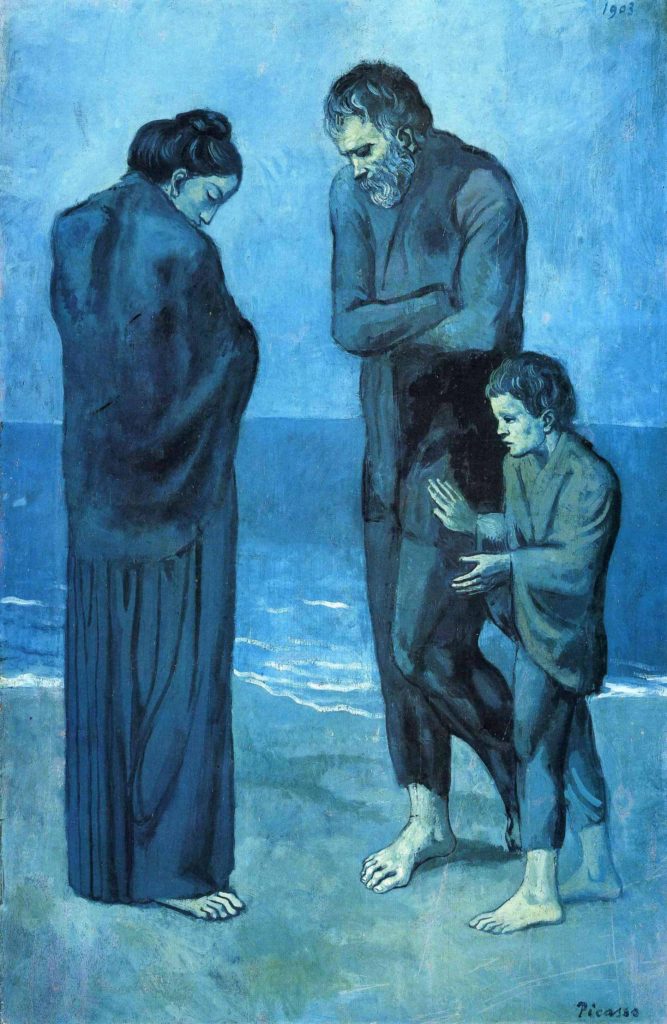
Picasso questioned what a portrait was supposed to look like. Banksy’s work “influence[s] the viewer…or simply opens someone’s eyes to contemporary problems,” expertly put by Sara M. White in her analysis of concrete rebellion.

Artists have always been at the forefront of movements for justice, equality, and freedom, using their work to highlight societal issues and provoke action. The Harlem Renaissance of the 1920s is a perfect example of this. This cultural movement was not just about creating beautiful works of art; it was about redefining African American identity, celebrating Black culture, and challenging the racist stereotypes that had dominated American society for centuries.

This kind of art isn’t just about aesthetics—it’s about challenging people to question their assumptions and consider new perspectives. Whether it’s through paintings, music, literature, or performance, art inspires change, making it an essential tool for building a better, more just society.

Art is Pink vs. Black

Stuart Semple and Anish Kapoor even turned color into a debate about ownership and access.

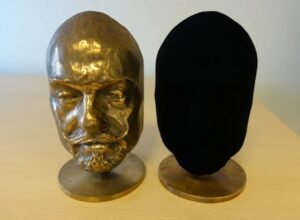
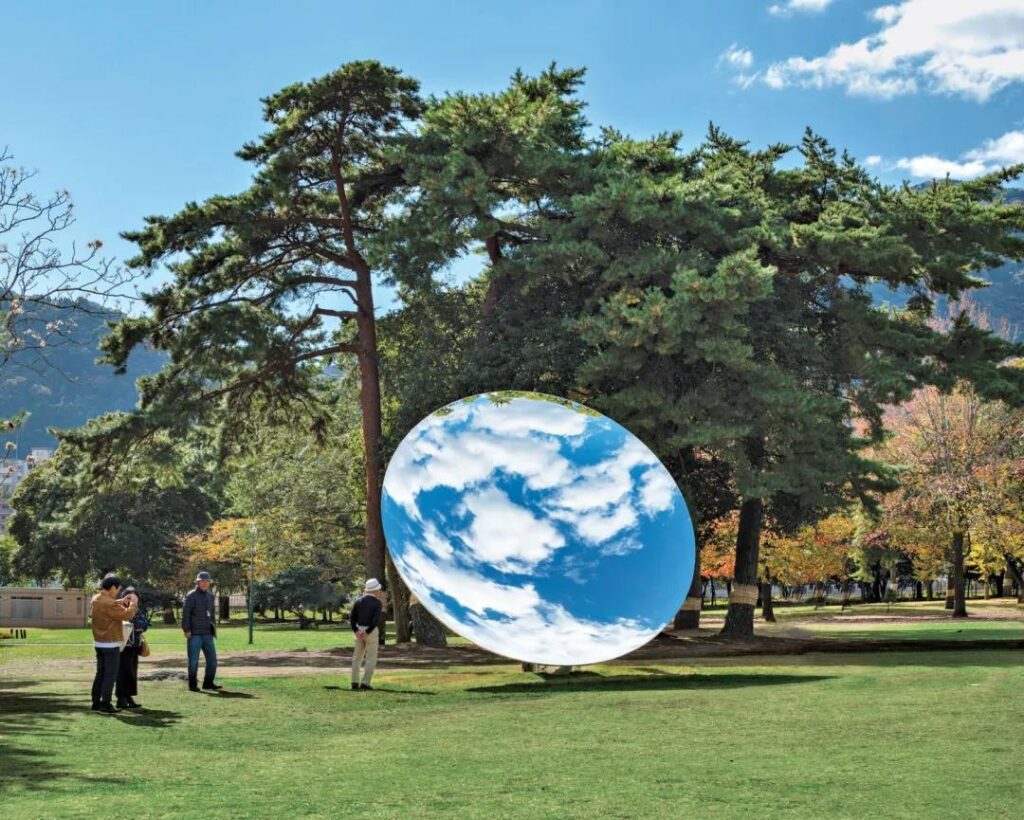
Kapoor is maybe most well known for the Chicago Bean sculpture, known by less as Cloud Gate in Millennium Park Plaza, Chicago. Kapoor decided he wanted to own a color, so he acquired exclusive artistic rights to a super-black paint material called Vantablack

In natural petty artist fashion, Semple rebelled the idea that a single artist could own a color. Semple made it his “mission to democratize art materials and make vibrant colors available to everyone,” according Hustle Culture paints. So in late 2016, Semple released a paint and called it “PINK – the world’s pinkest pink paint” and then subsequently banned Kapoor from ever purchasing the paint.

My favorite part of the story: In June 2024, Semple legally changed his name to Anish Kapoor.
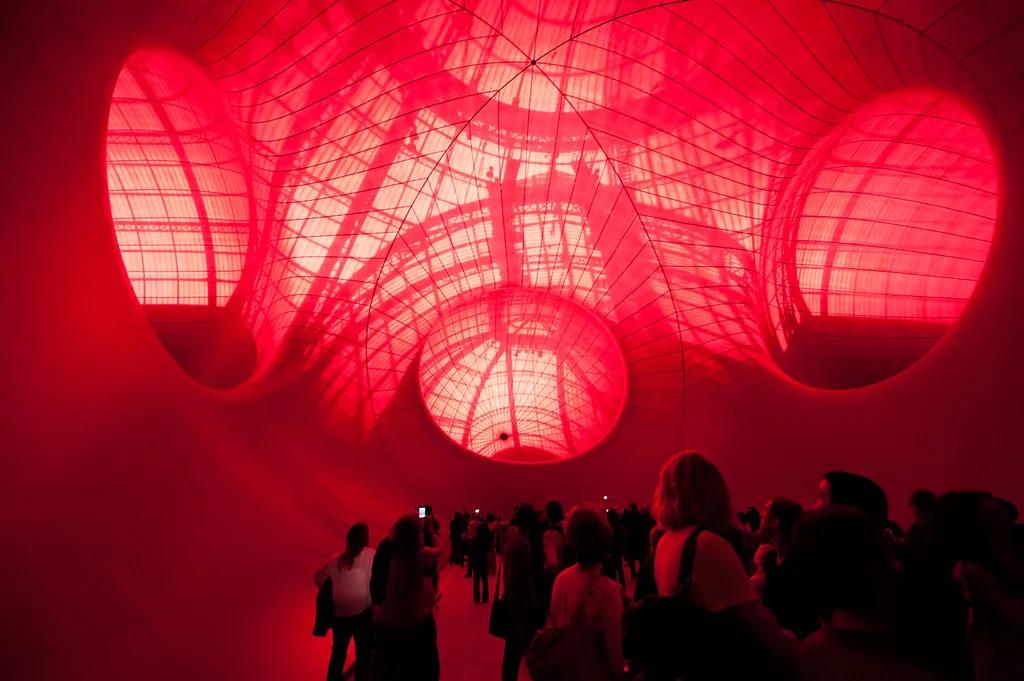
Pinkest Pink by Anish Kapoor aka Stuart Semple

Real artists don’t just decorate. They question systems. They challenge expectations.

Art is trying new methods even when it makes people uncomfortable.

Art is tension pushing culture forward.

Art is Challenging Power

Art is inherently political because it either supports existing systems or resists them.

There really isn’t a neutral middle. Even when art claims to be “just beautiful,” it still reflects who funded it, who it was made for, and whose story it tells.

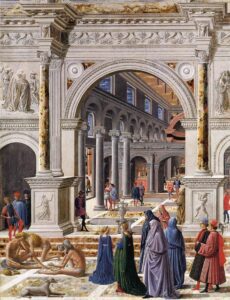
During the Renaissance, much of the most celebrated work was funded by the Church and European monarchies. Those paintings weren’t random acts of creativity — they reinforced religious authority, divine right, and hierarchy. They shaped how people understood God, power, and obedience. We call them masterpieces now, but at the time they functioned as messaging tools. Propaganda existed long before the word did (check out my other article on Brainrot Art & Jackson Pollock).
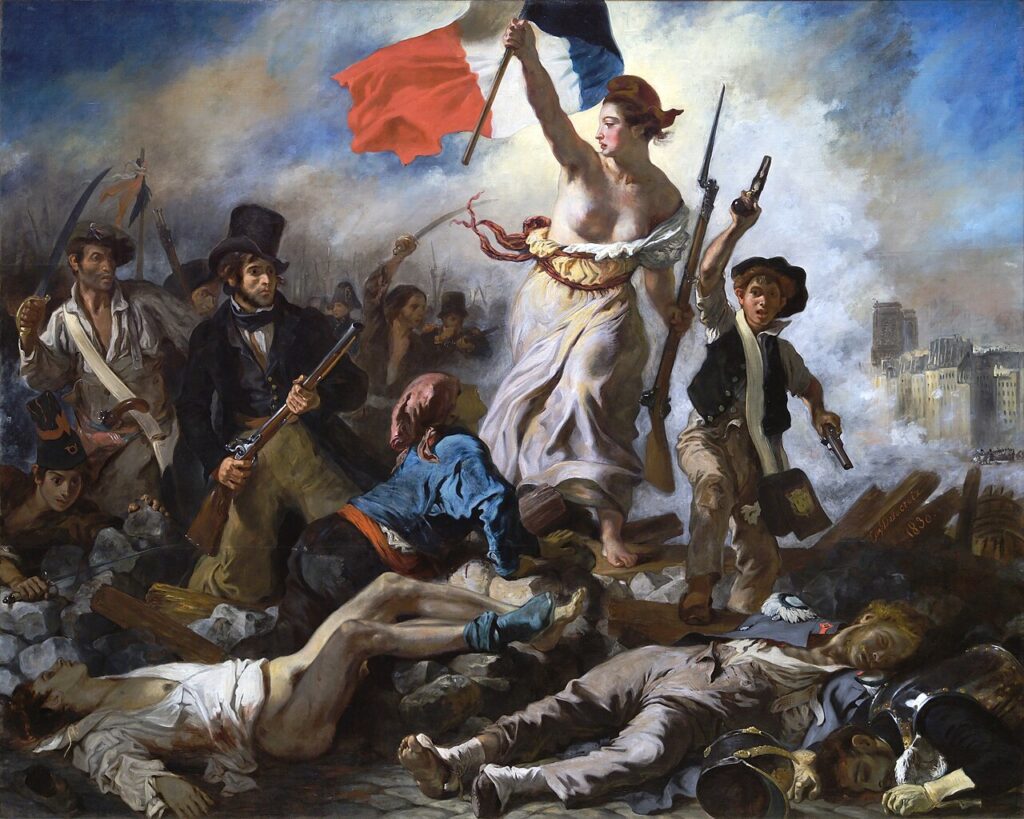
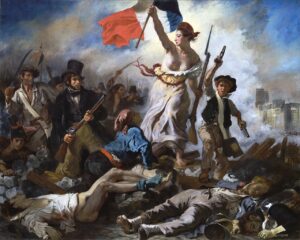
Lady Liberty Leading the People - Delacroix political art
Liberty Leading the People by Delacroix

Art is progress

Art moves forward because artists ask hard questions.

  • Why does this have to be done this way?
  • Who decided that?
  • Who benefits?

Maria Brito, a New York–based art advisor and curator, has said that art has always been political because it comes down to choice: Who gets to make it? Who gets to show it? Who gets to own it? Those aren’t neutral questions. They’re about power.
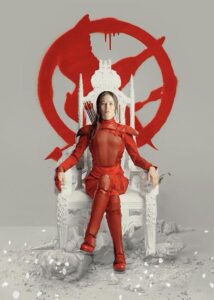
Being an artist isn’t just about making something that looks interesting. It’s about deciding what to say and how to say it. Every creative choice reflects something about the world around us. I know engineers who call themselves artists because they design or code in ways that translate information differently. That shift in communication — choosing to present something in a new way — is creative work.

Real artists don’t just decorate. They question systems. They challenge expectations. They try new methods even when it makes people uncomfortable. That tension is what pushes culture forward. What starts as disruption often becomes growth. And that’s how progress happens.

Art is a form of rebellion

When revolutions began reshaping the Western world, art shifted with them. During the American and French Revolutions, engravings, paintings, and prints circulated images of liberty, martyrdom, and resistance. They were documenting change and giving it fire. Liberty is designed to unify people around an idea.

  • Francisco Goya’s The Third of May 1808 did something different. Instead of glorifying war, it exposed its brutality. The faceless firing squad, the terrified civilian with raised hands — it documented state violence in a way that refused to romanticize it. It forced viewers to confront what power looks like when it turns violent.
  • Diego Rivera’s murals carried politics onto public walls. He painted workers, factories, farmers — elevating laborers to heroic scale. His work centered class struggle and economic injustice at a time when those conversations were volatile. Because they were public murals, they were accessible. They belonged to the people, not just collectors.
  • During World War II, posters became direct tools of persuasion. Governments used bold graphics and slogans to build national identity, encourage enlistment, ration supplies, and shape public morale. Art became strategy. It wasn’t subtle.
  • In the Civil Rights Movement, photography shifted public opinion in ways speeches alone could not. Images of peaceful protesters facing violence, children confronting segregation, marchers crossing bridges — those photographs made injustice undeniable. They moved people who might otherwise have looked away.
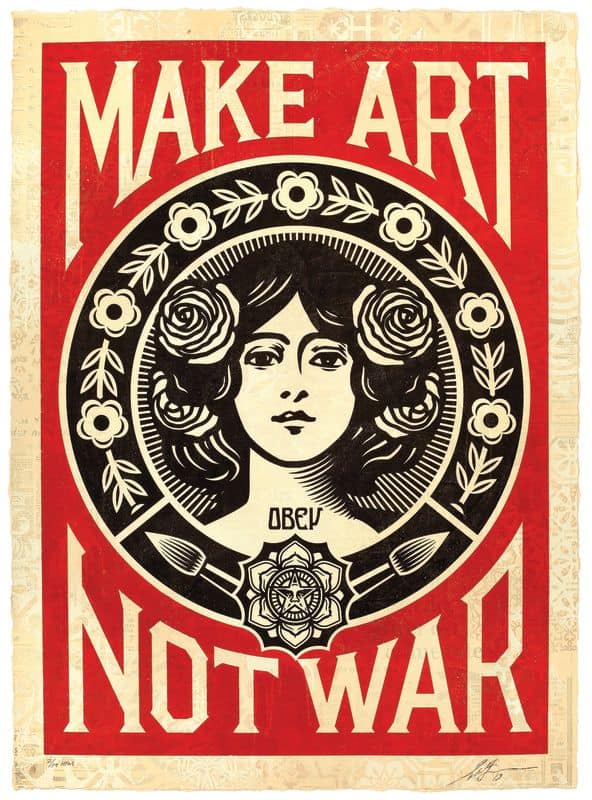
make art not war shepard fairey political poster
Make Art Not War by Shepard Fairey

Across centuries, the pattern is clear: Art is either strengthening those in power or challenging them.

Art shapes belief and documents truth. It persuades. It resists.

Whether hanging in a cathedral, printed on a poster, painted on a wall, or captured through a camera lens, art has always been part of the political conversation. Art has always reflected who holds power — and who is fighting it. It tells us who matters and who doesn’t. It decides what stories get preserved.

So if art has always been tied to power, what does that say about today?

The Modern U.S. Political Climate & Fears around Speaking out

@odesso

made out of the redacted parts. 113 layers, made in photoshop. #dubaichocolate #digitalcollage #collage

♬ Dancing and Blood – Low

Today’s political climate in the United States is tense.

Opinions waver. Headlines escalate. Families disagree. Communities split along ideological lines.

In this kind of environment, making art can feel complicated. The pressure isn’t always loud, but it’s there — in what we choose to say, what we avoid saying, and how much of ourselves we’re willing to reveal.

And social media has done nothing but amplify that pressure.

Artists can reach thousands instantly, but they can also face backlash just as quickly. The fear of being misunderstood, misquoted, or “canceled” is real. One post can shift an audience. One image can spark outrage. When your work lives online, it doesn’t just hang quietly in a gallery — it circulates, it’s screenshotted, it’s debated. That reality makes silence feel safer.

Neutrality feels strategic.

At the same time, corporate branding and monetization shape creative decisions in subtler ways.

Many artists rely on partnerships, sponsorships, or algorithms to sustain their work. That dependence can influence what feels “safe” to create. Artwork that is aesthetic, pleasing, and broadly palatable is rewarded. Artwork that is more vocal or politically specific can feel risky.
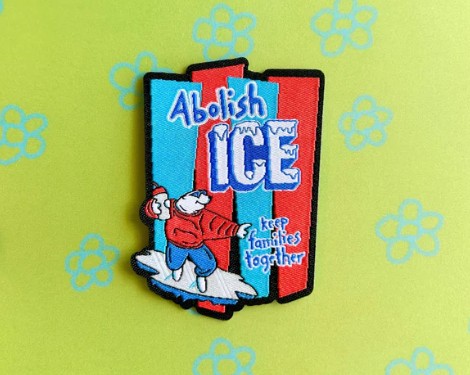
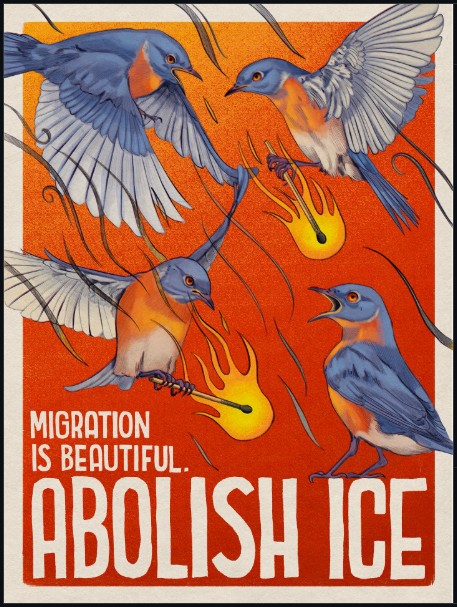
Abolish ICE Iron-On Patch
Cool Patch for purchase at Humboldt House

Art is Protest in visual form

And yet, outside curated feeds and brand guidelines, protest continues to take visual form.

Women’s marches fill streets with handmade signs. Racial justice movements transformed plywood-covered storefronts into murals. LGBTQ+ rights demonstrations flood timelines with bold graphics and reclaimed symbols. Reproductive rights protests carry typography that spreads across cities in hours.

Protest art today is immediate — cardboard, spray paint, digital illustration, viral design.

It travels fast. It speaks before policy changes.

Artists express culture, even when it is divided and reactive. Photographers capture history that reminds us that art can emerge from instability. War, revolution, civil unrest — these periods have repeatedly produced work that was urgent, uncomfortable, and necessary. The art that endures is rarely the art that tried hardest to offend no one.

Silence can feel protective in a polarized moment. It can preserve followers, partnerships, reputation. But art that avoids discomfort often risks becoming decorative instead of meaningful. To create honestly now requires courage and clarity. But remember, risk has always been played a part in the artist’s role.

To publish, post, exhibit, or even quietly share work that reflects conviction means accepting that not everyone will approve.

B. Eisman, world renowned photographer

@editsbyelsa

Alysa Liu, you’re a genius 🖼️✨ · Promise – Laufey 🕰️ —— #alysaliuedit #alysaliu #laufey #laufeyedit #mixedmedia —— @laufeyland @frigouscigous @laufeyfan

♬ son original – elsa

How Our Culture Has Changed in How We Value Art

Somewhere along the way, art went from “let’s disrupt the government” to “will this match my living room?”

Paintings are now investment assets and creativity is filtered through Instagram algorithms. ChatGPT gently whispers in your ear, “Have you considered making this more millennial grey?” and you say back “I need acrylic paint markers to be a real artist.”

Art is now optimized, branded, ai generated, and a/b market tested. Essentially, neutralized. Creativity is monetized and “if you don’t make money then you aren’t a real artist.”

Good thing I make money as an artist.
The Shape of Content, by Ben Shahn

I recently finished a book that discusses this idea of an artist’s role to push boundaries. It’s called The Shape of Content by Ben Shahn.

It’s a book of essays based on lectures by the artist at Harvard in 1957. However old, the ideas are not outdated, and I actually found them to be more relevant than ever in 2026. Shahn makes a case that all artists have an unavoidable responsibility to society, and I agree with many online reviews that anyone studying art should make an effort to read this book.

I have always believed that the character of a society is largely shaped and unified by its great creative works, that a society is molded upon its epics, and that it imagines in terms of its created things—its cathedrals, its works of art, its musical treasures, its literary and philosophical works.

Ben Shahn, The Shape of Content

It’s a reminder that art is not just an aesthetic exercise—it’s how we make meaning, shape memory, and build a shared imagination. It’s how we record what mattered to us, even when words fall short. When the world feels overwhelmed by noise, art quietly insists on depth. It challenges, comforts, questions, and preserves.

Shahn’s essays argue that artists don’t just reflect the world—they help shape its future. And in reading his words, I felt reminded that creativity isn’t a luxury or a hobby, it’s a responsibility. It’s how we leave something behind that speaks for us when we’re no longer here. It’s how we process the destruction of art and the value we assign it.

So paint on big canvases that don’t match couches. Make drawings that aren’t aesthetically pleasing. Force art to elbow its way through sponsorship emails and dashboards to stay alive and keep on kicking.
Conclusion: Art is never neutral

Art remembers what we try to forget. It remembers the injustice. It remembers the courage. It remembers who spoke and who stayed silent.

When we look back at history, we do not remember the neutral. We remember the brave.

There is something quietly tragic about realizing that every era believes it is too complicated, too divided, too fragile for bold expression.

And yet, history moves forward because someone painted anyway.

Someone wrote anyway.

Someone marched anyway.
annish kapoor
Sky Mirror by Anish Kapoor

Maybe the real question is not whether art is political.

Maybe the question is whether we are willing to let our art be our voice.

And years from now, when someone looks back at this moment in the U.S., what will they see? Silence? Or a voice?

Art Is Never Neutral Read More »

100 Inspiring Quotes About All Types of Art

Art has a way of saying the things we can’t quite put into words.

Whether you’re sketching in the margins of a notebook, layering paint on canvas, editing photos at midnight, or wandering through a museum just to feel something shift inside you, art meets us where language falls short. Sometimes, all it takes is a single sentence to unlock a new way of seeing—or to remind us why we started creating in the first place.

That’s where quotes about art and painting come in. They capture the shared experience of artists across time: the doubt, the obsession, the joy, the quiet persistence. These quotes aren’t just decorative words—they’re creative compatriots. They sit beside you in the studio, whisper encouragement when a piece isn’t working, and remind you that uncertainty is part of the process.

This collection of quotes about art and painting is designed to inspire artists of every kind—painters, illustrators, photographers, designers, sculptors, journalers, and creatives who don’t fit neatly into one box. You’ll find well-known voices alongside lesser-known artists whose words feel deeply lived-in and honest. Whether you’re here to spark an idea, find motivation, or simply feel less alone in your creative practice, this page is meant to be returned to again and again.

“Photographers capture the truth of light.”

B. Eisman 2026
peru amazon jungle photography by brianna eisman
Camping in the Amazon jungle in Northern Peru by Brianna Eisman

Quotes About Art & Drawing

“Drawing is the honesty of the art. There is no possibility of cheating.” — Salvador Dalí

“A line is a dot that went for a walk.” — Paul Klee

“Drawing is not what one sees, but what one can make others see.” — Edgar Degas

“Drawing is thinking on paper.” — Saul Steinberg

“Every artist was first an amateur.” — Ralph Waldo Emerson

“Sketching is a way of asking questions without needing immediate answers.” — Jessica Hische, lettering artist

“Drawing teaches you how to really look.” — Dana Schutz

“Your sketchbook is a place to be wrong safely.” — Austin Kleon

“Drawing connects the hand to the mind in a way nothing else does.” — Peter Han, concept artist

“Sometimes the sketch holds more truth than the finished piece.” — Cathy Johnson, artist and art educator

Quotes About Art & Painting

“I dream my painting, and then I paint my dream.” — Vincent van Gogh

“Painting is poetry that is seen rather than felt.” — Leonardo da Vinci

“A painting is never finished—it simply stops in interesting places.” — Paul Gardner

“I shut my eyes in order to see.” — Paul Gauguin

“Color is my day-long obsession, joy, and torment.” — Claude Monet

“I shut my eyes in order to see.” — Paul Gauguin

“Painting is about trusting yourself enough to begin.” — Lisa Congdon

“Every canvas is an opportunity to forgive the last one.” — Chuck Close

“Paint what you feel, not what you think you should.” — Cecily Brow

“Art should comfort the disturbed and disturb the comfortable.” — Banksy (Check out my photos of Banksy’s work)

“Painting is an act of faith.” — Gerhard Richter

Quotes About Art & Sculpture

“I saw the angel in the marble and carved until I set him free.” — Michelangelo

“Sculpture is the art of the intelligence.” — Pablo Picasso

“Sculpture is made by taking away.” — Antoine-Louis Barye

“Materials have their own opinions.” — Eva Hesse

“Clay remembers every touch.” — Peter Voulkos, ceramic artist

“Sculpture exists in the space we share with it.” — Antony Gormley

“Form is emotion slowed down.” — Barbara Hepworth

“Sculpture teaches patience through resistance.” — Andy Goldsworthy

“You learn by listening to the material.” — Isamu Noguchi

“Space is as important as solid form.” — Henry Moore

Quotes About Art & Photography

“A photograph is a secret about a secret.” — Diane Arbus

“The camera is an instrument that teaches people how to see.” — Dorothea Lange

“Photography is the story I fail to put into words.” — Destin Sparks

“You don’t take a photograph, you make it.” — Ansel Adams

“Light makes the photograph.” — George Eastman

“Photography is about paying attention.” — Alex Webb

“Sometimes the blur tells the truth.” — Jonathan Topping, film photographer

“A camera is a diary with no eraser.” — Henri Cartier-Bresson

“Blur can be more honest than sharpness.” — Daido Moriyama

“Photographs feel like memories we didn’t live.” — Gregory Crewdson

Quotes About Art & Graphic Design

“Design is intelligence made visible.” — Alina Wheeler

“Good design is obvious. Great design is transparent.” — Joe Sparano

“Design is thinking made visual.” — Saul Bass

“White space is breathing room.” — Khoi Vinh

“Design is how it works, not just how it looks.” — Steve Jobs

“Clarity beats cleverness.” — Ellen Lupton

“Design is problem solving with empathy.” — Mike Monteiro

“A logo is not a brand—it’s a doorway.” — Debbie Millman (Check out her podcast, Design Matters! It’s one of the first, longest running and most respected podcasts in the world)

“Consistency is a form of respect.” — Pentagram Design Group

“Design should feel effortless, even when it isn’t.” — Paula Scher

Quotes About Art & Game Design

“Games are the most elevated form of investigation.” — Albert Einstein

“A game is a series of interesting choices.” — Sid Meier

“Play is the highest form of research.” — Stuart Brown

“Players remember feelings, not mechanics.” — Jenova Chen

“Game design is empathy expressed through systems.” — Eric Zimmerman

“Failure should be fun.” — Raph Koster

“Games teach through experience, not instruction.” — Jane McGonigal

“A good game respects the player’s intelligence.” — Shigeru Miyamoto

“Design for curiosity first.” — Brenda Romero

“Rules create meaning.” — Jesper Juul

Quotes About Art & Art History

“Art is a lie that makes us realize truth.” — Pablo Picasso

Every artist is shaped by their time.” — Ernst Gombrich

“Art history is a conversation, not a timeline.” — Linda Nochlin

“The past is never silent.” — John Berger

“To study art is to study humanity.” — E.H. Gombrich

“Movements are born from resistance.” — T.J. Clark

“Style is a response to culture.” — Rosalind Krauss

“Art history is full of rule breakers.” — Griselda Pollock

“Context changes everything.” — Hal Foster

“Nothing radical exists in isolation.” — Aby Warburg

Quotes About Art & Museums

“Museums are time machines.” — Orhan Pamuk

“Art belongs to everyone.” — Ai Weiwei

“You don’t have to understand art to feel it.” — Agnes Martin

“Museums teach us how to look slowly.” — Teju Cole

“Galleries are spaces for listening.” — Hans Ulrich Obrist

“Museums remind us we are not alone in time.” — Rebecca Solnit

“Every wall has a voice.” — Thelma Golden

“Museums hold questions, not answers.” — Glenn Lowry

“Art needs space to breathe.” — Ellsworth Kelly

“A gallery visit is a conversation across centuries.” — Jerry Saltz

Quotes About Art, Journaling, & Creative Reflection

“Your journal is a judgment-free zone.” — Lynda Barry

“Creativity grows in private first.” — Julia Cameron

“Write what you notice.” — Natalie Goldberg

“A journal is where art begins quietly.” — Keri Smith

“Messy pages are honest pages.” — Austin Kleon

“Reflection is part of the practice.” — Sark

“Your sketchbook is allowed to be imperfect.” — Danny Gregory

“Pages are patient.” — Anne Lamott

“Journaling is drawing with words.” — Shauna Niequist

“Your thoughts deserve space.” — Brené Brown

How to Create Your Own Inspirational Paintings

If reading quotes about art and painting sparks the urge to create, lean into it. You don’t need expensive tools, just a few reliable supplies and permission to experiment.

Here are my suggestions for art supplies to create a painting in acrylic paint:

Try painting one quote as a visual concept—use color, shapes, or mood instead of literal words. Let the quote guide the feeling, not the outcome. This is about expression, not perfection.

Final Thoughts on Quotes About Art

Quotes don’t replace practice, but they can reignite it. The right words can pull you out of a creative rut, soften your inner critic, or remind you that every artist you admire once stood exactly where you are now. These quotes about art and painting are proof that uncertainty, experimentation, and growth are universal parts of making art.

Creativity isn’t a straight line, and it was never meant to be. Some days you’ll feel inspired and confident; other days, you’ll question everything. Let these quotes serve as gentle reminders that showing up matters more than perfection—and that your work doesn’t need to look like anyone else’s to be meaningful.

Bookmark this page. Highlight your favorites. Paint from them. Journal about them. Let them sit quietly in the background of your studio or creative space. Art is made in moments both loud and subtle, and sometimes inspiration arrives simply by reading the words of someone who understands the process.

Most of all, remember this: your perspective is already enough. Keep creating, keep experimenting, and keep trusting that your voice—like the artists quoted here—deserves to exist in the world.

Like this article? Get Updated when I write the next one:

Subscription Form

AI AI art art art advice art drawings art history Artificial intelligence artsy artsy drawings artsydrawings art tips artwork Banksy brianna eisman bujo bullet journal color wheel Contemporary art craft crafting crafts Creativity Cubism design diy drawing drawings drawing tips drawing tips for beginners eisman Impressionism Inspiration journal landscapes painting paintings painting tips pencil scrapbooking sketchbook social media Surrealism Traditional art visual art words to describe art

100 Inspiring Quotes About All Types of Art Read More »
The Ins & Outs of 2026: Artsy Trends Forecast

Every January, the internet hits refresh and somehow finds a new “right” way to make art. A right aesthetic. A right color palette. A right overpriced art supplies. Sure, it’s fun to check out Pinterest’s artsy trends and laugh at the irony of Pantone’s 2026 Color of the Year. But if the internet brought you here, I think you’re looking for something a little more than just artsy trends.

At Artsy Drawings, we’re starting 2026 with intention to create art that moves and communicates. Please still make fun silly crafts, but please do it in a way that saves you time, energy, and money. I’m not going to give advice or say the artsy trends are to buy the next new art kit, because let’s face it — your craft drawer/room is already bursting with supplies.

This is the year you reuse what you already have, make art that feels good to you, and stop side-eyeing yourself (or others) for not keeping up. You don’t have to participate in every trend to be a “real” artist, just like you don’t have to consistently make good art every single time.

Consider this your official Artsy Drawings permission slip as we ring in the new year (cue confetti made of scrap paper!) These are the 2026 Artsy Drawings Ins & Outs—not as commandments, but more like artsy trends guidelines. Take what resonates. Leave what doesn’t. Carry the good energy into the next chapter and have a Happy New Year!

winter solstice ins and outs of 2026 artsy trends

Artsy Trends OF 2026

IN #1: Craft Just for Fun

Not everything needs a deep backstory about your trauma. Sometimes it’s really fun to make art that is pretty, and that’s it. Crafts are meant to spark joy and comfort. From making homemade cards to making silly paintings of your summer slushie, crafts are expressively fun and lighthearted and sometimes that’s all you need. This year, we’re officially done pretending fun needs justification. If it makes you smile while you’re making it, it’s doing its job.

IN #2: Create Imperfect sketchbooks

Your sketchbook or journal is not a performance. It’s not supposed to look like it was printed in a factory or photographed for a brand deal. Smudges, ink spills, coffee marks, and tears mean you used it. Crooked lines mean you are human. Misspelled headers mean you were thinking faster than your pen could keep up. The more “imperfect” your sketchbook is, the more honest it probably is, and for 2026’s artsy trends, honesty beats aesthetic pressure every single time.

IN #3: Reuse Supplies for Multiple Projects

One paint set does not have a single destiny, and I think I still have acrylic paint from high school hiding away because I despise using Cadmium Red.

The new year artsy trends include reusing your art supplies! Using the same supplies across multiple projects isn’t lazy, it’s resourceful, creative, and makes you iconic and sustainable. It forces you to problem-solve and experiment instead of constantly buying something new. Supplies that look worn, ink-stained, and a little chaotic are proof they’re being loved.

IN #4: Be an Artist who Supports Artists

Art thrives in community, not competition. Sharing another artist’s work, tagging designers, crediting inspiration, and buying from small arts markets and shops keeps the creative ecosystem alive. No one loses when artists support each other, everyone grows. This year, we’re choosing collaboration over comparison and cheering louder for people doing cool things.

Speaking of, go check out some of my favorite artists I found this year:

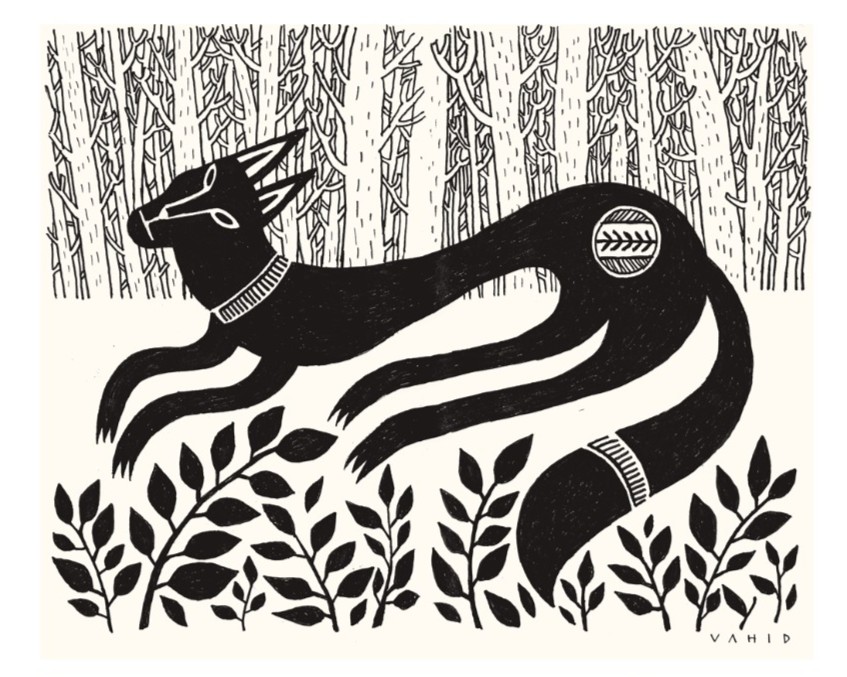
Vahid Fazel – Vahid is an Iranian-Canadian visual artist, filmmaker, and illustrator based in Toronto. According to his website, his artwork “bridges cultural narratives and universal themes through animations, compelling illustrations, and prints.”

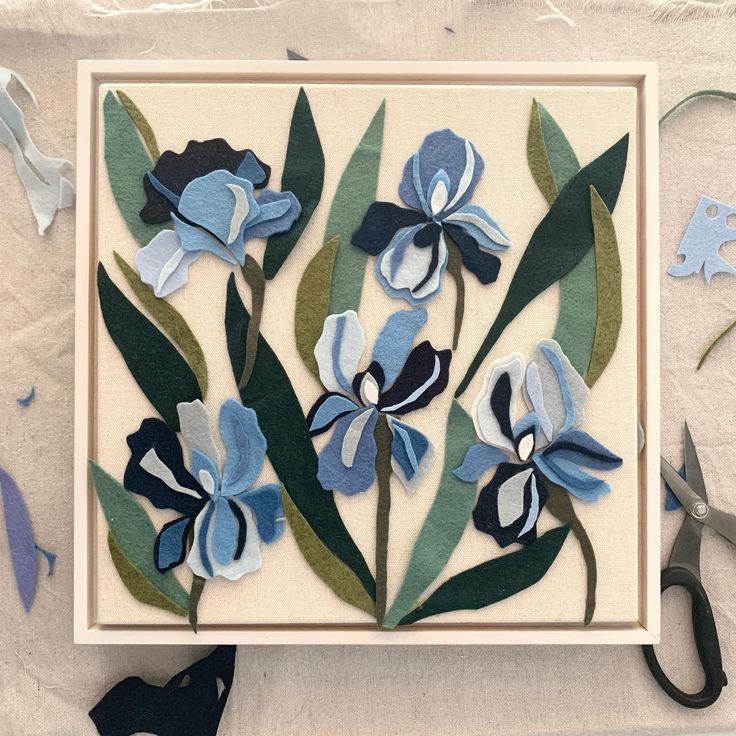
Annie Raymond – Annie is a wildly talented Georgia-based artist who works mainly with felt, making colorful, layered pieces that feel playful and a little nostalgic. With a background in teaching elementary art, she draws on that playful spirit and curiosity in everything she makes.

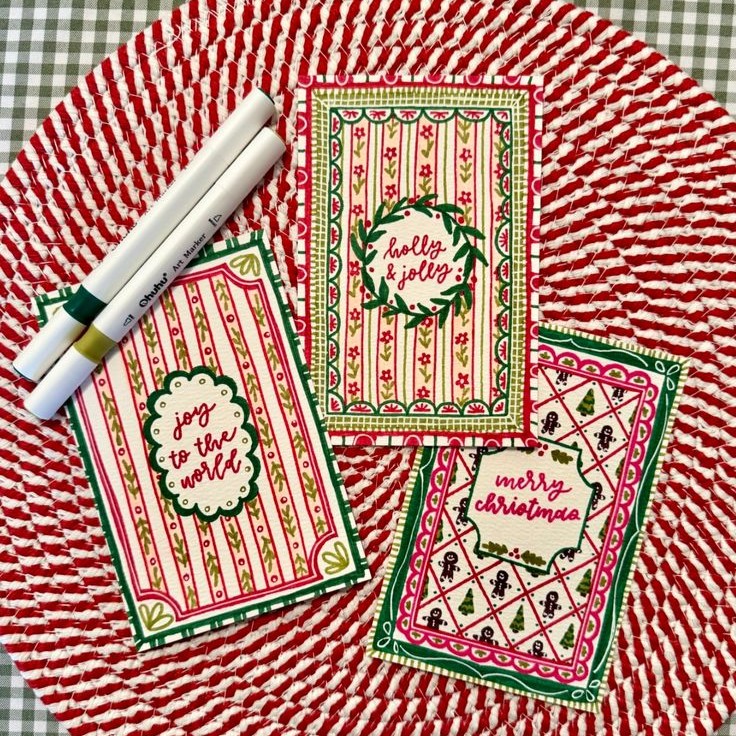
Lauren Gross – Lauren is the incredible artist behind Send Love Studio who makes warm, heartfelt pieces full of color, texture, and everyday beauty. Her work feels playful and personal with little calligraphy reminders of joy, connection, and faith.

IN #5: Know the Basics of art

Know the basics. Learning color theory, the principles and elements of design, and the rule of thirds gives your art a solid foundation to build on. These tools help you make intentional choices about balance, contrast, and composition, so your work communicates the way you want it to. Mastering the basics doesn’t limit creativity, it frees it, letting your ideas shine while still feeling cohesive and visually satisfying. Even small shifts, like adjusting where a focal point sits or experimenting with complementary colors, can make your pieces feel more polished and intentional without losing their spark.

If you’re interested in learning more about color theory, I recommend you take a look at Easy Color Theory for Beginners and Color Knowledge Tips that will Make you a Better Artist. Likewise, the article How to Create an Artist Statement discusses words you can use to make you sound more like an artist, including the elements and principles of design. You can also learn about perspective in the article titled Making Mountains Small and Worms Feel Tall.

OUT #1: Using a Whole Sheet of Paper for a Tiny Cut-Out

If the final shape is the size of a coin, the paper sacrificed should not be the size of a notebook page. This year’s artsy trends are about thinking ahead, trimming scraps first, and respecting materials. Your future self (and your scrap bin) will thank you.

OUT #2: Buying Art Supplies Just Because They’re Trending

Artsy trends move fast. Your preferences don’t, and trust me, that’s a good thing. If you didn’t like gouache last year, a viral video isn’t going to magically change that. The same goes for acrylic paint pens, chunky oil pastels, gel printing plates, alcohol markers, or the latest “must-have” sketchbook everyone is suddenly obsessed with.

Buying supplies you don’t enjoy using doesn’t make you more creative; it just makes your art supply drawers more crowded and your wallet lighter. That expensive set of markers won’t fix the fact that you actually prefer pencil. The ceramic palette won’t help if you hate cleaning it. Spend money on tools that fit your process, your habits, and your style—not someone else’s aesthetic, not a TikTok cart haul, and definitely not guilt.

For the thrifty artist, check out these artsy articles on How to Thrift Art Supplies and No-Buy DIY Crafts Using Stuff You Already Own.

OUT #3: Copying other artists’ work

It should be obvious at this point, but don’t copy other artists’ work. You can gather inspiration, but if it feels wrong in the pit of your heartless soul, it most likely is wrong.

Another topic has come up more frequently lately and I want to reiterate an important note: AI art does not steal artist’s work. I know this is a controversial take, but as an artist myself, I believe AI art is not inherently art. An AI model doesn’t understand the nuances behind creating art, it just predicts what it thinks the audience wants. Artists don’t just reproduce — we choose, edit, and improvise. Artists can problem solve and come up with creative solutions and intentions behind creating a painting or an image or whatever. Artificial intelligence lacks this very human internal pursuit to express.

OUT #4: Gatekeeping Techniques & Styles

Art is not a secret club with hidden rules. People are allowed to ask questions, try things the wrong way and learn in public. Gatekeeping doesn’t protect art, it limits it. The more people feel welcome to create, the richer the art world becomes.

OUT #5: Hustle Culture Disguised as “Motivation”

You do not need to turn every sketch into a product or every hobby into a brand. Not all artsy trends need to be photographed and posted. Rest is productive. Play is productive. Burnout is not proof of dedication, it’s a warning sign. In 2026, we’re letting creativity breathe instead of abusing it for some hustler output.

If you are a burnt-out artist, I recommend you taking a peak at my artsy article: How to Avoid Burnout: 13 Tips from A Tired Artist.

IN #6: Visit Museums & Galleries

In 2026, we are visiting art houses like museums, galleries, arts markets, and small shops!

Experiencing art in person, whether timeless classics or contemporary pieces that look like splatter paint brain rot, connects you to the history and evolution of creativity. Learning and experiencing art history in person helps you understand how artists use color, composition, and storytelling to communicate ideas. Seeing how others solve visual problems gives you tools to make smarter, more confident choices in your own work. Even one painting or sculpture can inspire new approaches, spark fresh ideas, and deepen your creative perspective.

IN #7: Warm up Your Artsy Muscles & Practice

Warm up your artsy muscles, not the ones you flex in the mirror when no one is looking, but the ones that actually builds your art skills. Quick sketches, doodles, or small studies get your hand and eye in sync, loosen your style, and make it easier to dive into bigger projects with confidence.

Every sketch, every brushstroke, every “failed” piece is a step forward, teaching you something your brain can’t learn any other way. Progress doesn’t happen in big leaps. it happens in the small, repeated motions, in showing up day after day. Embrace the messy, the awkward, and the imperfect, that’s where real growth and skill live.

IN #8: Draw/Paint from Life

Draw and paint from life whenever you can, it will seriously help your hand-eye coordination. Observing real people, objects, or landscapes trains your eye to see shapes, light, and color in ways photos can’t. Start with simple still lifes like a bowl of fruit or a vase of flowers. You can also sketch people in a cafe to learn posture, gesture, and proportion.

Artists like John Singer Sargent mastered this approach, capturing movement and life in every brushstroke. Working from life teaches you to notice subtle details that make your art feel alive and immediate and real.

IN #9: Be a Professional

In the words of Paige Mills and Simone Christen with the Artwork Archive, “in order to be successful in the art world, the demands on an artist are high. Therefore, it’s crucial to run the administrative side as efficiently and professionally as possible.”

Calling yourself a professional artist means taking ownership of your marketing, sales, and online presence, and treating them with the same care you give your work. Developing your style and listening to your inner voice is vital, but so is building professionalism through social media, a website, an online portfolio, and consistent branding. Being a professional artist also means cultivating resilience: setbacks and frustrations are part of the process, and maintaining a positive, curious, and experimental mindset will keep your creativity, and your career, moving forward.

IN #10: Remembering the Artist’s Role

An artist’s role is more than slinging paint and getting messy: it’s about reflecting society and casting a glow of change.

Artists get the choice to create a message and determine how it could be understood and interpreted. I know engineers who consider themselves artists because they design or code in a way that helps translate the data in a different way. This choice, to not only communicate, but to do so in a new or different way, is what really pushes a true artist. They rebel against the norms or challenge ways of communicating, and in turn, this turmoil is reflected positively in society as experimentation and eventually, progress.

perspective in art artsy drawings brianna eisman worms eye view ins and outs of 2026
Not everything has to be seen from eye level. Looking up, literally and creatively, changes everything. Worm’s-eye view perspectives invite curiosity, drama, and storytelling. They remind us that art doesn’t have to be safe or expected to be interesting.

OUT #6: Consuming more than you Create

A lot of new art doesn’t hit as hard because it’s made for an audience that’s used to quick swipes and fast likes. We’ve been trained to scroll past things in seconds, even when they’re beautiful or meaningful. It’s not really our fault—we’re just overwhelmed. But that’s the problem: art is getting lost in the noise. People don’t take time to sit with it, to think about what it’s saying or what went into it. It’s like eating a steak in two bites and wondering why it didn’t taste like anything. When everything is content, art starts to lose its weight. It becomes something to consume, not something to connect with.

OUT #7: Art Hauls

You don’t need 47 versions of the same brush. You need time, practice, and permission to slow down.

Art hauls are out. Watching someone unbox dozens of supplies might feel satisfying, but owning a pile of stuff doesn’t make you a better artist. Inspiration doesn’t come from quantity, it comes from using what you have, experimenting, and figuring out what actually works for you.

OUT #8: Pretending You’re “Too Late” to Start

There’s no deadline for creativity. That feeling of being “behind” is just fear sneaking in. Your ideas, sketches, and experiments are unfolding exactly when they should—there’s always time to start, and you’re right on schedule.

OUT #9: Destroying Art

Art is being destroyed. The accused “war crimes” include “intentionally directing attacks against buildings dedicated to religion and historic monuments.”

When art starts to feel disposable, it’s easier to destroy. Not just by ignoring it, but by literally erasing it—through war, censorship, or indifference. If people can’t recognize the value of a painting or sculpture in peace, what happens to that art in times of conflict? The less we appreciate it, the less we fight to protect it.

I know that what’s happening is wrong and from an artist’s standpoint, the destruction of art, history, and society feels like a step backwards for humans. But, what can I do? I’m a 25-year-old U.S. painter with internet access and a sink full of dishes. I should stop worrying about things outside my control, so I buy eggs when they drop below $4 and dye them silly colors in the summertime, because I couldn’t afford eggs during Easter.

I know how to hold a paintbrush better than a gun. My hands were made for color, not combat.

OUT #10: Fear of “Ruining” a Page

Pages exist to be used. Sketchbooks are tools, not heirlooms. The only truly wasted page is the one you’re too afraid to touch. Messy pages mean momentum.

One of my favorite artsy tips to avoid burnout is learning to overcome perfectionism. As an artist, I see perfectionism at both the beginning and end of my projects. To start, I fear failing or messing up or marking the wrong mark on the page. I procrastinate or over-plan to the point that sometimes I have to tell myself “oh my goodness, just paint!!!” I see the same emotions pop up at the end of a project when I struggle with deciding when the piece is truly finished. I even debate varnishing paintings just in case I want to go back in and edit something. I’m stressing myself out when I should be simply enjoying making art.

Art is not valuable because it’s polished or impressive. It’s valuable because it meant something to the person who made it. Expression will always matter more than perfection.

artsy trends bujo 2026 ins and outs bullet journal december art journal sketchbook

Final Thoughts on 2026 Artsy Trends

As we move into 2026, the most important thing to remember about artsy trends is that you get to choose how (and if) you participate in them. Artsy trends can be inspiring, playful, and even motivating—but they’re not rules, and they’re definitely not requirements. The goal isn’t to do more art or buy more supplies. The goal is to make art more thoughtfully.

Being intentional with what you’re crafting means slowing down long enough to ask: Do I actually enjoy this? Will I use this? Does this align with how I want to create? Intentional design is about purpose over pressure. Choose materials that last, reuse what you already have, and design projects that feel meaningful instead of performative.

Sustainability isn’t just about the environment (though that absolutely matters). It’s also about sustaining your creativity. When you reuse supplies, avoid overconsumption, and let go of hustle culture, you create space for ideas to grow naturally. When you take inspiration without copying, give credit generously, and support other artists openly, you help build a creative community that actually lasts.

So take inspiration from artsy trends, but don’t let them dictate your process. Let them spark ideas, not your anxiety. Create with curiosity, design with intention, and treat kindness as a non-negotiable part of your practice. That’s the kind of trend worth sticking with, this year and every year after.


Join my Monthly Newsletter for more Artsy Trends

Subscription Form

The Ins & Outs of 2026: Artsy Trends Forecast Read More »
Why Did the CIA Fund Brainrot Art? The Messy Truth of Jackson Pollock

If you scroll through the online artsy backrooms in 2025, you’ll run into two of my favorite art conspiracies:

  1. Jackson Pollock was secretly bankrolled by the CIA to serve as a weapon in the Cold War.
  2. Brainrot art is being idolized by wealthy cultural gatekeepers/money launderers.

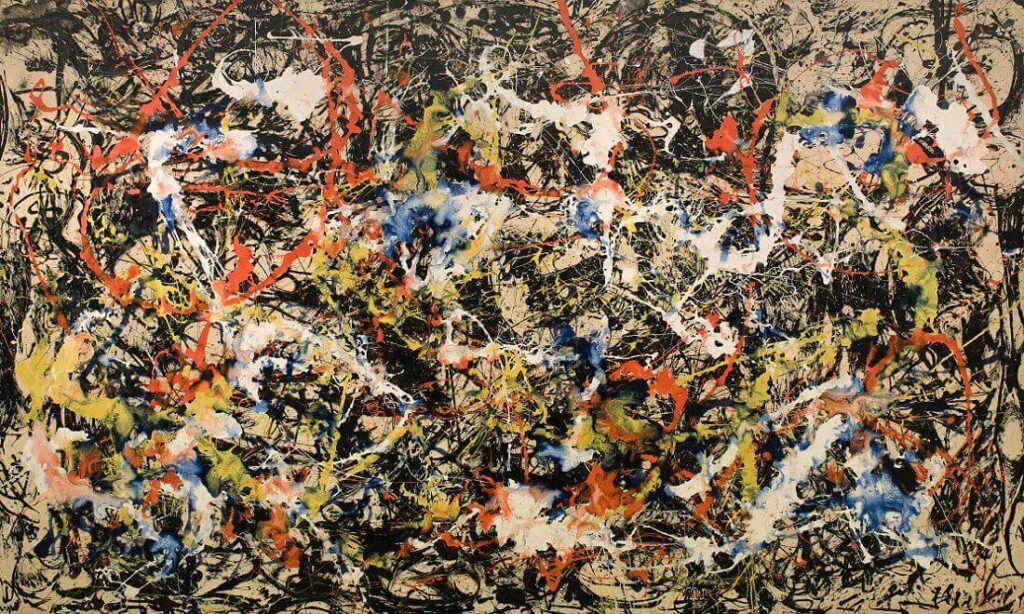
Which one is true? Both? Neither? In this artsy article, I wanna take a winding, tortuous pathway through splatter paint’s journey from admired social activism to the embarrassing reality of being compared to children’s scribbles. Let’s critically judge some art, not to decide if it’s good or bad, but to attempt to find the truth behind brainrot art.

However thoughtful, I know some of you are only here to find brainrot art. And for you silly little brainrot artists, I have found you coloring pages with the worst memes on the internet. Enjoy: https://coloriagevip.com/en/coloriage-steal-a-brainrot/?img=37

The uncomfortable Story of the CIA, Abstract Expressionism, & A Chilly War

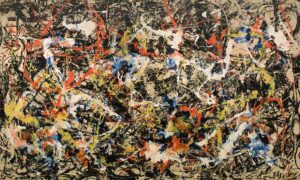
In the late 1940s and 1950s, Abstract Expressionism became the flagship avant-garde artistic style in the United States. Artists like Jackson Pollock, Willem de Kooning, Mark Rothko shaped the era. It was chaotic, expressive, often nonfigurative, the complete opposite of realism. Meanwhile, on the other side of the Iron Curtain, Socialist Realism reigned and art was required to depict workers, heroic scenes, factories, revolution, etc.

So you had an ideological clash: expression, freedom, individualism (in the West) versus collectivism, order, narrative (in the Russian Soviet bloc). Pollock was called a “rotten rebel from Russia” and according to co-curator of the Royal Academy exhibition, “Rothko said he was an anarchist.”

The U.S. government wasn’t immediately obsessed with splatter paint, but they quietly liked the idea that art could embody “freedom”— even if that meant non-representational squiggles.

Did the Government actually fund Brainrot Art?

Yes, there is credible evidence that U.S. intelligence and cultural agencies secretly funded or channeled money into promoting abstract art exhibitions as a form of “soft power.” They wanted to show that Americans could afford and enjoy “meaningless art,” implying they live in a freer, more prosperous society.

brainrot art on artsydrawings.com about jackson pollock

However, it may be a stretch to say Jackson Pollock personally cashed CIA checks. The funding was often indirect, via foundations, sponsors, international cultural exchanges. But the broader narrative is supported by many art historians: the U.S. used Pollock’s style as propaganda.

In 1973, Max Kozloff argued Abstract Expressionism was “a form of benevolent propaganda,” (Artforum.com) hinting at the impact of the art movement on changes in American culture. He wasn’t the only one to notice this change and eventually the true story started to leak out.

How did they do it?

So, how did the government get away with funding Pollock’s work? If they weren’t handing out splatter paint checks, how did these artists make any money? Here’s a quick history lesson:

The Cold War started in 1944 and in 1947, the U.S. created the CIA. Within the CIA was a special dedicated group called the Propaganda Assets Inventory. This group was responsible for managing a network of over 800 publications, organizations, and other entities to spread pro-American messages globally. They used psychological warfare in the form of modern art.

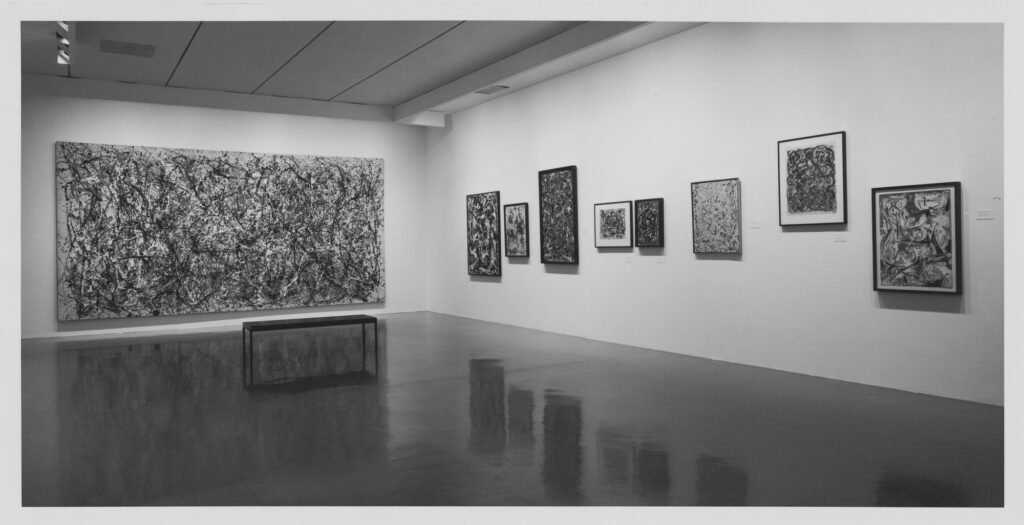
One such group was called the Congress for Cultural Freedom (CCF) and was known as “an anti-Communist advocacy group active in 35 countries.” The important part is that the CIA “helped to establish and fund” the CCF. According to Alastair Sooke’s BBC article, this group went on to bankroll a number of artistic platforms including a liberal anti-Communist magazine, the Boston Orchestra to perform in Paris, and “several high-profile exhibitions…including The New American Painting [tour]. This European art exhibit toured eight countries between 1958 and 1959, and our favorite brainrot artist was one of the stars! Below, you can see a clear image of Jackson Pollock’s work on display in The New American Painting exhibit.

The New American Painting ” Exhibition by Soichi Sunami. Photographed May 28, 1959–September 8, 1959, sourced from The Museum of
Modern Art Archives, New York.

Why did they choose Abstract (brainrot art)?

So, the CCF funded these galleries across the world. This still doesn’t explain why they chose the subject of abstract art.

From the Soviet side, abstract art was ideologically dangerous: it looked like chaos, it didn’t commit to narratives or legible messages, and it spoke of the individual’s inner life more than of the collective cause. A state that demands uniformity can’t fully comprehend ambiguity in art. So this Western “freedom art” was a cultural arrow pointed at the very heart of socialist doctrine.

Art critics and Soviet officials often ridiculed abstract expressionism as “decadent,” “bourgeois nonsense.” The tension was political, not just aesthetic.

If you’ve actually read a few of my more poignant articles, you know I enjoy art created for political reasons. Picasso challenged what it means to paint a portrait, Basquiat challenged tagging and street art norms, Stuart Semple and Anish Kapoor challenged color itself. Art is progress because artists consciously ask “why” and “how.”

If you are interested in reading more of my artsy articles with this level of cynicism and brattiness, I recommend you check out Why do people hate minimalist architecture?, The Destruction of Art., and Is AI art to be a valuable future or a scary end of originality?.

Maria Brito is an art advisor, curator, and author based in New York City. She believes art has always been political “because art, at its core, is about choices. Who gets to make it? Who gets to show it? Who gets to own it? These are all political questions.”

The story I believe is that art has always been political, whether it was financed by the church, the Medici, or the US government. Art sends a message and typically the rich decide what that message says. So, even though the art may look like splatter paint from a toddler, “brainrot art” was political for the time and context of which it was created. This is the truth behind art and many people struggle with this idea that art is not always pretty or aesthetic to what you want it to be in the present day.

Brainrot art in 2025: How to Judge Art for what it is

Now let’s jump a few decades forward to brainrot art in today’s world. The same Jackson Pollock that was once used as a moral and ideological emblem is widely dismissed as “paint splatter” and compared to that of a child’s drawings. Why would you pay over $100 million for something a toddler can make?

Here’s where things get tricky. I am a 25 year old artist with a little bit of an attitude. I want you, my dearest reader, to not only feel my angst around brainrot art, but to understand that it’s okay to judge art and to not like everything you see in a gallery.

1. Art is born in a context

You can’t just judge Pollock by your 2025 meme filters. You need to ask: what was happening in 1950, socially, politically, culturally? Who funded it? What audiences saw it?
To reject context is lazy criticism.

2. Intent, funding, and “authorship” matter

If a painting is partly propped up by propaganda, that doesn’t erase the artist’s vision — but it does shift how you interpret it. Every painting lives in a web: patronage, politics, fashion, personality. Disentangle where you can, acknowledge what you can’t.

3. Meaning is not fixed

In 1952, someone might see cosmic energy, Jungian spontaneity, or existential angst in Pollock. In 2025, someone might see chaos catered to white institutions. While both judgements are technically accurate, they speak to different viewers. Be humble in your judgment and remember that meanings change over time.

4. Humor and cynicism help

Let’s be real: lots of art gets overblown hype. Hype doesn’t disprove value — but healthy skepticism keeps us honest. It guards against the “emperor’s new clothes” effect.

brainrot art on artsydrawings.com about jackson pollock

Conclusion: Pollock as a Mirror, Not a Masterpiece or Meme

jackson pollock brainrot art

So, was Jackson Pollock really funded by the CIA? Absolutely, and art historians have traced enough circumstantial paths to take that question very seriously. But, does that automatically make his work a propaganda tool? No…?

In 2025, seeing Pollock’s splatter paintings as “brainrot art” is partly backlash: pushback against art-world gatekeeping, elitism, and all that fancy art jargon. But that rejection can also reduce the complexity of what abstract art was trying to do in a fraught political era.

My hope is that future artists and critics keep both their ambition and skepticism. Honor the context without worshipping the myth. Please judge art harshly and directly, but don’t forget about the context in which it was made. Laugh at Renaissance drawings of cats and then try to draw a cat from memory without a reference photo.

Remember that brainrot art used to be just art and trends will ebb and flow, but the joy of a good meme will never die.


Why Did the CIA Fund Brainrot Art? The Messy Truth of Jackson Pollock Read More »
100 Surreal Drawing Ideas for every artist

Staring at a blank page, waiting for inspiration to strike, is the worst. You have the skill, the motivation (kind of), and the urge to create, but… what do you even draw? Whether you’re sketching for fun, practicing your craft, or just trying to break out of an art block, having a list of creative drawing ideas at your fingertips can make all the difference. Sometimes, all you need is a single spark—an unusual prompt, a fresh challenge, or a concept that takes your art in an unexpected direction.

Below is a carefully curated list of 100 creative drawing ideas designed to help you experiment, refine your style, and, most importantly, enjoy the process.

Introduction

There’s no wrong way to use this list—pick one randomly, challenge yourself to a daily drawing spree, or combine ideas to create something truly unique. These prompts are broken into different categories to suit your mood and style: fantasy, portraiture, nature, surrealism, and more.

For example, if you’re drawn to character design, you might love the idea of sketching a cyberpunk warrior or a historical figure reimagined as a fantasy character. If you prefer atmospheric scenes, try creating a neon-lit city on a rainy night or an enchanted forest with glowing plants. Feeling conceptual? Play with gravity-defying landscapes or melting clocks dripping into dreamscapes. The goal is to let your creativity take the lead—these ideas are just the launchpad.

Having the right art supplies is essential for bringing your creative visions to life—whether you’re sketching quick ideas or crafting detailed masterpieces. Quality materials like smooth sketchbooks, vibrant pencils, and blendable markers not only make the process more enjoyable but also help your artwork look its best. Below are some of my favorite and cheap art supplies—click through my Amazon affiliate links to grab them and support my work at the same time!

If you’ve gone through the list, and are still artistically stumped, check out my portfolio or other artsy articles on ArtsyDrawings.com.

Fantasy & Floral Drawing Ideas

  1. A wilted flower coming back to life with magical energy
  2. A giant sunflower with an eye in the center
  3. A fairy sitting inside a blooming rose
  4. A cactus growing out of a teacup
  5. A tree with glowing blossoms that only bloom at night
  6. A tiny village hidden inside a hollow tree
  7. A mushroom house with little windows and a smoking chimney
  8. A snail with a succulent growing from its shell
  9. A flower that changes shape with the seasons
  10. A floating lily pad city in the middle of a peaceful lake

Mystic Nature Scenes Drawing Ideas

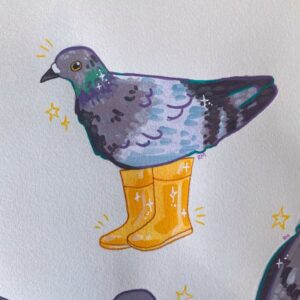
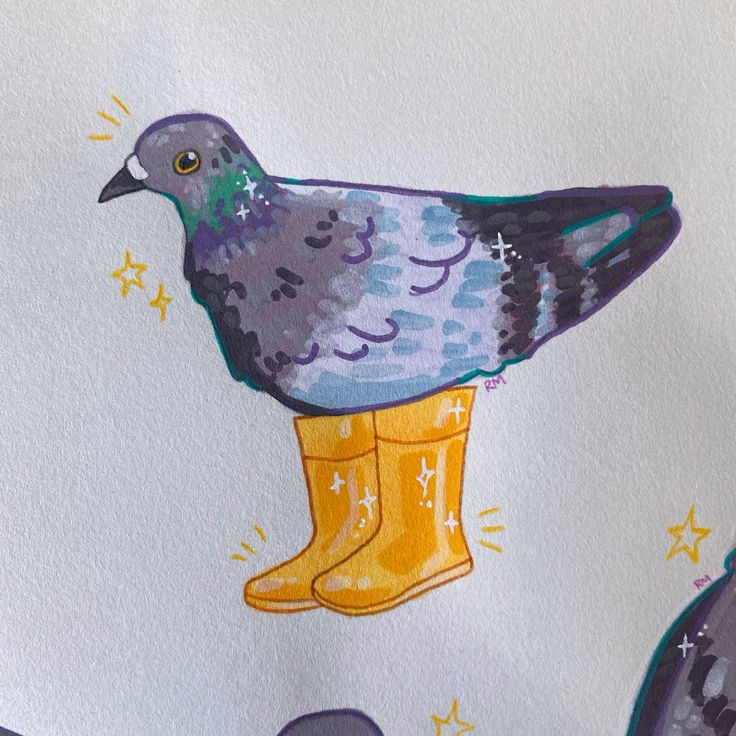
pigeon wearing yellow rain boots drawing ideas for artsy drawings
Pigeon in Yellow Rainboots by RM
  1. A twisting tree with roots reaching out like hands
  2. A hidden waterfall behind a wall of vines
  3. A forest path glowing under the light of fireflies
  4. A deer with antlers covered in hanging moss and flowers
  5. A secret garden only visible under the full moon
  6. A butterfly with flower petal wings
  7. A fox with fur that looks like swirling leaves
  8. A bird made entirely of vines and blossoms
  9. A mermaid whose tail turns into flower petals
  10. A rabbit with dandelion fluff instead of fur

Surreal Landscapes Drawing Ideas

  1. A tree growing upside down from the sky
  2. A crystal geode splitting open to reveal a tiny garden inside
  3. A flower field that turns into stars at night
  4. A floating rock covered in grass and wildflowers
  5. A mystical pond that reflects a different world than the one above it
  6. A garden where every flower glows a different color
  7. A river winding through the sky like a ribbon
  8. A giant daisy acting as an umbrella for a tiny creature
  9. A treehouse hidden among cherry blossoms in full bloom
  10. A stormy sky where lightning forms the shape of blooming flowers

Celestial & Atmospheric Drawing Ideas

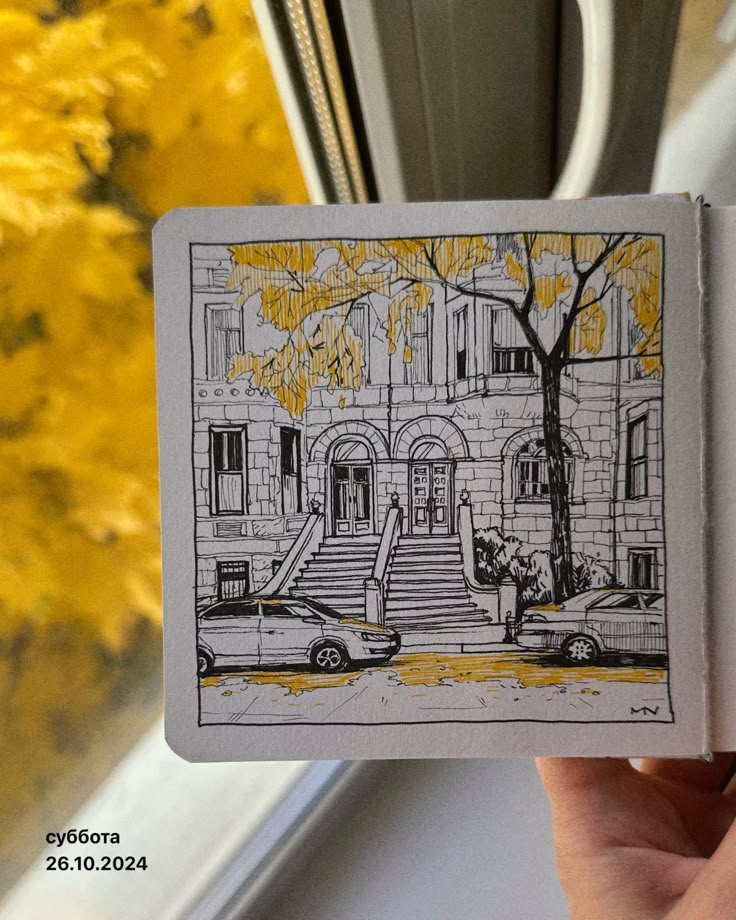
street view drawing ideas daily sketch by maria
Yellow Street View Drawing Ideas by Daily Sketch by Maria
  1. A moonflower opening under a glowing full moon
  2. A rainbow forming from the mist of a magical waterfall
  3. A sunset where the clouds are shaped like giant blooming roses
  4. A path made of floating lotus flowers leading to an unknown place
  5. A glacier with frozen flowers trapped inside the ice
  6. A bird with crystal feathers that glow in the dark
  7. A forest where every tree has a different colored bark
  8. A giant lily pad floating through the sky like an airship
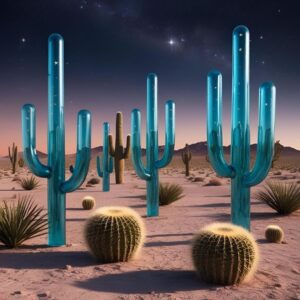
  9. A desert where the cacti are made of glass and reflect the stars
  10. A floating island with a single, massive cherry blossom tree

Whimsical Animals & Insects Drawing Ideas

  1. A hummingbird with wings made of flower petals
  2. A swan whose feathers turn into leaves when it spreads its wings
  3. A moth with wings that resemble dried autumn leaves
  4. A fox with a tail made of ivy and wildflowers
  5. A butterfly with stained-glass wings that reflect flowers in the light
  6. A river that glows in the dark, winding through a field of lavender
  7. A forest where the trees have golden leaves that never fall
  8. A moss-covered ruin overtaken by vines and blooming flowers
  9. A lake with floating flowers that light up like lanterns at night
  10. A meadow filled with oversized mushrooms and glowing spores

Dreamy Botanical Drawing Ideas

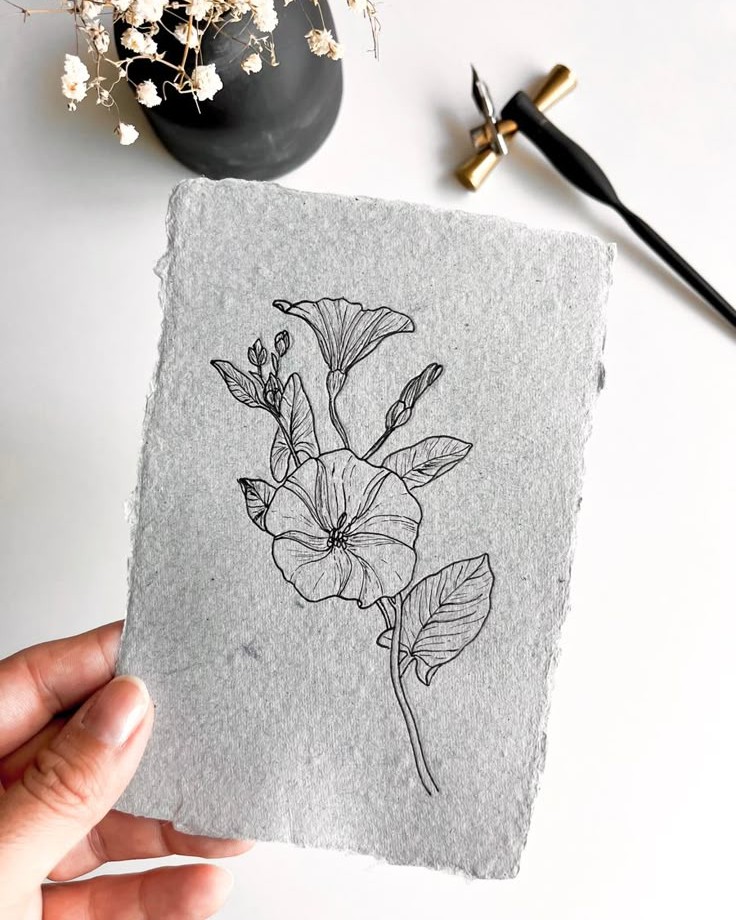
morning glory drawing ideas cami gonzalez calligraphy
Morning Glory Drawing By Cami Gonzalez
  1. A teapot pouring a stream of water that turns into a waterfall
  2. A giant sunflower bending down to whisper to a tiny creature
  3. A floating flower shop with bouquets tied to balloons
  4. A bridge made entirely out of intertwined vines and roses
  5. A giant dandelion puff releasing wishes into the sky
  6. A succulent terrarium with tiny people living inside
  7. A flower-covered skull as a symbol of life and rebirth
  8. A morning glory vine wrapping around an old, forgotten key
  9. A rose bush growing in the shape of a heart
  10. A water lily with a tiny fairy sleeping on its petals

Geometric & Abstract Conceptual Drawing Ideas

  1. A single line forming the silhouette of a city skyline
  2. Abstract shapes blending into each other to create a mysterious figure
  3. Geometric forms representing the concept of chaos
  4. A spiraling pattern that slowly morphs into a bird
  5. A circular pattern that gets increasingly disorganized the closer you look
  6. A series of interconnected dots forming a complex, surreal network
  7. A series of mismatched patterns swirling together into one image
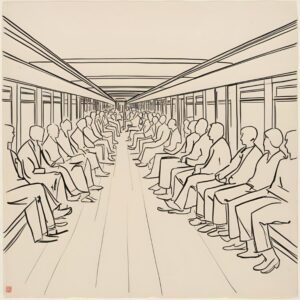
  8. A minimalist sketch of a crowded subway, showing only the outlines of passengers
  9. A futuristic city skyline where every building is a different distorted shape
  10. A chaotic mix of black ink splatters and precise pencil details

Organic & Flowy Drawing Ideas

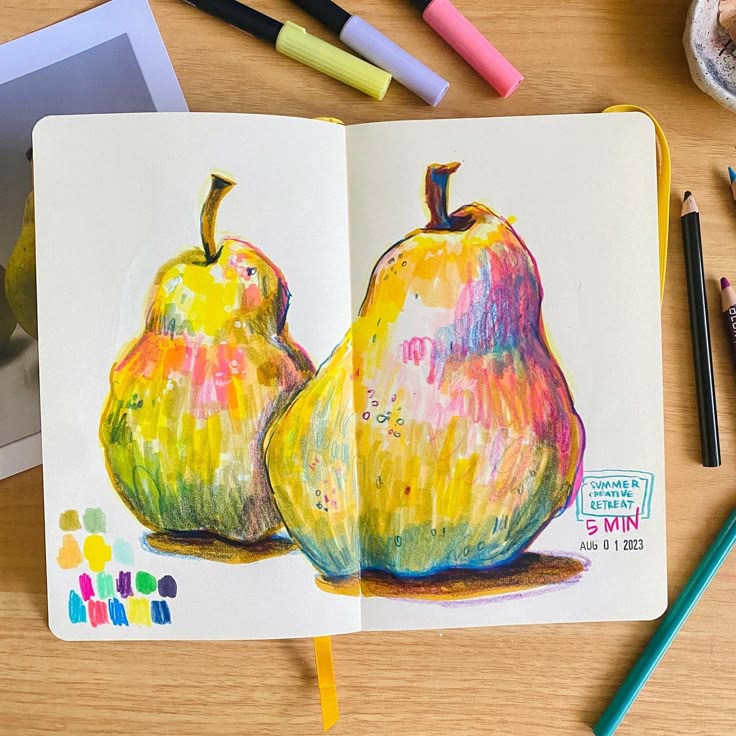
colorful Non-Local Pear Drawing ideas by Erika Lamar Buentello artsy drawings brianna eisman
Non-Local Pear Drawing by Erika Lamar Buentello
  1. A plant growing through a cracked window, creeping upward
  2. A half-drawn face with its features slowly dissolving into thin air
  3. A hollowed-out human figure with intricate patterns spilling out from inside
  4. A body with transparent parts that reveal a hidden world inside
  5. A melting object dripping into a chaotic pool of shapes
  6. A liquid that’s spilling from a cup, but instead of water, it’s made of words
  7. A deconstructed object—like a chair—rearranged into an abstract form
  8. A person holding a transparent sphere, and inside it, a completely different world
  9. A tangled mess of strings, each representing different emotions or concepts
  10. A floating object that shifts in shape the longer you look at it

Human & Emotional Drawing Ideas

  1. A faceless person standing in a crowd of shadows
  2. Two hands reaching toward each other, but never quite touching
  3. A hollowed-out human figure with intricate patterns spilling out from inside
  4. A body with transparent parts that reveal a hidden world inside
  5. A person holding a transparent sphere, and inside it, a completely different world
  6. A maze drawn inside a person’s silhouette, with no clear beginning or end
  7. A floating object that shifts in shape the longer you look at it
  8. A crumpled paper drawing, with creases creating a 3D effect
  9. A human figure dissolving into an array of fine, intricate lines
  10. An empty frame with only a shadow inside, suggesting what’s missing

Minimalism & Surrealism Drawing Ideas

  1. A blank page slowly getting filled with random scribbles
  2. A melting object dripping into a chaotic pool of shapes
  3. An open hand with light streaming out between the fingers
  4. A single brushstroke that seems to form a silhouette but fades into abstract swirls
  5. A sketch of a tree with roots that are made of tangled thread
  6. A bird with crystal feathers that glow in the dark
  7. A liquid that’s spilling from a cup, but instead of water, it’s made of words
  8. An abstract wave crashing into a geometric structure, like a solid wall
  9. A figure partially submerged in water, with only certain parts of them visible
  10. A cloud of dust swirling around an undefined object

Conclusion

At the end of the day, the best drawing ideas are the ones that excite you. Don’t be afraid to put your own spin on these prompts—merge ideas, push boundaries, and experiment with styles you wouldn’t normally try. The more you create, the more your artistic voice develops, and that’s where the real magic happens.

So grab your sketchbook, pick an idea, and start drawing! Who knows? That one random prompt might just lead to your next masterpiece.

Join my monthly newsletter!

Sign up for my monthly artsy newsletter and stay up to date with all things from ArtsyDrawings.com

*

100 Surreal Drawing Ideas for every artist Read More »
How to Avoid Burnout: 13 Tips from A Tired Artist

Sometimes the ideas flood out and I can create painting after painting, each more whimsical than the last. As much as I enjoy these spurts of creativity, when they pass I tend to get burned out. I’ve been an artist for many years and I know I will always love it, but I’m only human. I get tired and frustrated when the art doesn’t turn out the way I want it to and there are a lot of drawings and paintings I choose not to share, out of fear of not being good enough.

So, how do I get out of the creative funk? How do I avoid burnout as a tired artist?

Below I’ve listed 13 tips for how I avoid burnout, from setting healthy boundaries to creating art just for myself. Please remember that these tips to avoid burnout are my suggestions and opinions. Everyone has different methods for how they avoid burnout, and I implore you to use what works best for you and your lifestyle.

How to Avoid Burnout by Brianna Eisman

Tip #1: Avoid Burnout by Scheduling Out “Art Time”

My first tip to avoid burnout is to maintain a schedule. Whether your schedule is ambiguous like sketching once a day or once a week, or crafting a structured calendar specifically for your creative endeavors, its important to include your art into your routine.

street view drawing ideas daily sketch by maria
Yellow Street Daily Sketch by Maria

For me, I keep a separate Google Calendar for everything involved in this website, ArtsyDrawings.com. I plan out my social media posts, articles, monthly newsletter, bullet journaling time, and sketchbook time. Of course, I wish I was more diligent in meeting each of the goals I set for myself, but sometimes life happens and interrupts my art time, and that’s okay.

Setting realistic goals, like working on a project once a week, helps break down large projects into manageable tasks. This helps me to stay motivated without feeling overwhelmed and burnt out. Likewise, maintaining a consistent schedule helps me manage my time better and reduces the chances of overworking and spending all my creative juices in one sitting.

Tip #2: Avoid Burnout by Organizing your Time and Space

Honestly, I’m surprised every artist isn’t tested for ADHD. I work on many different projects at the same time, sometimes with different mediums and in different parts of the house. So, tip #2 to avoid burnout is to stay organized!

Organization can be achieved through many different methods. Cleaning frequently, using sorting bins for different materials and mediums, and labeling everything with a label maker are some of my favorite ways to keep myself organized. I think the best way to stay organized mentally is to choose either multiple projects in one location or one project in multiple locations.

For example, when I bullet journal I select the materials I want to use for the journaling pages and I’ll take those materials wherever I want to work. For me, bullet journaling is a timely process that I can take with me wherever I go; sometimes I’ll work on it at a coffee shop or out on the porch on a nice day. Regardless, I’m choosing one project in multiple locations.

In contrast, when I paint I like to keep everything in one place next to my supplies and artist easel. Acrylic paint dries out pretty fast so once I create the paint palette I like to maximize the material. This means I stay in one place, but work on many different projects at once.

Staying organized physically and mentally helps reduce stress and allows me to focus on the art in front of me. When I know where my materials are located and have my workspace clear, its easier for me to work when creativity strikes.

Tip #3: Make Art Fun Again

I think sometimes artists get caught up in the business and outside expectations that we forget why we started drawing in the first place. Art is a way for people to express themselves and enjoy the process of creating something new. So, how can you find that passionate fire again after burnout?

make art fun again practice your skill white you wait for inspiration

Below I’ve compiled a list of different activities I like to do when I’m burned out of formal paintings and drawings. These activities help inspire me and get me back into the creative groove.

  • Practice mark making
  • Walk around a craft store
  • Create holiday or birthday cards
  • Paint a wooden figurine
  • Create a diamond painting
  • Paint ceramic plant pots
  • Go to a local arts market
  • Create a scrapbook mood board
  • Test your pens and markers
  • Get inspired on Pinterest

Allow yourself to create without deadlines or expectations. Make art just because you love it.

Tip #4: Avoid Burnout by Taking Regular Breaks

Just like school or work, your art requires time and energy. When you overexert yourself painting or drawing, sometimes it can lead to burnout. To help avoid reaching this breaking point, make sure you are taking regular breaks. Step away, take a walk, or engage in activities that relax you.

While this step is simple, it’s easy to forget, especially when you get really deep into the project. This tip goes hand-in-hand with Tip #1: Avoid Burnout by Scheduling Out “Art Time.”

Tip #5: Avoid Burnout with a Sketchbook

When you keep a sketchbook or journal it allows you space to write down thoughts, ideas, and feelings that can help declutter your mind promote creativity outside of finished pieces. This tip is important whether you are currently burned out, approaching burnout, or actively creating art.

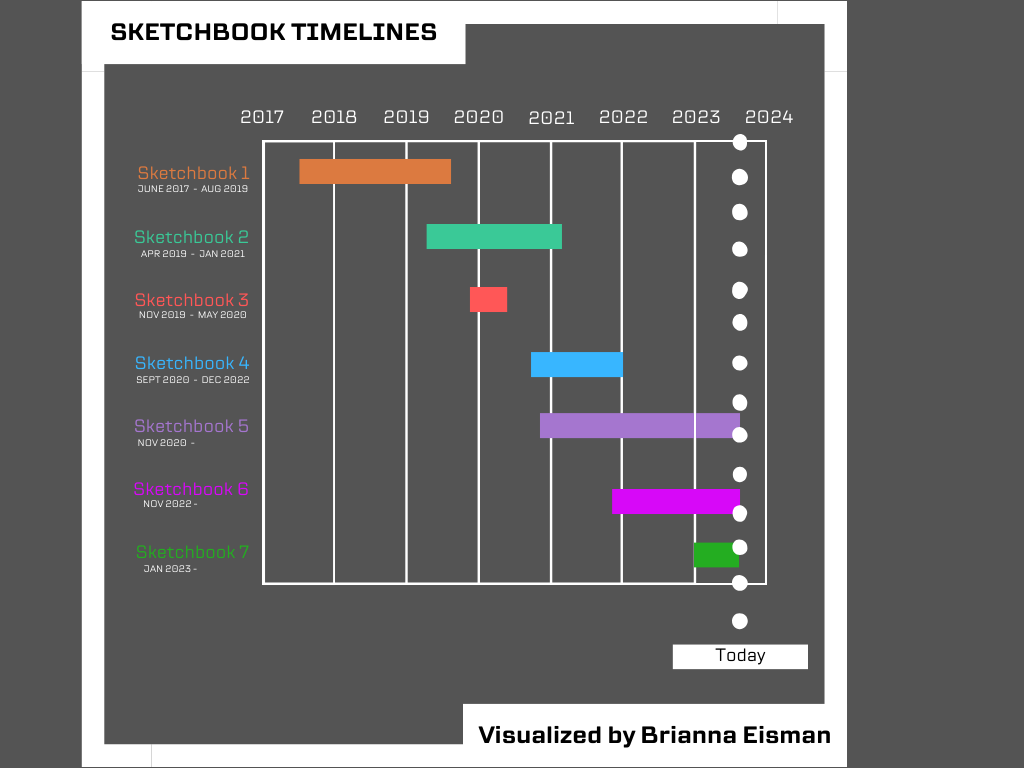
I was introduced to regularly drawing and sketching in a journal/sketchbook in middle school, and I’m happy it’s stuck with me. Aside from jotting down quick ideas and sketches, keeping a sketchbook is a great tool to maintain your creativity. I keep a few different sketchbooks for different reasons:

  • Bullet Journal – My bullet journal is a formal sketchbook structured by month. Each month I choose a color scheme and theme and create tracking pages for my habits, moods, and special moments from that month. For example, I have pages for my phone use, music I listened to recently, seasonal produce, and positive events that occurred throughout the month.
  • Private Sketchbook – This is the sketchbook I don’t show anyone, at least for a few years. I started the sketchbook with the intention of keeping it private, so the drawings are bad and weird and wonky, and that’s okay. This journal erases the expectation of making “good” art and focuses on simply creating and improving my line work, color schemes, and overall creativity.
  • Public Sketchbook – This sketchbook is the exact opposite of the above mentioned “private sketchbook.” I started it with the intention to share it publicly and to create beautiful, finalized works of art. If I mess up or don’t like the way the drawing is going, I’ll draw or paint over it. My idea for this sketchbook is to be able to bring it to art markets with me as a easy way to show my portfolio and range.

Gantt chart showing sketchbook use over time
Sketchbook Timelines by Brianna Eisman

Tip #6: Avoid Burnout by Celebrating Small Wins

When you’re learning to draw it’s easy to compare your work to others, or even compare it to the image you had in your head. Don’t get yourself down on what you can’t do, you have to focus on celebrating the small wins. You won’t become a great artist overnight, it takes a lot of bad drawings and it’s frustrating.

I remember this one portrait painting in art school that I kept painting the face over and over again because I just couldn’t get it right. The acrylic paint was so thick that if you held the canvas up to the light, no light would shine through to the back. This was one of my first experiences with artistic burnout. I hated working on this painting and dreaded going to the class. So, one day I got so frustrated that I took Cadmium Red paint and blocked out the portrait’s face with a big red blob. A few different things transpired:

  1. I shocked myself and remembered that I choose to make art because it makes me happy and puts me in control.
  2. I stopped working on the portrait’s face and focused on other aspects of the painting like the hands, dress, and background. Improving these associated pieces helped improve the painting as a whole.
  3. I gave myself a clean slate to start over on the face and it worked. I was able to repaint the face without the original disproportionate sketch peeking through.

These were three small victories that contributed to finishing the painting. Honestly, I’m not sure where that painting ended up. But, I’m glad I was able to turn my artistic burnout and frustrations into positives. The acknowledgement of small wins help you stay motivated and help avoid burnout.

Tip #7: Avoid Burnout by Seeking Inspiration

Being creative doesn’t necessarily mean making art, there are many ways to be creative.

When burnout strikes, instead of forcing yourself to create, try seeking inspiration through nature, local arts markets and galleries, or connecting with fellow artists. If you’re unable to go outside, scrolling through online art platforms like Pexels, Doodle Addicts, and RedBubble can provide a much-needed boost.

I also enjoy using my connections on social media for inspiration. I’ll do a deep dive into a hashtag I like to find similar artists or scroll the explore page until I find something that stands out to me. Inspiration is all around you, but its up to you to allow yourself to be inspired by it.

Tip #8: Avoid Burnout by Experimenting

Experimenting with different mediums can lead to new ideas.

Maybe your problem isn’t your creativity, but rather that you’ve been working with the same material or medium for too long. I know I go through cycles of painting, drawing and photography. Basically, when I get bored of the one medium, I’ll switch to another, avoiding burnout.

My personal favorite mediums are typically acrylic paint and drawing markers, but I do love to switch things up. I have a box labeled “Misc. Art Supplies” for stuff like henna, ribbons, embroidery floss, beads, tape, magnets, felt, glitter and all sorts of different things. When I’m burned out, or trying to avoid burnout, I’ll trifle through this box and see if anything stands out.

how to avoid burnout as a tired artist
Photo by Jure Širić

Tip #9: Avoid Burnout by Knowing When to Say “No”

You may be at the point in your art career where you are accepting commissions, paid and unpaid. It’s important to know yourself and your limits when accepting commissions. Rushing your art can significantly impact the quality of it. Knowing your abilities and your boundaries can help you avoid burnout.

It’s important to set healthy boundaries and learn to say no to projects or commitments that will stretch you too thin or compromise your creative time.

Tip #10: Avoid Burnout by Hiding your Art

After working a piece for while, you no longer see the work as a whole, rather individual parts that still require work. So, the next time you decide to take a break, move the piece somewhere you won’t be able to see it on a regular basis. For good measure you can also turn the piece upside down.

Tip #4: How to Avoid Burnout by Taking Regular Breaks talked about taking regular breaks to help you recharge and reset your eyes when making art. Tip #10: Hide Your Art is about hiding your art to further help reset your eyes.

When I work on a painting for multiple hours, I have to take a longer break at some point. During the time I’m not painting (could be days, could be weeks) the piece is hidden away in my storage closet. When I eventually resume painting, it’s new again and I can see things I didn’t notice before.

This practice helps you avoid burnout by reinvigorating your art with new perspective and energy.

Tip #11: Avoid Burnout by Prioritizing your Physical Health

This tip is pretty straight forward, but it needs to be said. You are the machine behind the products, and if the machine breaks no products are made. It’s important to prioritize your health above your art. Northwestern defines physical wellness as “recognizing the need for physical activity, healthy foods, and sleep, as well as preventing illness and injury or managing chronic health conditions.”

  • Get enough sleep and recharge
  • Exercise regularly
  • Stay hydrated
  • Create well-balanced and healthy eating habits
  • Seek medical care when needed

Tip #12: Avoid Burnout by Engaging with the Art Community

Whether you are a sculptor, painter, or graphic designer, art is subjectively lonely. The practice is typically done by yourself and reflects your personal experiences, expressions, and style. I’ve mentioned before in this article about how you can help to avoid burnout by visiting museums, galleries, and arts markets. These activities are a great way to connect with the art community.

Connecting with others who share your passion helps you grow. One of the easiest ways you can connect with others is on the internet. I frequent r/ArtistLounge on Reddit. This group posts most anything art like progress photos asking for critiques, art business questions, recommendations for art supplies, and personal troubles that other artists may share.

Engaging with other artists can provide new perspectives, lessen isolation, and make projects more fun.

You can also connect with me and my art community by joining my monthly newsletter! I send out updates about my website, recent art I’ve created, and local galleries and artsy events.

artsydrawings.com newsletter sign up by Brianna Eisman

Tip #13: Avoid Burnout by Avoiding Perfectionism

Perfectionism is a spicy mix of anxiety, expectations, and procrastination. It’s something everyone deals with, no matter the industry.

As an artist, I see perfectionism at both the beginning and end of my projects. To start, I fear failing or messing up or marking the wrong mark on the page. I procrastinate or over-plan to the point that sometimes I have to tell myself “oh my goodness, just paint!!!” I see the same emotions pop up at the end of a project when I struggle with deciding when the piece is truly finished. I even debate varnishing paintings just in case I want to go back in and edit something. I’m stressing myself out when I should be enjoying making art.

Even as I write this article, I’m plagued with anxiety that I’m giving poor art advice or I’m not answering the questions the “right” way. But, that’s the thing with art, there isn’t really a “right” way.

Obviously, if you follow color theory or composition tips or imitate a certain historical style, your art is more likely to please the eye. But, at the end of the day, your art is an extension of your emotions and feelings; it’s subjective. Art focuses ideas and thoughts into shapes and colors that have depth and meaning. Ideas aren’t perfect, so why do you expect your art to be?

There’s this productivity phrase that says “Done is better than perfect.” It’s a motivator for those, like me, who struggle with perfectionism and avoiding burnout, to try and see the bigger picture. Not every piece has to be a masterpiece. When you learn to appreciate the process, and not just the result, you find deeper meaning in art.

How to Avoid Burnout: 13 Tips from A Tired Artist Read More »
How to Thrift Art Supplies: 10 Easy Tips

Getting the right art supplies is very important for making art. Having good quality materials can really make your art look better. But, buying new art supplies can be costly. That’s why many artists like to thrift art supplies second-hand. This process can benefit the environment, save money, and utilize fewer new materials in this way. We’ll discuss how and where to thrift art supplies, as well as the benefits, in this blog post.

art supplies thrift secondhand
Art supplies can get expensive, but don’t let that stop you from creating art.

Understand What Makes Good Art Supplies

When making art, the quality of your art supplies can really matter. So, what makes good art supplies? How can you differentiate between something that’s merely okay and something that’s really good? Let’s break it down.

First and foremost, good art supplies should be durable. This means that they are built to last and can withstand repeated use. For example, a good paintbrush should have a sturdy handle that is comfortable to hold and bristles that don’t easily fall out. Similarly, a good sketchbook should have thick, high-quality pages that won’t easily tear or get damaged by erasers or different types of mediums.

Good art supplies should have a high level of performance. This means that they do their job well. In the case of paint, it should have vibrant, consistent colors and should apply smoothly on the canvas. Likewise, a good pencil should make clear, precise lines and should be easy to erase without leaving smudges or marks. They can be used for a variety of different art projects and styles. This is especially important if you like to experiment with different techniques or if you’re still exploring your artistic style.

Successful artists experiment frequently to see what works and what doesn’t. Choose art supplies that work for you and your style.

However, it’s important to remember that good art supplies don’t always have to be the most expensive ones. Sometimes, you can find high-quality art supplies at thrift stores or second-hand shops. The key is knowing what to look for. When shopping for thrift art supplies, you should always carefully check the condition of the items. Make sure they are not damaged in any way and that they still function as expected.

The best art supplies are the ones that work well for you. Everyone has different preferences and different needs when it comes to their art materials. What one person prefers might not work for another person. So, don’t be afraid to try out different types of art supplies and brands until you find the ones that suit your unique style and needs.

Thrift art supplies may be well loved, but not in the best condition. Be sure to carefully evaluate the materials before purchasing.

Where to thrift Art Supplies

Thrift stores are excellent places to find thrift art supplies second-hand. They often have a wide variety of items, from paintbrushes and sketchbooks to easels and canvases. Here are a few places you might want to check out:

1. Goodwill

Goodwill stores sell all sorts of donated items, including thrift art supplies. You may find brushes, paints, sketchbooks, and much more, all at affordable prices. Their stock changes often, so frequent visits may lead to finding different supplies each time.

2. Salvation Army

The Salvation Army also offers a variety of thrift art supplies. Their prices are usually very reasonable, which is great for artists on a budget. Similar to Goodwill, their inventory changes frequently, so there’s always a chance of finding something new.

3. Local Charity Shops

Local charity shops can be hidden gems for second-hand art supplies. These smaller shops often have a more select range of items. When you buy from them, you’re supporting local charities, which is a wonderful added bonus.

4. eBay

eBay is an online marketplace where you can find almost any type of art supply. There’s a huge range of items, from barely-used to brand-new. However, make sure to read the descriptions carefully and check the seller’s ratings before buying anything.

5. Etsy

Etsy is not just for handmade and vintage items – it also has a section for craft supplies. You can find unique and high-quality used art supplies here, often from fellow artists. As with eBay, keep an eye on seller ratings and reviews to ensure a successful purchase.

6. Facebook Marketplace

Facebook Marketplace is a great platform to find used thrift art supplies in your local area. People in your community might be selling just the thing you need. Besides finding great deals, it’s also a good way to connect with other local artists.

Remember, whether you’re shopping in-store or online, always check the condition of the art supplies before buying. Happy thrifting!

avoid low quality thrift Art Supplies

When you’re looking for thrift art supplies at second-hand stores, it’s really important to take your time and look over everything carefully before you buy it. Here are some easy-to-follow tips on how to make sure you’re getting good stuff:

  1. Look over all the art supplies for any damage: Before you buy anything, make sure you check it over really well. Look for any damage like cracks, dents, rust, or any missing parts. You want to make sure that the supplies are in good shape so you can use them for your art projects.
  2. Try out the thrift art supplies to make sure they still work: Besides just looking them over, you should also try out the art supplies to make sure they work like they’re supposed to. For example, if you’re thinking about buying a paintbrush, check to see if the bristles are in good shape and can hold paint well. If you’re looking at paints, open the tubes to check the color and how smoothly it comes out. This way, you can avoid any surprises when you start using them for your art.
  3. Talk to the thrift store workers about prices: Don’t be shy about asking for a lower price when you’re buying second-hand art supplies. A lot of thrift stores are happy to negotiate prices, especially if something has been there for a while. Ask nicely if they can lower the price a bit, especially if you’re buying a lot of things. If you’re nice to the thrift store workers, you might even be able to get discounts or special deals on art supplies.

By following these steps, you can feel confident about buying second-hand art supplies at thrift stores. Keep in mind that buying used thrift art supplies at these stores is not only a great way to save money, but it also helps to reuse materials that might have been thrown away. So, it’s a win-win situation! You save money, you help the environment, and you might even discover some really cool art supplies that you wouldn’t find anywhere else.

Conclusion:

Thrifting for art supplies is a fantastic way to save money, reduce waste, and discover unique materials for your creative projects. By exploring local thrift stores, researching brands, and carefully evaluating each item, you can build a collection of quality art supplies without breaking the bank. Not only does thrifting benefit your wallet and the environment, but it also adds an element of excitement and surprise to your artistic practice.

Whether you’re an experienced artist looking to expand your materials or a beginner on a budget, consider giving thrift shopping a try for your next art project.

Enjoy this article? Read more from Emily here.

How to Thrift Art Supplies: 10 Easy Tips Read More »
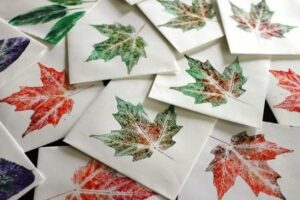
How can drawing make you a more successful artist?

Introduction: How do you become a successful artist?

Why is drawing important? What does it teach you in the long run? Why does it seem like drawing is the beginning step in becoming a successful artist? What does learning about art have to do with becoming a better person? Why is drawing important to being a successful artist?

It is my goal to attempt to answer these questions by the end of the article. Whether you are just starting out, or a seasoned professional artist, it is important to know the base skills that drawing provides. Overall, drawing is important for several reasons, from cognitive and emotional reasons like self expression and to help release stress, to practical domains like improving hand-eye coordination and motor skills.

For a list of tools and mediums I recommend, check out my Favorite Art Supplies list and this article about my favorite paints and drawing materials.

If you are interested in learning more about basic drawing and painting skills, please check out my Art Advice page. If you are a beginner artist, I recommend 5 Easy Drawing Tips and How to Create an Artist Statement. These are great resources to becoming a successful artist.

Drawing is a form of Self expression

Drawing allows individuals to express themselves visually, providing an outlet for emotions, ideas, and experiences that may be difficult to convey through words alone. It’s a form of non-verbal communication that can be powerful and evocative. The article from Arts Academy in the Woods puts it perfectly:

“Art gives us a way to take a painful thought out of our heads and put it onto a page or into a drawing, painting, or performance. It thereby releases the emotions around that thought and gives it less power.”

Brown and white artwork of stressed out woman pulling at her hair
Tension, 12″x10″ graphite and white pen on paper by Brianna Eisman

Drawing inspires creativity

Engaging in drawing stimulates creativity and imagination. It encourages you to think outside the box, explore new ideas, and experiment with different techniques and mediums. I first found a passion for art in school. Whenever I finished a test early, I would flip the page to the back, and doodle, sketch, and draw anything and everything I could imagine. Creativity is a skill, just like riding a bike or learning to code, you must practice being creative and using your imagination.

I believe that you truly become a successful artist when you make a mistake and have to think of a creative solution to fix it. This creative process teaches problem-solving skills, and I have found these skills help in many other areas of my life too.

draw more and become a successful artist! black and white pen marker drawing with organic shapes and lines by Brianna Eisman
Draw More, Sharpie and pen on paper by Brianna Eisman

Drawing improves observation

Drawing enhances observational skills as it requires a keen attention to detail, proportions, shapes, and spatial relationships. Performing blind drawing studies especially expedites this skill, and is key to becoming an experienced and successful artist.

Through practice, successful artists learn to perceive the world more deeply and accurately, honing their ability to notice subtleties and nuances in their surroundings, and in other people.

Drawing is a type of therapy

Drawing has therapeutic benefits and can promote relaxation, stress relief, and emotional healing. Many people, including myself, use art as a form of self-expression and introspection, finding solace and catharsis through the act of creating art. It’s also a sort of meditative process, especially one away from a digital screen.

Drawing is a Universal Language

Visual representations can transcend language barriers. Drawing was first used as a form of communication to pass down verbal stories through generations. The caves in Lascaux, France contain around 2000 Paleolithic cave paintings estimated to be 20,000 years old.

From art and design to science and engineering, drawing serves as a universal language that facilitates communication and understanding across cultures and disciplines.

Drawing helps develop motor skills

Drawing requires precise hand-eye coordination and fine motor skills, which are crucial for overall development, particularly in children. Practicing art helps improve dexterity and control over hand movements, which can have positive effects on writing, typing, and other manual tasks.

This skill is key to accurately translating your intended subject. That’s why drawing is taught first in art school, before other techniques like painting or sculpture. Art builds on itself and the more you draw, the better you’ll paint or sculpt or print.

An easy way to practice these motor skills, especially with children, is to create your own birthday and holiday cards. I share my process and inspiration in the article How to Wish Someone Happy Birthday, from an Artist.

woman using pink pen to draw homemade birthday card. This shows drawing is important in every part of life.
Draw your own birthday cards!

Drawing uses visual thinking

Creating art stimulates visual thinking, allowing individuals to organize and conceptualize ideas in a spatial manner. It encourages the brain to think in pictures, aiding in problem-solving, planning, and critical thinking across various domains. For example, my experience with writing in school started with writing artist statements. I used critical thinking to analyze what I was seeing in the painting, and what message the artist was trying to convey or communicate.

To be a successful artist, means you know how to communicate with your viewers. Whether you communicate through paint or sketches or an artist statement on the wall of the museum, bridging visual skills with written text is necessary.

Studies do show arts education improves academic performance. A study by Brian Kisida and Daniel H. Bowen analyzed “42 elementary and middle schools with over 10,000 third- through eighth-grade students.”

The study found “increases in arts educational experiences significantly reduce the proportion of students receiving disciplinary infractions,” “improve writing achievement” and “increase students’ compassion for others by… appreciation of art.”

Drawing encourages art appreciation

Engaging in the arts yourself, fosters an appreciation for artwork and the creative process, and helps you become a more successful artist. By creating your own artwork, you develop insight into the techniques, styles, and meanings behind other works of art, leading to a deeper understanding and enjoyment of visual culture. For example, once you learn color theory, you start to notice it everywhere; from football teams to soda brands.

To be a successful artist, you need to appreciate the arts. You can do this by learning about and analyzing artwork, attending museums, supporting local artists, and visiting arts markets and galleries. If you are interested in learning more about art history and art styles, I suggest you take this quick quiz I made!

gesture drawing pink and purple sketch showing how to be a more successful artist
Figure 2, 18″x24″ soft pastels on canvas by Brianna Eisman

Reading about art helps too. Searching for this article and learning about the creative process promotes appreciation of the arts. You are becoming a more successful artist simply by supporting my art journey, and inspiring me to continue to share my knowledge and passion for art.

Conclusion

Think of drawing as ‘step 1’ to becoming a more successful artist. Overall, drawing is a versatile and valuable skill that offers numerous cognitive, emotional, and practical benefits. It enriches the lives of artists and contributes to their personal growth and development.

How can drawing make you a more successful artist? Read More »
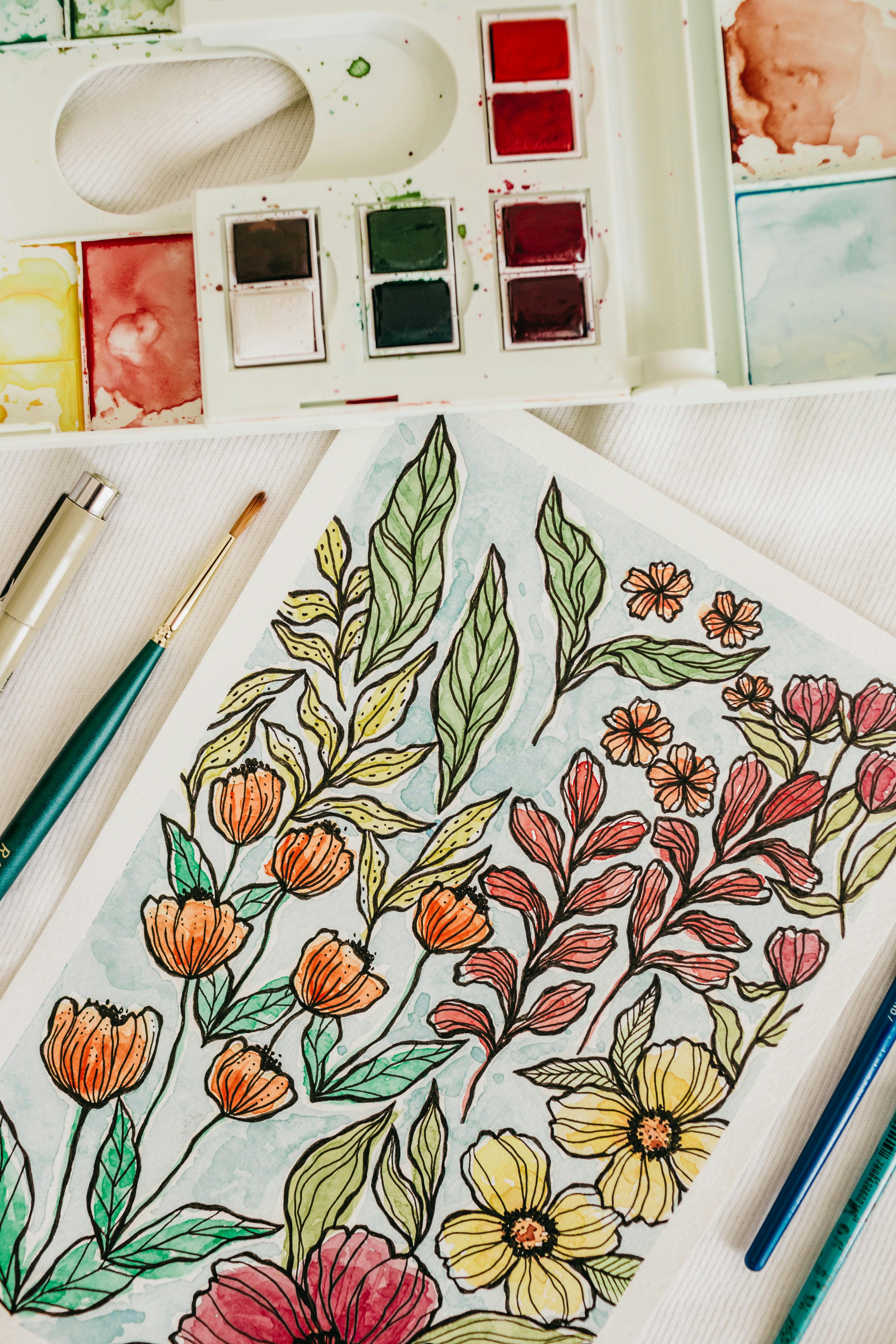
Color Knowledge Tips That Will Make You a Better Artist

Introduction to color knowledge

Color knowledge is a fundamental aspect of art that has the power to evoke emotions, convey messages, and create captivating compositions. Whether you’re an aspiring artist or a seasoned pro, a deep understanding of color can significantly enhance your creative endeavors, and in turn, make you a better artist.

If you are new to the art world, I suggest you take a look at this article on color theory for beginners.

In this artsy article, we’ll dive headfirst into color knowledge, covering essential principles of color theory like primary, secondary and tertiary colors, how to create an effective color scheme, and basics of color mixing.

Color Theory: The Foundation of Creativity

Color Knowledge tip 1: Primary Colors are Red, Blue, and Yellow

Color Knowledge image of primary colors mixing in triple venn diagram to create secondary colors
Red, yellow and blue are the starting point to create more colors like orange, green, and violet.

Primary colors are the foundational hues in the world of color theory, consisting of red, blue, and yellow. These three colors are considered “primary” because they cannot be created by mixing other colors together.

On a computer, these inks are called magenta, yellow, blue, and black. Though, you’ll notice if you run out of black ink, the computer will offer an alternative to mix magenta, yellow, and blue. This mixture is “optical black” in the painting world. I’ll talk more about optical black in the section about mixing paint colors together.

Different combinations of the primary colors create all other colors on the color wheel. The primary colors are essential color knowledge for artists and designers.

If you mix two primary colors, you get secondary colors. For instance, if you mix even parts red and yellow, you will get orange. Blue and red make violet. Yellow and blue make green.

Color Knowledge tip 2: memorize The Color wheel

The color wheel further expands with tertiary colors, created by mixing primary and secondary colors. There are endless possibilities for color exploration in art and design.

Color Knowledge image of the color wheel showing primary, secondary, and tertiary colors
This color wheel shows primary, secondary, and tertiary colors.

Great, now that you’ve grasped the basic concept of the Roy G. Biv color wheel, let’s move on to relationships between colors. For more beginner friendly tips, check out this article on color theory for beginners!

Color Knowledge tip 3: Understand Color Harmony

Next, let’s learn about color harmony schemes like complementary, analogous, and triadic colors. Choosing the right color scheme can add a lot of visual and metaphorical depth to your art.

Complementary color schemes involve pairing colors that are located directly opposite each other on the color wheel. They are literal compliments, such as red and green or blue and orange. This scheme creates strong visual contrast and can make each color appear more vibrant when placed next to its complement. This color scheme is often seen in comic books, illustrations, logos, and even signage on the side of the road.

Color Knowledge image of complementary colors in everyday media like Christmas card, football team, and soda logo
Complementary colors contrast one another and tend to “pop” off the page.

Analogous color schemes use colors that are adjacent to each other on the color wheel, such as yellow, yellow-green, and green. This scheme creates a sense of harmony and cohesion. The analogous color scheme is ideal for creating a peaceful or monochromatic color palette in art or design.

Both The Kiss by Gustav Klimt and my painting inspired by the same work use analogous color schemes to create a sense of calm and peaceful harmony.

Triadic color schemes involve selecting three colors evenly spaced around the color wheel, forming an equilateral triangle. For example, red, blue, and yellow form a triadic color scheme. This scheme offers a balanced and dynamic contrast of colors. Triadic color schemes create visually striking and vibrant compositions.

Spiderman showing a tertiary color scheme of red, yellow and blue
This image shows the selected colors used in the comic book about Spiderman. Red, blue, and yellow make a triadic color scheme.

Color Knowledge tip 4: Know the difference between tint and shade

Saturation and value are essential aspects of color theory illustrated through the use of tints, shades, and tones.

Tints and shades determine values. Tints are created by adding white to a color and shades are formed by adding black to a color. Saturation is determined by tone, in which grey is added to the pure hue to mute the color.

Tints, shades, and tones showing color knowledge
Tints, shades, and tones change the color depending on how much white, black or grey you add to the hue, respectively.

Tints and shades alter both the brightness (value) and intensity (saturation) of colors. The level of darkness or lightness is crucial for creating depth in your artwork and originality in your color schemes.

Color Knowledge tip 5: Color temps (Warm vs. Cool Colors)

Color temperature is a fundamental color knowledge tip that helps convey emotion and moods.

Warm colors, such as reds, oranges, and yellows, are associated with warmth, energy, and excitement. Typically seen in the foreground of the composition, warm colors evoke feelings of passion and vibrancy.

In contrast, cool colors, like blues, greens, and violets, are calming and associated with serenity, tranquility, and a sense of distance. They tend to recede in a composition and can evoke feelings of calmness and introspection.

During Pablo Picasso’s Blue Period, the artist used a predominantly cool color palette. This color scheme included shades of blue (obviously) and blue-green as dominant hues. This deliberate choice of colors conveyed a sense of melancholy, sadness, and emotional turmoil in his artworks.

Color Knowledge image of Pablo Picasso's blue period about how color schemes can help convey emotions
Pablo Picasso’s Blue Period (1901-1904) is one of the most well known artistic uses of how color can signify emotion.

Color can serve as a powerful tool for expressing complex emotions and capturing the human condition.

One of my favorite moments of artists being angsty and non-conformists is the controversy surrounding “Blue Boy.” Painted by English portrait artist Thomas Gainsborough, the 1770 painting includes the unconventional use of blue as the dominant color for the subject’s attire, rather than as a background hue.

One of my favorite moments of artists being angsty and non conformists is the controversy surrounding "Blue Boy" by English portrait artist Thomas Gainsborough. The 1770 painting includes the unconventional use of blue as the dominant color for the subject's attire rather than as a background hue.
Blue Boy by Tomas Gainsborough challenged norms of its time by using blue in the foreground of the painting.

This departure from traditional portraiture raised eyebrows in its time. I find that something I love about learning art history is how artists challenge conventional norms. Sparking debate about artistic choices leads to innovation and change and progress.

Likewise, try to understand the interplay between warm and cool colors. This part of color knowledge is crucial for creating balanced and emotionally resonant color palettes in art and design.

COLOR MIXING

Color Knowledge tip 6: learn to mix Optical black

Color mixing techniques can greatly enhance the range and depth of your artwork. This section will focus on the important concept of “optical black.”

In this painting, I mixed phthalo (Phthalocyanine) blue with burnt umber to create this super dark optical black background to show color knowledge
I mixed phthalo (Phthalocyanine) blue with burnt umber to create this dark optical black background.

Optical black is a “fake black” which looks like black, but is instead created using color.

In art school, we were not allowed to buy or use black paint in our paintings. Turns out, creating optical black teaches you color theory and color mixing much better than simply using black.

Remember back to when we were discussing value and saturation?

Color theory is easy with a cute visual.

So then if Optical Black = Orange + Blue then Shades = Optical Black + Orange + Blue.

Whoever said art doesn’t include math was just a silly-billy.

Anyways, mixing complementary colors can create the visual appearance of black, despite no actual black pigment used.

To start, mix complementary colors from the color wheel. From there, continue to add colors until you reach the optical black that looks best for your chosen color scheme.

For example, if your painting uses yellow highlights, you may want your optical black to look more violet. How does this work?

Using complementary colors trick the color receptors in your eyes to believe the color is black, and not dark violet. This technique achieves rich, natural and deep shadows in your artwork without resorting to flat-looking black paint.

The same effect is achieved when you wear colored ski-goggles.

“[Ski-goggles] are often orange so at the end of the day the orange receptors are tired and the world looks blue.”

stoopidusername

Disney World also uses this technique to make their colors seem more vibrant. The sidewalks are painted red to trick the color receptors in your eye to make the grass and trees seem greener.

Disney World uses complementary colors in their park. The red sidewalks make the grass and trees look greener.

Color Knowledge tip 7: Use complementary colors for desaturation

Additionally, complementary colors tone down the saturation of a color. When you mix a color with its complementary color, the result is a desaturated, or less vibrant, version of the original color.

In the below painting of a skull still life, I chose a color scheme that included a golden yellow ochre and a muted violet. To achieve many of the greyish mid-tones, I chose to mix the yellow and violet together using varying amounts of each color.

This acrylic painting of a skull illustrates the use of optical black in learning color knowledge for painting.
In addition to making optical black using violet and yellow, I chose those same complementary colors as a base color scheme for this painting.

For example, if you have a highly saturated red and you want to reduce its intensity, mix it with a bit of green, its complementary color. The resulting mixture will be a less vibrant shade of red, leaning more towards a neutral gray or brown, depending on the proportions used.

I tend to love using complementary color schemes in my artwork. For this work, I started with a red wash and red base painting, then added the green layers on top to really push the color.
I tend to love using complementary color schemes in my artwork. For this work, I started with a red wash and red base painting, then added the green layers on top to really push the green color forward.

When using complementary colors to desaturate, it’s essential to be mindful of the proportions of added colors. Adding too much of the complementary color can cause the mixture to become too muddy or dark. This is particularly evident in watercolor painting as it is more difficult to lighten the painting back (for watercolors you paint light to dark).

Experimentation and practice will help you develop an intuitive sense of how to mix colors. Color knowledge like optical black and using complementary colors to adjust saturation and intensity can help you become a better artist.

Color Knowledge tip 8: Physically mix colors

Mixing colors is an essential skill for any artist expanding their color knowledge. For this section, we will focus on mixing paint.

Begin with a clean palette and brushes. I also like to have a paper towel handy to dry my brushes. Then, squeeze small amounts of your chosen paint colors onto the palette. I like to use a paper plate as a paint palette, and I place the paint in a circle around the outer edge of the plate.

For example, the photo below features one of the paper plate palettes I used. Notice how I tried to keep the main paint colors clean and mixed my paint towards the center of the plate. You will also notice, I did not use black paint — I mixed an optical black using a dark blue and burnt umber.

I used this paper paint palette for a 4’x4′ garden painting with a lot of colorful flowers.

Next, use a palette knife or brush to blend the colors together gradually, starting with the lightest color and adding small increments of the darker color until you achieve the desired shade. Remember to test your mix on a scrap surface or a corner of the canvas itself to ensure it matches your vision before applying it to your artwork. Practice and experimentation will help you become proficient in creating custom colors for your art.

Follow my social media and newsletters for more tips on how to create a wider array of hues and tones, adding depth and complexity to your work through color knowledge.

Concluding color knowledge for now…

Color knowledge is a powerful tool for artists, allowing us to express ideas more effectively and create art that resonates with audiences. By mastering color theory, you can elevate your art to new heights. So, embrace the world of color, experiment fearlessly, and let your creativity flourish on the canvas of your imagination.

Understanding color theory and mixing colors is like having an artist’s secret toolkit. Whether you’re gently blending opposite, or complementary, colors to tone down the saturation or using clever mixtures to create “optical black,” these techniques are simply invaluable. I do want to remind you art lovers that there is so much more to know about color. If this is something that really interests you, please comment, message me, or join my newsletter to read more! I love color!!!

By grasping these fundamentals, you not only make your artwork visually engaging but also open doors to express intricate emotions and stories through color. So, dive into the world of color knowledge, and watch your art flourish with richer, more meaningful color scheme choices.

This is a super easy exercise for testing your markers to show what colors work and which markers have dried out. It also uses color knowledge to arrange the colors in a rainbow style order.

I realized this article was getting long, so I had to chop it up to allow for more in depth discussion of color knowledge. Trust me, there will be more color themed articles!

Color Knowledge Tips That Will Make You a Better Artist Read More »
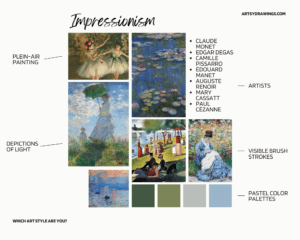
Scroll to Top
Cart
0
Add Coupon Code
Subtotal