drawings

The Ins & Outs of 2026: Artsy Trends Forecast

Every January, the internet hits refresh and somehow finds a new “right” way to make art. A right aesthetic. A right color palette. A right overpriced art supplies. Sure, it’s fun to check out Pinterest’s artsy trends and laugh at the irony of Pantone’s 2026 Color of the Year. But if the internet brought you here, I think you’re looking for something a little more than just artsy trends.

At Artsy Drawings, we’re starting 2026 with intention to create art that moves and communicates. Please still make fun silly crafts, but please do it in a way that saves you time, energy, and money. I’m not going to give advice or say the artsy trends are to buy the next new art kit, because let’s face it — your craft drawer/room is already bursting with supplies.

This is the year you reuse what you already have, make art that feels good to you, and stop side-eyeing yourself (or others) for not keeping up. You don’t have to participate in every trend to be a “real” artist, just like you don’t have to consistently make good art every single time.

Consider this your official Artsy Drawings permission slip as we ring in the new year (cue confetti made of scrap paper!) These are the 2026 Artsy Drawings Ins & Outs—not as commandments, but more like artsy trends guidelines. Take what resonates. Leave what doesn’t. Carry the good energy into the next chapter and have a Happy New Year!

winter solstice ins and outs of 2026 artsy trends

Artsy Trends OF 2026

IN #1: Craft Just for Fun

Not everything needs a deep backstory about your trauma. Sometimes it’s really fun to make art that is pretty, and that’s it. Crafts are meant to spark joy and comfort. From making homemade cards to making silly paintings of your summer slushie, crafts are expressively fun and lighthearted and sometimes that’s all you need. This year, we’re officially done pretending fun needs justification. If it makes you smile while you’re making it, it’s doing its job.

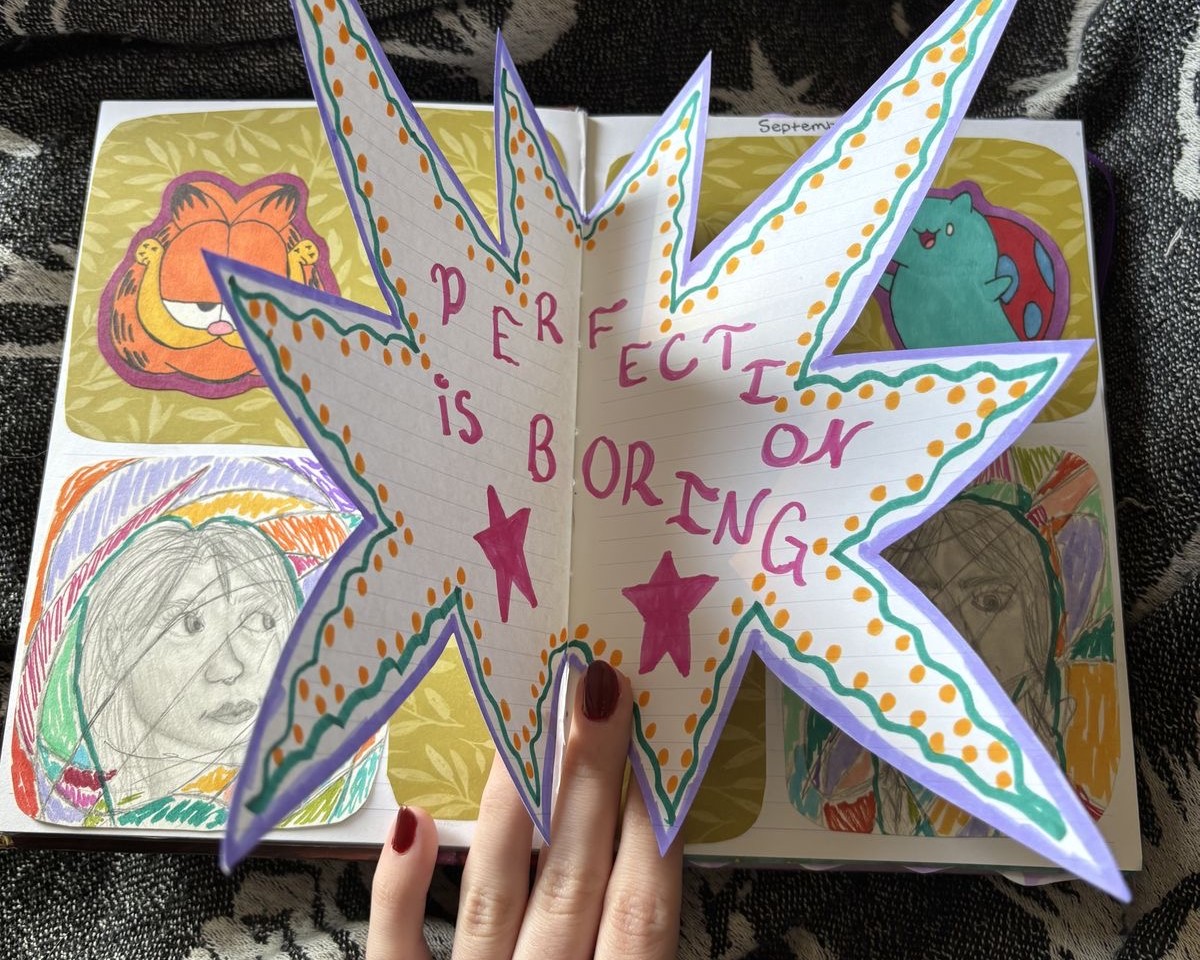
IN #2: Create Imperfect sketchbooks

Your sketchbook or journal is not a performance. It’s not supposed to look like it was printed in a factory or photographed for a brand deal. Smudges, ink spills, coffee marks, and tears mean you used it. Crooked lines mean you are human. Misspelled headers mean you were thinking faster than your pen could keep up. The more “imperfect” your sketchbook is, the more honest it probably is, and for 2026’s artsy trends, honesty beats aesthetic pressure every single time.

IN #3: Reuse Supplies for Multiple Projects

One paint set does not have a single destiny, and I think I still have acrylic paint from high school hiding away because I despise using Cadmium Red.

The new year artsy trends include reusing your art supplies! Using the same supplies across multiple projects isn’t lazy, it’s resourceful, creative, and makes you iconic and sustainable. It forces you to problem-solve and experiment instead of constantly buying something new. Supplies that look worn, ink-stained, and a little chaotic are proof they’re being loved.

IN #4: Be an Artist who Supports Artists

Art thrives in community, not competition. Sharing another artist’s work, tagging designers, crediting inspiration, and buying from small arts markets and shops keeps the creative ecosystem alive. No one loses when artists support each other, everyone grows. This year, we’re choosing collaboration over comparison and cheering louder for people doing cool things.

Speaking of, go check out some of my favorite artists I found this year:

Vahid Fazel – Vahid is an Iranian-Canadian visual artist, filmmaker, and illustrator based in Toronto. According to his website, his artwork “bridges cultural narratives and universal themes through animations, compelling illustrations, and prints.”

Annie Raymond – Annie is a wildly talented Georgia-based artist who works mainly with felt, making colorful, layered pieces that feel playful and a little nostalgic. With a background in teaching elementary art, she draws on that playful spirit and curiosity in everything she makes.

Lauren Gross – Lauren is the incredible artist behind Send Love Studio who makes warm, heartfelt pieces full of color, texture, and everyday beauty. Her work feels playful and personal with little calligraphy reminders of joy, connection, and faith.

IN #5: Know the Basics of art

Know the basics. Learning color theory, the principles and elements of design, and the rule of thirds gives your art a solid foundation to build on. These tools help you make intentional choices about balance, contrast, and composition, so your work communicates the way you want it to. Mastering the basics doesn’t limit creativity, it frees it, letting your ideas shine while still feeling cohesive and visually satisfying. Even small shifts, like adjusting where a focal point sits or experimenting with complementary colors, can make your pieces feel more polished and intentional without losing their spark.

If you’re interested in learning more about color theory, I recommend you take a look at Easy Color Theory for Beginners and Color Knowledge Tips that will Make you a Better Artist. Likewise, the article How to Create an Artist Statement discusses words you can use to make you sound more like an artist, including the elements and principles of design. You can also learn about perspective in the article titled Making Mountains Small and Worms Feel Tall.

OUT #1: Using a Whole Sheet of Paper for a Tiny Cut-Out

If the final shape is the size of a coin, the paper sacrificed should not be the size of a notebook page. This year’s artsy trends are about thinking ahead, trimming scraps first, and respecting materials. Your future self (and your scrap bin) will thank you.

OUT #2: Buying Art Supplies Just Because They’re Trending

Artsy trends move fast. Your preferences don’t, and trust me, that’s a good thing. If you didn’t like gouache last year, a viral video isn’t going to magically change that. The same goes for acrylic paint pens, chunky oil pastels, gel printing plates, alcohol markers, or the latest “must-have” sketchbook everyone is suddenly obsessed with.

Buying supplies you don’t enjoy using doesn’t make you more creative; it just makes your art supply drawers more crowded and your wallet lighter. That expensive set of markers won’t fix the fact that you actually prefer pencil. The ceramic palette won’t help if you hate cleaning it. Spend money on tools that fit your process, your habits, and your style—not someone else’s aesthetic, not a TikTok cart haul, and definitely not guilt.

For the thrifty artist, check out these artsy articles on How to Thrift Art Supplies and No-Buy DIY Crafts Using Stuff You Already Own.

OUT #3: Copying other artists’ work

It should be obvious at this point, but don’t copy other artists’ work. You can gather inspiration, but if it feels wrong in the pit of your heartless soul, it most likely is wrong.

Another topic has come up more frequently lately and I want to reiterate an important note: AI art does not steal artist’s work. I know this is a controversial take, but as an artist myself, I believe AI art is not inherently art. An AI model doesn’t understand the nuances behind creating art, it just predicts what it thinks the audience wants. Artists don’t just reproduce — we choose, edit, and improvise. Artists can problem solve and come up with creative solutions and intentions behind creating a painting or an image or whatever. Artificial intelligence lacks this very human internal pursuit to express.

OUT #4: Gatekeeping Techniques & Styles

Art is not a secret club with hidden rules. People are allowed to ask questions, try things the wrong way and learn in public. Gatekeeping doesn’t protect art, it limits it. The more people feel welcome to create, the richer the art world becomes.

OUT #5: Hustle Culture Disguised as “Motivation”

You do not need to turn every sketch into a product or every hobby into a brand. Not all artsy trends need to be photographed and posted. Rest is productive. Play is productive. Burnout is not proof of dedication, it’s a warning sign. In 2026, we’re letting creativity breathe instead of abusing it for some hustler output.

If you are a burnt-out artist, I recommend you taking a peak at my artsy article: How to Avoid Burnout: 13 Tips from A Tired Artist.

IN #6: Visit Museums & Galleries

In 2026, we are visiting art houses like museums, galleries, arts markets, and small shops!

Experiencing art in person, whether timeless classics or contemporary pieces that look like splatter paint brain rot, connects you to the history and evolution of creativity. Learning and experiencing art history in person helps you understand how artists use color, composition, and storytelling to communicate ideas. Seeing how others solve visual problems gives you tools to make smarter, more confident choices in your own work. Even one painting or sculpture can inspire new approaches, spark fresh ideas, and deepen your creative perspective.

IN #7: Warm up Your Artsy Muscles & Practice

Warm up your artsy muscles, not the ones you flex in the mirror when no one is looking, but the ones that actually builds your art skills. Quick sketches, doodles, or small studies get your hand and eye in sync, loosen your style, and make it easier to dive into bigger projects with confidence.

Every sketch, every brushstroke, every “failed” piece is a step forward, teaching you something your brain can’t learn any other way. Progress doesn’t happen in big leaps. it happens in the small, repeated motions, in showing up day after day. Embrace the messy, the awkward, and the imperfect, that’s where real growth and skill live.

IN #8: Draw/Paint from Life

Draw and paint from life whenever you can, it will seriously help your hand-eye coordination. Observing real people, objects, or landscapes trains your eye to see shapes, light, and color in ways photos can’t. Start with simple still lifes like a bowl of fruit or a vase of flowers. You can also sketch people in a cafe to learn posture, gesture, and proportion.

Artists like John Singer Sargent mastered this approach, capturing movement and life in every brushstroke. Working from life teaches you to notice subtle details that make your art feel alive and immediate and real.

IN #9: Be a Professional

In the words of Paige Mills and Simone Christen with the Artwork Archive, “in order to be successful in the art world, the demands on an artist are high. Therefore, it’s crucial to run the administrative side as efficiently and professionally as possible.”

Calling yourself a professional artist means taking ownership of your marketing, sales, and online presence, and treating them with the same care you give your work. Developing your style and listening to your inner voice is vital, but so is building professionalism through social media, a website, an online portfolio, and consistent branding. Being a professional artist also means cultivating resilience: setbacks and frustrations are part of the process, and maintaining a positive, curious, and experimental mindset will keep your creativity, and your career, moving forward.

IN #10: Remembering the Artist’s Role

An artist’s role is more than slinging paint and getting messy: it’s about reflecting society and casting a glow of change.

Artists get the choice to create a message and determine how it could be understood and interpreted. I know engineers who consider themselves artists because they design or code in a way that helps translate the data in a different way. This choice, to not only communicate, but to do so in a new or different way, is what really pushes a true artist. They rebel against the norms or challenge ways of communicating, and in turn, this turmoil is reflected positively in society as experimentation and eventually, progress.

perspective in art artsy drawings brianna eisman worms eye view ins and outs of 2026
Not everything has to be seen from eye level. Looking up, literally and creatively, changes everything. Worm’s-eye view perspectives invite curiosity, drama, and storytelling. They remind us that art doesn’t have to be safe or expected to be interesting.

OUT #6: Consuming more than you Create

A lot of new art doesn’t hit as hard because it’s made for an audience that’s used to quick swipes and fast likes. We’ve been trained to scroll past things in seconds, even when they’re beautiful or meaningful. It’s not really our fault—we’re just overwhelmed. But that’s the problem: art is getting lost in the noise. People don’t take time to sit with it, to think about what it’s saying or what went into it. It’s like eating a steak in two bites and wondering why it didn’t taste like anything. When everything is content, art starts to lose its weight. It becomes something to consume, not something to connect with.

OUT #7: Art Hauls

You don’t need 47 versions of the same brush. You need time, practice, and permission to slow down.

Art hauls are out. Watching someone unbox dozens of supplies might feel satisfying, but owning a pile of stuff doesn’t make you a better artist. Inspiration doesn’t come from quantity, it comes from using what you have, experimenting, and figuring out what actually works for you.

OUT #8: Pretending You’re “Too Late” to Start

There’s no deadline for creativity. That feeling of being “behind” is just fear sneaking in. Your ideas, sketches, and experiments are unfolding exactly when they should—there’s always time to start, and you’re right on schedule.

OUT #9: Destroying Art

Art is being destroyed. The accused “war crimes” include “intentionally directing attacks against buildings dedicated to religion and historic monuments.”

When art starts to feel disposable, it’s easier to destroy. Not just by ignoring it, but by literally erasing it—through war, censorship, or indifference. If people can’t recognize the value of a painting or sculpture in peace, what happens to that art in times of conflict? The less we appreciate it, the less we fight to protect it.

I know that what’s happening is wrong and from an artist’s standpoint, the destruction of art, history, and society feels like a step backwards for humans. But, what can I do? I’m a 25-year-old U.S. painter with internet access and a sink full of dishes. I should stop worrying about things outside my control, so I buy eggs when they drop below $4 and dye them silly colors in the summertime, because I couldn’t afford eggs during Easter.

I know how to hold a paintbrush better than a gun. My hands were made for color, not combat.

OUT #10: Fear of “Ruining” a Page

Pages exist to be used. Sketchbooks are tools, not heirlooms. The only truly wasted page is the one you’re too afraid to touch. Messy pages mean momentum.

One of my favorite artsy tips to avoid burnout is learning to overcome perfectionism. As an artist, I see perfectionism at both the beginning and end of my projects. To start, I fear failing or messing up or marking the wrong mark on the page. I procrastinate or over-plan to the point that sometimes I have to tell myself “oh my goodness, just paint!!!” I see the same emotions pop up at the end of a project when I struggle with deciding when the piece is truly finished. I even debate varnishing paintings just in case I want to go back in and edit something. I’m stressing myself out when I should be simply enjoying making art.

Art is not valuable because it’s polished or impressive. It’s valuable because it meant something to the person who made it. Expression will always matter more than perfection.

artsy trends bujo 2026 ins and outs bullet journal december art journal sketchbook

Final Thoughts on 2026 Artsy Trends

As we move into 2026, the most important thing to remember about artsy trends is that you get to choose how (and if) you participate in them. Artsy trends can be inspiring, playful, and even motivating—but they’re not rules, and they’re definitely not requirements. The goal isn’t to do more art or buy more supplies. The goal is to make art more thoughtfully.

Being intentional with what you’re crafting means slowing down long enough to ask: Do I actually enjoy this? Will I use this? Does this align with how I want to create? Intentional design is about purpose over pressure. Choose materials that last, reuse what you already have, and design projects that feel meaningful instead of performative.

Sustainability isn’t just about the environment (though that absolutely matters). It’s also about sustaining your creativity. When you reuse supplies, avoid overconsumption, and let go of hustle culture, you create space for ideas to grow naturally. When you take inspiration without copying, give credit generously, and support other artists openly, you help build a creative community that actually lasts.

So take inspiration from artsy trends, but don’t let them dictate your process. Let them spark ideas, not your anxiety. Create with curiosity, design with intention, and treat kindness as a non-negotiable part of your practice. That’s the kind of trend worth sticking with, this year and every year after.


Join my Monthly Newsletter for more Artsy Trends

Subscription Form

The Ins & Outs of 2026: Artsy Trends Forecast Read More »

100 Surreal Drawing Ideas for every artist

Staring at a blank page, waiting for inspiration to strike, is the worst. You have the skill, the motivation (kind of), and the urge to create, but… what do you even draw? Whether you’re sketching for fun, practicing your craft, or just trying to break out of an art block, having a list of creative drawing ideas at your fingertips can make all the difference. Sometimes, all you need is a single spark—an unusual prompt, a fresh challenge, or a concept that takes your art in an unexpected direction.

Below is a carefully curated list of 100 creative drawing ideas designed to help you experiment, refine your style, and, most importantly, enjoy the process.

Introduction

There’s no wrong way to use this list—pick one randomly, challenge yourself to a daily drawing spree, or combine ideas to create something truly unique. These prompts are broken into different categories to suit your mood and style: fantasy, portraiture, nature, surrealism, and more.

For example, if you’re drawn to character design, you might love the idea of sketching a cyberpunk warrior or a historical figure reimagined as a fantasy character. If you prefer atmospheric scenes, try creating a neon-lit city on a rainy night or an enchanted forest with glowing plants. Feeling conceptual? Play with gravity-defying landscapes or melting clocks dripping into dreamscapes. The goal is to let your creativity take the lead—these ideas are just the launchpad.

Having the right art supplies is essential for bringing your creative visions to life—whether you’re sketching quick ideas or crafting detailed masterpieces. Quality materials like smooth sketchbooks, vibrant pencils, and blendable markers not only make the process more enjoyable but also help your artwork look its best. Below are some of my favorite and cheap art supplies—click through my Amazon affiliate links to grab them and support my work at the same time!

If you’ve gone through the list, and are still artistically stumped, check out my portfolio or other artsy articles on ArtsyDrawings.com.

Fantasy & Floral Drawing Ideas

  1. A wilted flower coming back to life with magical energy
  2. A giant sunflower with an eye in the center
  3. A fairy sitting inside a blooming rose
  4. A cactus growing out of a teacup
  5. A tree with glowing blossoms that only bloom at night
  6. A tiny village hidden inside a hollow tree
  7. A mushroom house with little windows and a smoking chimney
  8. A snail with a succulent growing from its shell
  9. A flower that changes shape with the seasons
  10. A floating lily pad city in the middle of a peaceful lake

Mystic Nature Scenes Drawing Ideas

pigeon wearing yellow rain boots drawing ideas for artsy drawings
Pigeon in Yellow Rainboots by RM
  1. A twisting tree with roots reaching out like hands
  2. A hidden waterfall behind a wall of vines
  3. A forest path glowing under the light of fireflies
  4. A deer with antlers covered in hanging moss and flowers
  5. A secret garden only visible under the full moon
  6. A butterfly with flower petal wings
  7. A fox with fur that looks like swirling leaves
  8. A bird made entirely of vines and blossoms
  9. A mermaid whose tail turns into flower petals
  10. A rabbit with dandelion fluff instead of fur

Surreal Landscapes Drawing Ideas

  1. A tree growing upside down from the sky
  2. A crystal geode splitting open to reveal a tiny garden inside
  3. A flower field that turns into stars at night
  4. A floating rock covered in grass and wildflowers
  5. A mystical pond that reflects a different world than the one above it
  6. A garden where every flower glows a different color
  7. A river winding through the sky like a ribbon
  8. A giant daisy acting as an umbrella for a tiny creature
  9. A treehouse hidden among cherry blossoms in full bloom
  10. A stormy sky where lightning forms the shape of blooming flowers

Celestial & Atmospheric Drawing Ideas

street view drawing ideas daily sketch by maria
Yellow Street View Drawing Ideas by Daily Sketch by Maria
  1. A moonflower opening under a glowing full moon
  2. A rainbow forming from the mist of a magical waterfall
  3. A sunset where the clouds are shaped like giant blooming roses
  4. A path made of floating lotus flowers leading to an unknown place
  5. A glacier with frozen flowers trapped inside the ice
  6. A bird with crystal feathers that glow in the dark
  7. A forest where every tree has a different colored bark
  8. A giant lily pad floating through the sky like an airship
  9. A desert where the cacti are made of glass and reflect the stars
  10. A floating island with a single, massive cherry blossom tree

Whimsical Animals & Insects Drawing Ideas

  1. A hummingbird with wings made of flower petals
  2. A swan whose feathers turn into leaves when it spreads its wings
  3. A moth with wings that resemble dried autumn leaves
  4. A fox with a tail made of ivy and wildflowers
  5. A butterfly with stained-glass wings that reflect flowers in the light
  6. A river that glows in the dark, winding through a field of lavender
  7. A forest where the trees have golden leaves that never fall
  8. A moss-covered ruin overtaken by vines and blooming flowers
  9. A lake with floating flowers that light up like lanterns at night
  10. A meadow filled with oversized mushrooms and glowing spores

Dreamy Botanical Drawing Ideas

morning glory drawing ideas cami gonzalez calligraphy
Morning Glory Drawing By Cami Gonzalez
  1. A teapot pouring a stream of water that turns into a waterfall
  2. A giant sunflower bending down to whisper to a tiny creature
  3. A floating flower shop with bouquets tied to balloons
  4. A bridge made entirely out of intertwined vines and roses
  5. A giant dandelion puff releasing wishes into the sky
  6. A succulent terrarium with tiny people living inside
  7. A flower-covered skull as a symbol of life and rebirth
  8. A morning glory vine wrapping around an old, forgotten key
  9. A rose bush growing in the shape of a heart
  10. A water lily with a tiny fairy sleeping on its petals

Geometric & Abstract Conceptual Drawing Ideas

  1. A single line forming the silhouette of a city skyline
  2. Abstract shapes blending into each other to create a mysterious figure
  3. Geometric forms representing the concept of chaos
  4. A spiraling pattern that slowly morphs into a bird
  5. A circular pattern that gets increasingly disorganized the closer you look
  6. A series of interconnected dots forming a complex, surreal network
  7. A series of mismatched patterns swirling together into one image
  8. A minimalist sketch of a crowded subway, showing only the outlines of passengers
  9. A futuristic city skyline where every building is a different distorted shape
  10. A chaotic mix of black ink splatters and precise pencil details

Organic & Flowy Drawing Ideas

colorful Non-Local Pear Drawing ideas by Erika Lamar Buentello artsy drawings brianna eisman
Non-Local Pear Drawing by Erika Lamar Buentello
  1. A plant growing through a cracked window, creeping upward
  2. A half-drawn face with its features slowly dissolving into thin air
  3. A hollowed-out human figure with intricate patterns spilling out from inside
  4. A body with transparent parts that reveal a hidden world inside
  5. A melting object dripping into a chaotic pool of shapes
  6. A liquid that’s spilling from a cup, but instead of water, it’s made of words
  7. A deconstructed object—like a chair—rearranged into an abstract form
  8. A person holding a transparent sphere, and inside it, a completely different world
  9. A tangled mess of strings, each representing different emotions or concepts
  10. A floating object that shifts in shape the longer you look at it

Human & Emotional Drawing Ideas

  1. A faceless person standing in a crowd of shadows
  2. Two hands reaching toward each other, but never quite touching
  3. A hollowed-out human figure with intricate patterns spilling out from inside
  4. A body with transparent parts that reveal a hidden world inside
  5. A person holding a transparent sphere, and inside it, a completely different world
  6. A maze drawn inside a person’s silhouette, with no clear beginning or end
  7. A floating object that shifts in shape the longer you look at it
  8. A crumpled paper drawing, with creases creating a 3D effect
  9. A human figure dissolving into an array of fine, intricate lines
  10. An empty frame with only a shadow inside, suggesting what’s missing

Minimalism & Surrealism Drawing Ideas

  1. A blank page slowly getting filled with random scribbles
  2. A melting object dripping into a chaotic pool of shapes
  3. An open hand with light streaming out between the fingers
  4. A single brushstroke that seems to form a silhouette but fades into abstract swirls
  5. A sketch of a tree with roots that are made of tangled thread
  6. A bird with crystal feathers that glow in the dark
  7. A liquid that’s spilling from a cup, but instead of water, it’s made of words
  8. An abstract wave crashing into a geometric structure, like a solid wall
  9. A figure partially submerged in water, with only certain parts of them visible
  10. A cloud of dust swirling around an undefined object

Conclusion

At the end of the day, the best drawing ideas are the ones that excite you. Don’t be afraid to put your own spin on these prompts—merge ideas, push boundaries, and experiment with styles you wouldn’t normally try. The more you create, the more your artistic voice develops, and that’s where the real magic happens.

So grab your sketchbook, pick an idea, and start drawing! Who knows? That one random prompt might just lead to your next masterpiece.

Join my monthly newsletter!

Sign up for my monthly artsy newsletter and stay up to date with all things from ArtsyDrawings.com

*

100 Surreal Drawing Ideas for every artist Read More »

Why Art Is Essential to Humanity and How It Makes the World Better

When someone asks why art is essential or important, you might struggle to explain it. It’s not just about pretty pictures or sculptures; art is a powerful need that improves our lives and makes the world better.

Some people see art as a drain on resources that could be used for more important things. They say: “What’s the point of art?”, “Why spend time and money on art?” and “art isn’t a real job.” They may say “it’s not like air or food where it hurts or kills you to go without it.”

How do you handle the dismissal of art? How can we stand up to naysayers and feel that what we do is meaningful?

Why Art is Essential: Art Is Our Shared History

Art has been with us since the dawn of human existence. From the earliest cave paintings to the masterpieces hanging in museums today, art is how we’ve documented our lives, expressed our beliefs, and passed down stories through generations.

Lascaux is famous for its Palaeolithic cave paintings and drawings, found in a complex of caves in the Dordogne region of southwestern France, because of their exceptional quality, size, sophistication and antiquity. Estimated to be up to 20,000 years old, the paintings consist primarily of large animals, once native to the region. This is why art is essential to humanity.
Hall of the Bulls in Lascaux, France

The ancient Lascaux cave paintings in France, created over 17,000 years ago, are more than just depictions of animals. They provide a window into the lives, thoughts, and experiences of early humans. These images are not just art—they are records of a culture, telling us what was important to our ancestors, how they viewed the world, and what they valued. This art is essential to understanding our ancestors. Without these artistic expressions, our understanding of prehistoric life would be far more limited.

As civilizations evolved, so did their art. The Renaissance period, for example, was a time when art flourished as a means of exploring humanity, religion, and the natural world. Leonardo da Vinci’s Mona Lisa and Michelangelo’s Sistine Chapel ceiling are not only remarkable for their technical skill but also for the way they encapsulate the intellectual and spiritual currents of their time.

The School of Athens represents all the greatest mathematicians, philosophers and scientists from classical antiquity gathered together sharing their ideas and learning from each other. These figures all lived at different times, but here they are gathered together under one roof. Art style is classicism
School of Athens by Raphael

These works reflect a society that was rediscovering classical ideas, questioning the nature of humanity, and celebrating the beauty of the human form. They are more than just paintings—they are symbols of an era that continues to influence us today.

Throughout history, art has served as a mirror, reflecting the values, struggles, and triumphs of the people who created it. Whether it’s the monumental sculptures of Ancient Greece, the religious icons of the Byzantine Empire, or the protest art of the 20th century, each piece tells a story.

When we study art history, we are not just learning about art; we are learning about ourselves, our collective past, and the forces that have shaped our world. Art keeps our history alive, reminding us of where we’ve come from and helping us to understand who we are today. Without art, the richness of human history would be lost, and our connection to our ancestors would be much weaker.

Personally, I think this feeling of lost humanity has influenced a fear of computer generated art and AI art. AI’s influence on the art community is controversial, but fascinating regardless.

Why Art is Essential: Art Connects People

One of the most powerful aspects of art is its ability to connect people, regardless of language, culture, or time period. Art speaks a universal language that everyone can understand on some level, even if they don’t share the same background or experiences. Art is essential as a universal communicator.

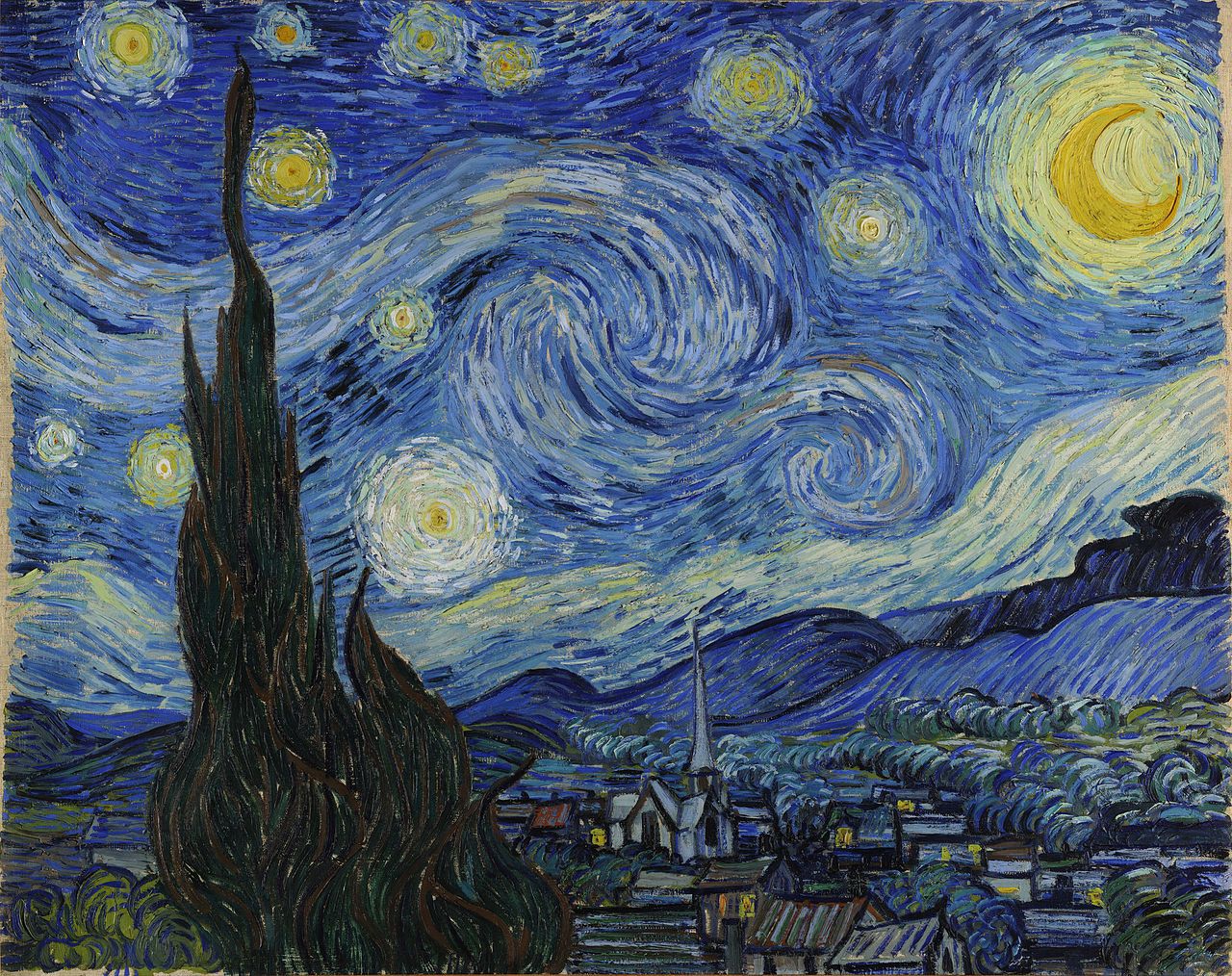
For instance, consider how people from all over the world are drawn to the works of Vincent van Gogh. His vibrant colors and emotional brushstrokes communicate feelings of loneliness, joy, and wonder that are universally relatable. You don’t need to know anything about his life to feel something when you look at Starry Night or Sunflowers.

Vincent Van Gogh's Starry Night painting is a good representation of why art is essential to understanding human connection and emotion.
Vincent Van Gogh’s Starry Night painting is a good representation of why art is essential to understanding human connection and emotion.

Similarly, Katsushika Hokusai’s The Great Wave off Kanagawa has become an iconic image recognized around the globe. Even though it was created in Japan during the early 19th century, its bold lines and dynamic composition capture the powerful force of nature in a way that speaks to people everywhere.

The Great Wave, by Brianna Eisman inspired by The Great Wave off Kanagawa
Print by Hokusai. Both works of art show the immense feeling of man vs. nature which connects all humans. This is why art is essential.
The Great Wave, by Brianna Eisman inspired by The Great Wave off Kanagawa
Print by Hokusai. Both works of art show the immense feeling of man vs. nature which connects all humans.

The wave, poised to crash down with unstoppable energy, evokes both awe and respect, reminding us of the universal human experience of facing forces beyond our control.

I made this painting using gouache paint on paper. Check out more of my art by looking at my Portfolio.

Why Art is Essential: Art Is Good for Your Mind and Soul

Art plays a crucial role in our mental and emotional well-being. It’s not just something to look at or listen to—it has a deep impact on how we think, feel, and live our lives.

Engaging with art can reduce stress, boost creativity, and improve our overall mood. When you draw, paint, or write, you’re not just creating something new; you’re also processing your thoughts and emotions in a healthy way. This is why art therapy is often used to help people deal with trauma, anxiety, and depression.

how to paint a flower painting - artist set up showing why art is essential
High Angle Shot of a Woman Painting by Leeloo The First

Even if you’re not creating art, simply surrounding yourself with it can have a profound effect on your well-being. Think about how you feel when you listen to your favorite song or watch a movie that really moves you. Art has the power to transport us to another world, offering a temporary escape from everyday worries.

Art has the power to inspire us, giving us new ideas and perspectives that we might not have ever considered. This is why so many people find comfort and joy in visiting art galleries, reading books, or watching films. Art is essential because it enriches our lives by making us more mindful, empathetic, and imaginative.

If you are new to art, I suggest you take a look at these articles:  5 Easy Drawings Tips,  How to Create an Artist Statement, and Easy Color Theory for Beginners.

Why Art is Essential: Art Enhances Our Surroundings

Art isn’t just something to be admired in a museum—it’s all around us, enhancing our surroundings and making our environments more enjoyable. Public art, architecture, and design can transform ordinary spaces into places of beauty and inspiration.

Take the Eiffel Tower, for example. It’s not just a structure; it’s a symbol of Paris, a work of art that has inspired countless artists, photographers, and dreamers. Or think about the colorful murals you might see in your city. These pieces of street art don’t just brighten up a wall; they add character to a neighborhood, tell a story, or make a statement. Street art decorating your community shows that art is essential to beautifying spaces.

form follows function showing how design is a reflection of reality. Art is essential in design and functionality.
“Form Follows Function” explains how design is a reflection of reality and how art is essential in merging design with functionality.

Good design in everyday objects—whether it’s a well-crafted chair, a beautifully illustrated book, or an innovative smartphone—also reflects the importance of art in our lives.

When art and design are integrated into the things we use and see every day, it elevates our experiences, making life not just functional, but also beautiful. It reminds us that art isn’t something separate from life; it’s a part of it, enriching our daily routines and surroundings in ways we might not always notice, but would surely miss if it were gone.

Why Art is Essential: Art Drives Social Change

Throughout history, art has been a powerful force for social change, challenging the status quo and inspiring people to think differently about the world.

Artists have always been at the forefront of movements for justice, equality, and freedom, using their work to highlight societal issues and provoke action. The Harlem Renaissance of the 1920s is a perfect example of this. This cultural movement was not just about creating beautiful works of art; it was about redefining African American identity, celebrating Black culture, and challenging the racist stereotypes that had dominated American society for centuries.

Norman Lewis was attuned to the importance of jazz and blues music, especially growing up in Harlem during the heyday of the Harlem Renaissance. It shows how art is essential to enacting social change.
Jazz by Norman Lewis c. 1938

Through the poetry of Langston Hughes, the novels of Zora Neale Hurston, the paintings of Aaron Douglas, and the prints of Norman Lewis, the Harlem Renaissance gave voice to a community that had been marginalized and oppressed. These artists used their creativity to assert their humanity and demand recognition, laying the groundwork for the Civil Rights Movement that would follow.

Art is essential to reaching people on an emotional level, making it a powerful tool for advocacy and activism. Picasso’s Guernica, for example, is one of the most famous anti-war paintings in history. Created in response to the bombing of the Spanish town of Guernica during the Spanish Civil War, the painting’s chaotic composition and haunting imagery convey the horror and suffering caused by war.

“Guernica” by Pablo Picasso shows how art is essential to enacting social change
Guernica by Pablo Picasso

Guernica is more than just a depiction of a historical event—it’s a universal condemnation of the violence and destruction that war brings. The painting has been displayed around the world, serving as a powerful reminder of the human cost of conflict and the need for peace.

In more recent times, artists like Banksy have used street art to critique contemporary issues such as consumerism, government surveillance, and environmental destruction. Banksy’s work is often provocative, using humor and irony to make serious points about the state of the world.

Banksy graffiti art drawings show that art is essential
Banksy creates some of the most well known graffiti art drawings like The Flower Thrower in which “the protester is a pacifist.”

By placing his art in public spaces, Banksy ensures that it reaches a wide audience, sparking conversations and encouraging people to think critically about the issues he addresses.

This kind of art isn’t just about aesthetics—it’s about challenging people to question their assumptions and consider new perspectives. Whether it’s through paintings, music, literature, or performance, art inspires change, making it an essential tool for building a better, more just society.

How to Bring Art into your Daily Life

You don’t have to be an artist or visit a museum to experience the benefits of art. There are many simple ways to bring more art into your daily life, helping you stay inspired and connected.

Start by surrounding yourself with art that speaks to you. This could be anything from posters of your favorite paintings, to playlists filled with music that makes you feel something, to books that transport you to another world. The key is to choose art that resonates with you personally.

Taylor Swift in regalia purple attire speaking at NYU graduation. Art is essential, even if it's Taylor Swift!

You can also make a habit of engaging with art in more active ways. Try visiting local galleries, attending live performances, or exploring public art in your community. You might discover something new that sparks your interest.

I try my best to incorporate art into my every day lifestyle, from bullet journaling to thrifting art supplies to data visualization. Follow me on social media to enjoy galleries, painting and photography tips, and behind the scenes of some of my favorite creations.

Also, don’t be afraid to create your own art, even if you don’t consider yourself particularly talented. The act of creating—whether it’s drawing, writing, dancing, or playing an instrument—can be incredibly fulfilling. It’s not about being perfect; it’s about expressing yourself, recording a feeling or a thought, and finding joy in the process.

summer bucket list bujo bullet journal ideas page for summer can show how art is essential even in every day scenarios for regular non-artistic people
Collecting photos and memorabilia for scrapbooking or bullet journalling is a fun and easy way to incorporate art in your everyday life.

Conclusion: Art Is Not a Luxury, but a Necessity

Art is much more than just a luxury—art is essential to being human. It connects us to our history, brings people together, nourishes our minds and souls, enhances our surroundings, and drives social change.

By recognizing the importance of art and making it a part of our daily lives, we can enrich ourselves and contribute to a world that values creativity, empathy, and beauty. Whether through painting, music, literature, or performance, art helps us understand the world and imagine new possibilities. And in a world that often feels divided and uncertain, that’s something we all need.

Subscribe

Sign up for my monthly newsletter and stay up to date on newest articles, galleries, and paintings

*

Why Art Is Essential to Humanity and How It Makes the World Better Read More »

How can drawing make you a more successful artist?

Introduction: How do you become a successful artist?

Why is drawing important? What does it teach you in the long run? Why does it seem like drawing is the beginning step in becoming a successful artist? What does learning about art have to do with becoming a better person? Why is drawing important to being a successful artist?

It is my goal to attempt to answer these questions by the end of the article. Whether you are just starting out, or a seasoned professional artist, it is important to know the base skills that drawing provides. Overall, drawing is important for several reasons, from cognitive and emotional reasons like self expression and to help release stress, to practical domains like improving hand-eye coordination and motor skills.

For a list of tools and mediums I recommend, check out my Favorite Art Supplies list and this article about my favorite paints and drawing materials.

If you are interested in learning more about basic drawing and painting skills, please check out my Art Advice page. If you are a beginner artist, I recommend 5 Easy Drawing Tips and How to Create an Artist Statement. These are great resources to becoming a successful artist.

Drawing is a form of Self expression

Drawing allows individuals to express themselves visually, providing an outlet for emotions, ideas, and experiences that may be difficult to convey through words alone. It’s a form of non-verbal communication that can be powerful and evocative. The article from Arts Academy in the Woods puts it perfectly:

“Art gives us a way to take a painful thought out of our heads and put it onto a page or into a drawing, painting, or performance. It thereby releases the emotions around that thought and gives it less power.”

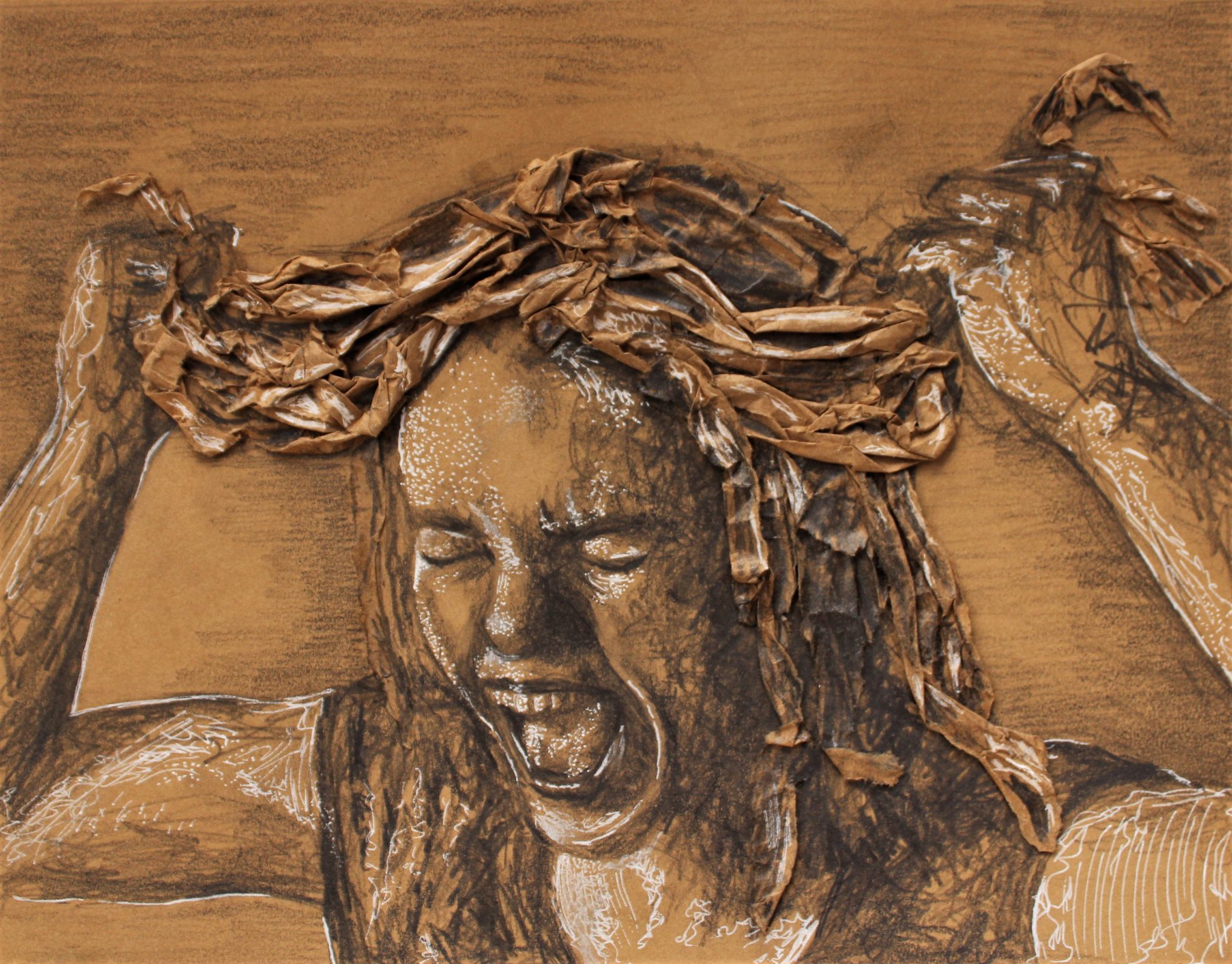
Brown and white artwork of stressed out woman pulling at her hair
Tension, 12″x10″ graphite and white pen on paper by Brianna Eisman

Drawing inspires creativity

Engaging in drawing stimulates creativity and imagination. It encourages you to think outside the box, explore new ideas, and experiment with different techniques and mediums. I first found a passion for art in school. Whenever I finished a test early, I would flip the page to the back, and doodle, sketch, and draw anything and everything I could imagine. Creativity is a skill, just like riding a bike or learning to code, you must practice being creative and using your imagination.

I believe that you truly become a successful artist when you make a mistake and have to think of a creative solution to fix it. This creative process teaches problem-solving skills, and I have found these skills help in many other areas of my life too.

draw more and become a successful artist! black and white pen marker drawing with organic shapes and lines by Brianna Eisman
Draw More, Sharpie and pen on paper by Brianna Eisman

Drawing improves observation

Drawing enhances observational skills as it requires a keen attention to detail, proportions, shapes, and spatial relationships. Performing blind drawing studies especially expedites this skill, and is key to becoming an experienced and successful artist.

Through practice, successful artists learn to perceive the world more deeply and accurately, honing their ability to notice subtleties and nuances in their surroundings, and in other people.

Drawing is a type of therapy

Drawing has therapeutic benefits and can promote relaxation, stress relief, and emotional healing. Many people, including myself, use art as a form of self-expression and introspection, finding solace and catharsis through the act of creating art. It’s also a sort of meditative process, especially one away from a digital screen.

Drawing is a Universal Language

Visual representations can transcend language barriers. Drawing was first used as a form of communication to pass down verbal stories through generations. The caves in Lascaux, France contain around 2000 Paleolithic cave paintings estimated to be 20,000 years old.

From art and design to science and engineering, drawing serves as a universal language that facilitates communication and understanding across cultures and disciplines.

Drawing helps develop motor skills

Drawing requires precise hand-eye coordination and fine motor skills, which are crucial for overall development, particularly in children. Practicing art helps improve dexterity and control over hand movements, which can have positive effects on writing, typing, and other manual tasks.

This skill is key to accurately translating your intended subject. That’s why drawing is taught first in art school, before other techniques like painting or sculpture. Art builds on itself and the more you draw, the better you’ll paint or sculpt or print.

An easy way to practice these motor skills, especially with children, is to create your own birthday and holiday cards. I share my process and inspiration in the article How to Wish Someone Happy Birthday, from an Artist.

woman using pink pen to draw homemade birthday card. This shows drawing is important in every part of life.
Draw your own birthday cards!

Drawing uses visual thinking

Creating art stimulates visual thinking, allowing individuals to organize and conceptualize ideas in a spatial manner. It encourages the brain to think in pictures, aiding in problem-solving, planning, and critical thinking across various domains. For example, my experience with writing in school started with writing artist statements. I used critical thinking to analyze what I was seeing in the painting, and what message the artist was trying to convey or communicate.

To be a successful artist, means you know how to communicate with your viewers. Whether you communicate through paint or sketches or an artist statement on the wall of the museum, bridging visual skills with written text is necessary.

Studies do show arts education improves academic performance. A study by Brian Kisida and Daniel H. Bowen analyzed “42 elementary and middle schools with over 10,000 third- through eighth-grade students.”

The study found “increases in arts educational experiences significantly reduce the proportion of students receiving disciplinary infractions,” “improve writing achievement” and “increase students’ compassion for others by… appreciation of art.”

Drawing encourages art appreciation

Engaging in the arts yourself, fosters an appreciation for artwork and the creative process, and helps you become a more successful artist. By creating your own artwork, you develop insight into the techniques, styles, and meanings behind other works of art, leading to a deeper understanding and enjoyment of visual culture. For example, once you learn color theory, you start to notice it everywhere; from football teams to soda brands.

To be a successful artist, you need to appreciate the arts. You can do this by learning about and analyzing artwork, attending museums, supporting local artists, and visiting arts markets and galleries. If you are interested in learning more about art history and art styles, I suggest you take this quick quiz I made!

gesture drawing pink and purple sketch showing how to be a more successful artist
Figure 2, 18″x24″ soft pastels on canvas by Brianna Eisman

Reading about art helps too. Searching for this article and learning about the creative process promotes appreciation of the arts. You are becoming a more successful artist simply by supporting my art journey, and inspiring me to continue to share my knowledge and passion for art.

Conclusion

Think of drawing as ‘step 1’ to becoming a more successful artist. Overall, drawing is a versatile and valuable skill that offers numerous cognitive, emotional, and practical benefits. It enriches the lives of artists and contributes to their personal growth and development.

How can drawing make you a more successful artist? Read More »

Discover 19 Reliable Ways to Improve your Personal Brand

What is personal branding and how do you start? Where do you find inspiration for it? How do you improve your personal brand through market changes? What are some great examples of personal branding?

Introduction

In the age of digital connectivity, crafting a compelling personal brand has become more than just an option—it’s a necessity. Your personal brand, a melding of your values, expertise, and online presence, is the compass that guides you towards opportunities and cultivates a meaningful online identity. This article dives headfirst into the art of building an impactful personal brand, offering insights, real-world examples, and a hopeful perspective on its role in your life.

Wikipedia defines personal branding by providing the purposes of career advancement, increasing circle of influence, and having a larger impact.

The Essence of a Strong Personal Brand

Your brand isn’t just a buzzword; it’s the vivid tapestry that reflects who you are, both professionally and personally. It shapes perceptions, fosters connections, and sets you apart in a crowded digital landscape. Try building a powerful personal brand which uses a multifaceted approach across many platforms and with many outlets.

To begin the process, think about your values, goals, and inspirations. Craft an identity you want to show the world. From there, add a color scheme, maybe a personalized logo, and a platform. For me, I use a website platform ArtsyDrawings.com.

If you are at a loss for how to build an optimized website, check out my colleague’s web design service: True Ideas.

Instagram Influencers: Building Communities Through Authenticity

Instagram influencers like @chrissyteigen and @selenagomez have cultivated personal brands rooted in authenticity. They share unfiltered glimpses of their lives, forging genuine connections with their followers. Emulate their approach by showcasing the real you, sharing your passions, and engaging openly with your audience.

selena gomez personal brand instagram page
Selena Gomez takes an authentic approach to her Instagram account by posting a candid photo she references as a “random moment” taken by her friend.

TikTok Creators: Crafting Compelling Stories in Seconds

TikTok influencers like @charlidamelio and @zachking have mastered the art of storytelling within seconds. When they use their personal brand to entertain, educate, and inspire, they create content that resonates across demographics. Take inspiration from their succinct storytelling and translate it into your own narrative. Also, many marketers advise short videos as the future of successful marketing.

Artists with a Digital Identity: Merging Creativity with Branding

Artists like Banksy and KAWS have utilized their digital presence to amplify their artwork’s impact. Compared to artists who choose to evade social media, these digital connoisseurs have extended their artistic narratives onto social media platforms, effectively merging their creativity with personal branding. Basically, they infuse their personal brands with elements of their craft, merging art with branding.

KAWS personal brand web search
In some cases, the artist and his work become synonymous on Google. When you search Brian Donnelly, his work and his professional artist name “KAWS” dominates the first results page.

Here at Artsy Drawings, I enjoy merging artistry with my personal brand. I use Linktr.ee to create a single, customizable link that houses multiple links to various online platforms. For me, these platforms include my portfolio, social media profiles like Pinterest and Instagram, and my online store. This link simplifies navigation for my audience, allowing them to access all relevant content from one central location.

Brianna Eisman’s Linktr.ee includes her website, RedBubble, Fiverr, Venmo, LinkedIn, and Pinterest links. Each phrase includes a call to action.

It is important to also note that changing your personal brand with the market is actually a good thing. Recently, I decided to rebrand my website and social platforms with a new color scheme, dedicated fonts, and a logo that focused more on Artsy Drawings itself. For more details on my rebrand, check out my About page.

Job Hunting and Personal Branding: A Match Made in Success

Personal branding isn’t confined to social resources; it plays a pivotal role in job hunting too. When potential employers search your name, what they find can significantly influence their decisions. It is vitally important, especially post graduation, to create a story about who you are and how you want the world to view you. Then, craft your personal brand to reflect your skills, passions, and professional aspirations, essentially turning your online identity into a compelling resume.

  1. Audit Your Social Media: First, go through your social media profiles and remove or adjust any content that might be seen as unprofessional or inappropriate. Delete posts or photos that could be misconstrued or reflect negatively back on you.
  2. Update Your Privacy Settings: Review the privacy settings on your social media accounts to limit what can be viewed by the public. By adjusting your settings, you can control who sees your posts, photos, and personal information. Make use of features that allow you to approve tagged posts before they appear on your profile.
  3. Create a Professional Online Presence: Next, focus on building a positive online image that aligns with your career goals. Share articles, posts, and content related to your industry to demonstrate your knowledge and interests. Consider creating a LinkedIn profile that highlights your professional accomplishments and connects you with others in your field.
  4. Use a Professional Email Address: Create a professional email address that uses your name rather than a nickname or casual (silly goose) handle. This small change can make a positive impression on potential employers when they communicate with you via email.
  5. Monitor Your Online Presence: Regularly search your name on search engines to see what information comes up. This will help you identify any potentially damaging content and take steps to address it. If you find negative information, then you can try to address it directly or focus on pushing positive content higher in search results through active online engagement. Also, try to research personal brand examples to see how influencers tackle positive and negative media.
I created a separate public Instagram account for my artwork and photography. This public business account also allows me to track post insights and analytics.

Digital Marketing Yourself: An Essential Skill in Today’s World

In a world where digital interactions dominate, marketing yourself online is crucial. Similarly to businesses, you can use digital strategies to showcase your personal brand and reach your audience. Hence, dive into SEO optimization, content creation, and consistent engagement to cultivate a strong online presence.

As you grow digitally, try to track your data through insights and analytics. This recording process can be integral in knowing how well your content is performing and analyzing how to improve. For more details about data visualization, collection, and reporting check out my article titled “How to Visualize Data as a Multi-Skilled Artist.”

Noteworthy Personal Brand Examples

  1. Marie Forleo (@marieforleo): A businesswoman and motivational speaker, Marie Forleo’s personal brand is built on empowerment and entrepreneurship. Overall, her online platform provides valuable content that resonates with aspiring business leaders.
  2. Neil Gaiman (@neilhimself): Renowned author Neil Gaiman’s personal brand seamlessly weaves his fantastical writing with his witty and engaging online presence. He particularly uses platforms like Twitter to connect with fans, share insights, and showcase his creative process.
  3. Lizzo (@lizzo): Singer and body positivity advocate Lizzo’s personal brand radiates confidence, self-love, and unapologetic authenticity. Her empowering messages and music resonate with a global audience, making her a prime example of a relatable personal brand.
  4. Simon Sinek (@simonsinek): Leadership expert Simon Sinek’s personal brand centers around inspiring leadership and self-discovery. Basically, his TED Talks, books, and majority of his online presence encourage individuals to find their “why” and lead with purpose.
  5. Alex Strohl (@alexstrohl): Adventure photographer Alex Strohl’s personal brand seamlessly intertwines his passion for photography with a love for travel and the outdoors. His captivating visuals and storytelling inspire wanderlust in his followers.
  6. Amanda Gorman (@amandascgorman): Poet Amanda Gorman’s personal brand combines her powerful words with her advocacy for social change. Her eloquence and activism have made her a symbol of hope and progress.
  7. Casey Neistat (@caseyneistat): Filmmaker and content creator Casey Neistat’s personal brand is characterized by his unique storytelling style and his commitment to authenticity. Following his YouTube vlogs and cinematic videos offers insights into his life and creative processes.
  8. Gwyneth Paltrow (@gwynethpaltrow): Last but not least, actress and entrepreneur Gwyneth Paltrow’s personal brand revolves around wellness and lifestyle. Her company, Goop, and her online presence promote holistic living and self-care.

Conclusion

Crafting a compelling personal brand isn’t just about garnering followers; it’s about shaping an identity that reflects your values, aspirations, and expertise. As you navigate the digital landscape, drawing inspiration from Instagram influencers, TikTok creators, and notable figures like artists and public speakers, remember that personal branding is a journey of self-discovery and growth.

Remember, in job hunting, personal branding acts as a beacon that attracts the right opportunities. By digitally marketing yourself, you take control of your narrative and present your most authentic self to the world. Whether you’re an aspiring entrepreneur, a creative artist, or a professional seeking advancement, your personal brand serves as your virtual handshake, leaving a memorable impression that extends beyond pixels and platforms.

Embrace the evolution of your personal brand with hope and enthusiasm, for it is a canvas that you paint with your passions, experiences, and aspirations. As you infuse your online presence with authenticity, engagement, and a touch of inspiration, you’re bound to forge connections, open doors, and carve a meaningful path towards success.

Discover 19 Reliable Ways to Improve your Personal Brand Read More »

Scroll to Top