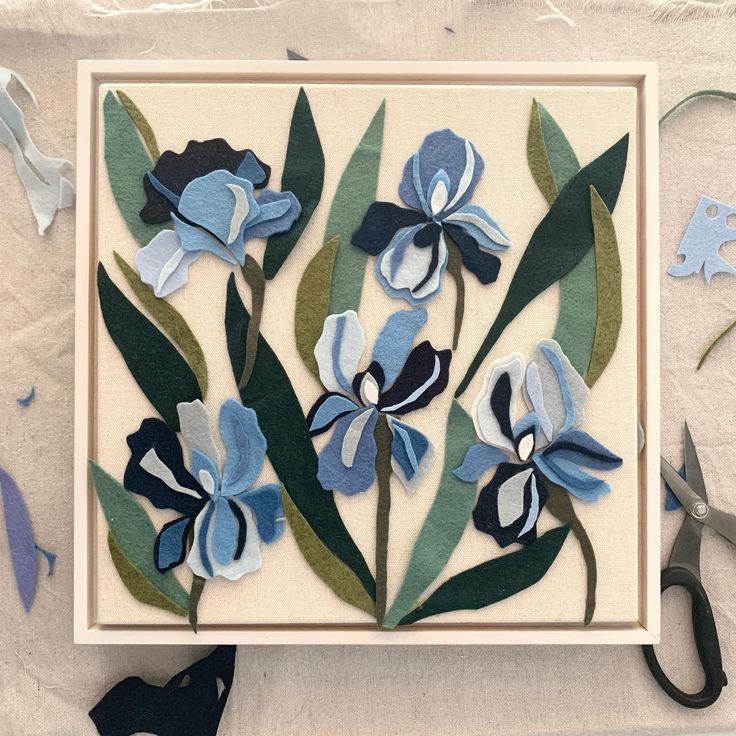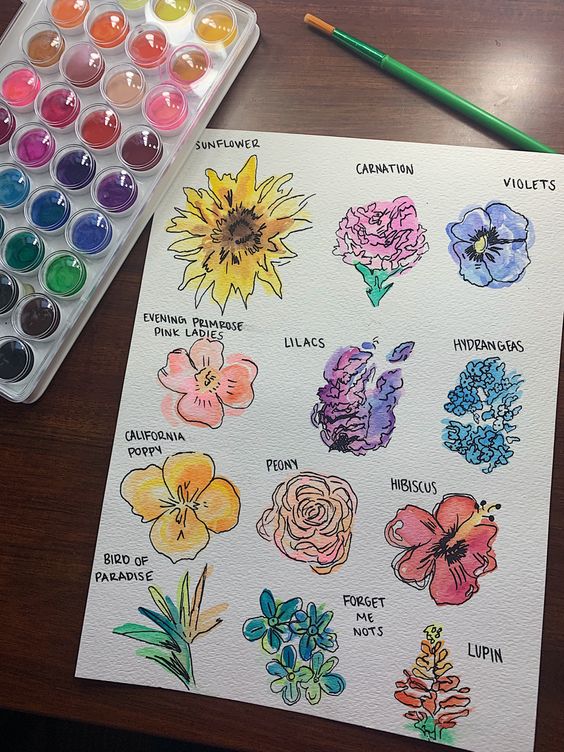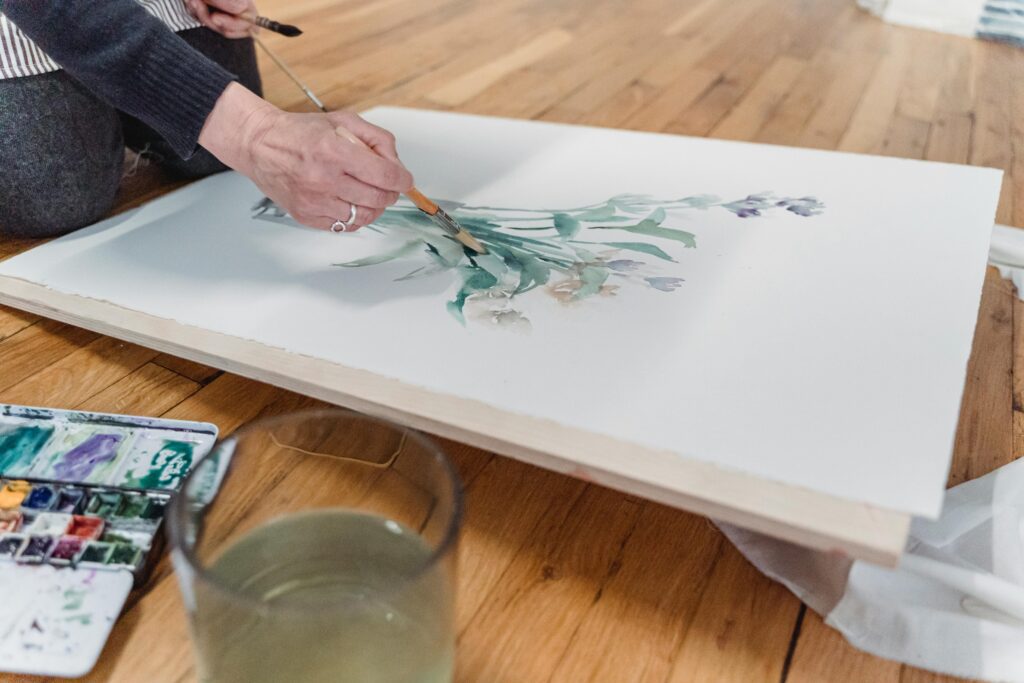
Have you ever wanted to paint a beautiful flower but didn’t know where to start? Painting can be a lot of fun and a great way to relax. Today, I’m going to show you how to paint a flower step by step. This guide is perfect for beginners or anyone who loves art and wants to create something beautiful. So, let’s get started!
How to paint a flower step 1: Gather Your Supplies
Before we dive into painting, it’s important to gather all the necessary supplies. You can find these supplies at your local craft stores, or purchase them from Amazon. If you choose to buy from Amazon, please use the links below to support Artsy Drawings!
You will need paints, either acrylic or watercolor, depending on what you prefer. Acrylic paints are thicker and dry quickly, while watercolors are lighter and can be blended with water. For help choosing mediums, check out the article My Favorite Artistic Mediums. Choose colors that you love for your flower and background.
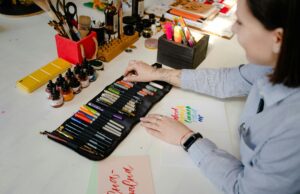
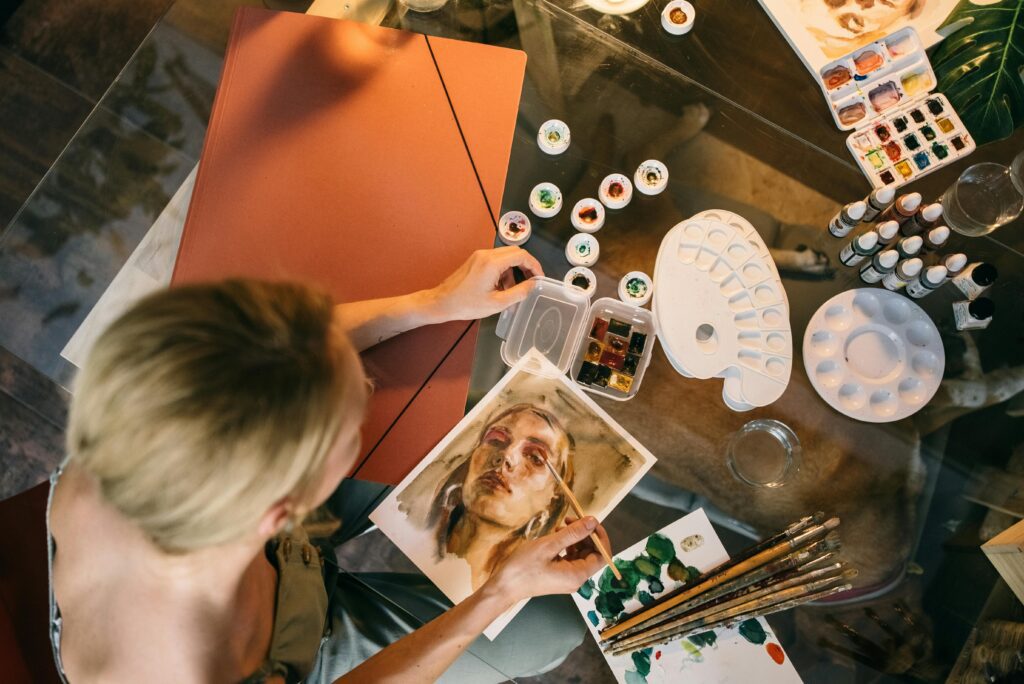
Next, you’ll need a variety of paintbrushes. Having a big brush for the background and smaller brushes for details will help you create different effects. You will also need a canvas or watercolor paper to paint on, and a palette to mix your paints. Regardless of whether you choose acrylic paints or watercolor paints, it’s important to keep a cup of water handy. If you’re using acrylics, a palette knife can be useful for mixing. Don’t forget to have some paper towels or a cloth to clean your brushes, and a pencil and eraser for sketching your flower.
Optional items that can make your painting experience better include an easel to hold your canvas or paper, an apron or old clothing to protect your clothes, and painters’ tape to keep your paper from moving. Once you have all your supplies ready, you’re set to learn how to paint a flower and create your masterpiece.
How to paint a flower step 2: Setting Up Your Workspace
Creating a comfortable and organized workspace is crucial for a smooth painting experience. Find a well-lit area where you feel relaxed and can see your work clearly. Arrange your paints, brushes, and other materials within easy reach so you won’t have to interrupt your creative flow to hunt for supplies. Make sure your canvas or paper is secured on your easel or flat surface, and you’re ready to begin to learn how to paint a flower.
Having a reference photo can be very helpful. Choose a simple flower like a daisy, tulip, or sunflower. You can find pictures online or in books. Pinterest is a great source for reference material. A reference photo will guide you and help you understand the shapes and colors better.
Here are some helpful tips before you start: keep your workspace tidy to avoid distractions, use a color wheel for better color choices, and practice basic shapes before starting on the final sketch. These tips will make your painting experience more enjoyable and successful.
How to paint a flower step 3: Sketching the Flower
Now that your workspace is set up and your supplies are ready, it’s time for the real step 1 in how to paint a flower: sketching the flower. Using a pencil, lightly sketch the outline of your flower on the canvas or paper. Use simple shapes to get the proportions right. For instance, a daisy has a round center with long, thin petals radiating out. Use your reference photo to guide your sketch. Don’t worry about making your sketch perfect; it’s just a guide to help you when you start painting.
How to paint a flower step 4: Painting the Flower
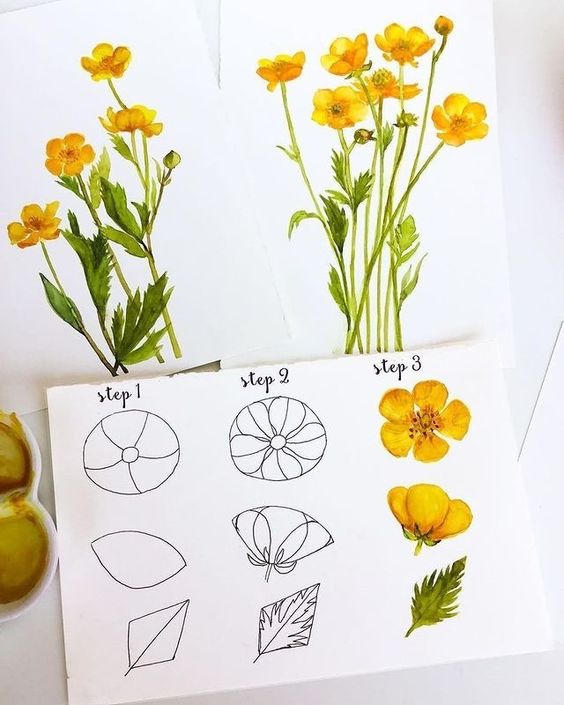
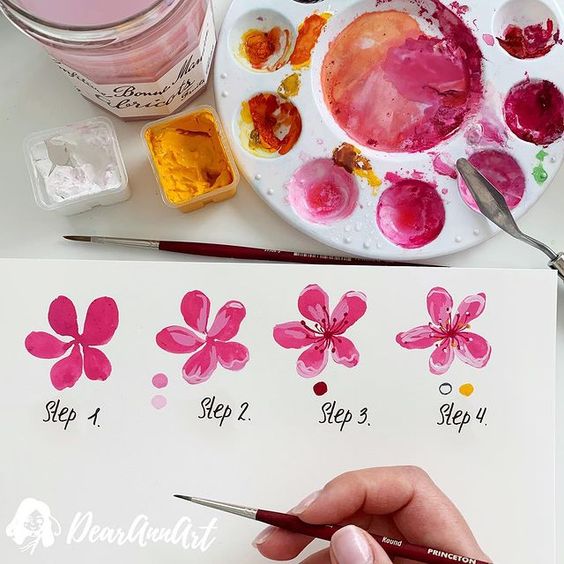
Learn how to paint a flower in a few easy steps!
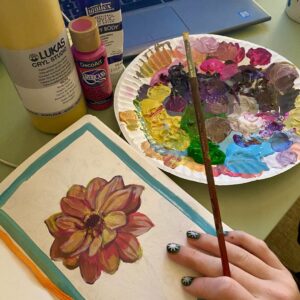
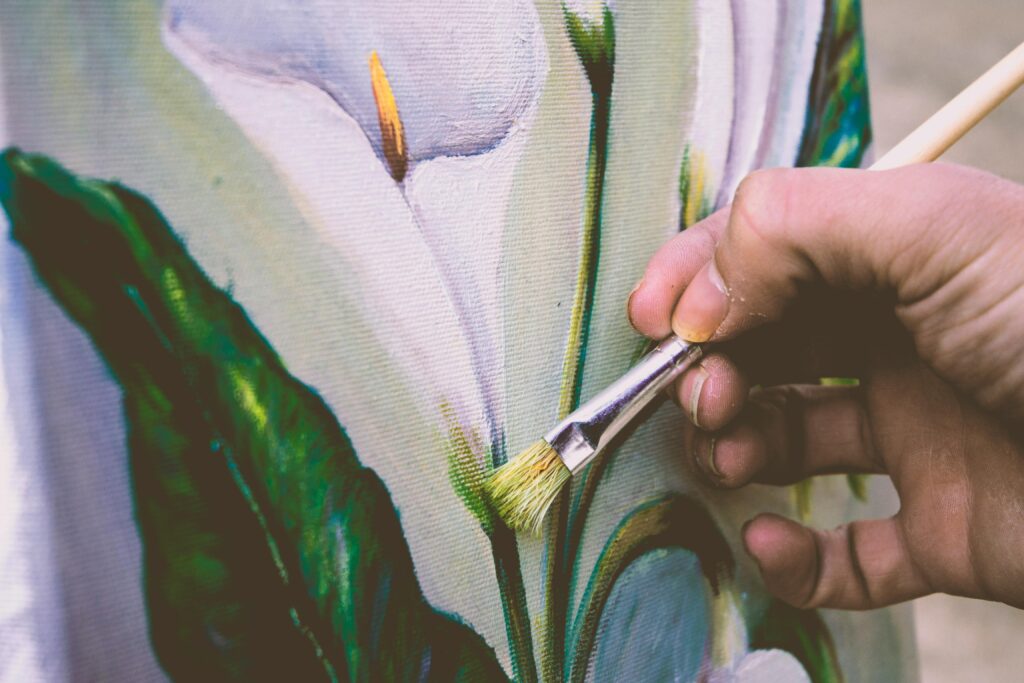
Now comes the fun part—painting the flower! Start by applying a base layer to the petals using a light color. For example, if you’re painting a daisy, you might use white or light yellow. Use a smaller brush for this step and carefully paint each petal.
Once the base layer is dry, it’s time to add details. Remember, if you are using acrylic or gouache paint you can paint dark to light. If you are using watercolors, paint light to dark.
Use different shades and tints to create shadows and highlights. This will give your flower depth and make it look more realistic. For the center of the flower, use a different color like yellow or brown for a daisy, and paint the stem and leaves green. Blending the colors smoothly where they meet will help your flower look soft and natural. Add any final touches to enhance the details and make your flower pop.
Let your painting dry completely before moving on to painting the background. This will prevent the colors from mixing unintentionally.
How to paint a flower step 5: Painting the Background
With your flower fully based out, the next step is to paint the background. Pick a color that will make your flower stand out, such as a light blue or green, because these colors are opposite to red and orange on the color wheel. Using a big brush, apply the paint in long, even strokes to cover the entire background. If you want, you can blend different colors to create a more interesting effect. For example, you can blend blue and white to create a sky-like background. You can also add extra green colors for grass, trees, or whatever garden you may find your flower in.
Understanding Different Types of Flowers
While the daisy, tulip, and sunflower are excellent choices for beginners, it’s worth exploring a variety of flowers to expand your painting repertoire. Each flower has unique shapes, colors, and textures that can be both a challenge and a delight to paint. Let’s take a closer look at a few more flowers you might want to try.
There are many different types of flowers you can choose to paint, from sunflowers and violets to hydrangeas and poppies.
Roses
Roses are classic and loved by many. They can be a bit challenging due to their layered petals, but with patience and practice, you can master them. Start by painting the central petals tightly together and gradually expand outwards, layering as you go. Use shades of red, pink, white, or yellow, and remember to add shadows and highlights to give depth.
Orchids
Orchids have an exotic and delicate appearance, making them a fascinating subject. Their petals often have intricate patterns and vibrant colors. When painting orchids, focus on capturing the delicate texture of the petals and the unique shapes of the flower parts. Use reference photos to help guide you.
Lilies
Lilies are elegant and can add a touch of sophistication to your artwork. Their large, curved petals and prominent stamens make them an interesting challenge. Use smooth, sweeping brushstrokes to capture the shape of the petals and pay attention to the subtle color variations in each petal.
Sunflowers
Sunflowers are cheerful and relatively straightforward to paint. Their bright yellow petals and large, dark centers make them instantly recognizable. When painting sunflowers, start with the center and work your way outwards, adding petals in layers to create a full, vibrant flower.
Cherry Blossoms
Cherry blossoms are delicate and often painted in clusters, creating a beautiful and serene scene. Use light pinks and whites, and focus on capturing the softness of the petals. Adding branches and buds can enhance the overall composition.
Hydrangeas
Hydrangeas are composed of many small flowers clustered together, creating a lush and full appearance. They can be painted in various colors, from blues and pinks to purples and whites. Use small, delicate brushstrokes to capture the individual flowers and create a sense of volume.
Practicing Different Flower Structures
As you become more comfortable with learning how to paint a flower, challenge yourself to explore different structures and compositions. Practice painting flowers from various angles and perspectives, such as a side view, top view, or even a close-up of a single petal. This will help you develop a better understanding of the shapes and forms of different flowers.
Mastering Color Mixing and Techniques
Color mixing is an important part of painting. Mixing colors allows you to create different shades and tones, making your painting more vibrant and realistic. For example, you can mix blue and yellow to make green, or red and white to make pink. Experiment with mixing colors on your palette to see what new colors you can create. If you want to learn more about color theory and mixing, check out our blog post here.
There are some easy painting techniques that can make your flower look even better. The wet-on-wet painting technique is when you apply wet paint onto wet paper or another layer of wet paint. This creates soft edges and allows colors to blend easily. The dry brush technique involves using a dry brush with very little paint. This technique is great for creating texture. Lastly, the layering technique involves applying multiple layers of paint, letting each layer dry before applying the next. This technique adds depth and richness to your painting.
After you’ve finished painting your flower, let it dry completely. This might take a few hours depending on the type of paint you used. Once it’s dry, you can handle your painting without worrying about smudging it. If you want to protect your painting, you can apply a clear varnish, though this step is optional. Sealing your painting can help it last longer and keep the colors vibrant.
At Artsy Drawings, we recommend using a good quality varnish, especially if you plan to sell your work or hang it in a sunny place. We use Liquitex Acrylic Medium Gloss Varnish for acrylic paintings.
Conclusion
You did it! You’ve painted a beautiful flower. In a few simple steps, you created a beautiful work of art, and became better at knowing how to paint a flower. Painting is all about practice and enjoying the process, so don’t worry if your first flower isn’t perfect. Keep practicing, and you’ll get better and better.
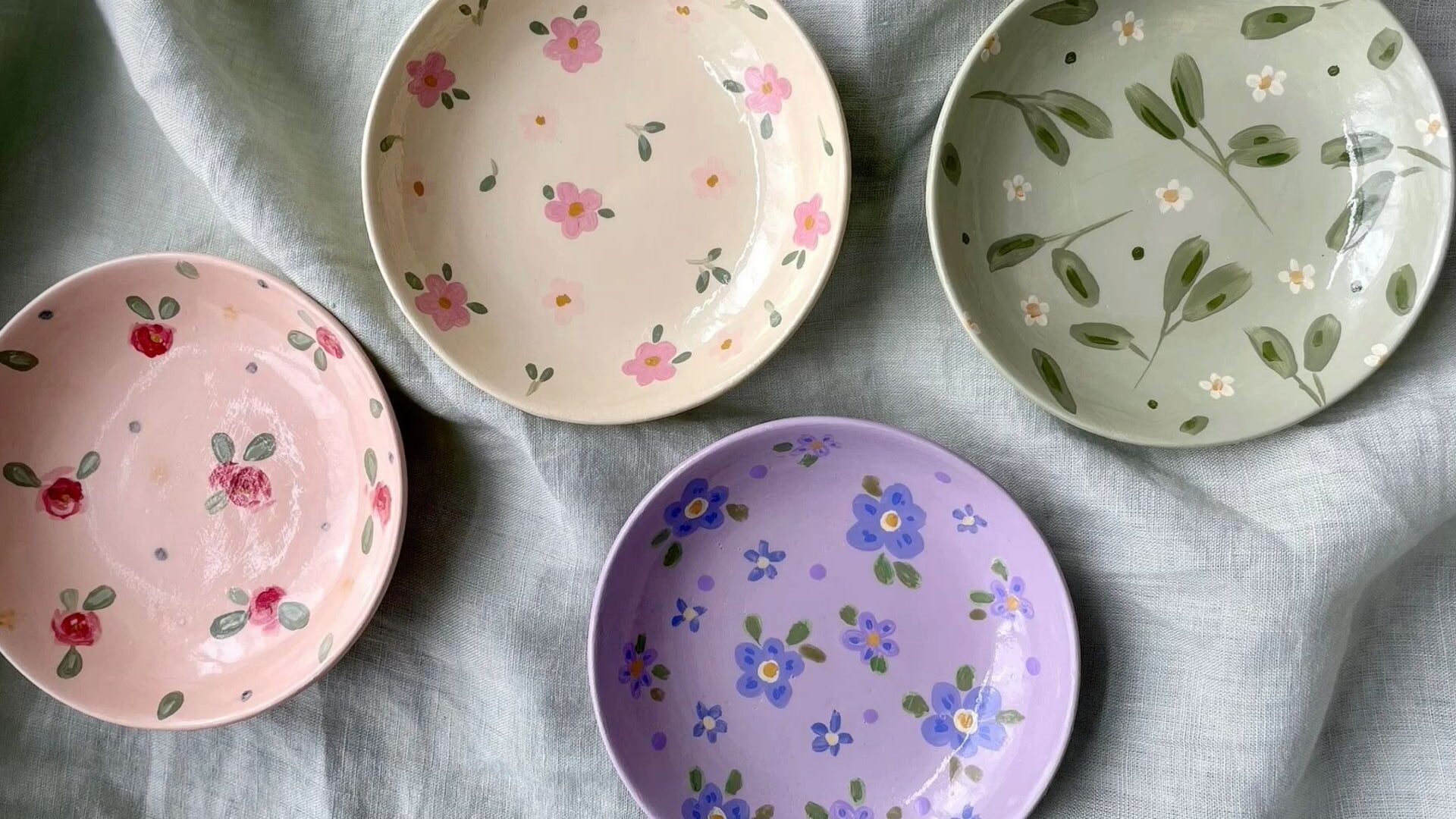
Knowing how to paint a flower can be a versatile skill that extends beyond your canvas. For instance, you can apply this talent to decorate pottery, adding a personal and artistic touch to ceramic pieces like vases or plates, making them unique gifts or home decor. Additionally, hand-painted flowers can be used to create personalized holiday ornaments or cards, infusing gifts with a special, handcrafted charm that reflects your creativity and attention to detail. This skill can also enhance your ability to design floral patterns for textiles or even decorate cakes with artistic precision.
We’d love to see your flower paintings! Share your finished artwork on social media and tag us. Feel free to leave comments and let us know how your painting experience went.
You can use this skill of how to paint flowers on all sorts of things: from canvas to pottery
I love the process of creating art. I love the brainstorming session with terrible stick figure drawings, the ‘practice stage’ of drawing the same thing over and over again, and feeling accomplishment you get from the final design. Through every tedious planning stage, I love how those small wobbly drawings in your sketchbook come to life in a beautiful masterpiece.
You know what the art means to you, but how do you describe it to others? How do you talk about it? Where do you find the words to describe art, something so subjective and intangible?
In this article, I hope to provide some clarity and tips for how to talk about art and which words to describe art. I will define a formal artist statement, analyze how others create artist statements and content captions, and list out the best words to describe art.
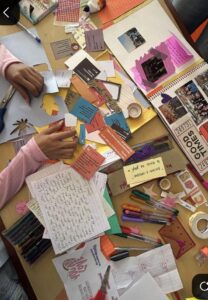
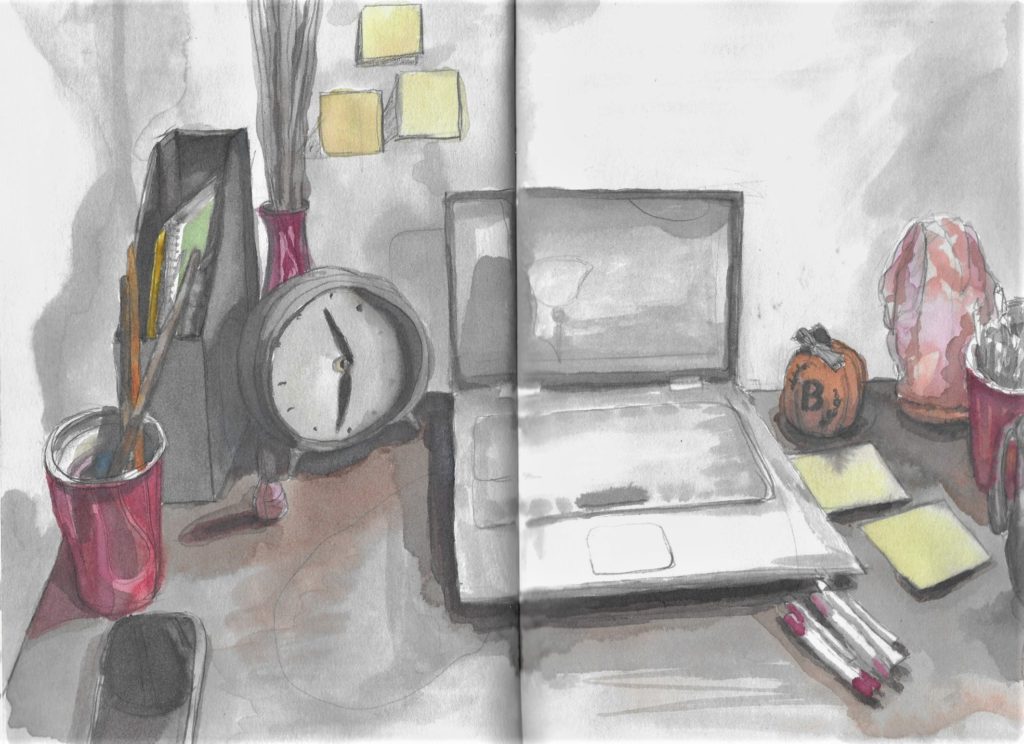
Desk Check by Brianna Eisman As someone who moves rather frequently I document my travels with what I like to call a “Desk Check.” I will draw, paint, photograph, and ultimately document everything on my desk at a certain point in time. This type of artwork displays an intimate snapshot into my life.
Table of Contents
What is an artist statement?
“[An artist statement is a] piece of writing by you that helps the audience access or understand your artistic work.”
Basically, an artist statement is a formal way of using words to describe art. It is a way for you, the artist, to express the message you are trying to convey visually. Words to describe art are used in many ways: from social media and website promotion to galleries, exhibitions, grant applications, teaching position applications, and fellowships.
Generally, I frequently write and rewrite my artist statements. Please check out my social media to see how I describe my own art.
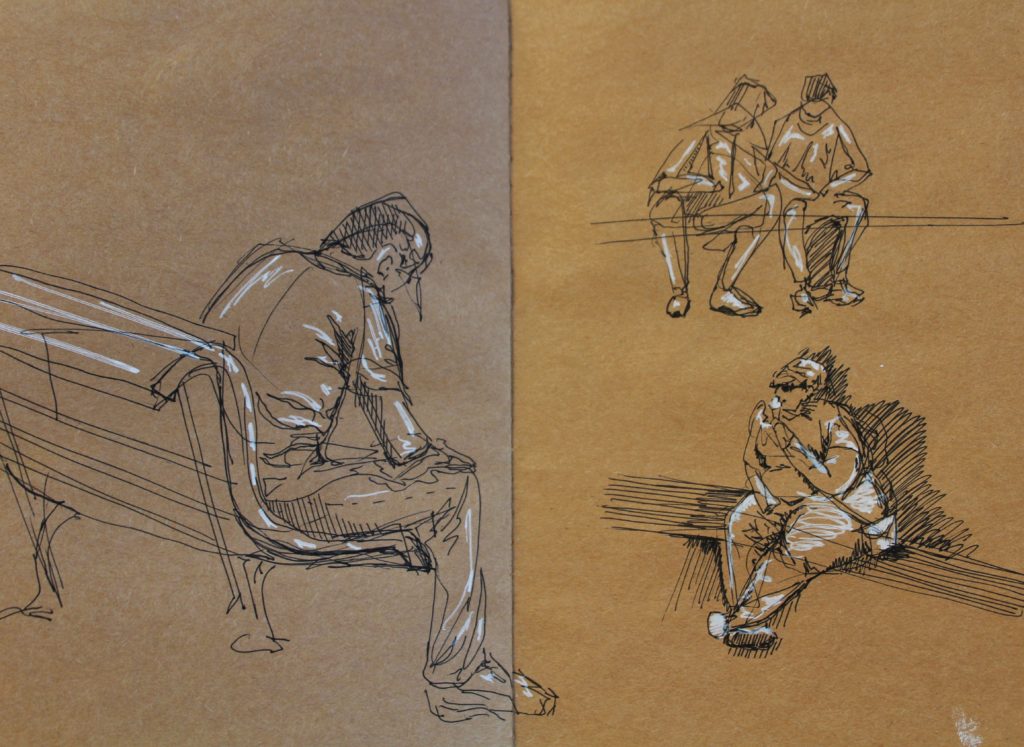
Gesture Figure Drawings by Brianna Eisman Gesture drawings are quick studies of the human form and one of the easiest ways to practice your line work and accurately sketching figures. ~ After visiting the Rijksmuseum in Amsterdam, I sketched a few people sitting around the fountain. I used my brown paper sketchbook to create a mid-tone base, a black pen for shadows, and a white pen for highlights. Not only did these gesture drawings improve my understanding of the human form, but I was able to capture light in a quick and cool manner.
What are the best ways to write a strong artist statement?
Writing an artist statement is more complex than simply using random words to describe art. First, write in first person POV, remember to keep your audience in mind while writing, and follow the acronym K.I.S.S. (Keep It Simple, Stupid). Lastly, I included some good questions to think about when brainstorming your artist statement. Hopefully, these tips to choosing the right words to describe art will help you communicate clearly.
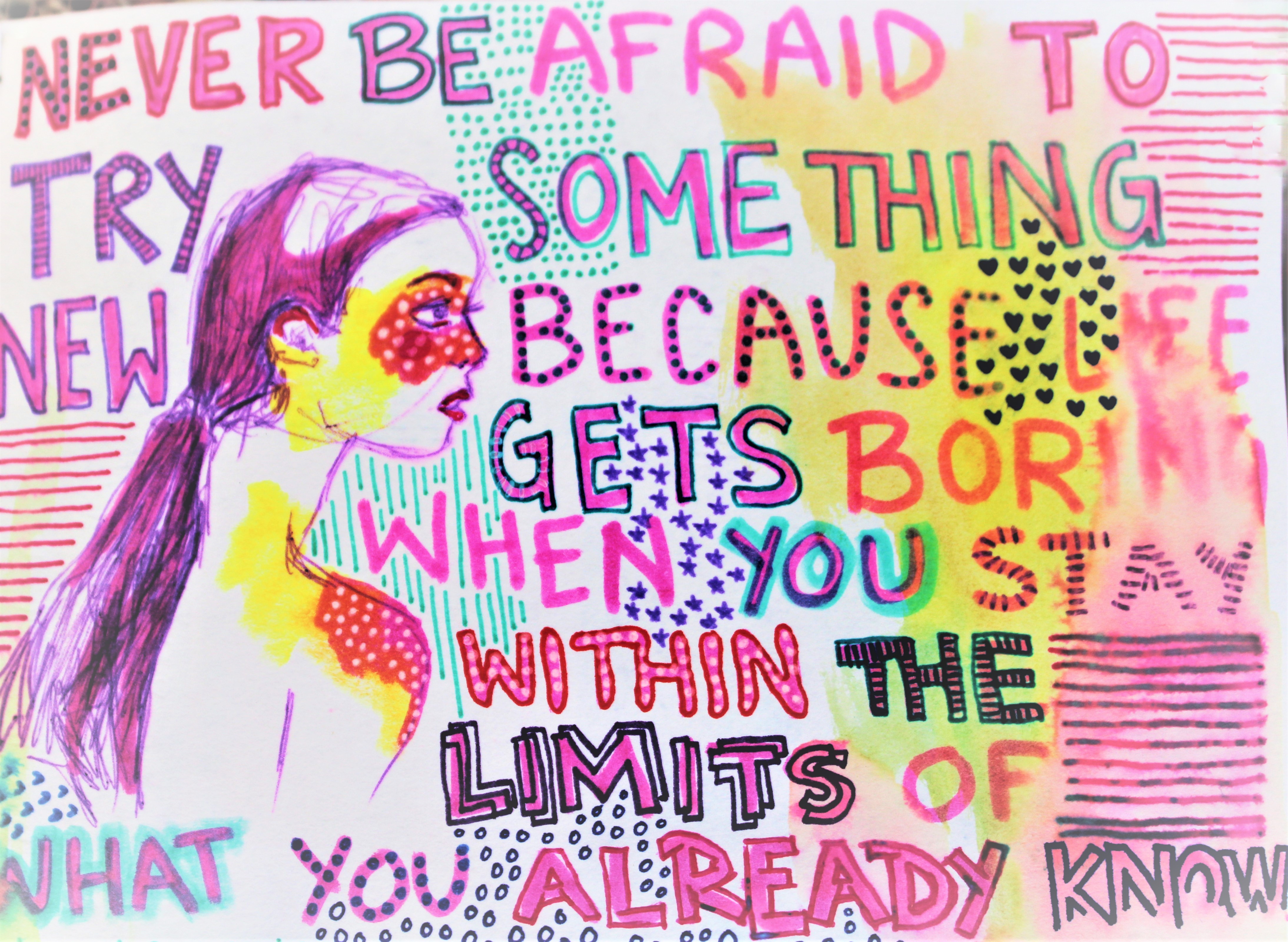
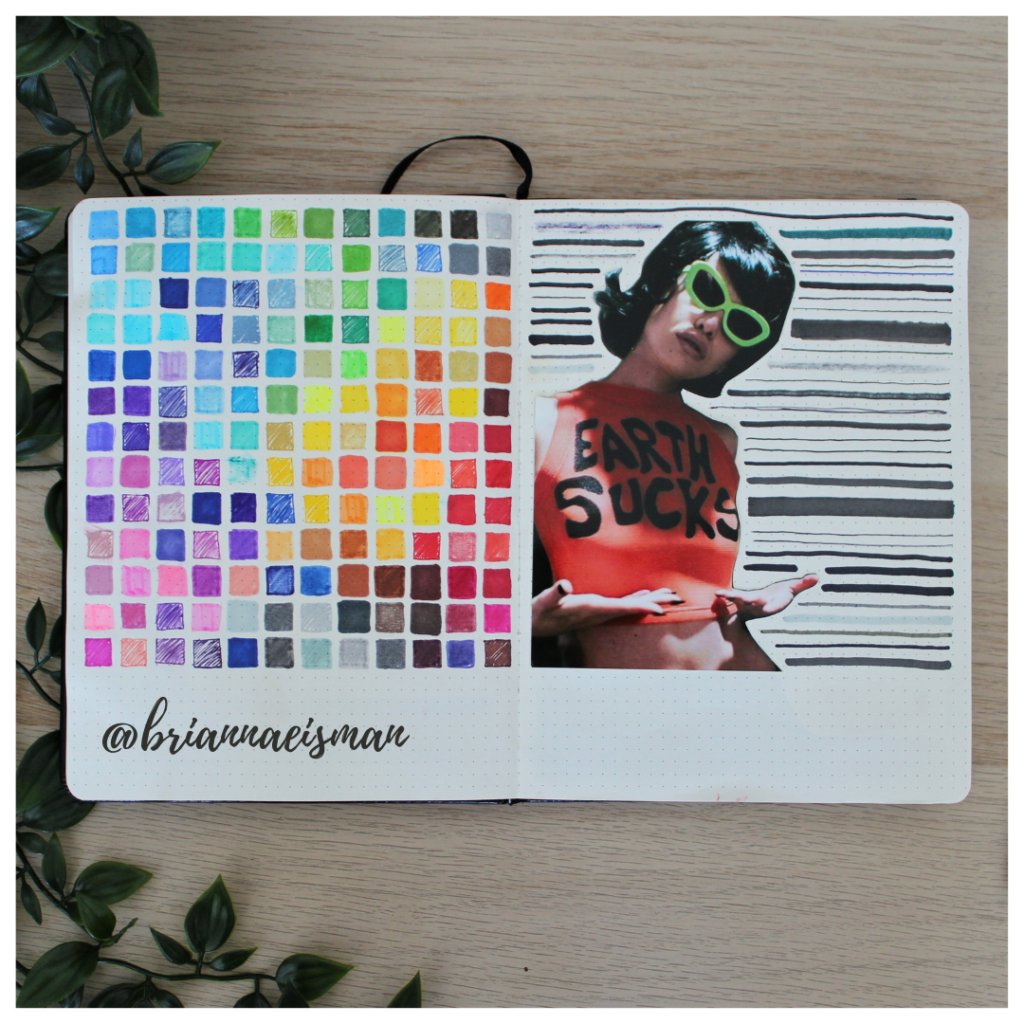
Marker Test (Earth Sucks) by Brianna Eisman About once a year I set aside a page in my sketchbook, or bullet journal, to do a marker test. First, I go through every pen I own including Sharpies, highlighters, Bic Permanent Markers, Crayola markers, Stabilo pens, Expo dry erase markers and everything in between. I document the quality and determine whether to keep or toss the utensil. It’s easy to collect art materials, especially when you’re like me and switch mediums regularly. It is important to know that when I reach for a certain pen or marker, it’s going to work the way I want it to. I do keep a page at the back of my sketchbook open for testing mediums, but it’s an important part of the process of creating art to go with the flow and just draw.
Tip 1: Write in First Person Point-of-View
Structurally, the SAIC recommends to write the artist statement in first person. This advice contrasts artist biographies which are typically written in third person.
For instance, you can say “I created this work to represent…” and “my mother influenced this…”. These examples work well because they help define an intimate connection between the art and the viewer.
Typically, you don’t personally know the viewer, so establishing personalized meaning can add substance to your art. Supporting the connections between the viewer and the artwork is vital in helping people really understand your work.
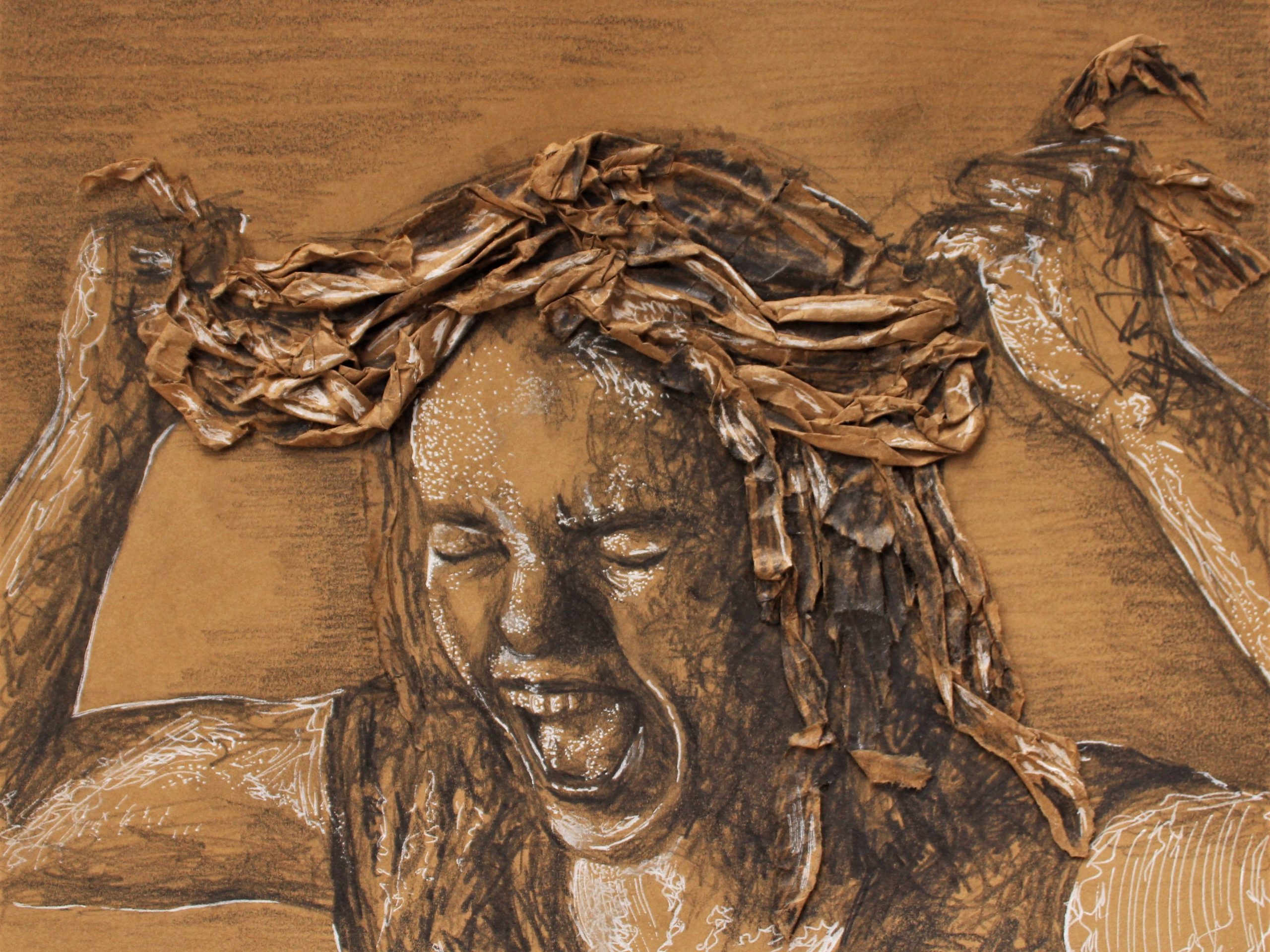
Tension by Brianna Eisman As art students, we were tasked with creating a work of art, recycling brown paper bags, and expressing ‘tension.’ In the midst of high school drama and stressful testing seasons, I created this mixed media drawing of a woman silently screaming and pulling at her hair, which is made of delicate paper.
Tip 2: Know your Audience & keep them in mind
Remember who your audience is. Who did you create this artwork for? What type of people would you imagine in the gallery looking at this artwork? Who would buy this painting? If you post it online, who is interacting with the post?
The artist statement is sometimes published on social media platforms or printed next to the painting in a gallery. You may be writing to someone who has never held a paintbrush in their life, so keep these thoughts in mind when writing an artist statement. Carefully choose words to describe art that make sense to your audience.
Some words to describe art are different for artists versus non artists. For example, saying a work is impressionistic could mean in reference to the impressionism painting style of the 19th century. In contrast, impressionistic could represent the work’s capability in leaving an impression, or a lasting memory, on the viewer. Learning art history is a great method to improve your art lingo. For instance, maybe learn how the difference between modern and contemporary, and how in the art world, they are not synonymous. If you are curious about which art style best matches your artwork, check out this quiz!
The specialized art jargon, referred to as “art speak,” is great for the critique, though try to avoid it for the artist statement.
“The terms ‘modern art’ and ‘contemporary art’ are easily confused, but each refers to its own distinct period in art history,” according to Rosie Lesso of The Collector
Tip 3: The KISS Method – Keep it Simple, Stupid
Try to be concise, straightforward, and as clear as you can. A good rule of thumb is to avoid using too many complex words to describe art, and stick to what you know. I like using certain words to describe art like colors, shapes, and patterns.
If you are optimizing your artwork for digital marketing purposes, sometimes describing the art is better than describing the meaning or the feeling. Understanding nuances in color theory help when describing your art, so make sure you read my article: Color Knowledge Tips That Will Make You a Better Artist
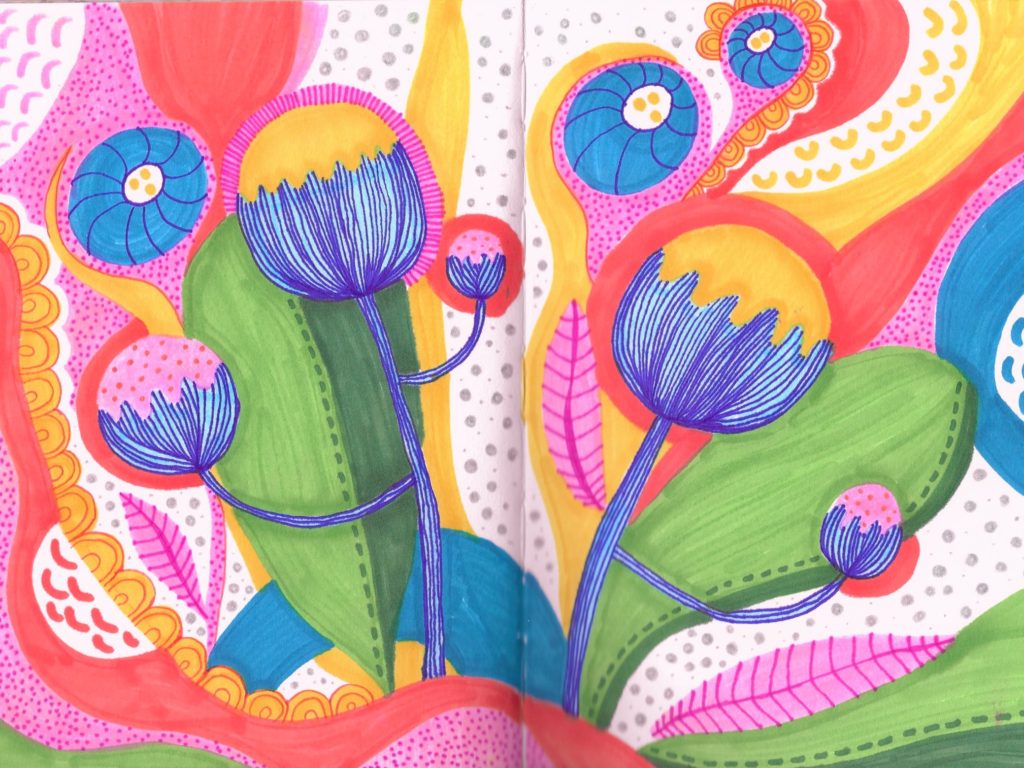
Stylized Poppies by Brianna Eisman This sketchbook spread features a stylized pattern of colorful poppy flowers. The garden of flowers includes leaves of green, yellow and peach. The flowers are yellow with blue stems. The drawing as a whole has a whimsical and playful feel with a bright color scheme, polka dots and organic squiggle shapes, and blobs of seemingly random colors.
Tip 4: Actually think it over before you write
Yes, brain dump writing is healthy, but your artist statement should not be a brain dump. You need to really think about your art and ask yourself certain questions prior to writing. Be selective in your words to describe art. Below are some important questions to ask yourself throughout the brainstorming process. Your answers to these questions can include words to describe art and how you created the art.
What are the key ideas, issues, struggles, and goals within your work?
Does your work have a thematic focus (goals, purposes, intentions, and explorations)?
What is the content of work, including themes, ideas, and subject matter?
How were you influenced culturally, historically, theoretically, artistically, personally, and biographically?
Who is your audience? Who will be looking at your work? What do you imagine they feel when viewing it?
How would your audience use words to describe art?
How did you create the work? What materials, processes, traditions, and styles did you use in your work?
Can you use your senses to describe the art? What does the work look, sound or feel (impasto) like?
How can you make your art work easier to understand?
Finally, have a friend or teacher review your artist statement when you finish writing it. You may think the statement makes sense, but it may not be clear to someone who hasn’t spent hours working on the artwork.
How do artists describe their art?
Tip 5: Study how the masters used words to describe art
Edvard Munch
Many famous artists write artist statements describing their masterful artwork. Some are available in museums, some are available online.
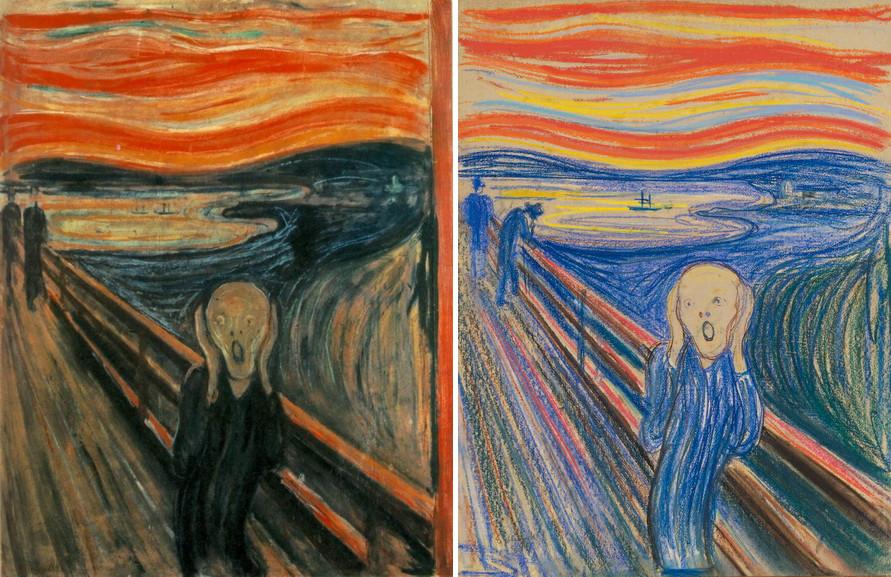
For instance, Edvard Munch’s The Screamhas a vivid artist statement full of life and emotion, similar to the visuals seen in the work itself. The artist chose relatively simple words to describe art, but written with dashes, like parsed thoughts coursing through the artist’s head.
The Scream by Edvard Munch I was walking along a path with two friends – the sun was setting – suddenly the sky turned blood red – I paused, feeling exhausted, and leaned on the fence – there were blood and tongues of fire above the blue-black fjord and the city – my friends walked on, and I stood there trembling with anxiety – and I sensed an infinite scream passing through nature.
Jackson Pollock
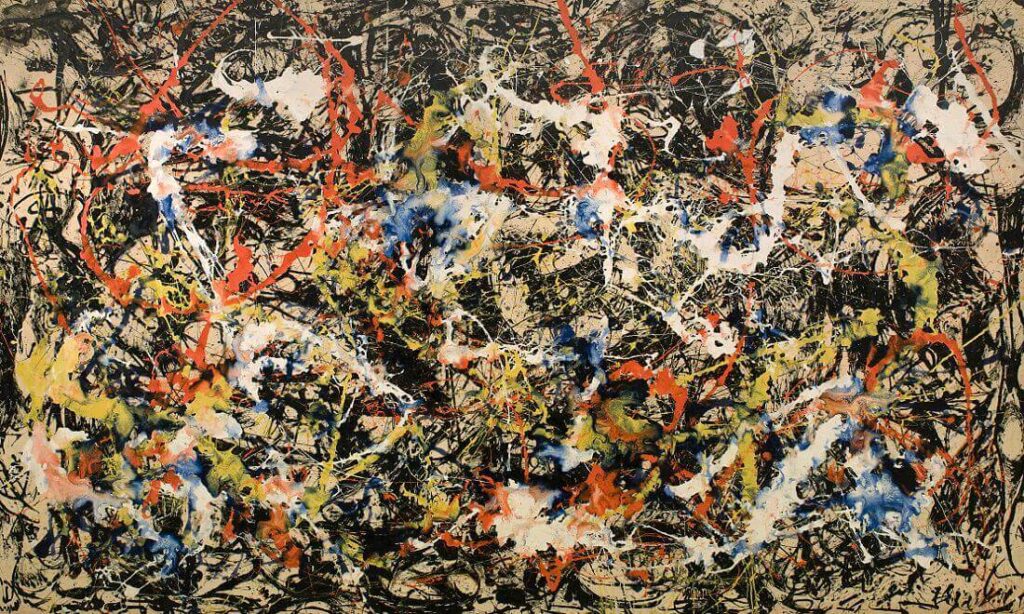
Jackson Pollock is fantastic artist, despite criticism for his work’s abstracted features. Pollock chose words to describe art that was not subjective, and much more emotive.
Convergence by Jackson Pollock I want to express my feelings rather than illustrate them. It doesn’t matter how the paint is put on, as long as something is said. On the floor, I am more at ease. I feel nearer, more part of the painting, since this way I can walk around it, work from the four sides and literally be in the painting. When I’m painting, I’m not aware of what I’m doing. It’s only after a get-acquainted period that I see what I’ve been about. I’ve no fears about making changes for the painting has a life of its own.
Louise Bourgeois
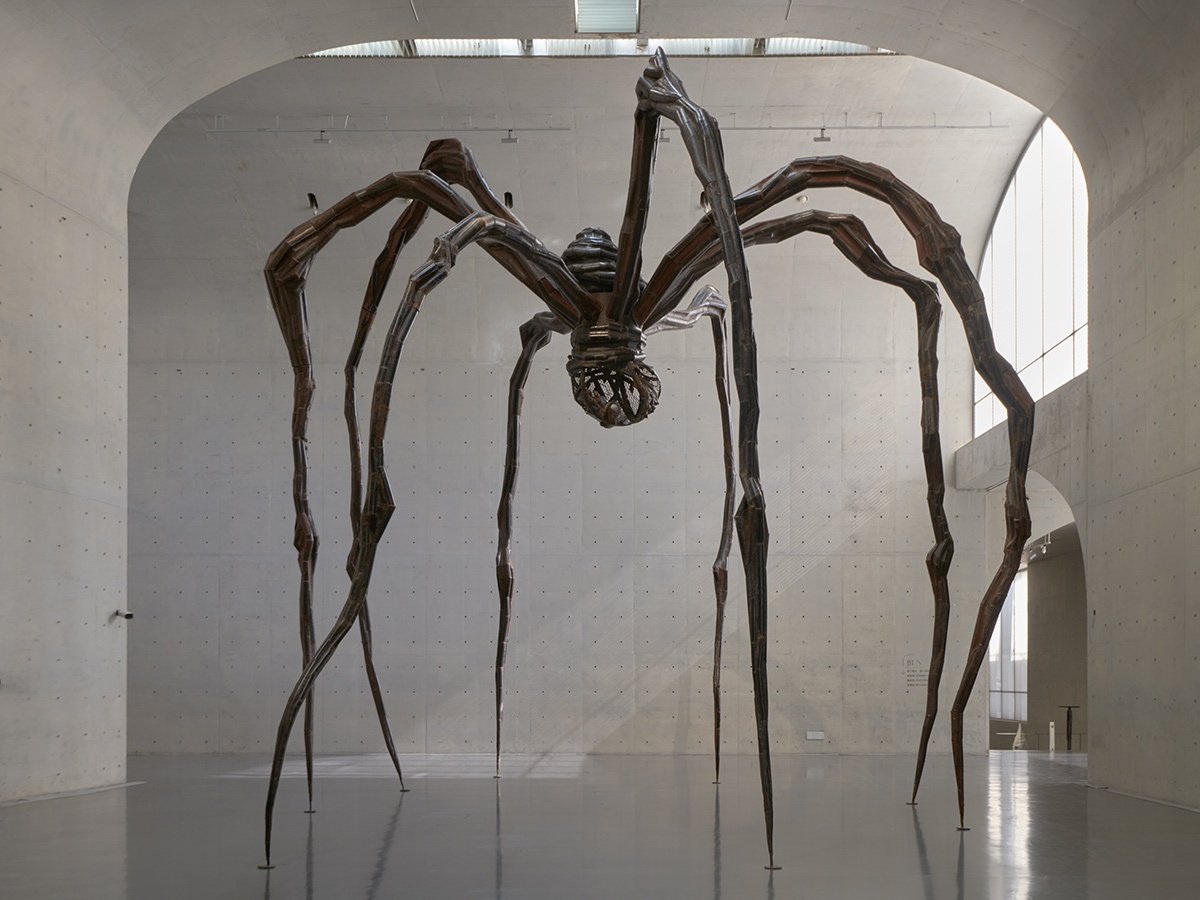
Louise Bourgeois’s massive spider sculptures are really cool and worth sharing. She started creating these steel structures in the 1990s, contrasting her previous styles. The words she chose to describe her art explain the metaphorical allegory behind the sculpture.
Spider by Louise Bourgeois I’ve drawn my whole life. My parents were in the tapestry restoration business, and as a young girl, I would draw in the missing parts of the tapestry that needed to be re-woven. My ability to draw made me indispensable to my parents. I came from a family of repairers. The spider is a repairer. If you bash into the web of a spider, she doesn’t get mad. She weaves and repairs it. ‘The Spider’ is an ode to my mother. She was my best friend. Like a spider, my mother was a weaver. . . Like spiders, my mother was very clever. Spiders are friendly presences that eat mosquitoes. So, spiders are helpful and protective, just like my mother.
Many of these masters use words to describe art with passion, flame, and emotion. Notice how they use first person POV, relatively simple diction, and still manage to communicate what the art is about and what it means to them.
Tip 6: Get inspired by Underrated Artists
I want to include some artist statements of underrated artists as well. I’ve met many talented and creative individuals, and I would like to share their art and artist statements in this section.
August Lamm
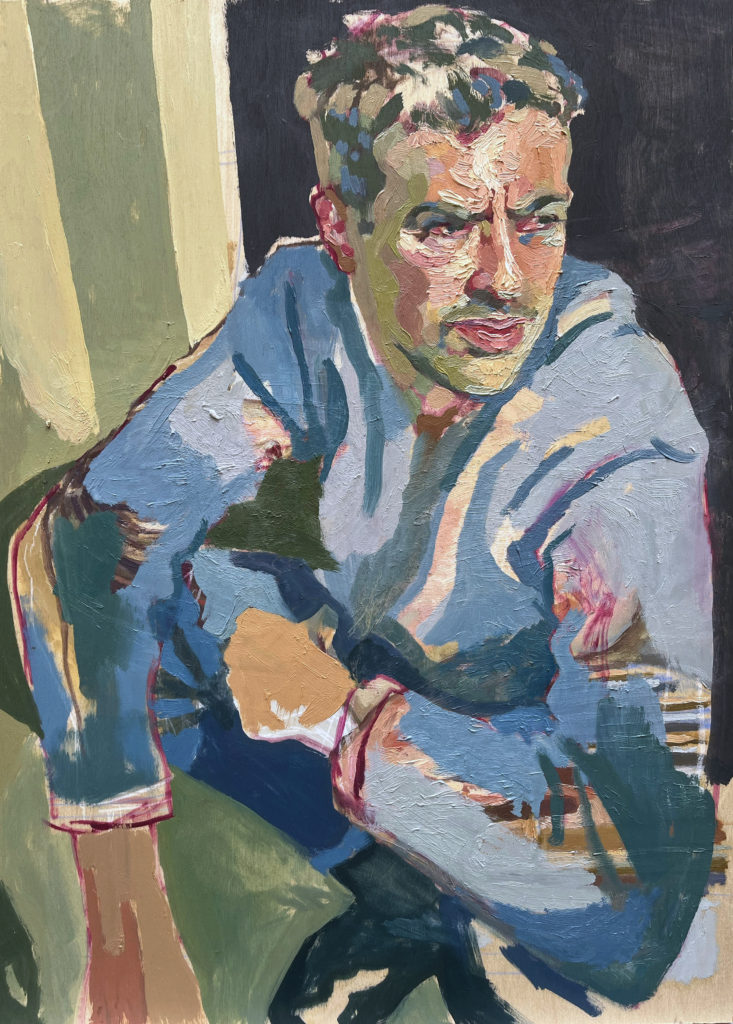
August Lamm is an incredible portrait artist, and I’m very excited to share her artwork. She typically uses ink and oil paints. In this piece, I especially love the use of complementary colors in the man’s face, the contrast of detail versus an almost unfinished impressionistic appearance, and of course, the simplicity of the artist statement. It’s very painterly and I love it. Be sure to check out more of August’s works on her Instagram!
The artist statement included in this painting is short and simple compared to others in this article. Regardless of length, it is powerful and emotional and allows the viewer to connect with the artist, and maybe even the subject, on a more intimate level.
Murray by August Lamm Sometimes you paint over an old painting and wonder why you waited so long to let go
Erika Wilson
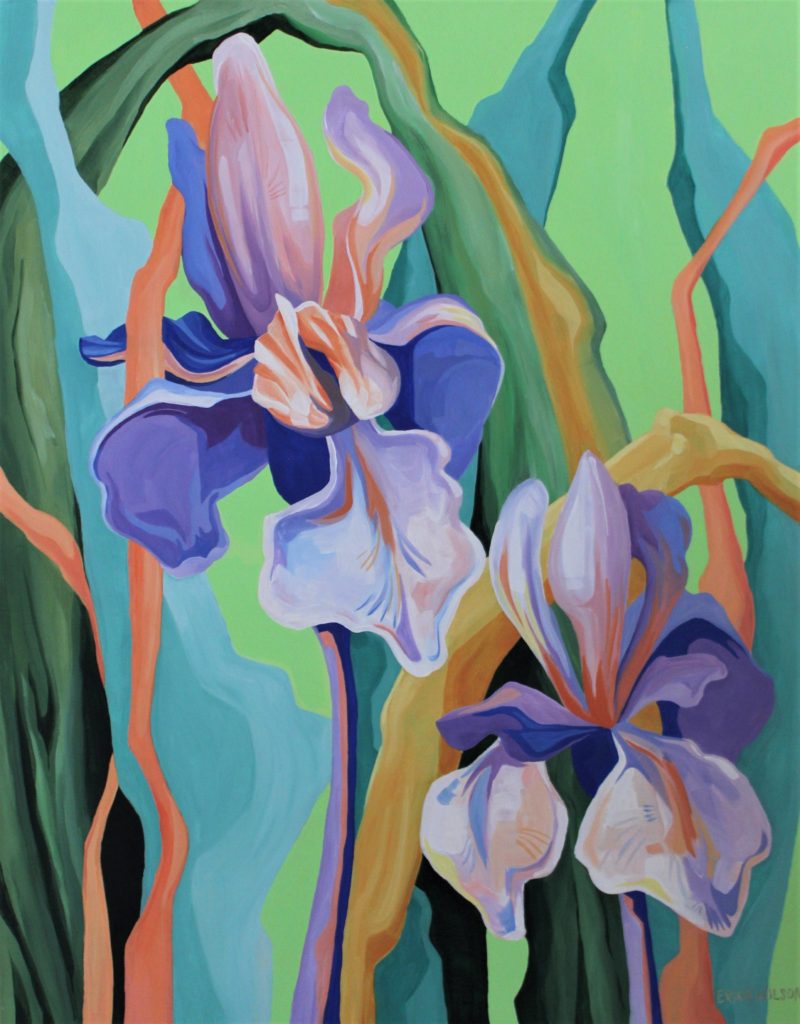
I first discovered Erika Wilson at a local arts market. Her work was captivating and I wanted to learn more about this incredible artist. Erika provided two artist statements, proving her knowledge of writing to a certain audience.
In the first artist statement, notice the purpose is primarily for social media, and make sure to follow her Instagram! Erika uses first person POV and includes the dimensions and mediums used in the work. She also includes emojis and middle dots between paragraphs, a common spacing technique for Instagram, showing that she knows her audience.
There Is Still Time by Erika Wilson So often I am eager for the future, reminiscent of the past, and losing track of the time in between. Feeling afraid or anxious that I don’t have time for everything. The weighty pressure of needing to make each day count. . This painting reminds me that a day is LONG when we are present for it, and immeasurably valuable regardless of what I do during it. Some days are filled with intentional time and mindfulness, some days I am meaninglessly busy and pointlessly stressed out, and some days I indulge in doing nothing at all. All are good days, and there is still time ✨️ . . . “There is Still Time” 22″ x 28″ acrylic on canvas Available
The next artist statement is noticeably more professional. In particular, notice how Erika adapted the bullet points into dashes and uses clear spacing, giving a cleaner appearance, similar to a resume. Erika’s use of words to describe art discuss her inspiration, techniques, and purpose in under 100 words. It’s simple, effective, and one of the best artist statements I’ve seen.
——————-
Hello! I’m Erika Wilson, a visual artist based in Salt Lake City, UT.
My work is deeply inspired by natural wilderness and the lush, strange, beauty of the botanical world. Equally, my artwork draws from cultivated nature found in urban spaces: gardens, houseplants, and roadside scrub alike.
I use vibrant color and dramatic line to create imagery that provokes wonderment, engages curiosity, and invites viewers to experience their senses unreservedly.
At its foundation, my artwork is a celebration of our intimate connection to nature, in the many forms we may find it, no matter how ordinary or unusual.
Kyle and I actually went to the same arts high school. We both studied Visual Arts and I’m really proud to see how he has grown as an artist. Please go follow his Instagram account here!
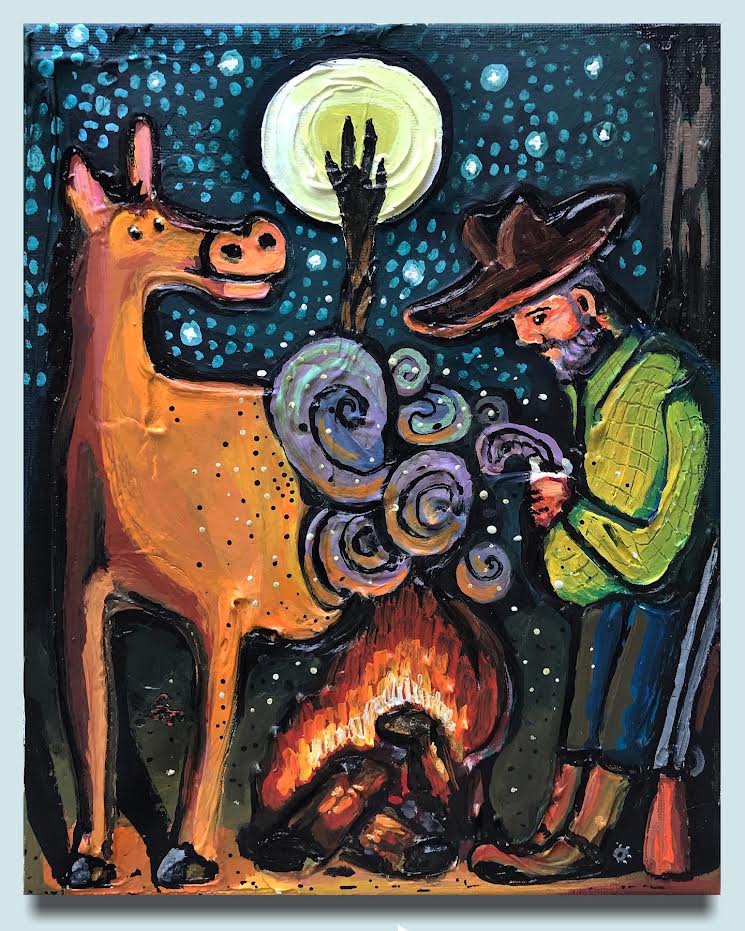
Kyle has a stunning impasto painting technique that really gives life to contrasting flat cartoon-like characters. His works are animated and fun to look at, as well as visually interesting.
Kyle’s artist statement uses first person POV to describe his thoughts and organizes the paragraphs increasing in size. He also continues to deliver contrasting elements. The whimsical and colorful style conveys comfort, in this “cozy painting,” unlike the realities in the life of a western cowboy, portrayed in the serious face and stature of the man.
Campfire Cowboy by Kyle Drury The Campfire Cowboy is part of a series of paintings I call Worsterns. I’m thinking about the bad things that could and maybe should have happened to old time cowboys. They’re dramatic paintings of cowboys falling victim to the dangers of the wild west. The danger is less obvious in Campfire Cowboy. It’s a cozy painting of a well-fed fella and his horse relaxing and drinking coffee by the fire. Its more about having a feeling that something bad is about to happen instead of witnessing it firsthand.
Julia Hill
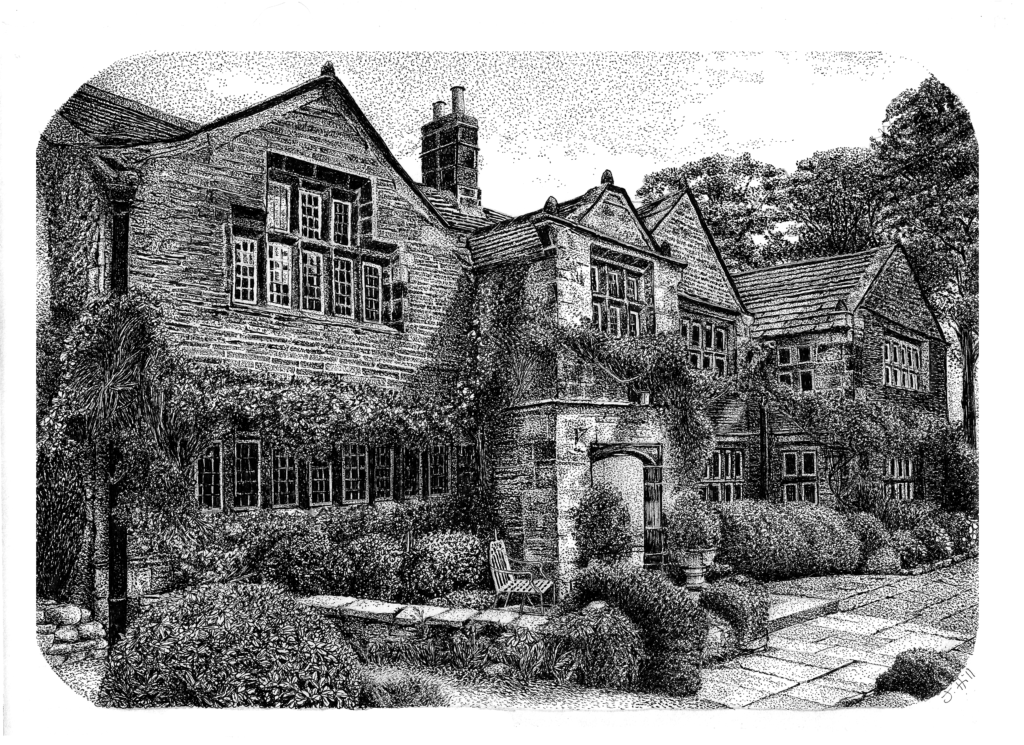
I found Julia’s artwork on Instagram and I was awestruck, definitely make sure to give her a follow! She uses fine pens to create stunning realistic and hyper detailed landscape drawings. Her artist statement is also written in first person POV and describes her medium of choice, thoughts behind her style and technique, and how her personal background impacts her artwork. The words to describe art express her talent and experience with the medium, her knowledge of principals and elements of design, and the contextual origin of the content.
Truly, Julia’s words describe the artwork better than I could ever analyze it. This is a perfect example of the importance of an artist statement and how it can compliment the visual artistry of the work.
Holdsworth House – A Place in Time by Julia Hill As an Illustrator, I predominantly use fine liners to create my images. I use 0.03, 0.05 and 0.1 black uni pens. I find drawing using a single black line extremely therapeutic and somewhat fascinating. I am driven by the constant complexities of creating depth, texture, light and shadow within my work using only a single black line. Holdsworth House presented itself to me as a challenge, to combine the solidity of a beautiful structure and the softness of the environment it sits within. Nature, the environment, wildlife and botanicals form the basis of all of my personal work. The natural environment has held a particular fascination for me since I was a child. The intricacy of my drawing allows me to connect to each subject on a much deeper level. ‘Seeing’ the intricacy within a form and recreating it with a mix of lines, dots and patterns to create an overall visual effect. My work is not just a simple depiction of the subject I have chosen, but rather a visual expression of my emotional and spiritual connection to what I am drawing.
What are some artsy words to describe art?
In this final section, I want to recall the elements and principles of art and design. These are the building blocks of aesthetically pleasing work, and great references to use when describing your own art. The list of elements and principles of art are generally a good place to start when looking for words to describe art. Basically, there are six elements of art and eight principles of art.
Tip 7: Use the Elements of Art and Design
Color: Generally associated with hue, value, and intensity, color is one of my personal favorite elements of art. Check out examples of color in my art here.
Shape: Associated with height and width, shape can be organic and/or geometric.
Form: I associate this element with volume, height, width, depth. It can be two or three dimensional because it gives an illusion of value (drawing) or real value (sculpture).
Line: This element is generally associated with being implied, abstracted, parallel, or crossed.
Space: This element is generally associated with positive (subject matter) and negative (background) areas. Space creates the illusion of depth through value.
Texture: This element is generally associated with how the art feels or looks like it feels (soft, bumpy, hard, slick, squishy, sharp, smooth).
Tip 8: Use The Principles of Art and Design
Rhythm: This principle of art and design is generally associated with patterns, movement, repetition, tempo, and beat.
Harmony: This principle is generally associated with unification, familiarity, and connection.
Balance: This principle of art is generally characterized by symmetrical, asymmetrical, and radial.
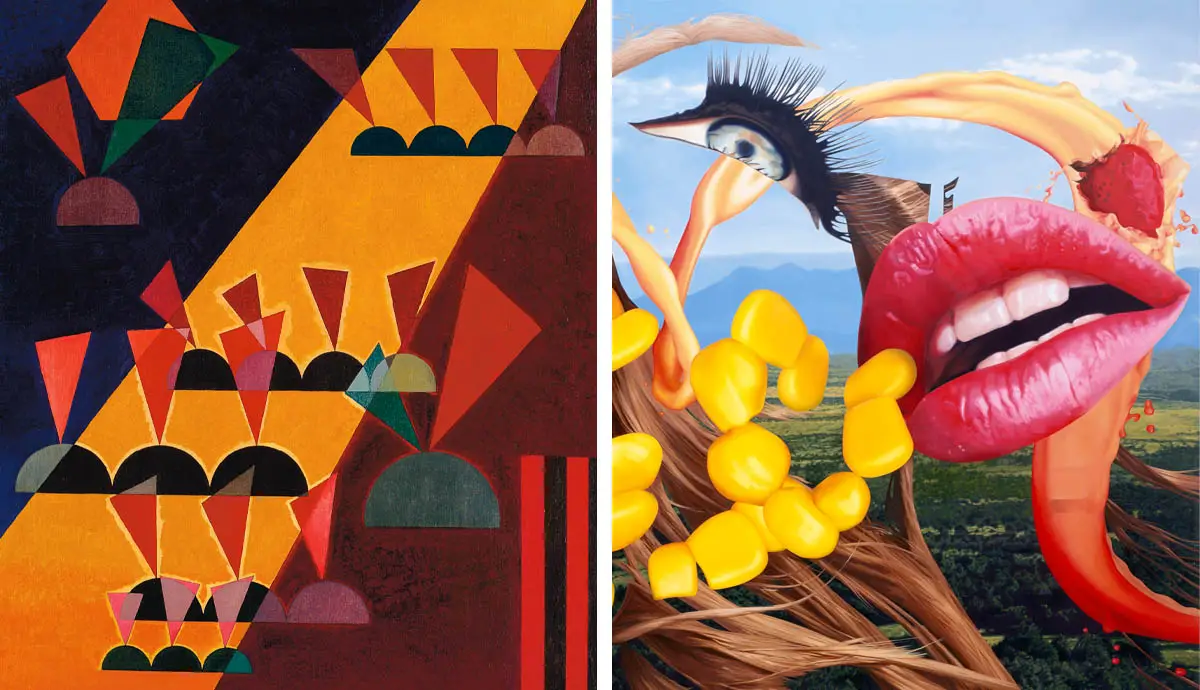
Contrast: This principle is generally used to highlight the focal point, or the subject, of a work of art. Pop art is a great example of using contrasting colors, especially complementary colors (colors opposite each other on the color wheel i.e. orange and blue).
Movement: This principle is generally associated with dynamism and action and helps to guide the viewer’s eye to the focal point.
Pattern: Similar to rhythm, this principle of design is generally associated with duplication.
Proportion: Relativity is a huge part of this principle of art and design. It is also related to relationships and size.
Variety: Generally associated with diversity and interest, variety captures attention, similar to contrast. Variety partners with unity to establish balance.
Conclusion: best words to describe art
In this article we defined an artist statement, discovered tips to effectively use words to describe art, and reviewed examples of artist statements in the wild.
You can choose to describe art in any way you want, because it’s your art. You can call it ugly or nonsensical just as easily as you call it stunning and deep and impressive. Adjectives are subjective in the same way you and your artwork are subjective.
However, if you want people to understand your artwork, you may need to clearly communicate what it means. Using artistic terms helps to encourage the viewer to look past the image and think about the process, materials, backstory, and time dedicated to create the art. Use art words to describe art.
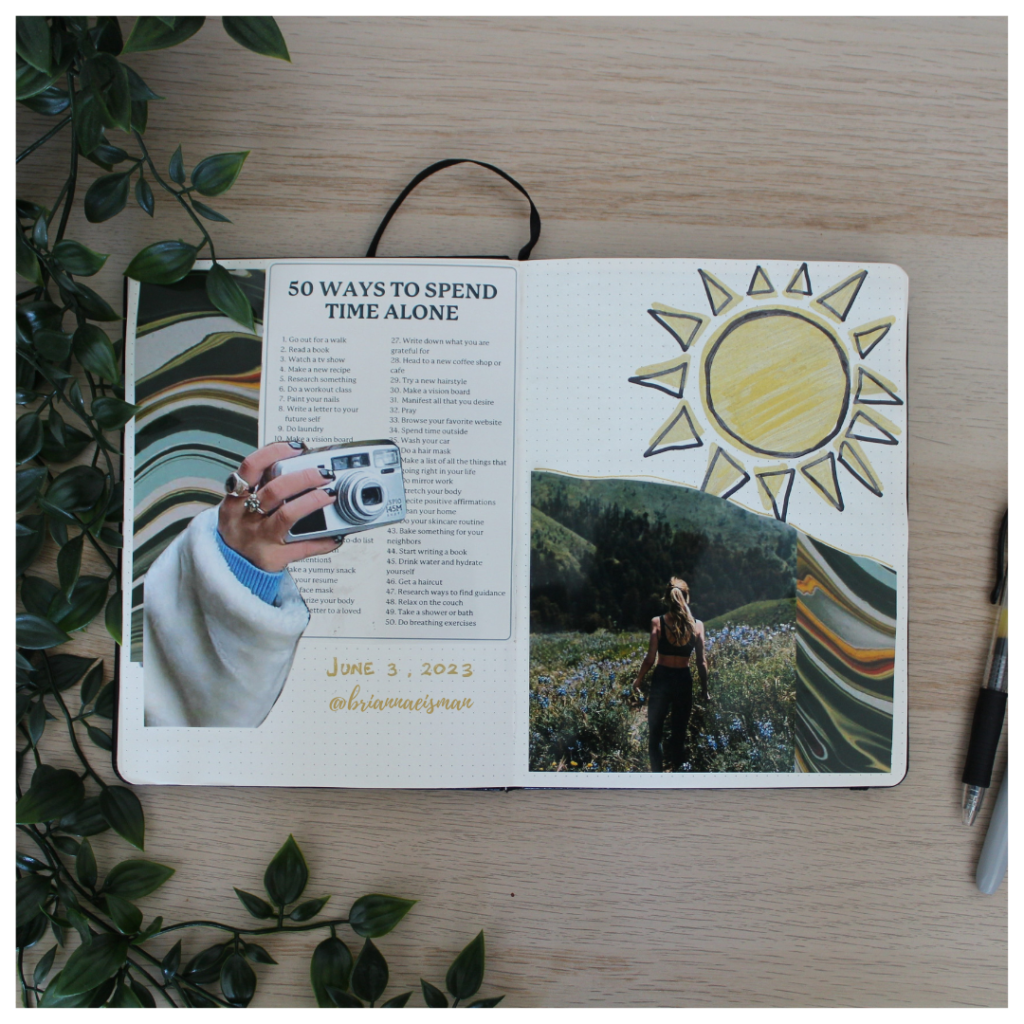
50 Ways to Spend Time Alone by Brianna Eisman After I graduated college, I felt especially lonely. You go from being surrounded by many curious and exotic people to a much smaller group. And then, you realize working 9-5 means you have even less time to spend with friends. I found this list of 50 Ways to Spend Time Alone on Pinterest. I hope you can use it and learn to love spending time alone as much as I have.
In this sense, writing a clear, optimized, and creative artist statement can add value to your artwork. There are many words to describe art, but an artist statement is unique because it comes directly from the creator. These are your words to describe art.
You, the artist, have the chance to tell the world what your art really means. You are the one to give your art value.