social media

8 Reasons to Save your Vacation Photos

Introduction

A getaway vacation offers the perfect opportunity to explore new destinations, create lasting memories, and capture breathtaking photographs. Whether you’re planning a trip to the sunny beaches of California, the enchanting streets of Italy, or the rural landscapes of Iceland, you and I both know you’ll probably take too many photos.

It’s okay to capture unique visuals and fun memories, but when you get home, what happens to those photos? Maybe you proactively print and frame your landscapes or post your favorites on social media.

In this article, I hope to convince you to actually save your vacation photos and use them in eight unique and creative ways. From sharing them with loved ones to scrapbooking your travels, remember that these are your vacation photos — your memories. It’s entirely up to you what you choose to do with these images, but maybe you can use them to make your world a little more artsy.

Part 1: Pre-Planning Your Vacation Photos

Research and Plan Ahead

Before embarking on your summer adventure, take time to research your chosen destinations. Familiarize yourself with iconic landmarks, natural wonders, and local culture. Explore online travel guides, photography blogs, and social media platforms for inspiration and to discover unique photo opportunities.

Travel influencers like Kiki from The Blonde Abroad or Kate from Adventurous Kate offer insights and inspiration for anyone wanting to travel.

By planning ahead, you’ll have a clearer vision of the shots you want to capture and maximize your time during your vacation.

Pack the Right Gear

When it comes to photography, having the right gear is crucial. While professional cameras and lenses can yield exceptional results, a high-quality smartphone with advanced camera features can also produce stunning images.

Choose a camera or smartphone that suits your preferences and skill level. Additionally, make sure to pack spare batteries, memory cards, a tripod for stability, lens filters for various lighting conditions, and a durable camera bag to protect your equipment during travel.

For me, I love my Canon Rebel DSLR (Digital Single Lens Reflex) camera. You can find the newest version, the Canon Rebel T7, on Amazon for under $500.
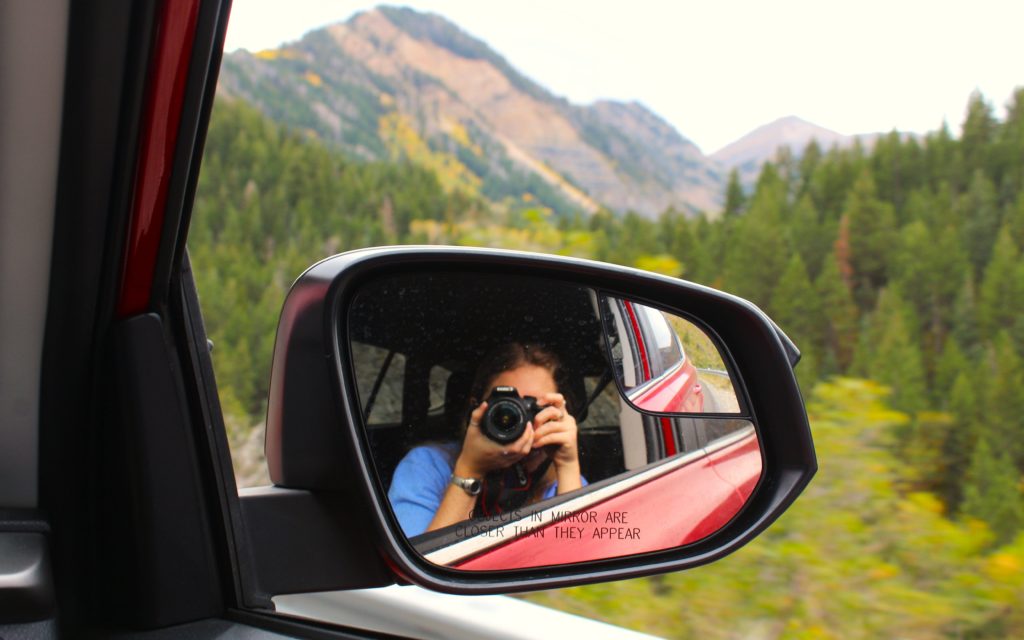
Photograph of Brianna Eisman taking a photo in the mirror of a car driving in the Utah mountains in the Alpine Loop vacation photos with Canon Rebel T5 DSLR Camera

Capture Authentic Moments

While iconic landmarks are undoubtedly worth photographing, don’t forget to capture the authentic moments that make your summer vacation special. Candid shots of friends and family, street performers, bustling markets, and intimate moments with loved ones can tell a compelling story and add depth to your travel album.

Be observant, patient, and ready to seize those fleeting, genuine moments that truly reflect the spirit of the places you visit.

Embrace Golden Hour

The “golden hour” refers to the period shortly after sunrise or before sunset when the light is soft, warm, and diffused, casting a magical glow on your subjects. During this time, the colors are more vibrant, shadows are softer, and the overall atmosphere is simply enchanting.

While it may be a little inconvenient waking up early on vacation, it may be worth it to capture the incredible morning light. Take advantage of the golden hour to capture breathtaking landscapes, silhouette shots, and romantic portraits that truly evoke the essence of your vacation destinations.
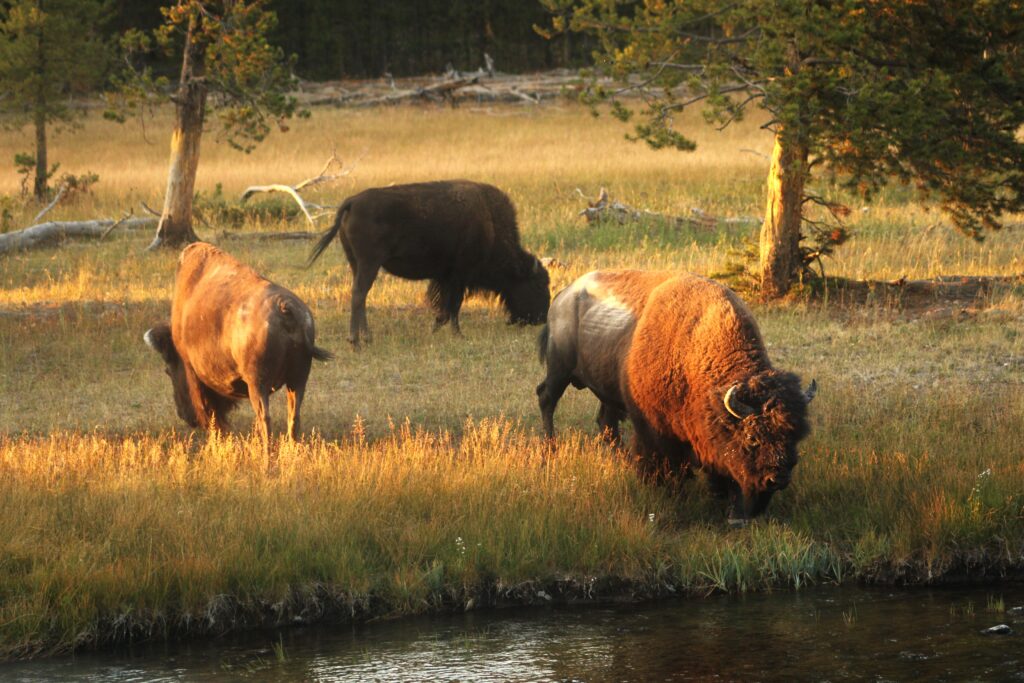
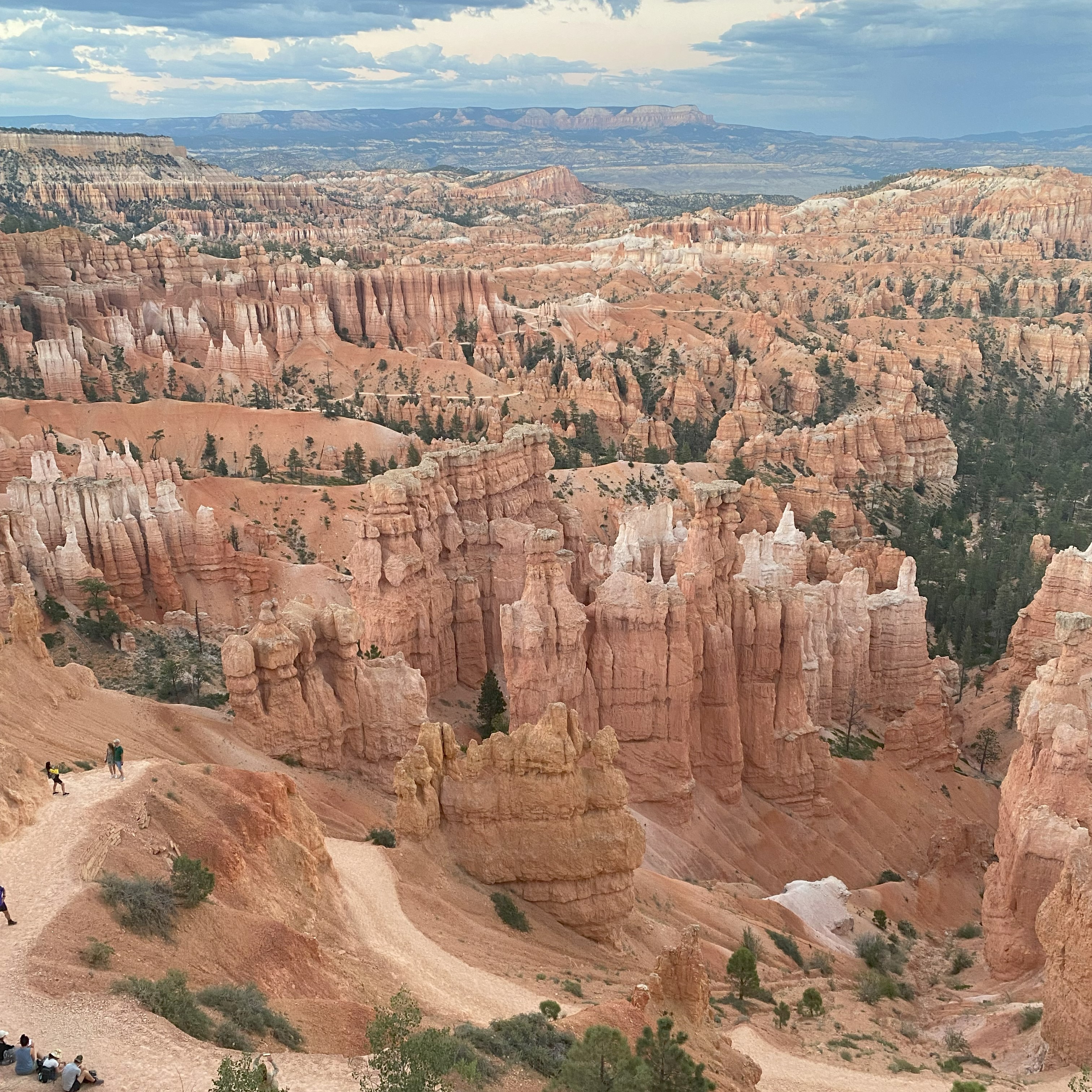
golden hour sunset sunrise photography vacation photos yellowstone wyoming buffalo bison

Experiment with Perspectives and Composition

Don’t be afraid to break away from conventional angles and experiment with different perspectives and compositions. Get down low for a unique worms-eye-view shot, climb a nearby hill for a stunning aerial view, or use reflections in water or mirrors to add intrigue to your photos.

Play with leading lines, the rule of thirds, and the placement of elements within the frame to create visually engaging and dynamic compositions that draw the viewer’s eye into the scene.

Part 2: Processing Your Vacation Photos

After an exciting vacation, the sheer number of photos can feel overwhelming, especially if you’re like me and want to get the best pose at each photo opp. To ensure your memories are organized and ready to share or treasure, processing them thoughtfully is key. Below are my tips for how to simplify the process and make your vacation photos shine.

Delete As You Go

Not every photo needs to make the final cut. As you review your images, delete duplicates, blurry shots, or vacation photos that don’t capture the moment as you intended. This keeps your collection manageable and helps highlight the best memories.

Typically, if I’m on a multi-day vacation, I try to delete 5-10 bad vacation photos anytime I get a down moment. These moments could be while you’re waiting for family or friends to get ready in the morning, on a long car trip, or right before bed at night.

Choose a Few Favorites From Each Day

Vacations are filled with countless moments, but selecting a handful of highlights from each day can create a more meaningful narrative. These curated images will tell the story of your trip without overwhelming viewers with too many similar shots.

Likewise, choosing these vacation photos ahead of time while on your trip will help you down the road when posting or scrapbooking the vacation.


Edit Consistently

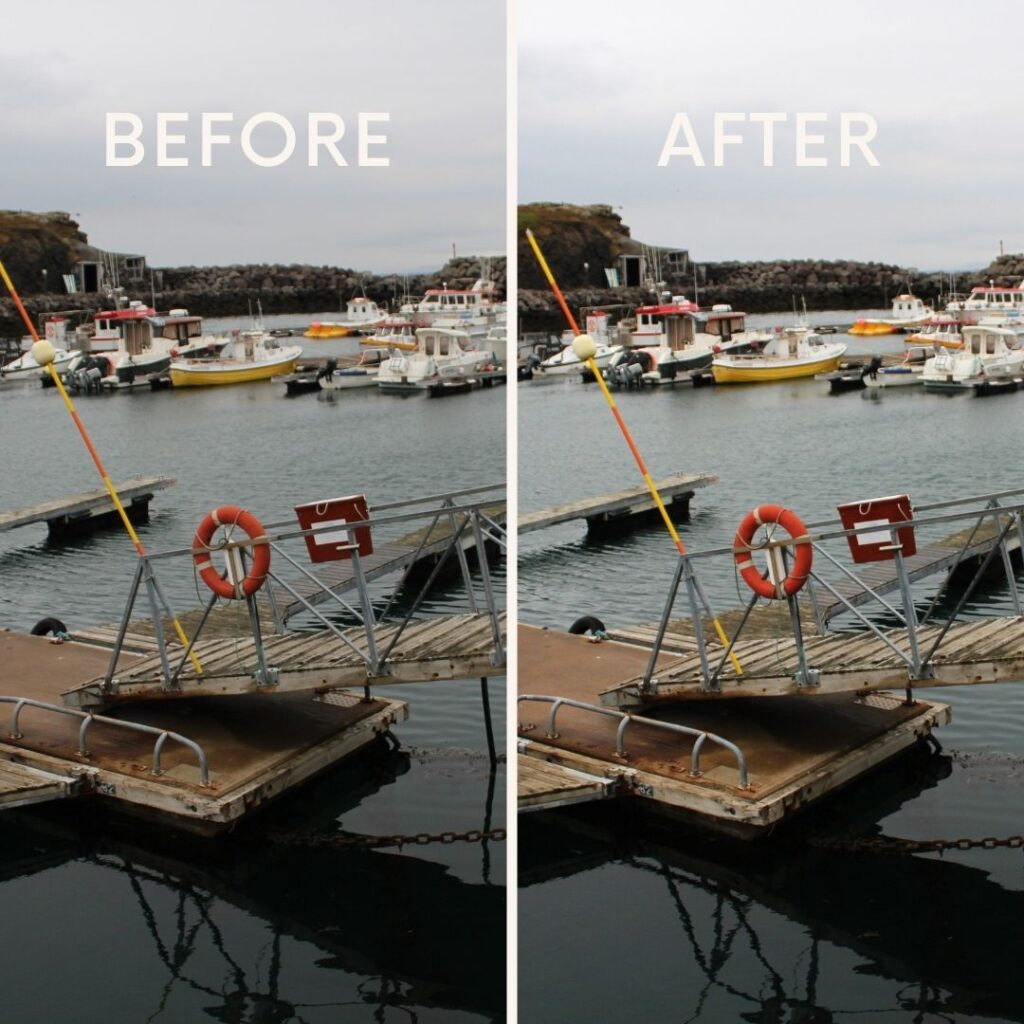
A cohesive look ties your photos together beautifully. Whether you prefer vibrant and colorful edits or a soft, minimalist style, apply similar filters or adjustments across your vacation photos. This process of editing consistently ensures your vacation album feels polished and harmonious.

I’ve noticed even the slightest contrast and saturation boosts can make your vacation photos really pop!
Part 3: Actually Doing Something with Your Vacation Photos

Now that your photos are curated and polished, it’s time to share them and make them part of your life. Vacation photos are meant to be enjoyed and remembered, not hidden away in digital storage. Here are two creative ways to showcase your memories:

1. Post on Social Media

Social media is a fantastic way to share your travel highlights with friends and family. Create a carousel post or a series of story highlights that tell the story of your trip. Pair your photos with captions that bring out the emotions and moments behind the images—whether it’s a funny anecdote, a breathtaking view, or a memorable meal.
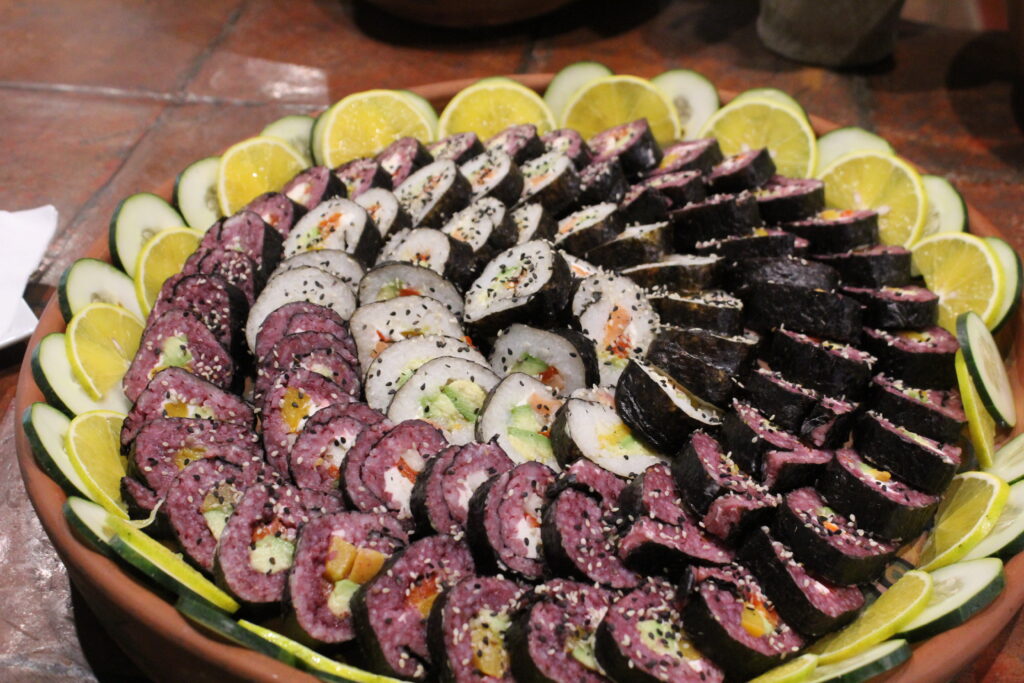
alpaca sushi in peru for cool photos to post on social media
While visiting Peru, I had the incredible opportunity to eat at a sushi buffet. I tried many unique foods including raw alpaca sushi!

While this may be the easy option for many, you can always add a creative and unique spin when posting your vacation photos. For instance, you can use tools like Canva or Photoshop to create collages of your vacation photos. Marissa at Pretty Presets and Actions has a great Photoshop tutorial for how to create a collage in a carousel.

Turn your best shots into art by printing them in various sizes and creating a gallery wall. Choose matching frames or a mix-and-match aesthetic for a modern touch. Arrange the photos in a pattern or collage to make a visually interesting story of your travels. Sites like Printique or Walgreens make ordering prints easy.

Give your favorite photos a permanent place in your space by turning them into a gallery wall. Select a mix of prints in various sizes and arrange them in a pattern that complements your décor. A gallery wall not only brightens your home but also serves as a daily reminder of your adventures and the memories that make you smile.

3. Host a Photo Swap Night

Invite your friends over to share their vacation photos while you showcase yours. You can project images on a TV or wall and let everyone narrate their adventures. Bonus points if you serve food inspired by your travel destination! It’s a fun way to connect over shared stories.

4. Design a Custom Map

Pin your travel destinations on a digital map and include your favorite photos. Services like Mapiful let you create a physical map to display, but Google Maps or Canva are great for digital versions. It’s a chic way to commemorate where you’ve been and inspire future adventures.

5. Make Photo Gifts

Turn your photos into everyday items like mugs, tote bags, or phone cases. Websites like Vistaprint and Zazzle let you customize gifts easily. These are not only fun to use but also make great gifts for family or friends who might have shared the trip with you.

6. Make a Time-Lapse Video

Compile your travel photos into a quick time-lapse or slideshow. Apps like iMovie or CapCut let you add transitions, music, and effects. Focus on telling a story—like a “day in the life” theme or a before-and-after comparison of your destination.

7. Turn Photos into Postcards

Design custom postcards using apps like PostSnap. Mail them to friends and family with a personal note about your adventures. It’s a nostalgic way to stay connected and share your favorite moments tangibly, especially in this digital age.

If you’re proud of your photography, consider sharing your work with the world by submitting your images to a copyright-free website like Unsplash or Pexels. These platforms allow others to use your photos, showcasing your creativity to a wider audience.

Personally, I post my vacation photos on Pexels. I try not to include images of faces nor identifiable aspects. Currently, my images have been viewed over 150,000 times, downloaded by people all over the world and even featured in a local news article.

Pexels image from Brianna Eisman featuring UNF Student Union building in Florida
As one of my most successful copyright free images, this photograph features the Student Union Center at the University of North Florida, my alma mater.

Your photography could inspire or assist someone else’s project, turning your vacation photos memories into a meaningful contribution to the art community. For example, this photo of UNF was featured in an article on ReligionNews.com. This exact photo was also published with online articles about the Master of Science in Mechanical Engineering program at UNF and why you may need a hard copy of your diploma.

Conclusion

Summer vacations offer a wealth of photographic opportunities, allowing you to capture the essence and beauty of your chosen destinations.

By planning ahead, packing the right gear, and embracing the unique characteristics of your travel destinations, you can create a stunning collection of photos to remember your adventures. Then, you can actually do something with those images instead of letting them fade into your memories. Whether you choose to post and share your vacation photos, or create something artsy with them, allow yourself to finalize your vacation with a memorable craft.

So, grab your camera, set off on your journey, and let the world be your canvas.

8 Reasons to Save your Vacation Photos Read More »
How to Visualize Data as a Multi-Skilled Artist

This article may be a little different from others on this website. Typically, I try to write about art history, unique styles and creative techniques, and while data visualization feels somewhat foreign to a traditional painting and drawing artist, I believe it’s a necessary skill for the future of promoting and sharing art.

I have my Masters of Science degree in Business Analytics, and took classes in data analytics, visualization, and programming. However, I understand that many artists pursue art degrees. So I’m here to explain, as best I can, why artists should learn data visualization skills and how to merge creativity, color theory, and analytics to visualize data as an artist.

Visualize data part 1: What is data visualization

I assume you know what data is; heck, you probably learned Excel before cursive. Data visualization is essentially the process of transferring records of information into a summary chart or graph.

When you paint with acrylics, you build the painting. You start with the underpainting and add shadows and mid-tones and lights to eventually tell a story. To visualize data, you use a similar process, except with pieces of information, added one by one, to tell a story.

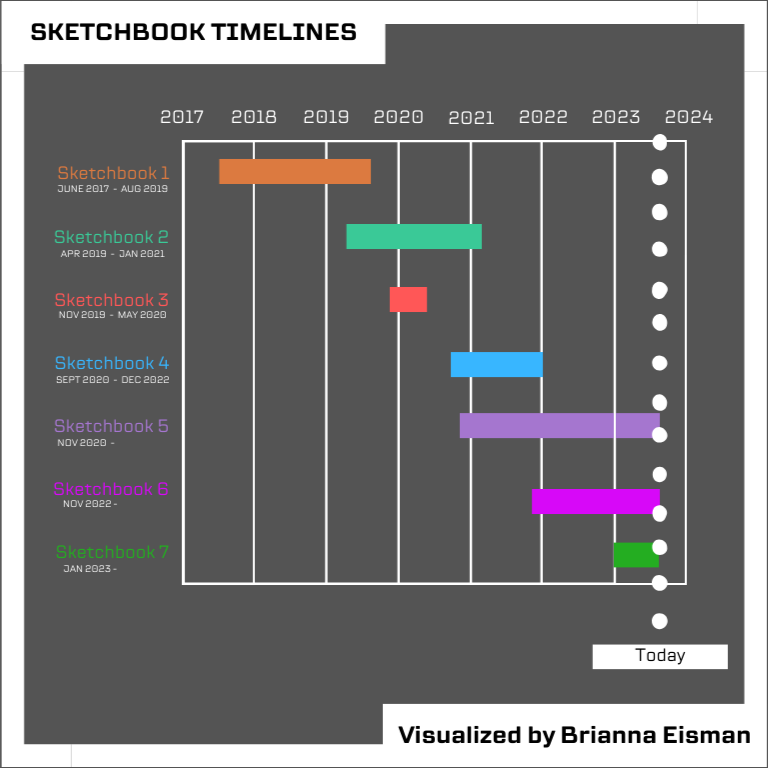
I keep track of when I start and end my sketchbooks, and in Fall 2023, I recorded the data in a Gantt chart, seen below.

Gantt Chart showing Sketchbook Timelines ending Fall 2023

This visualization shows that since 2017, I take around 2 years to complete a sketchbook, and work on 2-3 sketchbooks at a time. During the pandemic, I completed Sketchbook 3 in about 7 months, and started 2 other sketchbooks during 2020. But, why does this matter?

I visualize data to tell a story to improve my skills. This visual allows me to clearly see the speed at which I complete sketchbooks; this is the story. These sketchbooks are around the same size, with the same number of pages, so I can estimate how much artwork I can produce in a given amount of time. In order to expand my art business, this is a necessary metric to know in order to manage my time appropriately.

Visualize data part 2: Why is data visualization important

In truth, you don’t need to know how to visualize data to be a good artist. But, if you want to make money with your art, it may be a good skill to learn.

I adopted a social media marketing strategy and use app-provided analytics. I use many platforms, but in this article I will focus majority on Instagram and Pinterest. Social media platforms typically record insights like accounts reached, accounts engaged, profile activity, and advertising results.

Let’s break this section down into three parts: growth, engagement, and connections.

1. Growth

The first step in building a brand or starting a business is growth. You want people exposed to you and your product. Personally, I chose a digital marketing strategy. I built my website, ArtsyDrawings.com, and directed everything to this one place. I also started many platforms including Instagram, Pinterest, TikTok, RedBubble, Doodle Addicts, Pexels, Reddit, and Buy Me a Coffee.

To learn more about how I built my brand, check out my article 19 Ways to Improve Your Personal Brand.

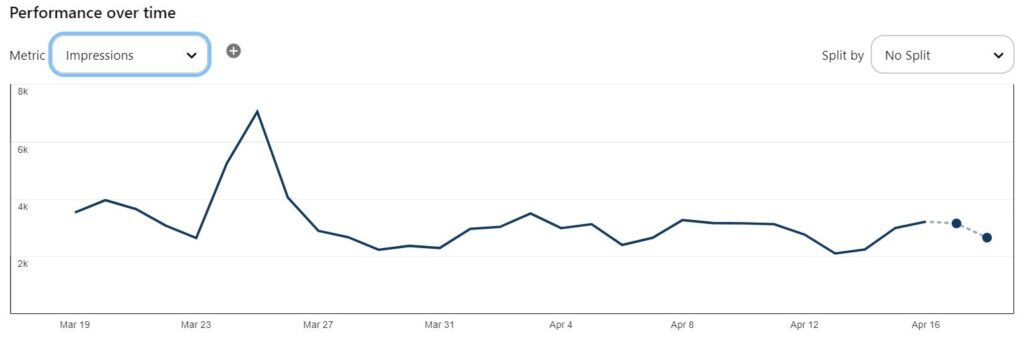
Growth is measured by impressions, and I’m proud to show 98,000 impressions over the past month on Pinterest.

Pinterest Impressions March 19 – April 18 totaling 97,979.

2. Engagement

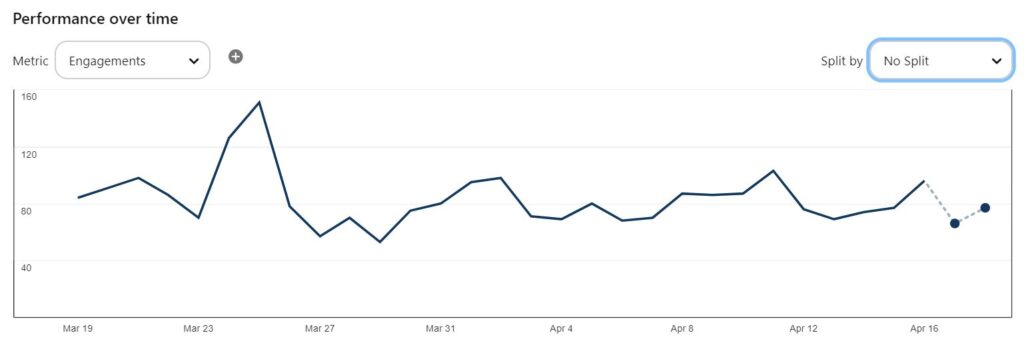
Growth is important, but so is engagement. On Pinterest, engagements are “saves, Pin clicks, outbound clicks, carousel card swipes, clicking a link,” etc.

While my Pinterest shows 98,000 impressions, it also shows only 2,500 engagements over the same period. So roughly 2.5% of my impressions are leading to engagements. And wait… that’s interesting…this line graph looks very similar to the impressions line graph above. This data visualization shows a possible correlation between impressions and engagement.

Pinterest Engagements March 19 – April 18 totaling 2,568.

So, then how do I improve my engagement rate? This starts with finding your target audience and marketing your business towards them.

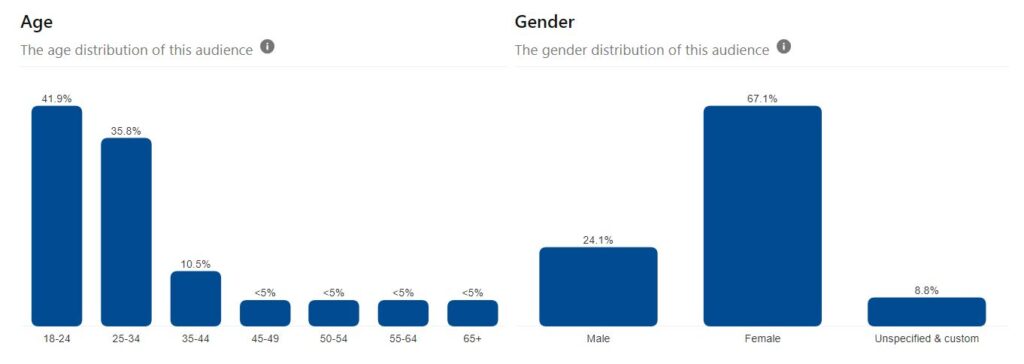
Both Pinterest and Instagram visualize data insights for your target audience’s age and gender. These are called audience demographics.

visualize data as an artist by first discovering audience demographics
Pinterest Insights show age and gender distributions for my audience.

Pinterest shows 77.7% of my audience between the ages of 18-34 and Instagram shows 85.6% of my audience between the ages of 18-34. Both accounts also show my audience is majority women.

3. Connections

Once I was able to target my audience, I tuned my business to accommodate this group of people. Establishing and growing these connections led to more business.

First, I realized that I fall into my target audience in terms of age and gender, and I assumed many of my followers were friends, family, peers, and coworkers I had met in person over the years.

Next, I created a free email subscription for people who want to know me on a more personal level. Every month I send out an Artsy Drawings Newsletter highlighting the art I created recently and updates to my website. For this newsletter, I’ve recorded a 64% open rate and a 12% click rate since August of 2023.

If you are interested in joining my Artsy Drawings Newsletter, please subscribe below!

Subscribe

Sign up for my monthly newsletter and stay up to date

*

By better understanding my target audience and app-provided visualizations, I’m able to share my art with people who support me. This is one of many ways how I benefit from knowing how to visualize data as an artist.

Visualize data part 3: Social Media is not on your side

I want to be honest with you. Social media is a nice serotonin boost for my ego, and it did help me understand my target audience. However, social media metrics are designed to confuse you, and tend to tell the story you want to hear, not the actual story.

I recently learned Instagram does not record insights in your time zone. So, when you look at the app-provided insights, the bar graph showing the most popular times for your audience, may not be recorded accurately. Instead, “Facebook and Instagram’s APIs format all of their data to match the time zone at their headquarters (UTC -8:00 or UTC -7:00 during daylight saving time).” Ironically, this tidbit is not listed in the help section of Instagram.

Likewise, Instagram lacks certain details when they visualize data. The app tends to leave out axis titles and specific units of measure. While I can see that my followers are most active between the hours of 6am-6pm, the visual does not specify the unit of measure. What metric represents activity?

Recording your own data is necessary to beat the algorithm

So, if social media is not providing accurate data, then I must rely on my own data collection. As an artist, I find knowing how to visualize data effectively and accurately is a necessary skill to beat social media algorithms.

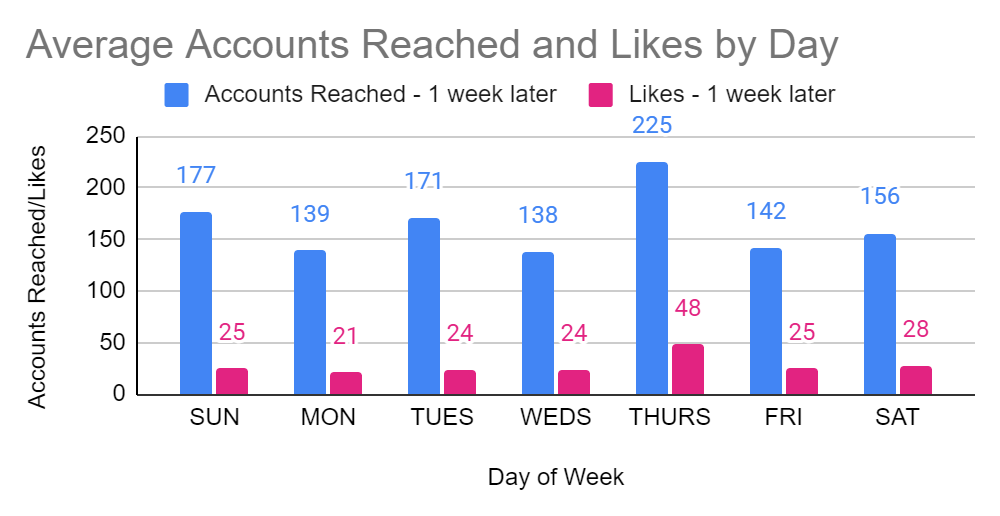
According to Instagram Insights, the best day for me to post is Saturday, with Monday as a close second. According to my personal data collection, and the visual I created below, Thursday is by far the best day for me to post. Instagram is most likely inaccurate because the data can only pull 90 days back, while my records started August 2023, around 260 days ago.

Seasonality, posting frequency, holidays, media type, and changes in the algorithm can all impact this data, so having more data is more accurate. Recording my own information helps maintain my accuracy when I visualize data.

I created this data visualization to find which days are best to post on Instagram. For my account, Thursdays tend to have more engagement than any other day.

You’ll also notice on the above graph that my Accounts Reached averages significantly more than the likes I’m receiving. I’ve done extensive research, and the best theory I have to justify this trend is changes in the Instagram algorithm. You see, I solely use organic search on social media, meaning I don’t buy ads to promote my posts and I don’t buy followers or likes. My theory is that the platform wants me to spend money and is reducing my reach until I do.

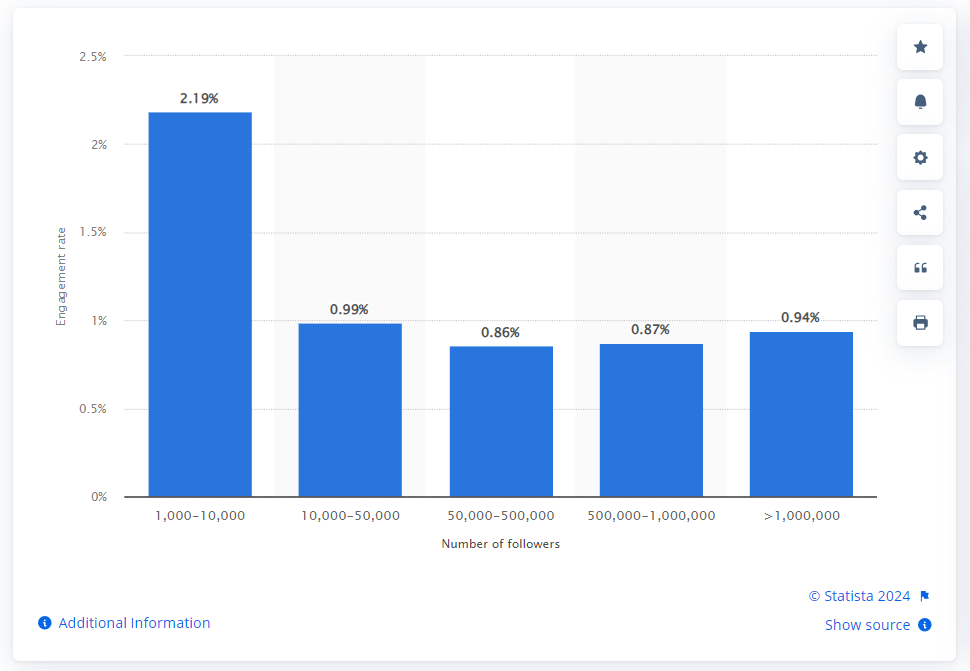
There’s no way to prove why my engagement appears low compared to my impressions, but compared to larger accounts, my rates are actually high. The below visualization shows global Instagram engagement rates in 2023 for accounts with 1000+ followers. Comparably, my average engagement rate is currently 15.4%.

Instagram influencer engagement rates worldwide in 2023, by follower count (Published by Valentina Dencheva, Mar 25, 2024)

Visualize data part 4: How to start recording data

So how do you record data? I think the best advice I can provide is to try different methods and see what works best for you. One of my favorite parts of data visualization, is that you choose the question and the data will tell the story. You can ask about social media metrics or website performance or how many times you eat vegetables in a month. You can record how long it takes you to complete a painting. You can record how many paintbrushes you own and which types you use the most.

Data visualization is a beautiful technology that we have access to. It’s a way of recording behavior and showing trends in contributing factors.

Recording online data

Personally, for website and social media metrics, I like Google Sheets or Excel and create visuals using internal charts and Pivot tables. If you collect big data, programs like Tableau, Power BI and JMP may be better options for visualizing your data.

I create a different worksheet for each platform and columns describing the metrics that platform uses. Keep in mind, it’s not wise to compare different platforms’ metrics to one another. For example, you should not compare Instagram likes to Pinterest saves to Reddit upvotes, there are just too many variables involved.

I tend to choose a date once a week to record my data. This helps me manage my time best, and not overwhelm myself by feeling I have to record everything all the time. I use Google Calendar to schedule posting, data collection, and email newsletters.

As an artist, I strive for beauty in my creations, and this remains true for when I visualize data. I enjoy choosing how to format the data in a visually pleasing and effective way. Here are some tips to visualize data:

  • Use branded colors to your advantage
  • Use colors that work well together (color theory)
  • Remember that pie charts are visually hard to understand if the numbers are close
  • Use San Serif fonts for headers and Serif fonts for paragraphs
  • Add axis titles to clarify units of measure

Recording personal data

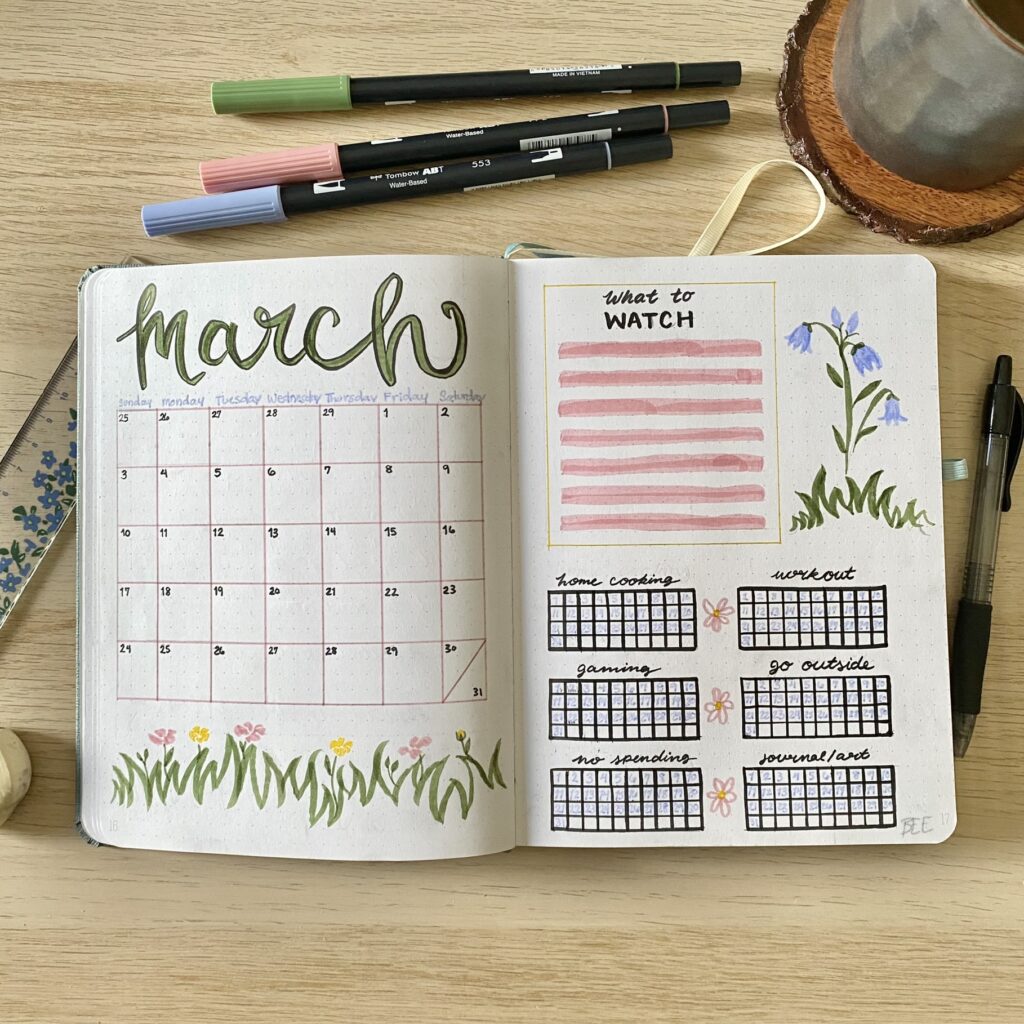
One of my favorite ways to record and visualize data is through a bullet journal (BUJO). As an artist, I like physically drawing the charts and calendars, choosing color schemes, and having a bit more flexibility when it comes to the actual data visualization side of things.

My March 2024 Bullet Journal cover page featured a calendar, a list of movies to watch throughout the month, and six habit trackers.

In my bullet journal, I record metrics like Pinterest trends, daily habits, mood trackers, workout schedules and songs I listened to that month. I scrapbook my vacations and trips, my fortunes from fortune cookies, and random scraps of paper from my life. By the end of the bullet journal, I have a beautiful record of my feelings, habits, printed photos of friends and family, and essentially a visual snapshot of my life.

Conclusion

Data visualization is an incredible technology for understanding behavior and factors involved in change. As artists, you have the keen abilities to make visuals aesthetically pleasing, which is often taken for granted in the business and technology world. It is my hope that you will use these skills to visualize data to make yourself and your art more valuable.

How to Visualize Data as a Multi-Skilled Artist Read More »

Discover 19 Reliable Ways to Improve your Personal Brand

What is personal branding and how do you start? Where do you find inspiration for it? How do you improve your personal brand through market changes? What are some great examples of personal branding?

Introduction

In the age of digital connectivity, crafting a compelling personal brand has become more than just an option—it’s a necessity. Your personal brand, a melding of your values, expertise, and online presence, is the compass that guides you towards opportunities and cultivates a meaningful online identity. This article dives headfirst into the art of building an impactful personal brand, offering insights, real-world examples, and a hopeful perspective on its role in your life.

Wikipedia defines personal branding by providing the purposes of career advancement, increasing circle of influence, and having a larger impact.

The Essence of a Strong Personal Brand

Your brand isn’t just a buzzword; it’s the vivid tapestry that reflects who you are, both professionally and personally. It shapes perceptions, fosters connections, and sets you apart in a crowded digital landscape. Try building a powerful personal brand which uses a multifaceted approach across many platforms and with many outlets.

To begin the process, think about your values, goals, and inspirations. Craft an identity you want to show the world. From there, add a color scheme, maybe a personalized logo, and a platform. For me, I use a website platform ArtsyDrawings.com.

If you are at a loss for how to build an optimized website, check out my colleague’s web design service: True Ideas.

Instagram Influencers: Building Communities Through Authenticity

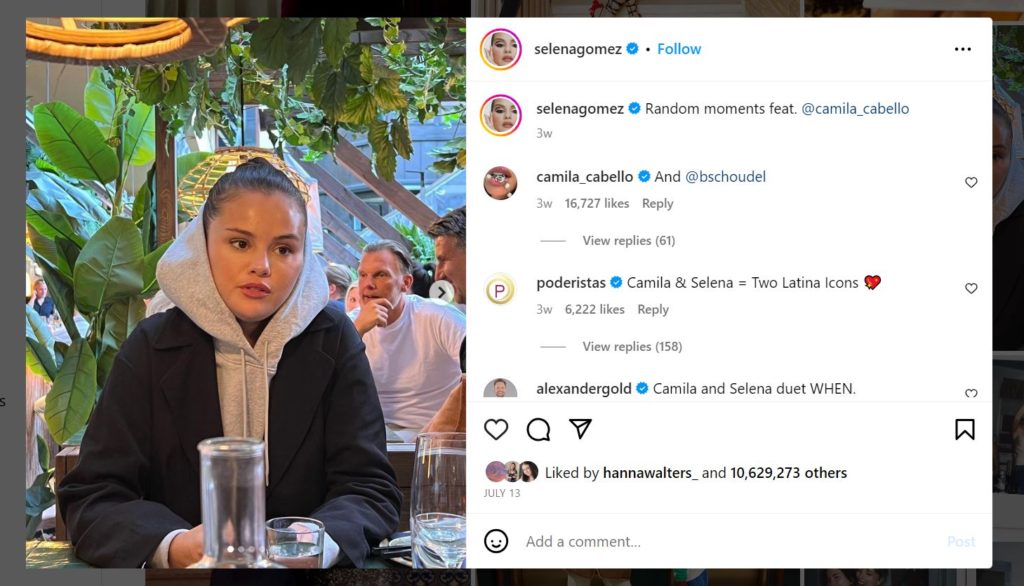
Instagram influencers like @chrissyteigen and @selenagomez have cultivated personal brands rooted in authenticity. They share unfiltered glimpses of their lives, forging genuine connections with their followers. Emulate their approach by showcasing the real you, sharing your passions, and engaging openly with your audience.

selena gomez personal brand instagram page
Selena Gomez takes an authentic approach to her Instagram account by posting a candid photo she references as a “random moment” taken by her friend.

TikTok Creators: Crafting Compelling Stories in Seconds

TikTok influencers like @charlidamelio and @zachking have mastered the art of storytelling within seconds. When they use their personal brand to entertain, educate, and inspire, they create content that resonates across demographics. Take inspiration from their succinct storytelling and translate it into your own narrative. Also, many marketers advise short videos as the future of successful marketing.

Artists with a Digital Identity: Merging Creativity with Branding

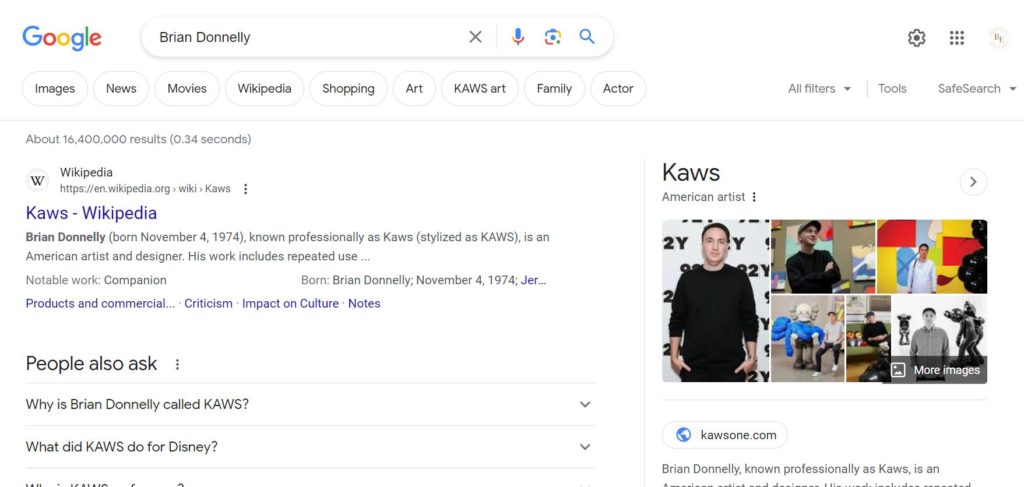
Artists like Banksy and KAWS have utilized their digital presence to amplify their artwork’s impact. Compared to artists who choose to evade social media, these digital connoisseurs have extended their artistic narratives onto social media platforms, effectively merging their creativity with personal branding. Basically, they infuse their personal brands with elements of their craft, merging art with branding.

KAWS personal brand web search
In some cases, the artist and his work become synonymous on Google. When you search Brian Donnelly, his work and his professional artist name “KAWS” dominates the first results page.

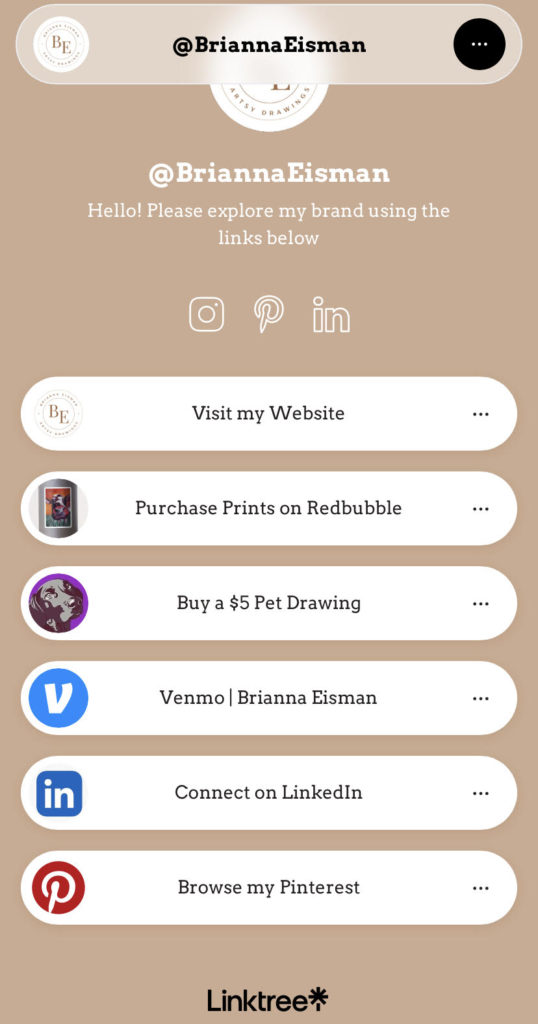
Here at Artsy Drawings, I enjoy merging artistry with my personal brand. I use Linktr.ee to create a single, customizable link that houses multiple links to various online platforms. For me, these platforms include my portfolio, social media profiles like Pinterest and Instagram, and my online store. This link simplifies navigation for my audience, allowing them to access all relevant content from one central location.

Brianna Eisman’s Linktr.ee includes her website, RedBubble, Fiverr, Venmo, LinkedIn, and Pinterest links. Each phrase includes a call to action.

It is important to also note that changing your personal brand with the market is actually a good thing. Recently, I decided to rebrand my website and social platforms with a new color scheme, dedicated fonts, and a logo that focused more on Artsy Drawings itself. For more details on my rebrand, check out my About page.

Job Hunting and Personal Branding: A Match Made in Success

Personal branding isn’t confined to social resources; it plays a pivotal role in job hunting too. When potential employers search your name, what they find can significantly influence their decisions. It is vitally important, especially post graduation, to create a story about who you are and how you want the world to view you. Then, craft your personal brand to reflect your skills, passions, and professional aspirations, essentially turning your online identity into a compelling resume.

  1. Audit Your Social Media: First, go through your social media profiles and remove or adjust any content that might be seen as unprofessional or inappropriate. Delete posts or photos that could be misconstrued or reflect negatively back on you.
  2. Update Your Privacy Settings: Review the privacy settings on your social media accounts to limit what can be viewed by the public. By adjusting your settings, you can control who sees your posts, photos, and personal information. Make use of features that allow you to approve tagged posts before they appear on your profile.
  3. Create a Professional Online Presence: Next, focus on building a positive online image that aligns with your career goals. Share articles, posts, and content related to your industry to demonstrate your knowledge and interests. Consider creating a LinkedIn profile that highlights your professional accomplishments and connects you with others in your field.
  4. Use a Professional Email Address: Create a professional email address that uses your name rather than a nickname or casual (silly goose) handle. This small change can make a positive impression on potential employers when they communicate with you via email.
  5. Monitor Your Online Presence: Regularly search your name on search engines to see what information comes up. This will help you identify any potentially damaging content and take steps to address it. If you find negative information, then you can try to address it directly or focus on pushing positive content higher in search results through active online engagement. Also, try to research personal brand examples to see how influencers tackle positive and negative media.
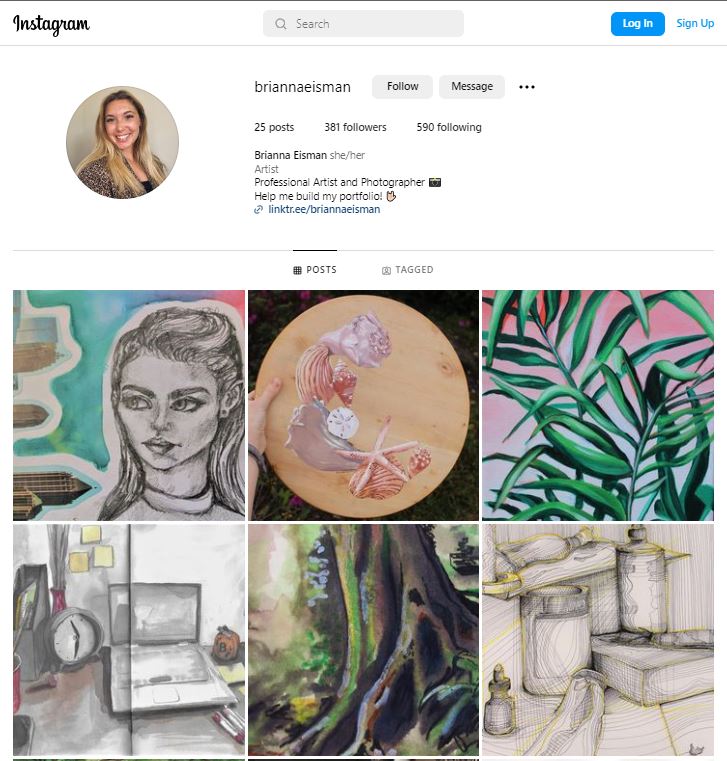
I created a separate public Instagram account for my artwork and photography. This public business account also allows me to track post insights and analytics.

Digital Marketing Yourself: An Essential Skill in Today’s World

In a world where digital interactions dominate, marketing yourself online is crucial. Similarly to businesses, you can use digital strategies to showcase your personal brand and reach your audience. Hence, dive into SEO optimization, content creation, and consistent engagement to cultivate a strong online presence.

As you grow digitally, try to track your data through insights and analytics. This recording process can be integral in knowing how well your content is performing and analyzing how to improve. For more details about data visualization, collection, and reporting check out my article titled “How to Visualize Data as a Multi-Skilled Artist.”

Noteworthy Personal Brand Examples

  1. Marie Forleo (@marieforleo): A businesswoman and motivational speaker, Marie Forleo’s personal brand is built on empowerment and entrepreneurship. Overall, her online platform provides valuable content that resonates with aspiring business leaders.
  2. Neil Gaiman (@neilhimself): Renowned author Neil Gaiman’s personal brand seamlessly weaves his fantastical writing with his witty and engaging online presence. He particularly uses platforms like Twitter to connect with fans, share insights, and showcase his creative process.
  3. Lizzo (@lizzo): Singer and body positivity advocate Lizzo’s personal brand radiates confidence, self-love, and unapologetic authenticity. Her empowering messages and music resonate with a global audience, making her a prime example of a relatable personal brand.
  4. Simon Sinek (@simonsinek): Leadership expert Simon Sinek’s personal brand centers around inspiring leadership and self-discovery. Basically, his TED Talks, books, and majority of his online presence encourage individuals to find their “why” and lead with purpose.
  5. Alex Strohl (@alexstrohl): Adventure photographer Alex Strohl’s personal brand seamlessly intertwines his passion for photography with a love for travel and the outdoors. His captivating visuals and storytelling inspire wanderlust in his followers.
  6. Amanda Gorman (@amandascgorman): Poet Amanda Gorman’s personal brand combines her powerful words with her advocacy for social change. Her eloquence and activism have made her a symbol of hope and progress.
  7. Casey Neistat (@caseyneistat): Filmmaker and content creator Casey Neistat’s personal brand is characterized by his unique storytelling style and his commitment to authenticity. Following his YouTube vlogs and cinematic videos offers insights into his life and creative processes.
  8. Gwyneth Paltrow (@gwynethpaltrow): Last but not least, actress and entrepreneur Gwyneth Paltrow’s personal brand revolves around wellness and lifestyle. Her company, Goop, and her online presence promote holistic living and self-care.

Conclusion

Crafting a compelling personal brand isn’t just about garnering followers; it’s about shaping an identity that reflects your values, aspirations, and expertise. As you navigate the digital landscape, drawing inspiration from Instagram influencers, TikTok creators, and notable figures like artists and public speakers, remember that personal branding is a journey of self-discovery and growth.

Remember, in job hunting, personal branding acts as a beacon that attracts the right opportunities. By digitally marketing yourself, you take control of your narrative and present your most authentic self to the world. Whether you’re an aspiring entrepreneur, a creative artist, or a professional seeking advancement, your personal brand serves as your virtual handshake, leaving a memorable impression that extends beyond pixels and platforms.

Embrace the evolution of your personal brand with hope and enthusiasm, for it is a canvas that you paint with your passions, experiences, and aspirations. As you infuse your online presence with authenticity, engagement, and a touch of inspiration, you’re bound to forge connections, open doors, and carve a meaningful path towards success.

Discover 19 Reliable Ways to Improve your Personal Brand Read More »

Scroll to Top
Cart
0
Add Coupon Code
Subtotal