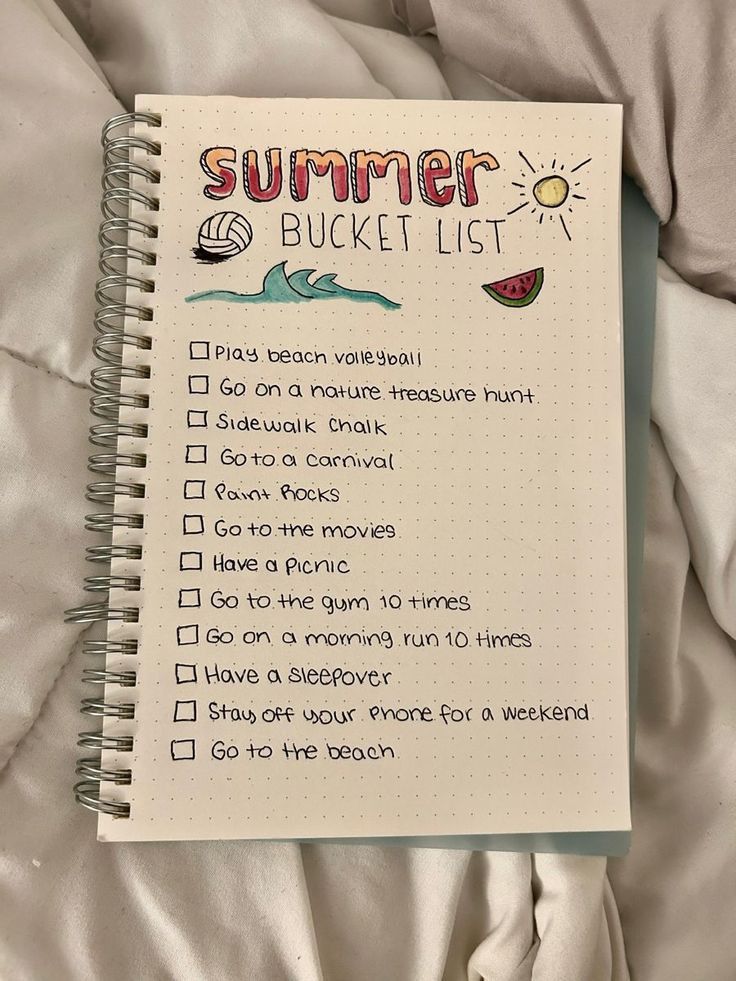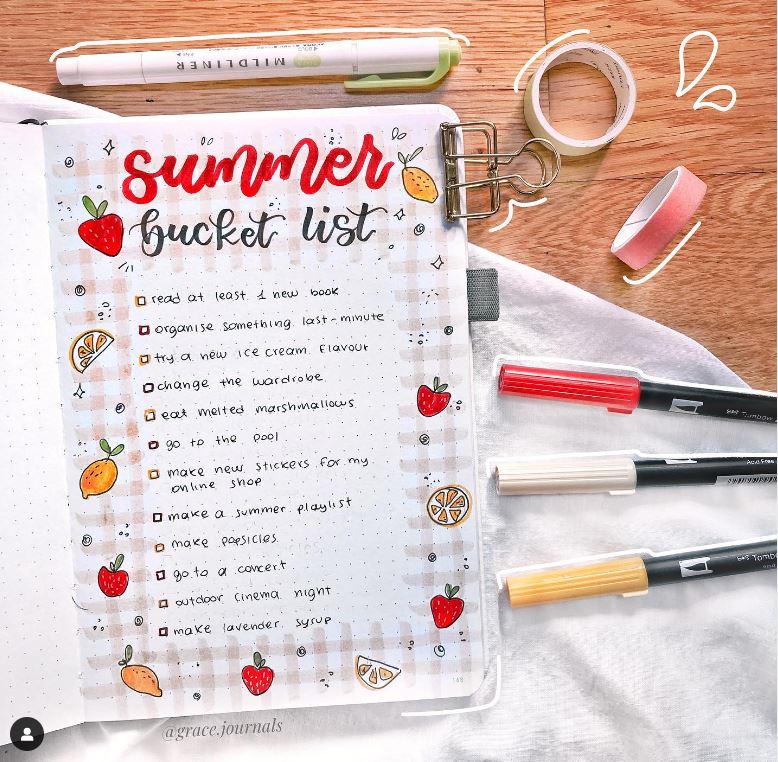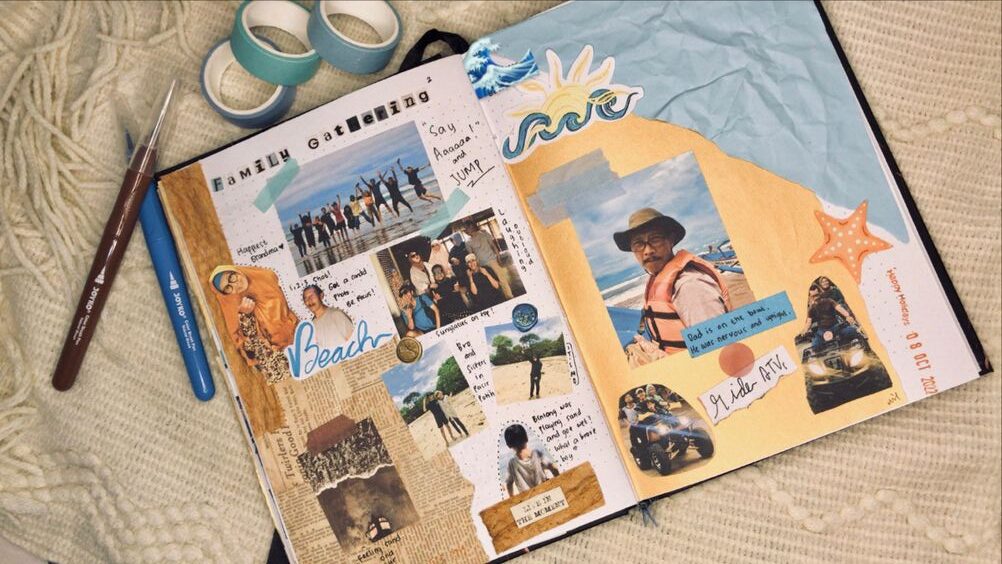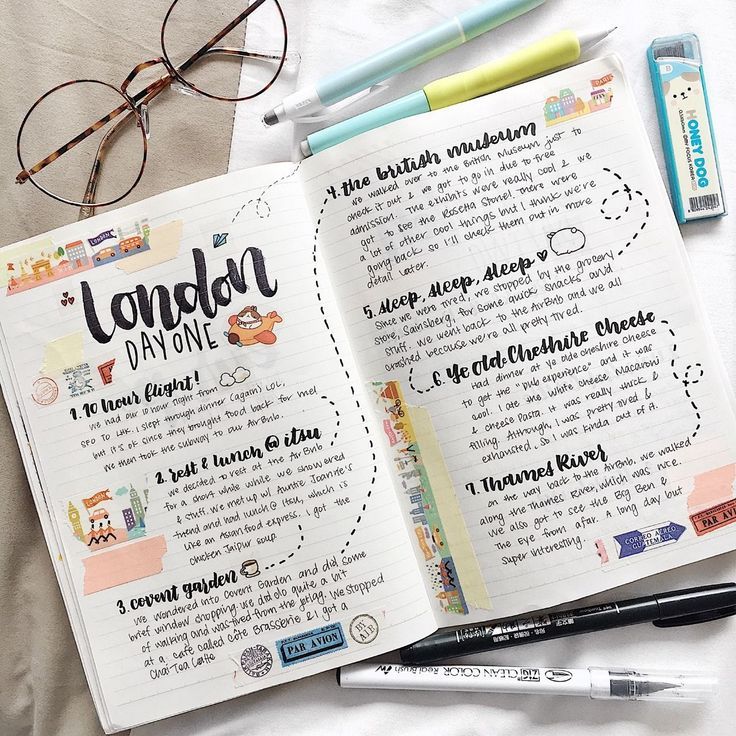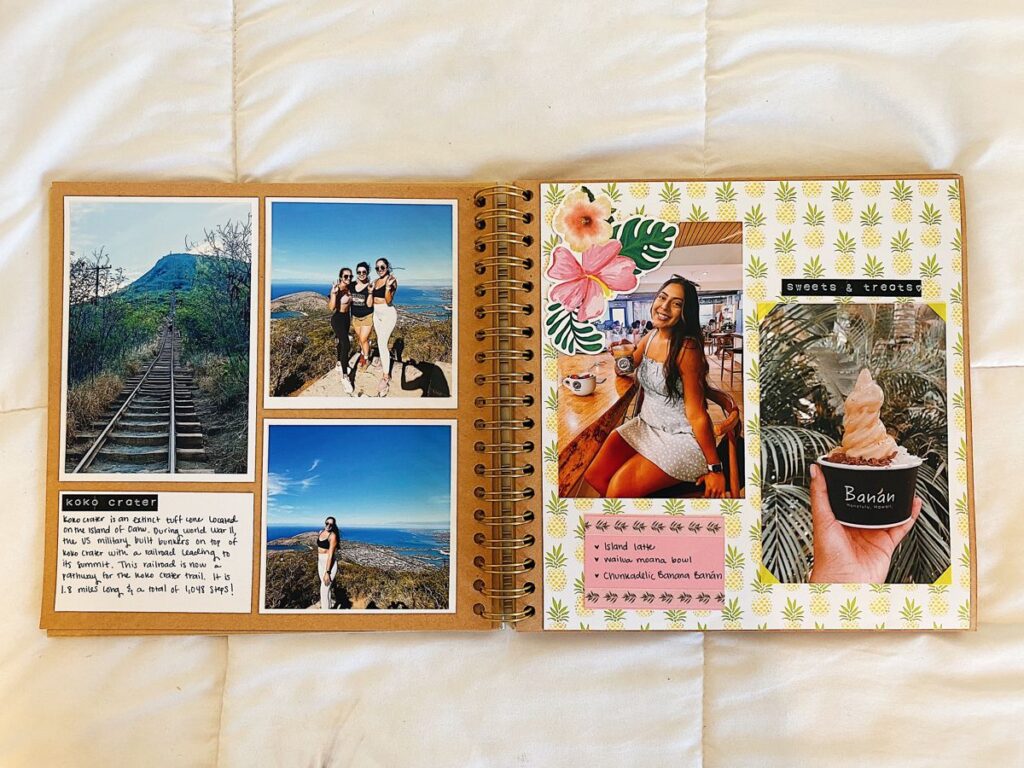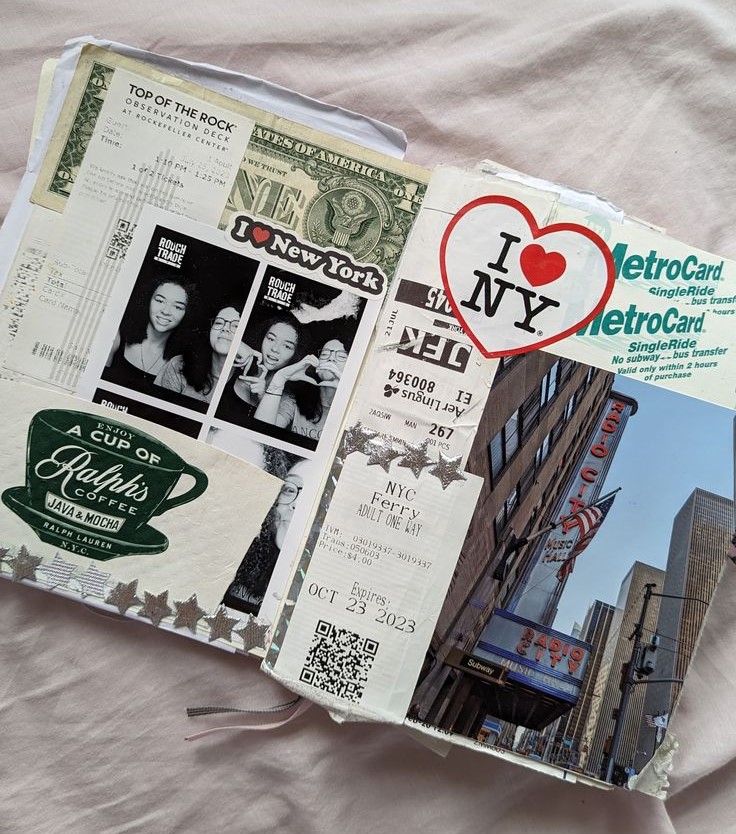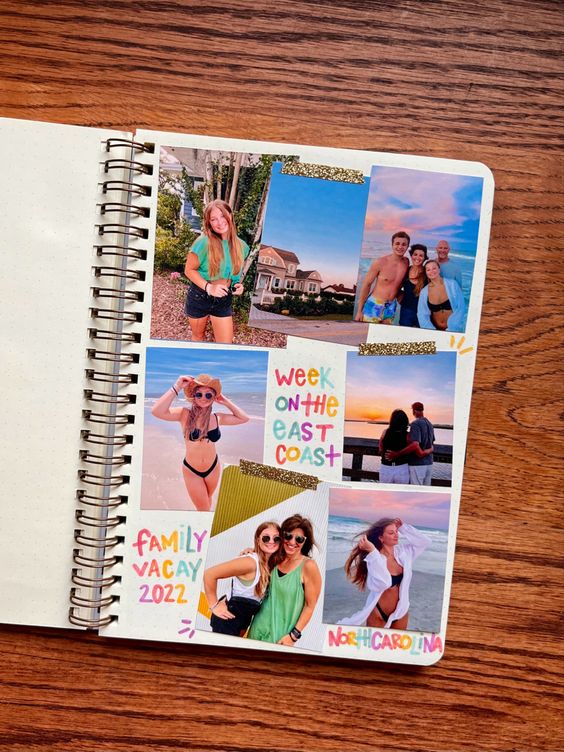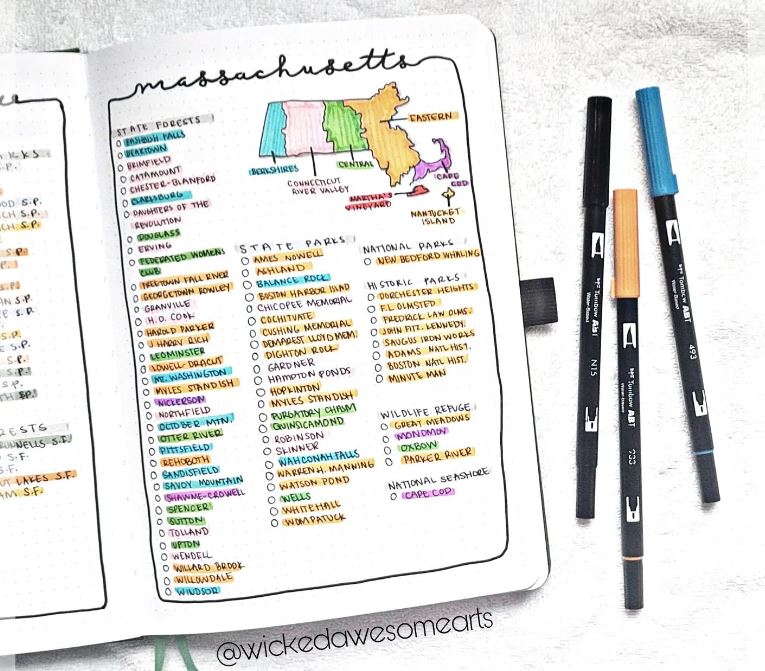
sketchbook

The Ins & Outs of 2026: Artsy Trends Forecast

Every January, the internet hits refresh and somehow finds a new “right” way to make art. A right aesthetic. A right color palette. A right overpriced art supplies. Sure, it’s fun to check out Pinterest’s artsy trends and laugh at the irony of Pantone’s 2026 Color of the Year. But if the internet brought you here, I think you’re looking for something a little more than just artsy trends.

At Artsy Drawings, we’re starting 2026 with intention to create art that moves and communicates. Please still make fun silly crafts, but please do it in a way that saves you time, energy, and money. I’m not going to give advice or say the artsy trends are to buy the next new art kit, because let’s face it — your craft drawer/room is already bursting with supplies.

This is the year you reuse what you already have, make art that feels good to you, and stop side-eyeing yourself (or others) for not keeping up. You don’t have to participate in every trend to be a “real” artist, just like you don’t have to consistently make good art every single time.

Consider this your official Artsy Drawings permission slip as we ring in the new year (cue confetti made of scrap paper!) These are the 2026 Artsy Drawings Ins & Outs—not as commandments, but more like artsy trends guidelines. Take what resonates. Leave what doesn’t. Carry the good energy into the next chapter and have a Happy New Year!
winter solstice ins and outs of 2026 artsy trends

Artsy Trends OF 2026

IN #1: Craft Just for Fun

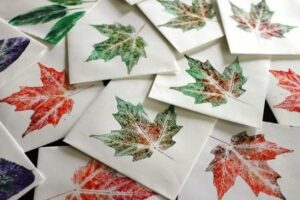
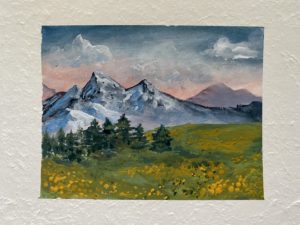
Not everything needs a deep backstory about your trauma. Sometimes it’s really fun to make art that is pretty, and that’s it. Crafts are meant to spark joy and comfort. From making homemade cards to making silly paintings of your summer slushie, crafts are expressively fun and lighthearted and sometimes that’s all you need. This year, we’re officially done pretending fun needs justification. If it makes you smile while you’re making it, it’s doing its job.

IN #2: Create Imperfect sketchbooks

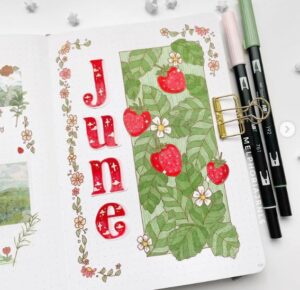
Your sketchbook or journal is not a performance. It’s not supposed to look like it was printed in a factory or photographed for a brand deal. Smudges, ink spills, coffee marks, and tears mean you used it. Crooked lines mean you are human. Misspelled headers mean you were thinking faster than your pen could keep up. The more “imperfect” your sketchbook is, the more honest it probably is, and for 2026’s artsy trends, honesty beats aesthetic pressure every single time.

IN #3: Reuse Supplies for Multiple Projects

One paint set does not have a single destiny, and I think I still have acrylic paint from high school hiding away because I despise using Cadmium Red.

The new year artsy trends include reusing your art supplies! Using the same supplies across multiple projects isn’t lazy, it’s resourceful, creative, and makes you iconic and sustainable. It forces you to problem-solve and experiment instead of constantly buying something new. Supplies that look worn, ink-stained, and a little chaotic are proof they’re being loved.

IN #4: Be an Artist who Supports Artists

Art thrives in community, not competition. Sharing another artist’s work, tagging designers, crediting inspiration, and buying from small arts markets and shops keeps the creative ecosystem alive. No one loses when artists support each other, everyone grows. This year, we’re choosing collaboration over comparison and cheering louder for people doing cool things.

Speaking of, go check out some of my favorite artists I found this year:
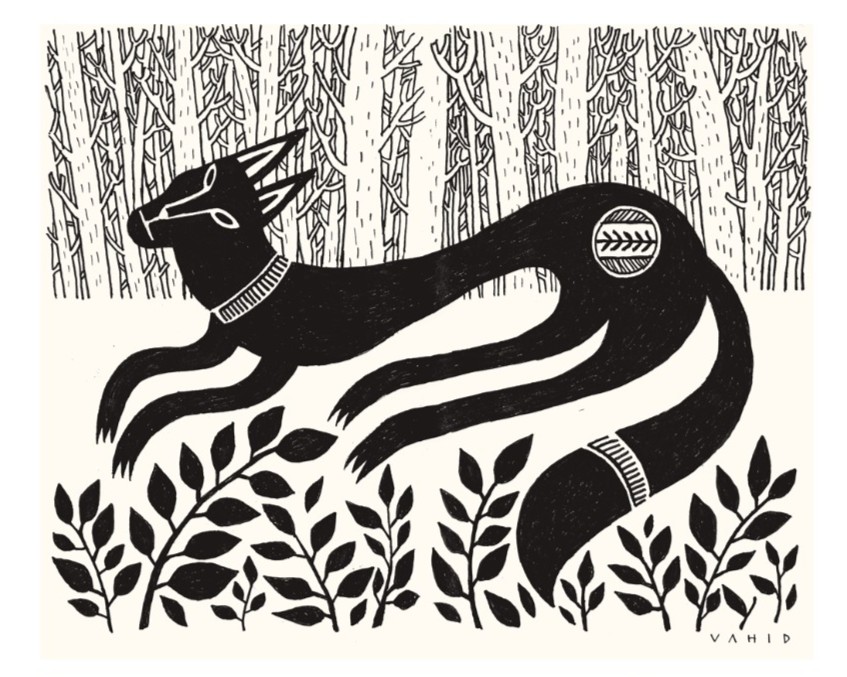
Vahid Fazel – Vahid is an Iranian-Canadian visual artist, filmmaker, and illustrator based in Toronto. According to his website, his artwork “bridges cultural narratives and universal themes through animations, compelling illustrations, and prints.”
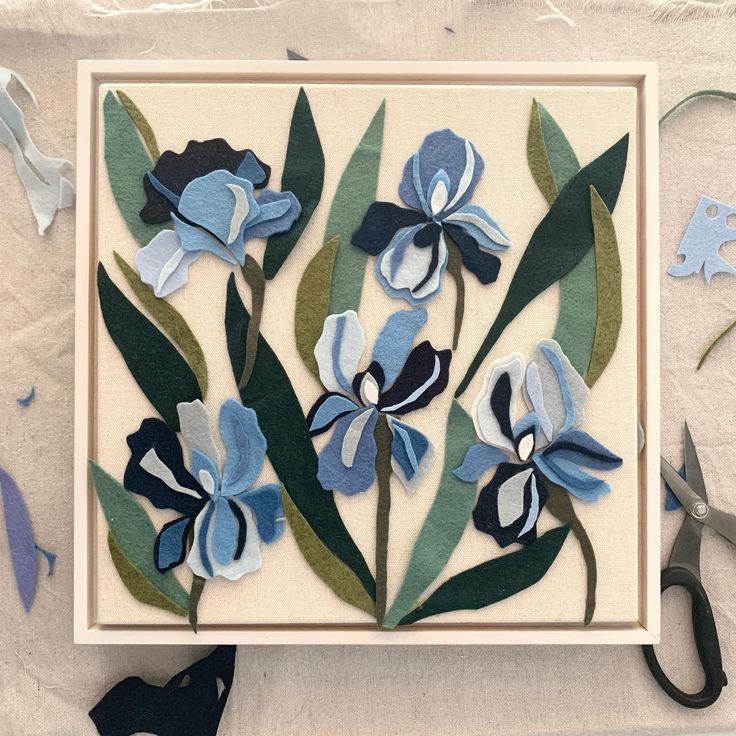
Annie Raymond – Annie is a wildly talented Georgia-based artist who works mainly with felt, making colorful, layered pieces that feel playful and a little nostalgic. With a background in teaching elementary art, she draws on that playful spirit and curiosity in everything she makes.
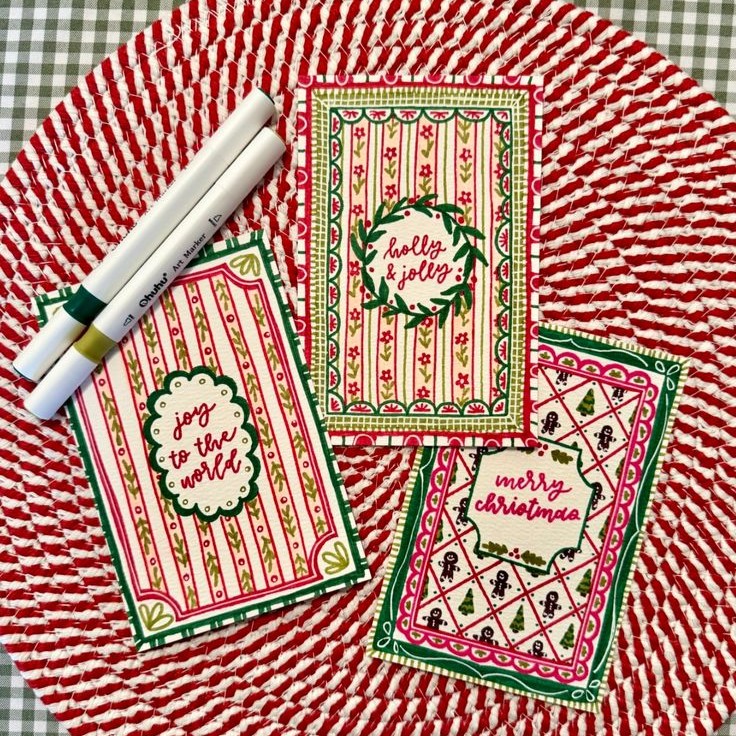
Lauren Gross – Lauren is the incredible artist behind Send Love Studio who makes warm, heartfelt pieces full of color, texture, and everyday beauty. Her work feels playful and personal with little calligraphy reminders of joy, connection, and faith.

IN #5: Know the Basics of art

Know the basics. Learning color theory, the principles and elements of design, and the rule of thirds gives your art a solid foundation to build on. These tools help you make intentional choices about balance, contrast, and composition, so your work communicates the way you want it to. Mastering the basics doesn’t limit creativity, it frees it, letting your ideas shine while still feeling cohesive and visually satisfying. Even small shifts, like adjusting where a focal point sits or experimenting with complementary colors, can make your pieces feel more polished and intentional without losing their spark.

If you’re interested in learning more about color theory, I recommend you take a look at Easy Color Theory for Beginners and Color Knowledge Tips that will Make you a Better Artist. Likewise, the article How to Create an Artist Statement discusses words you can use to make you sound more like an artist, including the elements and principles of design. You can also learn about perspective in the article titled Making Mountains Small and Worms Feel Tall.
OUT #1: Using a Whole Sheet of Paper for a Tiny Cut-Out

If the final shape is the size of a coin, the paper sacrificed should not be the size of a notebook page. This year’s artsy trends are about thinking ahead, trimming scraps first, and respecting materials. Your future self (and your scrap bin) will thank you.

OUT #2: Buying Art Supplies Just Because They’re Trending

Artsy trends move fast. Your preferences don’t, and trust me, that’s a good thing. If you didn’t like gouache last year, a viral video isn’t going to magically change that. The same goes for acrylic paint pens, chunky oil pastels, gel printing plates, alcohol markers, or the latest “must-have” sketchbook everyone is suddenly obsessed with.

Buying supplies you don’t enjoy using doesn’t make you more creative; it just makes your art supply drawers more crowded and your wallet lighter. That expensive set of markers won’t fix the fact that you actually prefer pencil. The ceramic palette won’t help if you hate cleaning it. Spend money on tools that fit your process, your habits, and your style—not someone else’s aesthetic, not a TikTok cart haul, and definitely not guilt.

For the thrifty artist, check out these artsy articles on How to Thrift Art Supplies and No-Buy DIY Crafts Using Stuff You Already Own.

OUT #3: Copying other artists’ work

It should be obvious at this point, but don’t copy other artists’ work. You can gather inspiration, but if it feels wrong in the pit of your heartless soul, it most likely is wrong.

Another topic has come up more frequently lately and I want to reiterate an important note: AI art does not steal artist’s work. I know this is a controversial take, but as an artist myself, I believe AI art is not inherently art. An AI model doesn’t understand the nuances behind creating art, it just predicts what it thinks the audience wants. Artists don’t just reproduce — we choose, edit, and improvise. Artists can problem solve and come up with creative solutions and intentions behind creating a painting or an image or whatever. Artificial intelligence lacks this very human internal pursuit to express.

OUT #4: Gatekeeping Techniques & Styles

Art is not a secret club with hidden rules. People are allowed to ask questions, try things the wrong way and learn in public. Gatekeeping doesn’t protect art, it limits it. The more people feel welcome to create, the richer the art world becomes.

OUT #5: Hustle Culture Disguised as “Motivation”

You do not need to turn every sketch into a product or every hobby into a brand. Not all artsy trends need to be photographed and posted. Rest is productive. Play is productive. Burnout is not proof of dedication, it’s a warning sign. In 2026, we’re letting creativity breathe instead of abusing it for some hustler output.

If you are a burnt-out artist, I recommend you taking a peak at my artsy article: How to Avoid Burnout: 13 Tips from A Tired Artist.
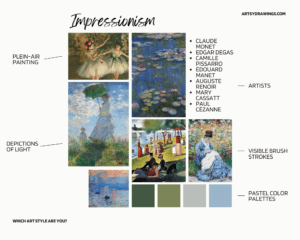
IN #6: Visit Museums & Galleries

In 2026, we are visiting art houses like museums, galleries, arts markets, and small shops!

Experiencing art in person, whether timeless classics or contemporary pieces that look like splatter paint brain rot, connects you to the history and evolution of creativity. Learning and experiencing art history in person helps you understand how artists use color, composition, and storytelling to communicate ideas. Seeing how others solve visual problems gives you tools to make smarter, more confident choices in your own work. Even one painting or sculpture can inspire new approaches, spark fresh ideas, and deepen your creative perspective.

IN #7: Warm up Your Artsy Muscles & Practice

Warm up your artsy muscles, not the ones you flex in the mirror when no one is looking, but the ones that actually builds your art skills. Quick sketches, doodles, or small studies get your hand and eye in sync, loosen your style, and make it easier to dive into bigger projects with confidence.

Every sketch, every brushstroke, every “failed” piece is a step forward, teaching you something your brain can’t learn any other way. Progress doesn’t happen in big leaps. it happens in the small, repeated motions, in showing up day after day. Embrace the messy, the awkward, and the imperfect, that’s where real growth and skill live.

IN #8: Draw/Paint from Life

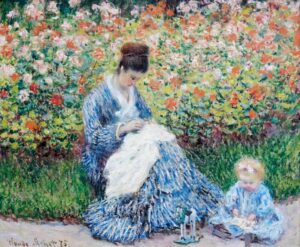
Draw and paint from life whenever you can, it will seriously help your hand-eye coordination. Observing real people, objects, or landscapes trains your eye to see shapes, light, and color in ways photos can’t. Start with simple still lifes like a bowl of fruit or a vase of flowers. You can also sketch people in a cafe to learn posture, gesture, and proportion.

Artists like John Singer Sargent mastered this approach, capturing movement and life in every brushstroke. Working from life teaches you to notice subtle details that make your art feel alive and immediate and real.

IN #9: Be a Professional

In the words of Paige Mills and Simone Christen with the Artwork Archive, “in order to be successful in the art world, the demands on an artist are high. Therefore, it’s crucial to run the administrative side as efficiently and professionally as possible.”

Calling yourself a professional artist means taking ownership of your marketing, sales, and online presence, and treating them with the same care you give your work. Developing your style and listening to your inner voice is vital, but so is building professionalism through social media, a website, an online portfolio, and consistent branding. Being a professional artist also means cultivating resilience: setbacks and frustrations are part of the process, and maintaining a positive, curious, and experimental mindset will keep your creativity, and your career, moving forward.

IN #10: Remembering the Artist’s Role

An artist’s role is more than slinging paint and getting messy: it’s about reflecting society and casting a glow of change.

Artists get the choice to create a message and determine how it could be understood and interpreted. I know engineers who consider themselves artists because they design or code in a way that helps translate the data in a different way. This choice, to not only communicate, but to do so in a new or different way, is what really pushes a true artist. They rebel against the norms or challenge ways of communicating, and in turn, this turmoil is reflected positively in society as experimentation and eventually, progress.
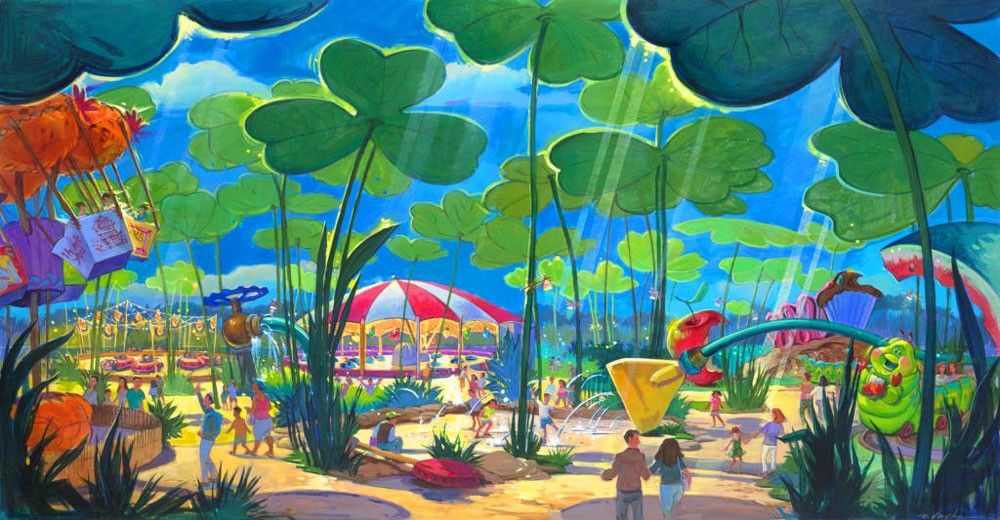
perspective in art artsy drawings brianna eisman worms eye view ins and outs of 2026
Not everything has to be seen from eye level. Looking up, literally and creatively, changes everything. Worm’s-eye view perspectives invite curiosity, drama, and storytelling. They remind us that art doesn’t have to be safe or expected to be interesting.

OUT #6: Consuming more than you Create

A lot of new art doesn’t hit as hard because it’s made for an audience that’s used to quick swipes and fast likes. We’ve been trained to scroll past things in seconds, even when they’re beautiful or meaningful. It’s not really our fault—we’re just overwhelmed. But that’s the problem: art is getting lost in the noise. People don’t take time to sit with it, to think about what it’s saying or what went into it. It’s like eating a steak in two bites and wondering why it didn’t taste like anything. When everything is content, art starts to lose its weight. It becomes something to consume, not something to connect with.

OUT #7: Art Hauls

You don’t need 47 versions of the same brush. You need time, practice, and permission to slow down.

Art hauls are out. Watching someone unbox dozens of supplies might feel satisfying, but owning a pile of stuff doesn’t make you a better artist. Inspiration doesn’t come from quantity, it comes from using what you have, experimenting, and figuring out what actually works for you.

OUT #8: Pretending You’re “Too Late” to Start

There’s no deadline for creativity. That feeling of being “behind” is just fear sneaking in. Your ideas, sketches, and experiments are unfolding exactly when they should—there’s always time to start, and you’re right on schedule.

OUT #9: Destroying Art

Art is being destroyed. The accused “war crimes” include “intentionally directing attacks against buildings dedicated to religion and historic monuments.”

When art starts to feel disposable, it’s easier to destroy. Not just by ignoring it, but by literally erasing it—through war, censorship, or indifference. If people can’t recognize the value of a painting or sculpture in peace, what happens to that art in times of conflict? The less we appreciate it, the less we fight to protect it.

I know that what’s happening is wrong and from an artist’s standpoint, the destruction of art, history, and society feels like a step backwards for humans. But, what can I do? I’m a 25-year-old U.S. painter with internet access and a sink full of dishes. I should stop worrying about things outside my control, so I buy eggs when they drop below $4 and dye them silly colors in the summertime, because I couldn’t afford eggs during Easter.

I know how to hold a paintbrush better than a gun. My hands were made for color, not combat.

OUT #10: Fear of “Ruining” a Page

Pages exist to be used. Sketchbooks are tools, not heirlooms. The only truly wasted page is the one you’re too afraid to touch. Messy pages mean momentum.

One of my favorite artsy tips to avoid burnout is learning to overcome perfectionism. As an artist, I see perfectionism at both the beginning and end of my projects. To start, I fear failing or messing up or marking the wrong mark on the page. I procrastinate or over-plan to the point that sometimes I have to tell myself “oh my goodness, just paint!!!” I see the same emotions pop up at the end of a project when I struggle with deciding when the piece is truly finished. I even debate varnishing paintings just in case I want to go back in and edit something. I’m stressing myself out when I should be simply enjoying making art.

Art is not valuable because it’s polished or impressive. It’s valuable because it meant something to the person who made it. Expression will always matter more than perfection.
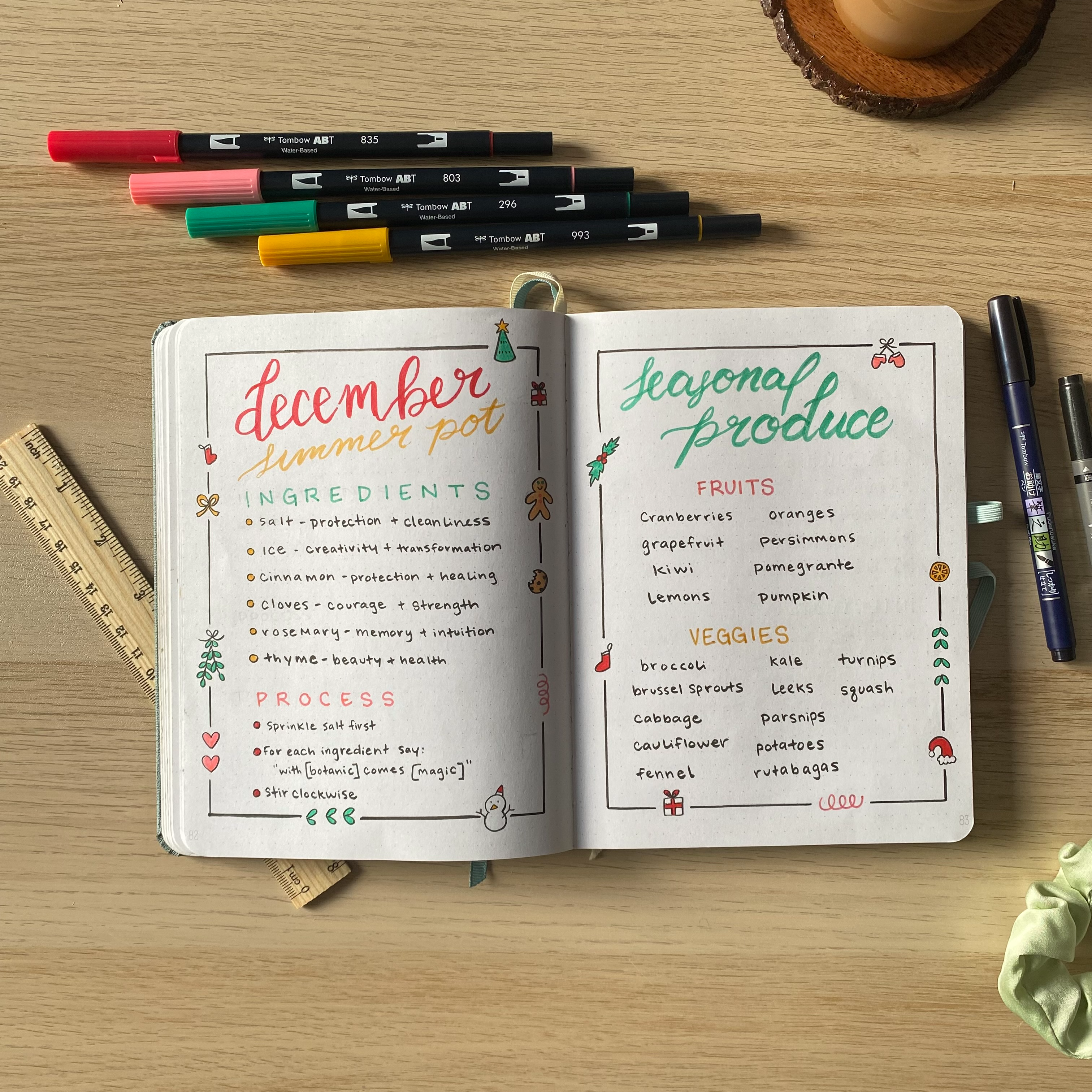
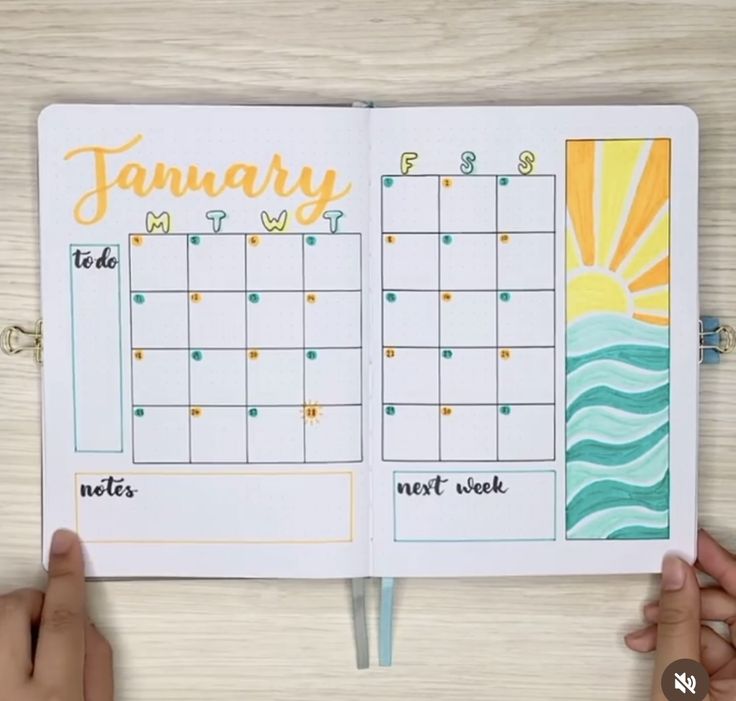
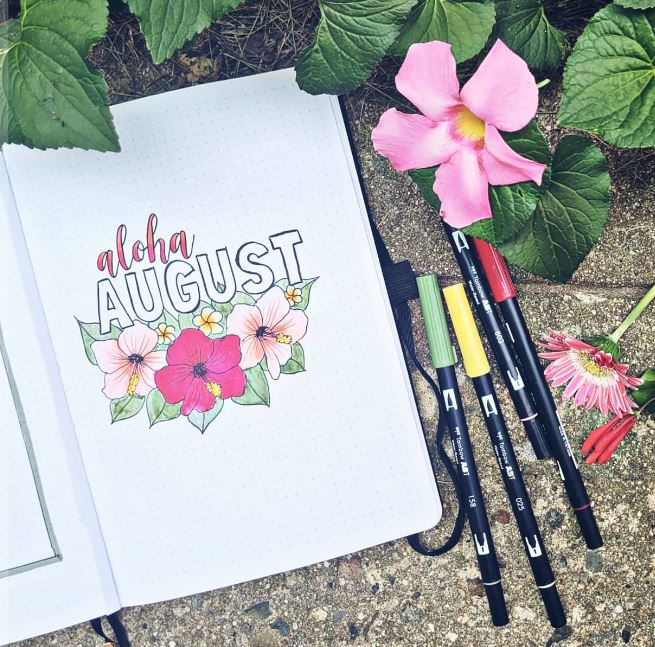
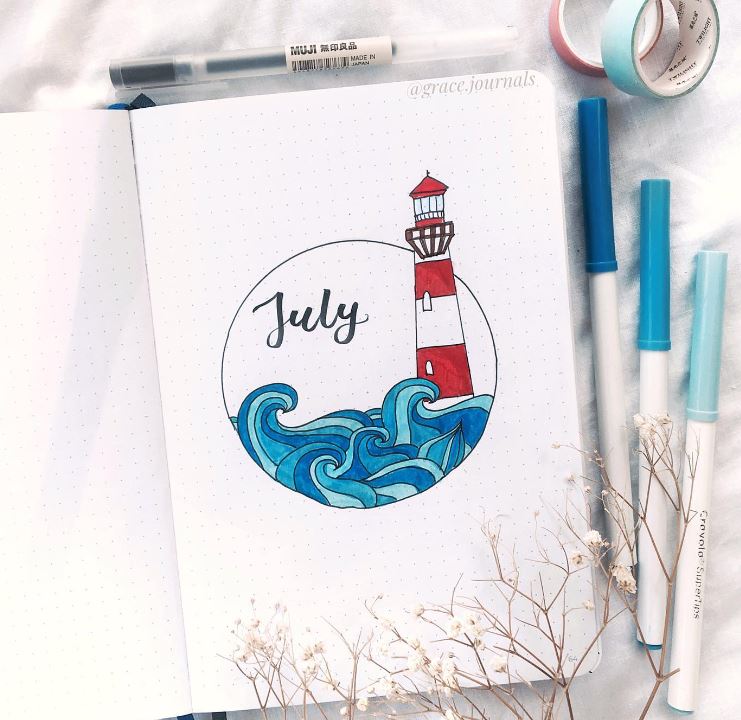
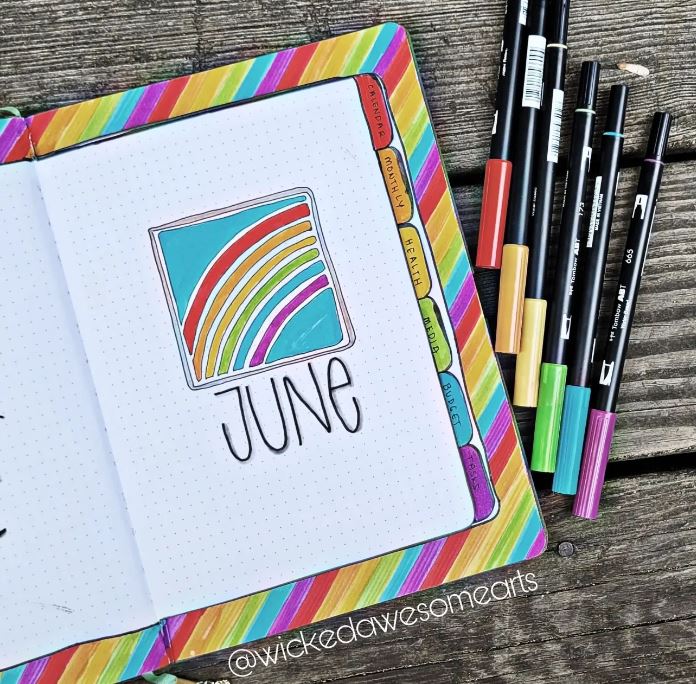
artsy trends bujo 2026 ins and outs bullet journal december art journal sketchbook

Final Thoughts on 2026 Artsy Trends

As we move into 2026, the most important thing to remember about artsy trends is that you get to choose how (and if) you participate in them. Artsy trends can be inspiring, playful, and even motivating—but they’re not rules, and they’re definitely not requirements. The goal isn’t to do more art or buy more supplies. The goal is to make art more thoughtfully.

Being intentional with what you’re crafting means slowing down long enough to ask: Do I actually enjoy this? Will I use this? Does this align with how I want to create? Intentional design is about purpose over pressure. Choose materials that last, reuse what you already have, and design projects that feel meaningful instead of performative.

Sustainability isn’t just about the environment (though that absolutely matters). It’s also about sustaining your creativity. When you reuse supplies, avoid overconsumption, and let go of hustle culture, you create space for ideas to grow naturally. When you take inspiration without copying, give credit generously, and support other artists openly, you help build a creative community that actually lasts.

So take inspiration from artsy trends, but don’t let them dictate your process. Let them spark ideas, not your anxiety. Create with curiosity, design with intention, and treat kindness as a non-negotiable part of your practice. That’s the kind of trend worth sticking with, this year and every year after.


Join my Monthly Newsletter for more Artsy Trends

Subscription Form

The Ins & Outs of 2026: Artsy Trends Forecast Read More »
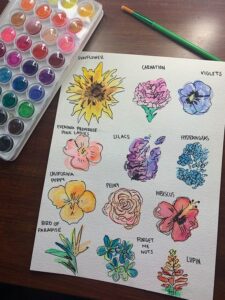
100 Surreal Drawing Ideas for every artist

Staring at a blank page, waiting for inspiration to strike, is the worst. You have the skill, the motivation (kind of), and the urge to create, but… what do you even draw? Whether you’re sketching for fun, practicing your craft, or just trying to break out of an art block, having a list of creative drawing ideas at your fingertips can make all the difference. Sometimes, all you need is a single spark—an unusual prompt, a fresh challenge, or a concept that takes your art in an unexpected direction.

Below is a carefully curated list of 100 creative drawing ideas designed to help you experiment, refine your style, and, most importantly, enjoy the process.

Introduction

There’s no wrong way to use this list—pick one randomly, challenge yourself to a daily drawing spree, or combine ideas to create something truly unique. These prompts are broken into different categories to suit your mood and style: fantasy, portraiture, nature, surrealism, and more.

For example, if you’re drawn to character design, you might love the idea of sketching a cyberpunk warrior or a historical figure reimagined as a fantasy character. If you prefer atmospheric scenes, try creating a neon-lit city on a rainy night or an enchanted forest with glowing plants. Feeling conceptual? Play with gravity-defying landscapes or melting clocks dripping into dreamscapes. The goal is to let your creativity take the lead—these ideas are just the launchpad.

Having the right art supplies is essential for bringing your creative visions to life—whether you’re sketching quick ideas or crafting detailed masterpieces. Quality materials like smooth sketchbooks, vibrant pencils, and blendable markers not only make the process more enjoyable but also help your artwork look its best. Below are some of my favorite and cheap art supplies—click through my Amazon affiliate links to grab them and support my work at the same time!

If you’ve gone through the list, and are still artistically stumped, check out my portfolio or other artsy articles on ArtsyDrawings.com.

Fantasy & Floral Drawing Ideas

  1. A wilted flower coming back to life with magical energy
  2. A giant sunflower with an eye in the center
  3. A fairy sitting inside a blooming rose
  4. A cactus growing out of a teacup
  5. A tree with glowing blossoms that only bloom at night
  6. A tiny village hidden inside a hollow tree
  7. A mushroom house with little windows and a smoking chimney
  8. A snail with a succulent growing from its shell
  9. A flower that changes shape with the seasons
  10. A floating lily pad city in the middle of a peaceful lake

Mystic Nature Scenes Drawing Ideas

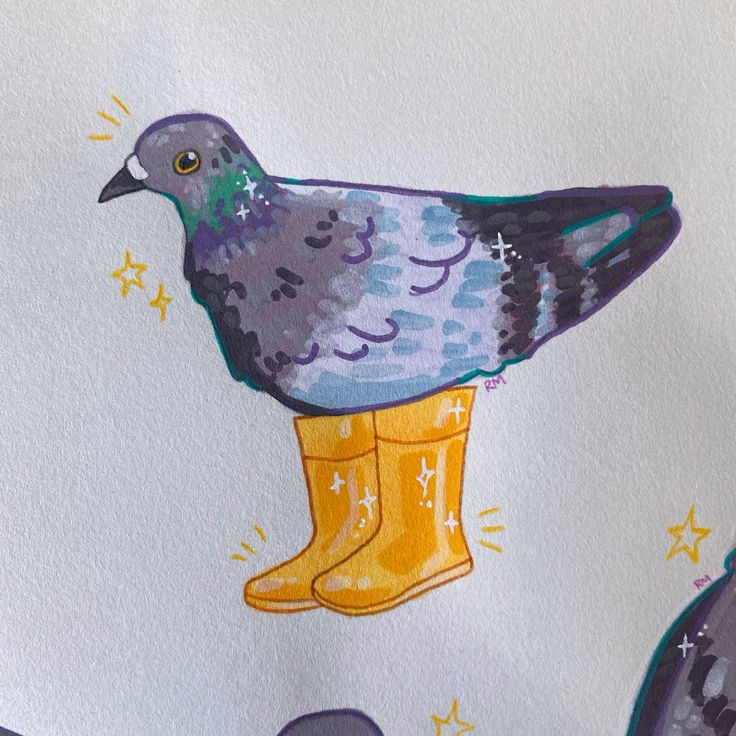
pigeon wearing yellow rain boots drawing ideas for artsy drawings
Pigeon in Yellow Rainboots by RM
  1. A twisting tree with roots reaching out like hands
  2. A hidden waterfall behind a wall of vines
  3. A forest path glowing under the light of fireflies
  4. A deer with antlers covered in hanging moss and flowers
  5. A secret garden only visible under the full moon
  6. A butterfly with flower petal wings
  7. A fox with fur that looks like swirling leaves
  8. A bird made entirely of vines and blossoms
  9. A mermaid whose tail turns into flower petals
  10. A rabbit with dandelion fluff instead of fur

Surreal Landscapes Drawing Ideas

  1. A tree growing upside down from the sky
  2. A crystal geode splitting open to reveal a tiny garden inside
  3. A flower field that turns into stars at night
  4. A floating rock covered in grass and wildflowers
  5. A mystical pond that reflects a different world than the one above it
  6. A garden where every flower glows a different color
  7. A river winding through the sky like a ribbon
  8. A giant daisy acting as an umbrella for a tiny creature
  9. A treehouse hidden among cherry blossoms in full bloom
  10. A stormy sky where lightning forms the shape of blooming flowers

Celestial & Atmospheric Drawing Ideas

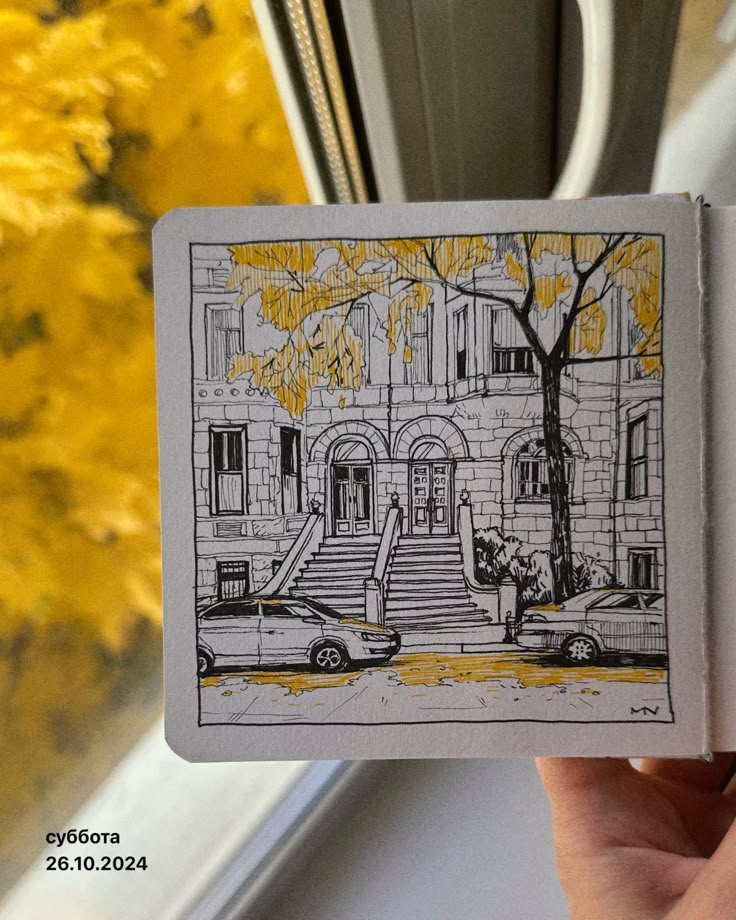
street view drawing ideas daily sketch by maria
Yellow Street View Drawing Ideas by Daily Sketch by Maria
  1. A moonflower opening under a glowing full moon
  2. A rainbow forming from the mist of a magical waterfall
  3. A sunset where the clouds are shaped like giant blooming roses
  4. A path made of floating lotus flowers leading to an unknown place
  5. A glacier with frozen flowers trapped inside the ice
  6. A bird with crystal feathers that glow in the dark
  7. A forest where every tree has a different colored bark
  8. A giant lily pad floating through the sky like an airship
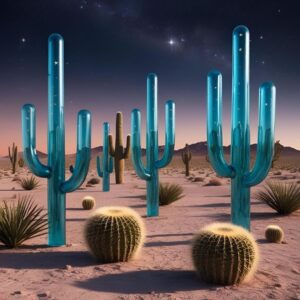
  9. A desert where the cacti are made of glass and reflect the stars
  10. A floating island with a single, massive cherry blossom tree

Whimsical Animals & Insects Drawing Ideas

  1. A hummingbird with wings made of flower petals
  2. A swan whose feathers turn into leaves when it spreads its wings
  3. A moth with wings that resemble dried autumn leaves
  4. A fox with a tail made of ivy and wildflowers
  5. A butterfly with stained-glass wings that reflect flowers in the light
  6. A river that glows in the dark, winding through a field of lavender
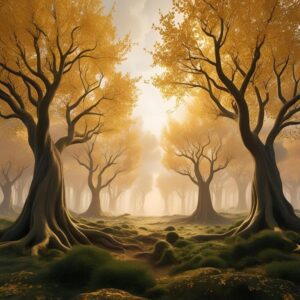
  7. A forest where the trees have golden leaves that never fall
  8. A moss-covered ruin overtaken by vines and blooming flowers
  9. A lake with floating flowers that light up like lanterns at night
  10. A meadow filled with oversized mushrooms and glowing spores

Dreamy Botanical Drawing Ideas

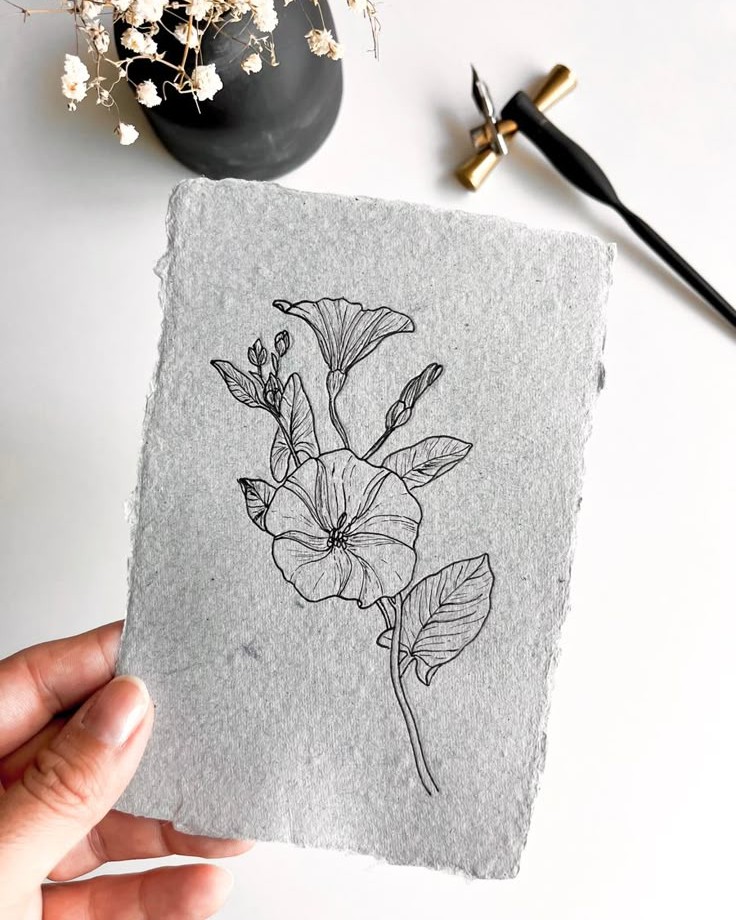
morning glory drawing ideas cami gonzalez calligraphy
Morning Glory Drawing By Cami Gonzalez
  1. A teapot pouring a stream of water that turns into a waterfall
  2. A giant sunflower bending down to whisper to a tiny creature
  3. A floating flower shop with bouquets tied to balloons
  4. A bridge made entirely out of intertwined vines and roses
  5. A giant dandelion puff releasing wishes into the sky
  6. A succulent terrarium with tiny people living inside
  7. A flower-covered skull as a symbol of life and rebirth
  8. A morning glory vine wrapping around an old, forgotten key
  9. A rose bush growing in the shape of a heart
  10. A water lily with a tiny fairy sleeping on its petals

Geometric & Abstract Conceptual Drawing Ideas

  1. A single line forming the silhouette of a city skyline
  2. Abstract shapes blending into each other to create a mysterious figure
  3. Geometric forms representing the concept of chaos
  4. A spiraling pattern that slowly morphs into a bird
  5. A circular pattern that gets increasingly disorganized the closer you look
  6. A series of interconnected dots forming a complex, surreal network
  7. A series of mismatched patterns swirling together into one image
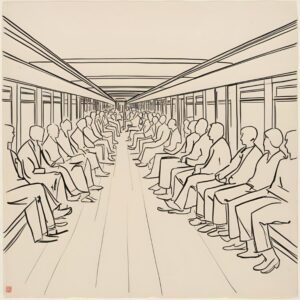
  8. A minimalist sketch of a crowded subway, showing only the outlines of passengers
  9. A futuristic city skyline where every building is a different distorted shape
  10. A chaotic mix of black ink splatters and precise pencil details

Organic & Flowy Drawing Ideas

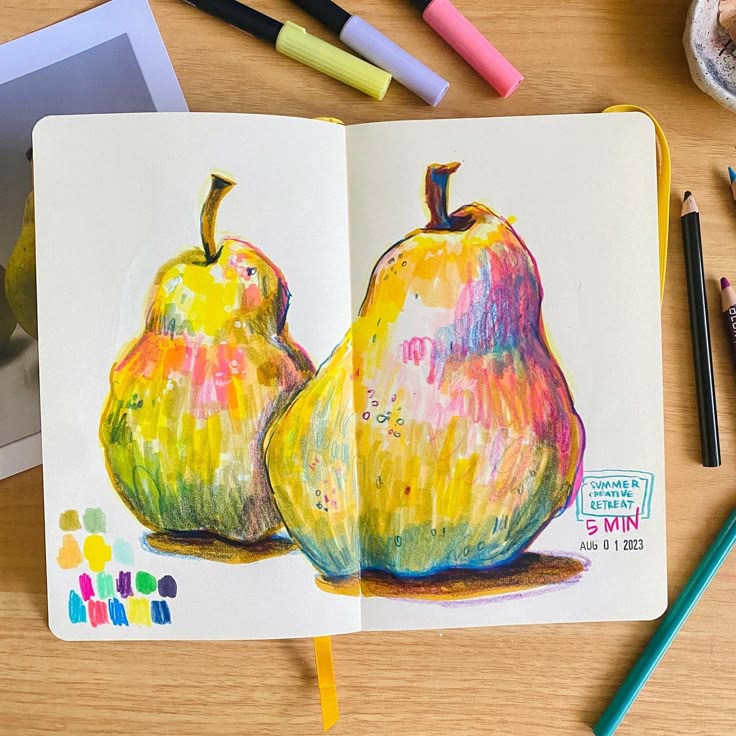
colorful Non-Local Pear Drawing ideas by Erika Lamar Buentello artsy drawings brianna eisman
Non-Local Pear Drawing by Erika Lamar Buentello
  1. A plant growing through a cracked window, creeping upward
  2. A half-drawn face with its features slowly dissolving into thin air
  3. A hollowed-out human figure with intricate patterns spilling out from inside
  4. A body with transparent parts that reveal a hidden world inside
  5. A melting object dripping into a chaotic pool of shapes
  6. A liquid that’s spilling from a cup, but instead of water, it’s made of words
  7. A deconstructed object—like a chair—rearranged into an abstract form
  8. A person holding a transparent sphere, and inside it, a completely different world
  9. A tangled mess of strings, each representing different emotions or concepts
  10. A floating object that shifts in shape the longer you look at it

Human & Emotional Drawing Ideas

  1. A faceless person standing in a crowd of shadows
  2. Two hands reaching toward each other, but never quite touching
  3. A hollowed-out human figure with intricate patterns spilling out from inside
  4. A body with transparent parts that reveal a hidden world inside
  5. A person holding a transparent sphere, and inside it, a completely different world
  6. A maze drawn inside a person’s silhouette, with no clear beginning or end
  7. A floating object that shifts in shape the longer you look at it
  8. A crumpled paper drawing, with creases creating a 3D effect
  9. A human figure dissolving into an array of fine, intricate lines
  10. An empty frame with only a shadow inside, suggesting what’s missing

Minimalism & Surrealism Drawing Ideas

  1. A blank page slowly getting filled with random scribbles
  2. A melting object dripping into a chaotic pool of shapes
  3. An open hand with light streaming out between the fingers
  4. A single brushstroke that seems to form a silhouette but fades into abstract swirls
  5. A sketch of a tree with roots that are made of tangled thread
  6. A bird with crystal feathers that glow in the dark
  7. A liquid that’s spilling from a cup, but instead of water, it’s made of words
  8. An abstract wave crashing into a geometric structure, like a solid wall
  9. A figure partially submerged in water, with only certain parts of them visible
  10. A cloud of dust swirling around an undefined object

Conclusion

At the end of the day, the best drawing ideas are the ones that excite you. Don’t be afraid to put your own spin on these prompts—merge ideas, push boundaries, and experiment with styles you wouldn’t normally try. The more you create, the more your artistic voice develops, and that’s where the real magic happens.

So grab your sketchbook, pick an idea, and start drawing! Who knows? That one random prompt might just lead to your next masterpiece.

Join my monthly newsletter!

Sign up for my monthly artsy newsletter and stay up to date with all things from ArtsyDrawings.com

*

100 Surreal Drawing Ideas for every artist Read More »
How to Avoid Burnout: 13 Tips from A Tired Artist

Sometimes the ideas flood out and I can create painting after painting, each more whimsical than the last. As much as I enjoy these spurts of creativity, when they pass I tend to get burned out. I’ve been an artist for many years and I know I will always love it, but I’m only human. I get tired and frustrated when the art doesn’t turn out the way I want it to and there are a lot of drawings and paintings I choose not to share, out of fear of not being good enough.

So, how do I get out of the creative funk? How do I avoid burnout as a tired artist?

Below I’ve listed 13 tips for how I avoid burnout, from setting healthy boundaries to creating art just for myself. Please remember that these tips to avoid burnout are my suggestions and opinions. Everyone has different methods for how they avoid burnout, and I implore you to use what works best for you and your lifestyle.

How to Avoid Burnout by Brianna Eisman

Tip #1: Avoid Burnout by Scheduling Out “Art Time”

My first tip to avoid burnout is to maintain a schedule. Whether your schedule is ambiguous like sketching once a day or once a week, or crafting a structured calendar specifically for your creative endeavors, its important to include your art into your routine.

street view drawing ideas daily sketch by maria
Yellow Street Daily Sketch by Maria

For me, I keep a separate Google Calendar for everything involved in this website, ArtsyDrawings.com. I plan out my social media posts, articles, monthly newsletter, bullet journaling time, and sketchbook time. Of course, I wish I was more diligent in meeting each of the goals I set for myself, but sometimes life happens and interrupts my art time, and that’s okay.

Setting realistic goals, like working on a project once a week, helps break down large projects into manageable tasks. This helps me to stay motivated without feeling overwhelmed and burnt out. Likewise, maintaining a consistent schedule helps me manage my time better and reduces the chances of overworking and spending all my creative juices in one sitting.

Tip #2: Avoid Burnout by Organizing your Time and Space

Honestly, I’m surprised every artist isn’t tested for ADHD. I work on many different projects at the same time, sometimes with different mediums and in different parts of the house. So, tip #2 to avoid burnout is to stay organized!

Organization can be achieved through many different methods. Cleaning frequently, using sorting bins for different materials and mediums, and labeling everything with a label maker are some of my favorite ways to keep myself organized. I think the best way to stay organized mentally is to choose either multiple projects in one location or one project in multiple locations.

For example, when I bullet journal I select the materials I want to use for the journaling pages and I’ll take those materials wherever I want to work. For me, bullet journaling is a timely process that I can take with me wherever I go; sometimes I’ll work on it at a coffee shop or out on the porch on a nice day. Regardless, I’m choosing one project in multiple locations.

In contrast, when I paint I like to keep everything in one place next to my supplies and artist easel. Acrylic paint dries out pretty fast so once I create the paint palette I like to maximize the material. This means I stay in one place, but work on many different projects at once.

Staying organized physically and mentally helps reduce stress and allows me to focus on the art in front of me. When I know where my materials are located and have my workspace clear, its easier for me to work when creativity strikes.

Tip #3: Make Art Fun Again

I think sometimes artists get caught up in the business and outside expectations that we forget why we started drawing in the first place. Art is a way for people to express themselves and enjoy the process of creating something new. So, how can you find that passionate fire again after burnout?

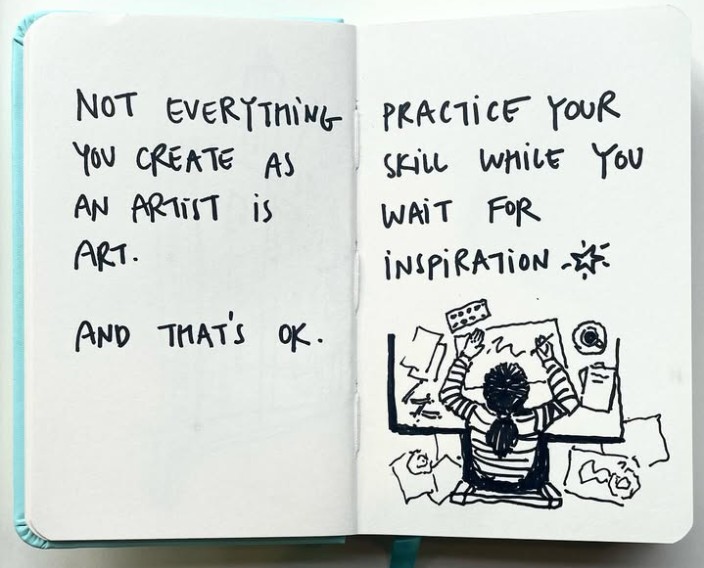
make art fun again practice your skill white you wait for inspiration

Below I’ve compiled a list of different activities I like to do when I’m burned out of formal paintings and drawings. These activities help inspire me and get me back into the creative groove.

  • Practice mark making
  • Walk around a craft store
  • Create holiday or birthday cards
  • Paint a wooden figurine
  • Create a diamond painting
  • Paint ceramic plant pots
  • Go to a local arts market
  • Create a scrapbook mood board
  • Test your pens and markers
  • Get inspired on Pinterest

Allow yourself to create without deadlines or expectations. Make art just because you love it.

Tip #4: Avoid Burnout by Taking Regular Breaks

Just like school or work, your art requires time and energy. When you overexert yourself painting or drawing, sometimes it can lead to burnout. To help avoid reaching this breaking point, make sure you are taking regular breaks. Step away, take a walk, or engage in activities that relax you.

While this step is simple, it’s easy to forget, especially when you get really deep into the project. This tip goes hand-in-hand with Tip #1: Avoid Burnout by Scheduling Out “Art Time.”

Tip #5: Avoid Burnout with a Sketchbook

When you keep a sketchbook or journal it allows you space to write down thoughts, ideas, and feelings that can help declutter your mind promote creativity outside of finished pieces. This tip is important whether you are currently burned out, approaching burnout, or actively creating art.

I was introduced to regularly drawing and sketching in a journal/sketchbook in middle school, and I’m happy it’s stuck with me. Aside from jotting down quick ideas and sketches, keeping a sketchbook is a great tool to maintain your creativity. I keep a few different sketchbooks for different reasons:

  • Bullet Journal – My bullet journal is a formal sketchbook structured by month. Each month I choose a color scheme and theme and create tracking pages for my habits, moods, and special moments from that month. For example, I have pages for my phone use, music I listened to recently, seasonal produce, and positive events that occurred throughout the month.
  • Private Sketchbook – This is the sketchbook I don’t show anyone, at least for a few years. I started the sketchbook with the intention of keeping it private, so the drawings are bad and weird and wonky, and that’s okay. This journal erases the expectation of making “good” art and focuses on simply creating and improving my line work, color schemes, and overall creativity.
  • Public Sketchbook – This sketchbook is the exact opposite of the above mentioned “private sketchbook.” I started it with the intention to share it publicly and to create beautiful, finalized works of art. If I mess up or don’t like the way the drawing is going, I’ll draw or paint over it. My idea for this sketchbook is to be able to bring it to art markets with me as a easy way to show my portfolio and range.

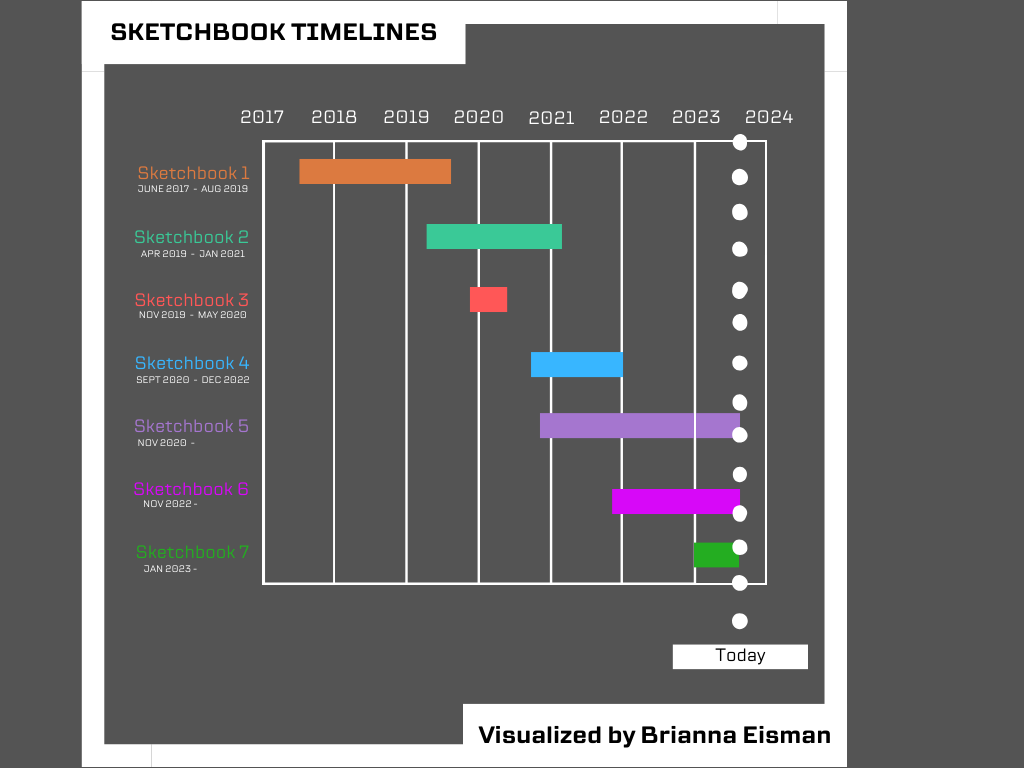
Gantt chart showing sketchbook use over time
Sketchbook Timelines by Brianna Eisman

Tip #6: Avoid Burnout by Celebrating Small Wins

When you’re learning to draw it’s easy to compare your work to others, or even compare it to the image you had in your head. Don’t get yourself down on what you can’t do, you have to focus on celebrating the small wins. You won’t become a great artist overnight, it takes a lot of bad drawings and it’s frustrating.

I remember this one portrait painting in art school that I kept painting the face over and over again because I just couldn’t get it right. The acrylic paint was so thick that if you held the canvas up to the light, no light would shine through to the back. This was one of my first experiences with artistic burnout. I hated working on this painting and dreaded going to the class. So, one day I got so frustrated that I took Cadmium Red paint and blocked out the portrait’s face with a big red blob. A few different things transpired:

  1. I shocked myself and remembered that I choose to make art because it makes me happy and puts me in control.
  2. I stopped working on the portrait’s face and focused on other aspects of the painting like the hands, dress, and background. Improving these associated pieces helped improve the painting as a whole.
  3. I gave myself a clean slate to start over on the face and it worked. I was able to repaint the face without the original disproportionate sketch peeking through.

These were three small victories that contributed to finishing the painting. Honestly, I’m not sure where that painting ended up. But, I’m glad I was able to turn my artistic burnout and frustrations into positives. The acknowledgement of small wins help you stay motivated and help avoid burnout.

Tip #7: Avoid Burnout by Seeking Inspiration

Being creative doesn’t necessarily mean making art, there are many ways to be creative.

When burnout strikes, instead of forcing yourself to create, try seeking inspiration through nature, local arts markets and galleries, or connecting with fellow artists. If you’re unable to go outside, scrolling through online art platforms like Pexels, Doodle Addicts, and RedBubble can provide a much-needed boost.

I also enjoy using my connections on social media for inspiration. I’ll do a deep dive into a hashtag I like to find similar artists or scroll the explore page until I find something that stands out to me. Inspiration is all around you, but its up to you to allow yourself to be inspired by it.

Tip #8: Avoid Burnout by Experimenting

Experimenting with different mediums can lead to new ideas.

Maybe your problem isn’t your creativity, but rather that you’ve been working with the same material or medium for too long. I know I go through cycles of painting, drawing and photography. Basically, when I get bored of the one medium, I’ll switch to another, avoiding burnout.

My personal favorite mediums are typically acrylic paint and drawing markers, but I do love to switch things up. I have a box labeled “Misc. Art Supplies” for stuff like henna, ribbons, embroidery floss, beads, tape, magnets, felt, glitter and all sorts of different things. When I’m burned out, or trying to avoid burnout, I’ll trifle through this box and see if anything stands out.

how to avoid burnout as a tired artist
Photo by Jure Širić

Tip #9: Avoid Burnout by Knowing When to Say “No”

You may be at the point in your art career where you are accepting commissions, paid and unpaid. It’s important to know yourself and your limits when accepting commissions. Rushing your art can significantly impact the quality of it. Knowing your abilities and your boundaries can help you avoid burnout.

It’s important to set healthy boundaries and learn to say no to projects or commitments that will stretch you too thin or compromise your creative time.

Tip #10: Avoid Burnout by Hiding your Art

After working a piece for while, you no longer see the work as a whole, rather individual parts that still require work. So, the next time you decide to take a break, move the piece somewhere you won’t be able to see it on a regular basis. For good measure you can also turn the piece upside down.

Tip #4: How to Avoid Burnout by Taking Regular Breaks talked about taking regular breaks to help you recharge and reset your eyes when making art. Tip #10: Hide Your Art is about hiding your art to further help reset your eyes.

When I work on a painting for multiple hours, I have to take a longer break at some point. During the time I’m not painting (could be days, could be weeks) the piece is hidden away in my storage closet. When I eventually resume painting, it’s new again and I can see things I didn’t notice before.

This practice helps you avoid burnout by reinvigorating your art with new perspective and energy.

Tip #11: Avoid Burnout by Prioritizing your Physical Health

This tip is pretty straight forward, but it needs to be said. You are the machine behind the products, and if the machine breaks no products are made. It’s important to prioritize your health above your art. Northwestern defines physical wellness as “recognizing the need for physical activity, healthy foods, and sleep, as well as preventing illness and injury or managing chronic health conditions.”

  • Get enough sleep and recharge
  • Exercise regularly
  • Stay hydrated
  • Create well-balanced and healthy eating habits
  • Seek medical care when needed

Tip #12: Avoid Burnout by Engaging with the Art Community

Whether you are a sculptor, painter, or graphic designer, art is subjectively lonely. The practice is typically done by yourself and reflects your personal experiences, expressions, and style. I’ve mentioned before in this article about how you can help to avoid burnout by visiting museums, galleries, and arts markets. These activities are a great way to connect with the art community.

Connecting with others who share your passion helps you grow. One of the easiest ways you can connect with others is on the internet. I frequent r/ArtistLounge on Reddit. This group posts most anything art like progress photos asking for critiques, art business questions, recommendations for art supplies, and personal troubles that other artists may share.

Engaging with other artists can provide new perspectives, lessen isolation, and make projects more fun.

You can also connect with me and my art community by joining my monthly newsletter! I send out updates about my website, recent art I’ve created, and local galleries and artsy events.

artsydrawings.com newsletter sign up by Brianna Eisman

Tip #13: Avoid Burnout by Avoiding Perfectionism

Perfectionism is a spicy mix of anxiety, expectations, and procrastination. It’s something everyone deals with, no matter the industry.

As an artist, I see perfectionism at both the beginning and end of my projects. To start, I fear failing or messing up or marking the wrong mark on the page. I procrastinate or over-plan to the point that sometimes I have to tell myself “oh my goodness, just paint!!!” I see the same emotions pop up at the end of a project when I struggle with deciding when the piece is truly finished. I even debate varnishing paintings just in case I want to go back in and edit something. I’m stressing myself out when I should be enjoying making art.

Even as I write this article, I’m plagued with anxiety that I’m giving poor art advice or I’m not answering the questions the “right” way. But, that’s the thing with art, there isn’t really a “right” way.

Obviously, if you follow color theory or composition tips or imitate a certain historical style, your art is more likely to please the eye. But, at the end of the day, your art is an extension of your emotions and feelings; it’s subjective. Art focuses ideas and thoughts into shapes and colors that have depth and meaning. Ideas aren’t perfect, so why do you expect your art to be?

There’s this productivity phrase that says “Done is better than perfect.” It’s a motivator for those, like me, who struggle with perfectionism and avoiding burnout, to try and see the bigger picture. Not every piece has to be a masterpiece. When you learn to appreciate the process, and not just the result, you find deeper meaning in art.

How to Avoid Burnout: 13 Tips from A Tired Artist Read More »
35 Best BUJO Spreads for a Colorful Summer 2024

Hey there art lovers and bullet journaling enthusiasts! As we dive headfirst into the sizzling days of Summer 2024, it’s time to break out our trusty bullet journals (BUJOs) and infuse them with some sunny vibes. No worries if you don’t have a bujo yet, the blank journals are currently on sale on Amazon! Whether you’re a seasoned bullet journaling aficionado or just dipping your toes into the world of creative planning, I’ve got you covered with some fresh and fun bujo spreads to make your summer journaling experience totally unforgettable.

Let these ideas be a good starting point for your own artistic exploration, as you adapt and personalize each spread to suit your own preferences, color schemes, and styles.

Let’s get started with fruity bujo spreads

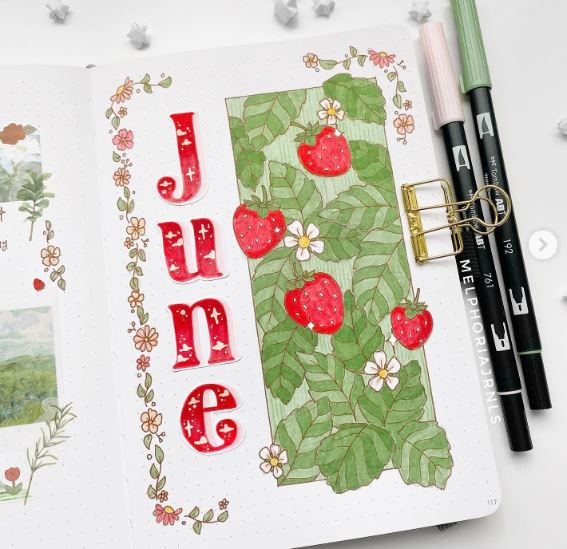
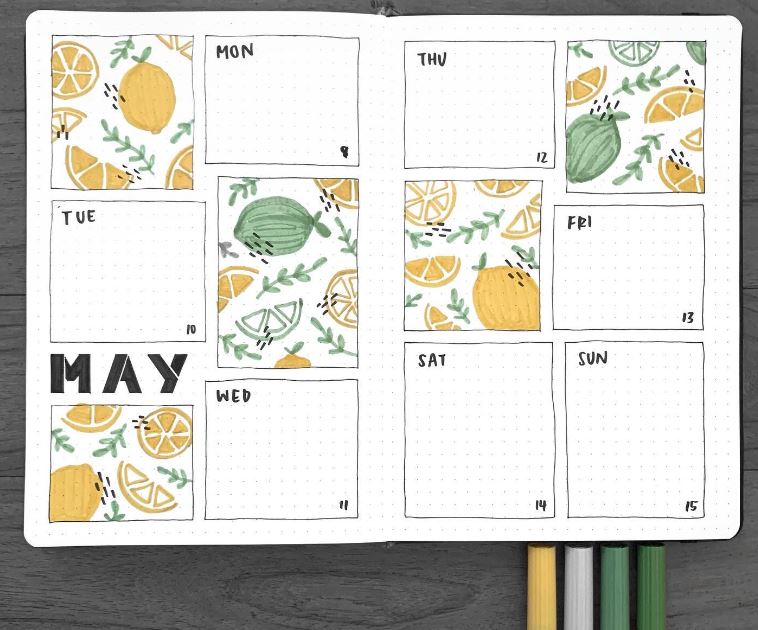
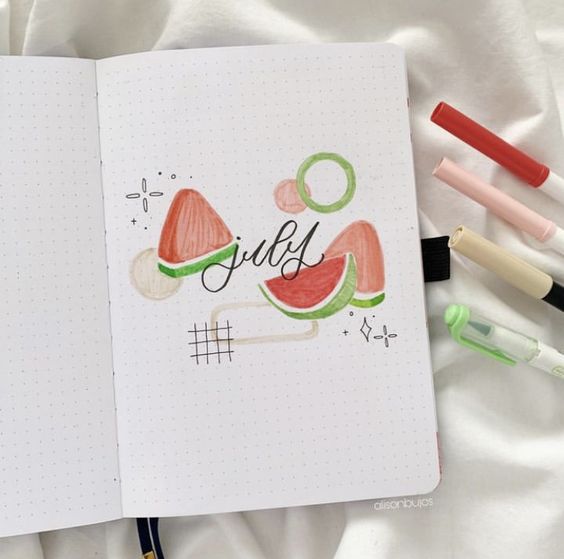
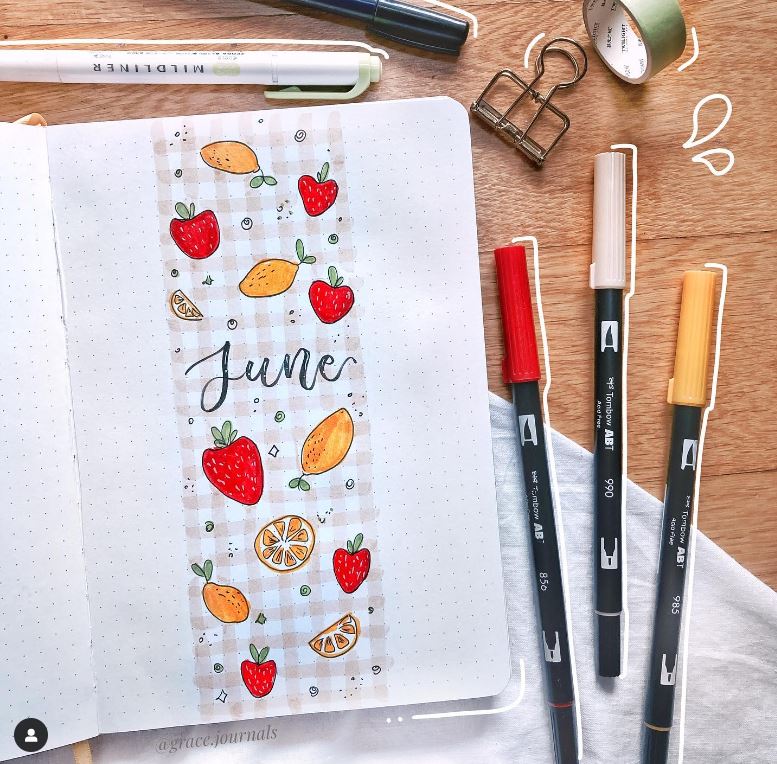
As the seasons change, the fruit and flowers blossom! Check out these colorful bujo spreads inspired by fruit like strawberries, blueberries, watermelon, lemons and more. I chose this fun strawberry June spread to start. I personally also use Tombow Dual Brush Pens for my bullet journaling, and these markers are featured in the image below. These pens have two tips, one brush-like and the other side is a fine-marker style. They are awesome for clean linework and you can create nice depth with multiple layers, similar to a highlighter. You can find Tombow Dual Brush Pens at your local art supply store, or get a pack for under $20 on Amazon!

strawberry bujo bullet journal ideas page for summer
@melphoriajrnls
may fruit bujo bullet journal ideas page for summer
@macchiatoclouds
july watermelon fruit bujo bullet journal ideas page for summer
@24braunh

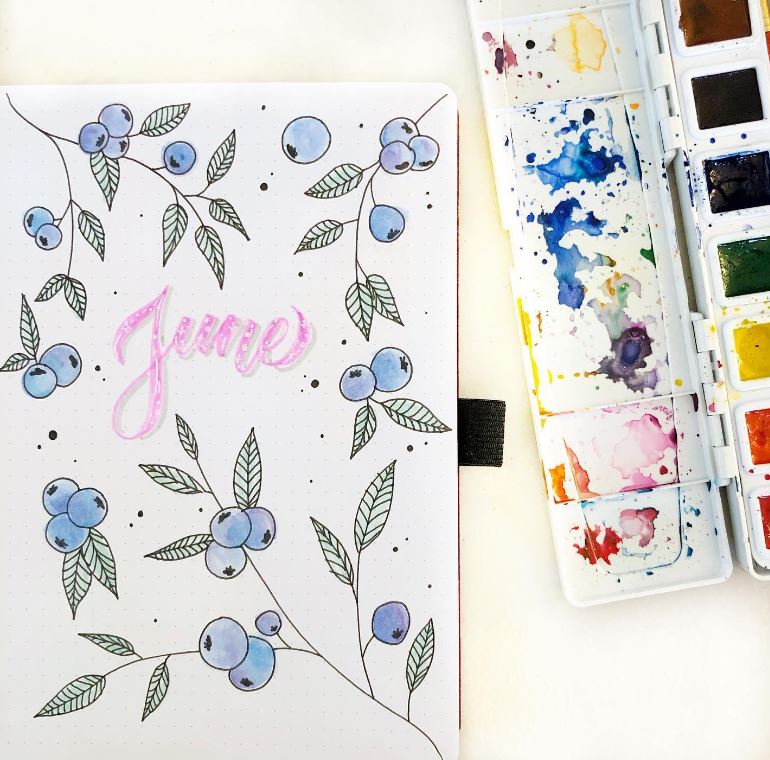
Feel free to experiment with different mediums like watercolor too! This artist used a beautiful light blue paint to color in the blueberries in this June bujo cover page. I actually loved this design so much, that I recreated it for my June 2024 bullet journal. Instead of watercolor, I used Tombow Dual Tip Brush Pens to create a layered multi-dimensional appearance.

It’s important to experiment with different mediums or art supplies to find what works best for you! For a complete list of my art supply recommendations, check out my Favorite Art Supplies List.

blueberry bujo bullet journal ideas page for summer
@hay.hannay
strawberry bujo bullet journal ideas page for summer
@grace.journals
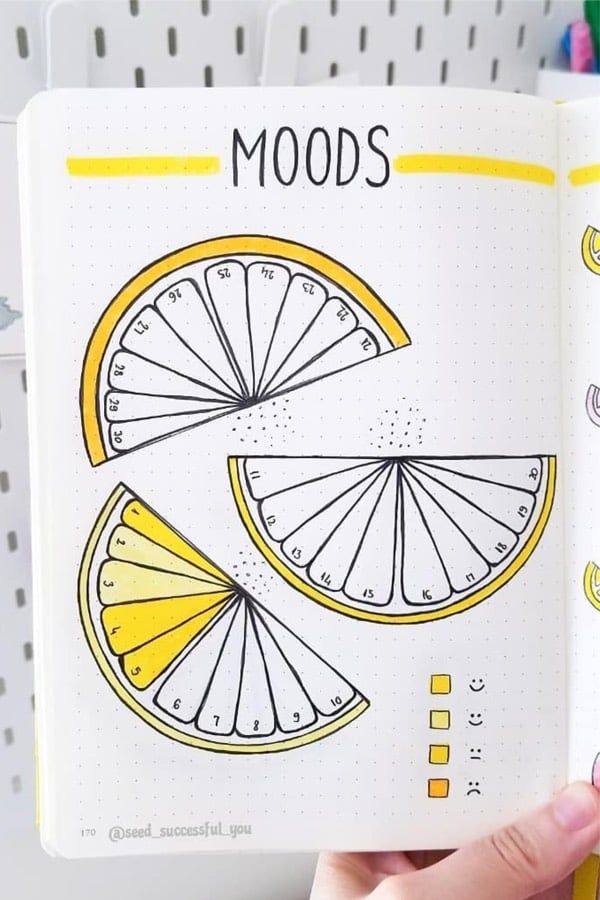
yellow lemon bujo bullet journal ideas page for summer
@seed_successful_you via CrazyLaura.com
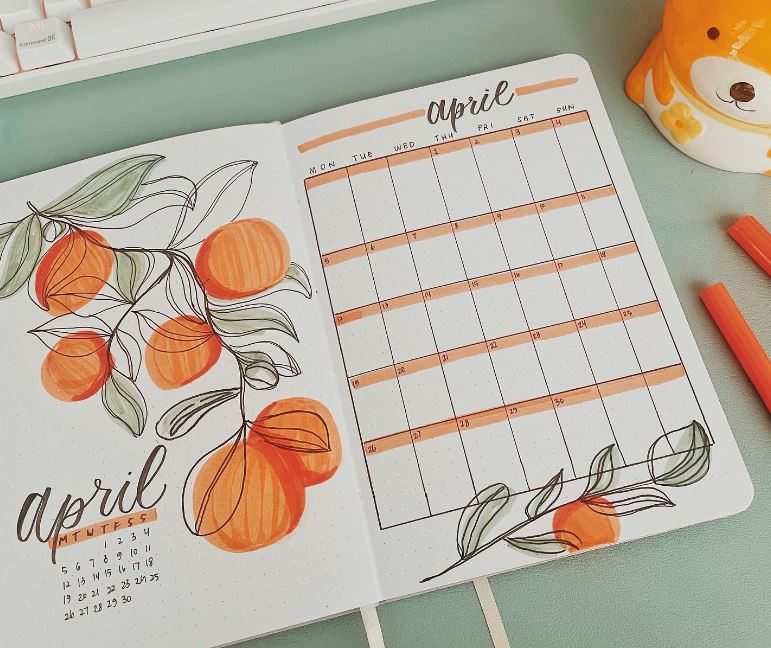
orange bujo bullet journal ideas page for summer
@hay.hannay

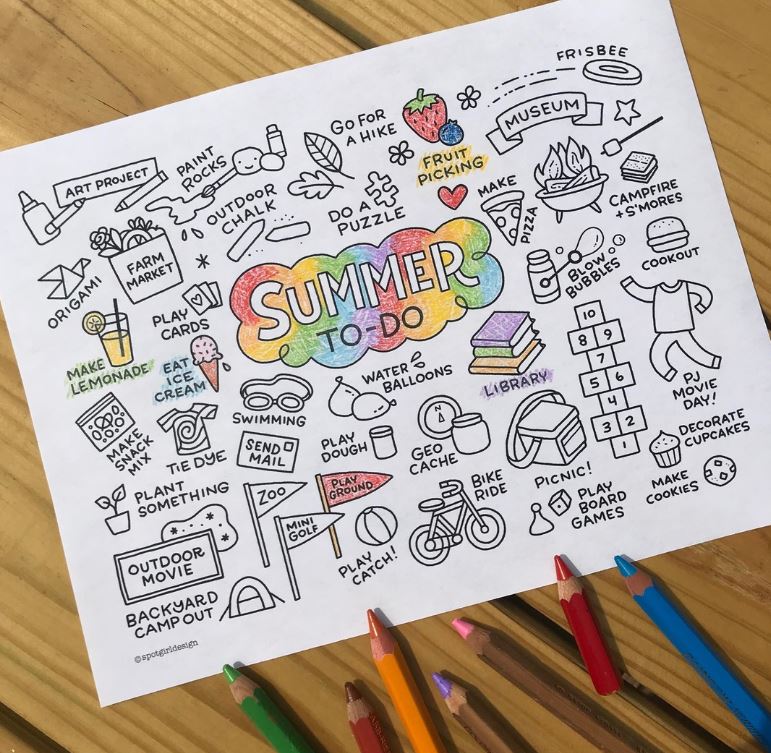
Bujo summer bucket lists

I remember making summer bucket lists with my sister growing up. It made the summer so much more memorable. Let’s bring that nostalgia factor back with some beautiful and colorful summer bucket list bujo spreads!

Think beach days, road trips, outdoor concerts, and everything in between. Add checkboxes next to each item so you can mark them off as you go, and don’t forget to leave some space for doodles and memories along the way.

summer bucket list  bujo bullet journal ideas page for summer
@spotgirldesign
summer bucket list bujo bullet journal ideas page for summer
@nhalinowska

You may see that some designers use binder clips to hold back pages of your bullet journal. I especially love these gold clips used by @Grace.Journals. These clips help keep the page steady and still while you’re working on it, especially while erasing underdrawings. A 12 pack of binder clips is $10 right now, which is a really great deal.

summer bucket list bujo ideas

@grace.journals

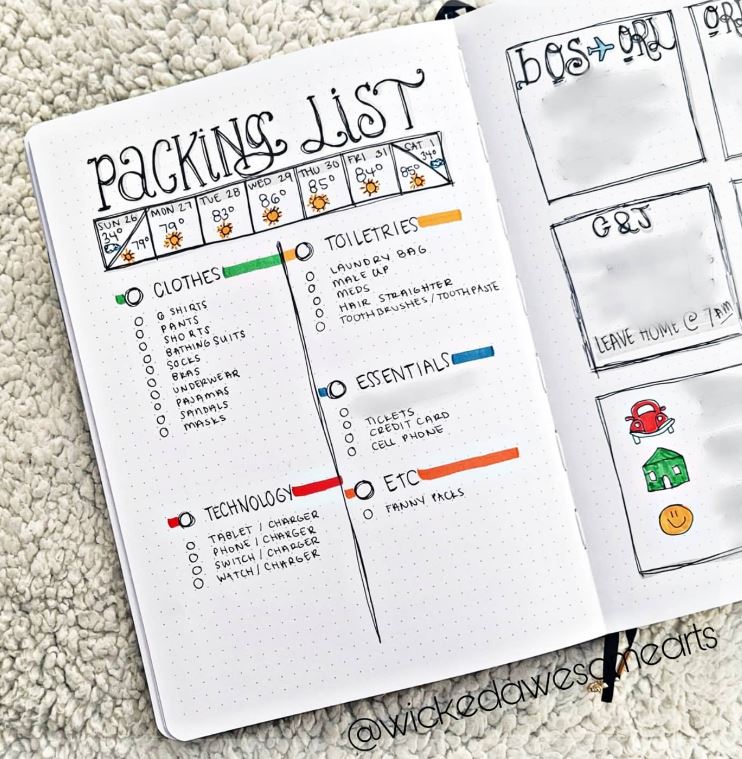
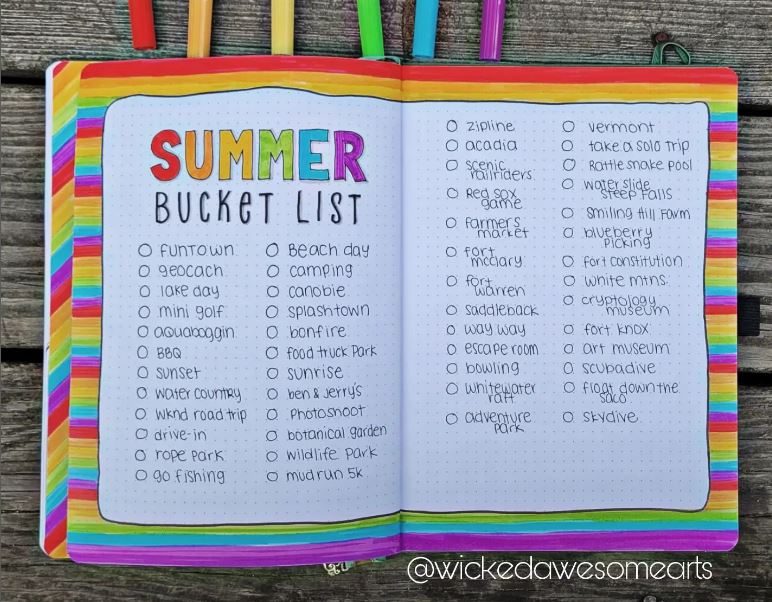
Summer is supposed to be a time to try new things and experience life in the summer sun. Some ideas for your summer bucket list could include ziplining, blueberry picking, farmers markets, visiting arts museums, and hiking! Use these bujo examples to inspire your own personalized list.

summer bucket list  bujo bullet journal ideas page for summer
@wickedawesomearts

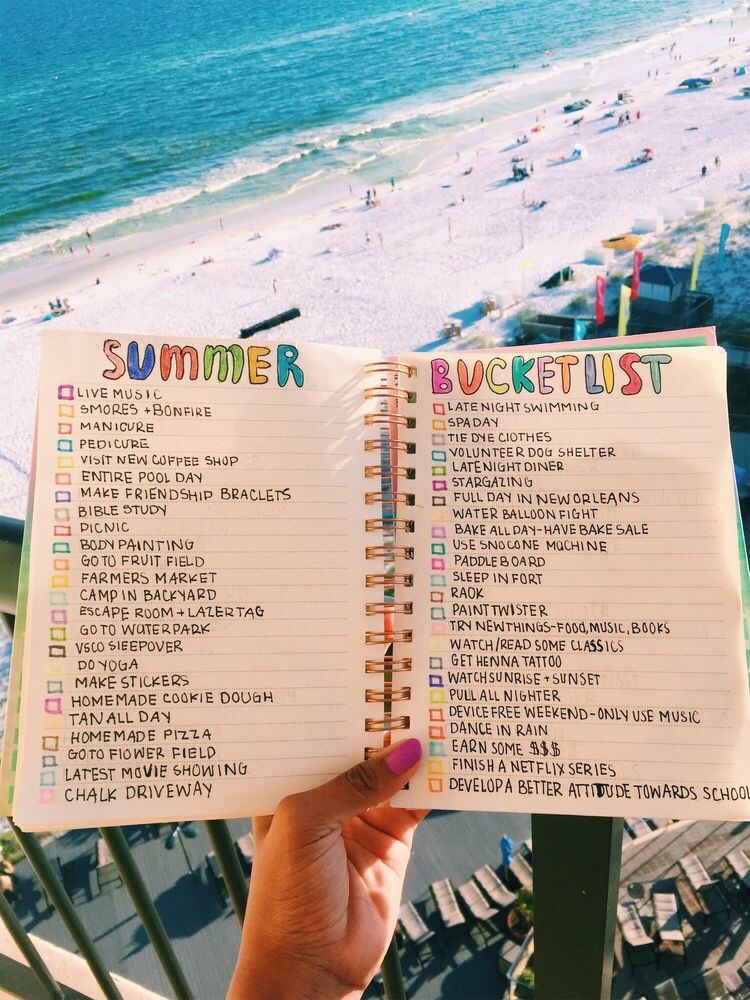
I love how this artist used different colors for the check boxes! It’s important to be creative and colorful with your journal, especially in the summertime to reflect the many colors found in nature this time of year.

summer bucket list  bujo bullet journal ideas page for summer
Article written by Brittany Bly

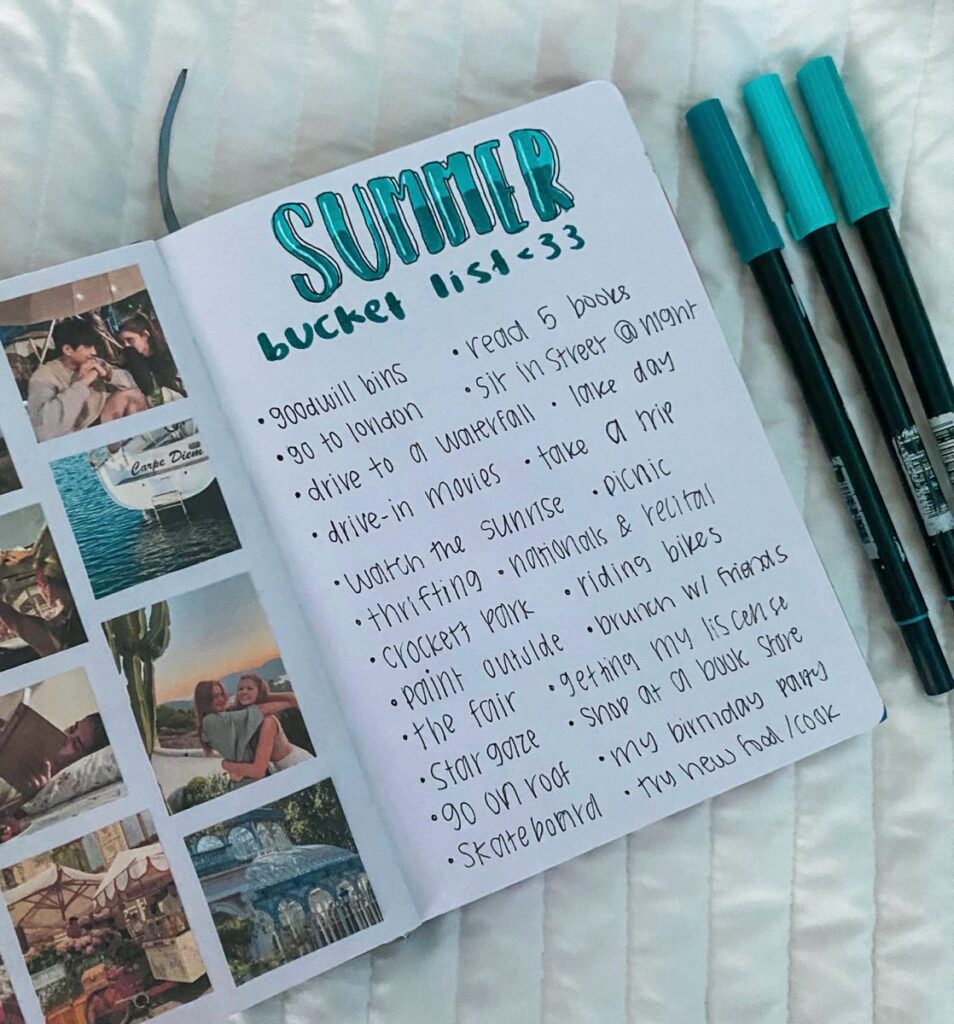
Adding polaroid or printed photos can also help to personalize your bullet journal. Scrapbooking is the original bujo. This artist also uses dual tip brush pens, shown in the photo below.

summer bucket list  bujo bullet journal ideas page for summer
@clairetomlinsonnn

Travel tracker bujo inspiration

Whether you’re jet-setting across the globe or exploring hidden gems in your own backyard, travel tracker bujo spreads are a must-have for any summer adventurer. Map out your destinations, jot down important details like flight times and hotel addresses, and leave plenty of room for postcards, ticket stubs, polaroid photos, and every scrap of paper you collect on your journey.

This bullet journal sketchbook on Amazon includes a folder at the back of the book, perfect for storing memorabilia from your trip. It also includes stickers, and it’s under $10!

summer bucket list  bujo bullet journal ideas page for summer
@artiewithane

I absolutely love how this artist broke down the first day of the trip into seven main points. If this is too much work, try using the same concept but for each day of your vacation.

summer bucket list  bujo bullet journal ideas page for summer
@Thatadventurer
summer bucket list  bujo bullet journal ideas page for summer
@ainsleynupah

These artists used scrapbooking techniques for their travel bujo spreads. I love the use of collected receipts, stickers, photos, and even a dollar bill (for safe keeping).

summer bucket list  bujo bullet journal ideas page for summer
@lillymaeferrari
summer bucket list  bujo bullet journal ideas page for summer
@ainsleynupah
summer bucket list  bujo bullet journal ideas page for summer
@wickedawesomearts

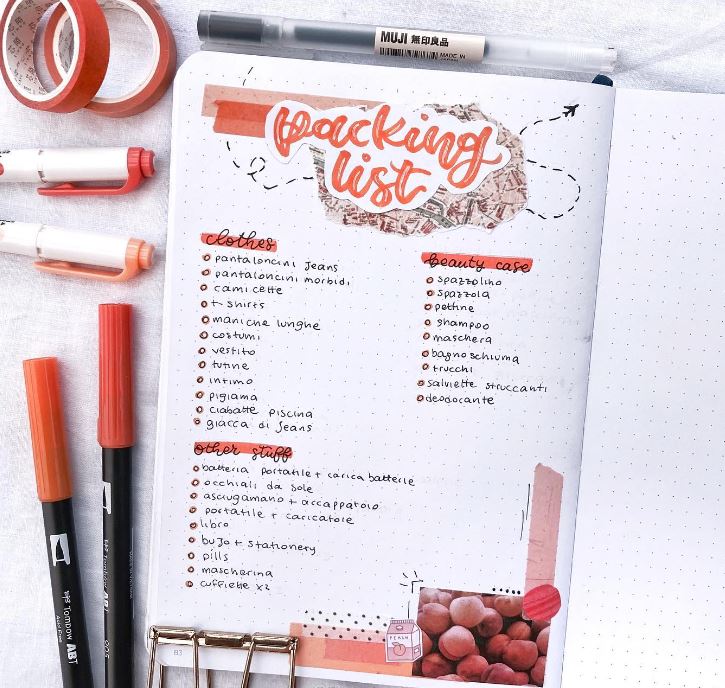
Packing lists are also a great idea for a bullet journal spread, but definitely complete the page before your trip.

travel bujo bullet journal ideas page for summer
@grace.journals
summer bujo bullet journal ideas page for summer
@wickedawesomearts

Summer 2024 Playlist spread ideas

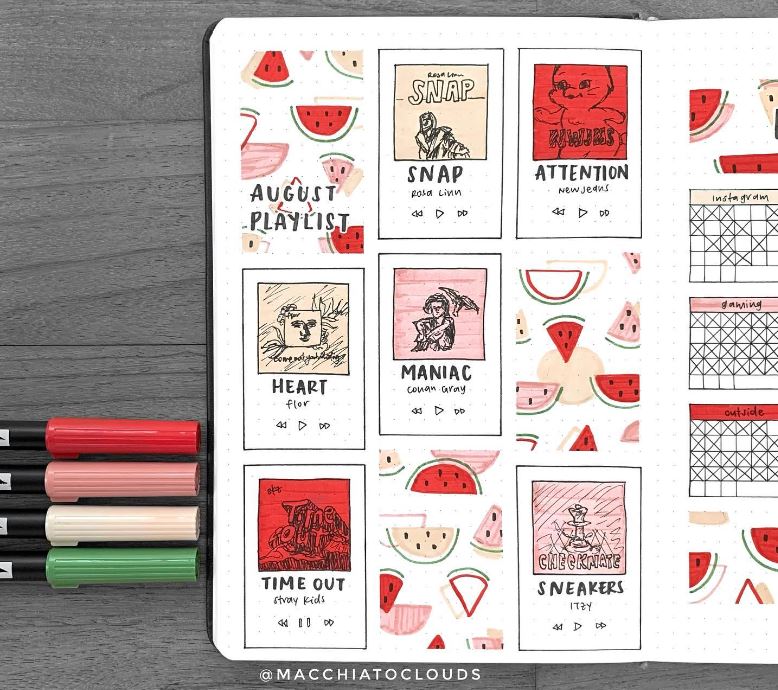
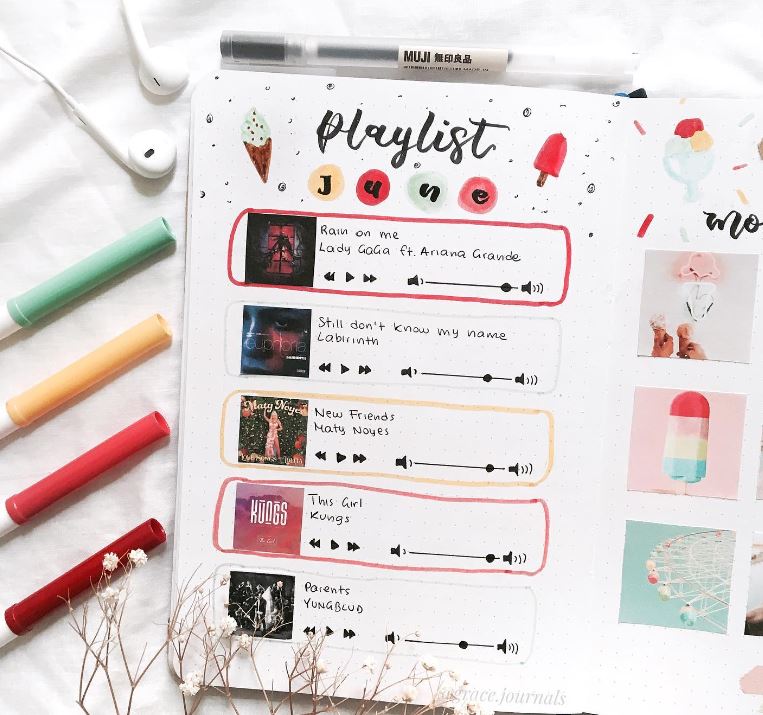
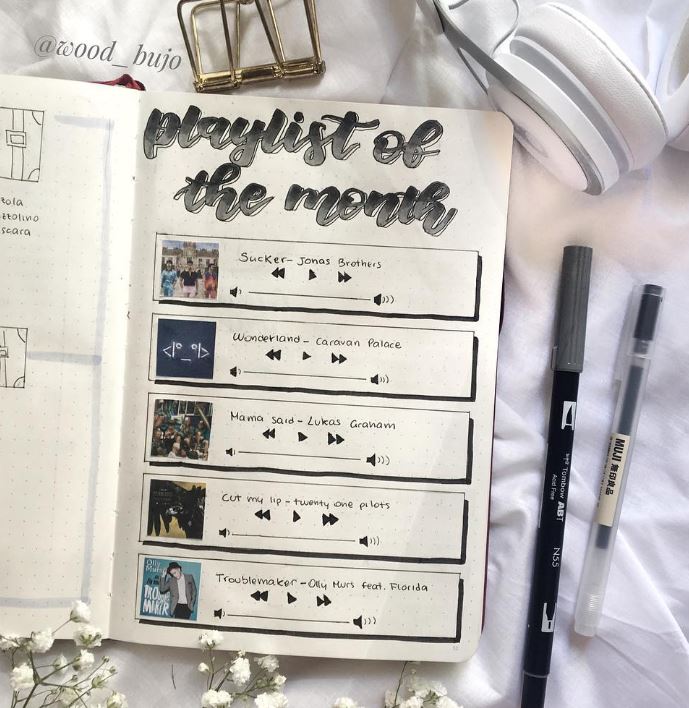
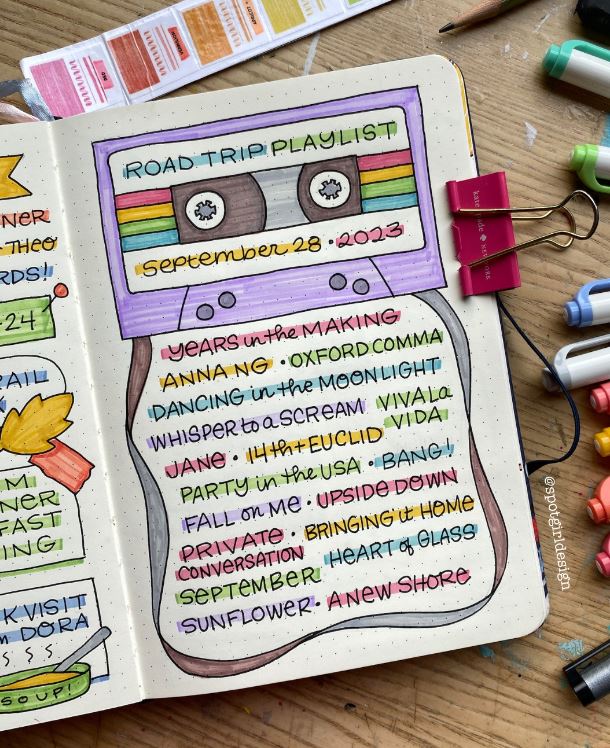
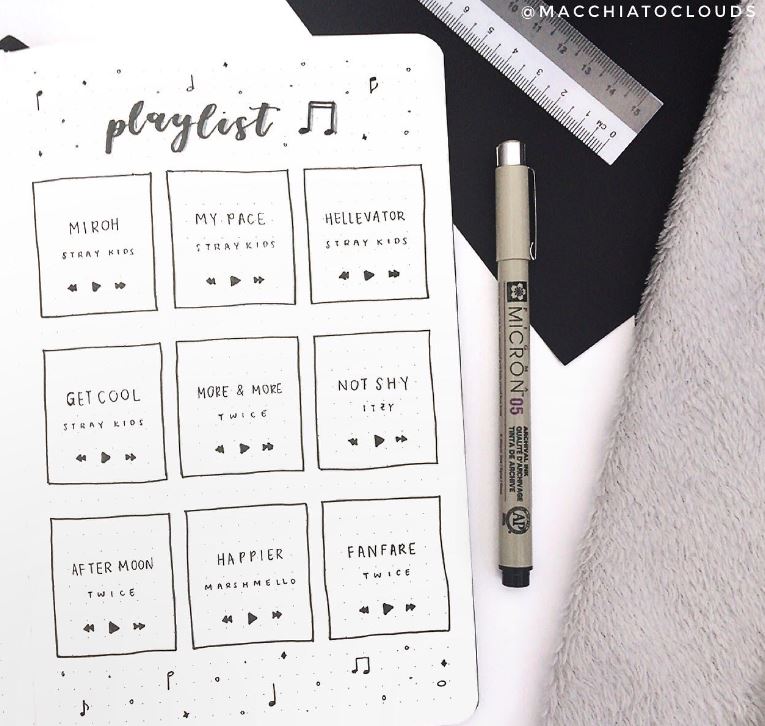
Music and summer go hand in hand, so why not create a summer playlist collage in your bullet journal? Gather your favorite songs that evoke those summer vibes, print out their album covers or write their titles in colorful fonts, and create a collage that you can refer back to whenever you need a little musical pick-me-up. These music inspired bujo spreads are a great resource for any time of year, not just summer!

You may also notice that many of these artists use Tombow Dual Brush Pens, and I do too. They really are such great multi-functional marker pens, especially if you’re new to bullet journaling. They have two tips, come in many colors, and so far none of mine have dried out in the 6+ months I’ve owned them. They also don’t bleed through to the next page!

summer road trip music bujo bullet journal ideas page
@macchiatoclouds
summer road trip music bujo bullet journal ideas page
@grace.journals

I think a music summary list is a really easy option if you’re out of ideas for how to finish off the month in your bullet journal. Music can tell a lot about who a person is and how they process their emotions. Obviously Spotify Wrapped is a cool feature, but what if you could see your top songs every month? It could make for super fun and easy bujo spreads.

summer road trip music bujo bullet journal ideas page
@grace.journals
summer road trip music bujo bullet journal ideas page
@spotgirldesign
summer road trip music bujo bullet journal ideas page
@macchiatoclouds

Sun-kissed bullet journal cover pages

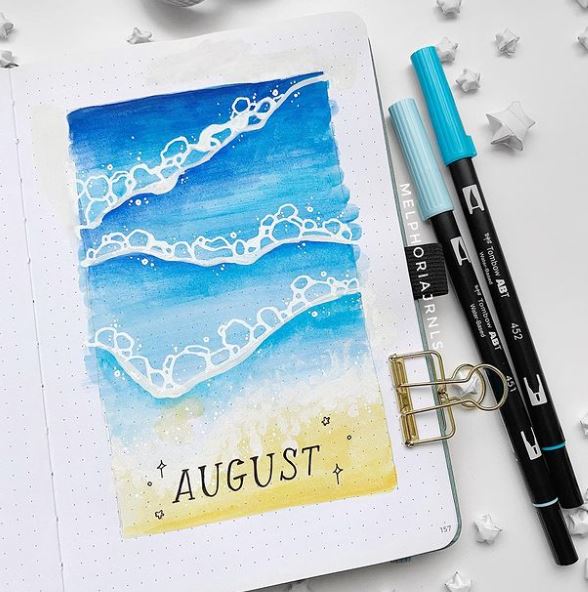
Channel those warm, sunny vibes onto the very first page of each month. Create a vibrant cover page featuring a bright yellow sun, palm trees swaying in the breeze, a colorful beach umbrella, sand beaches, and maybe even some sea life! Let your imagination run wild and let your creativity shine through! These bujo spreads are filled with summer inspired icons, bright contrasting colors, and chill vibes.

I also want to point out the use of these super cute gold binder clips! They help keep your notebook steady while drawing, plus they look really professional in photos!

summer aesthetic bujo bullet journal ideas page bujo spreads ideas
@melphoriajrnls

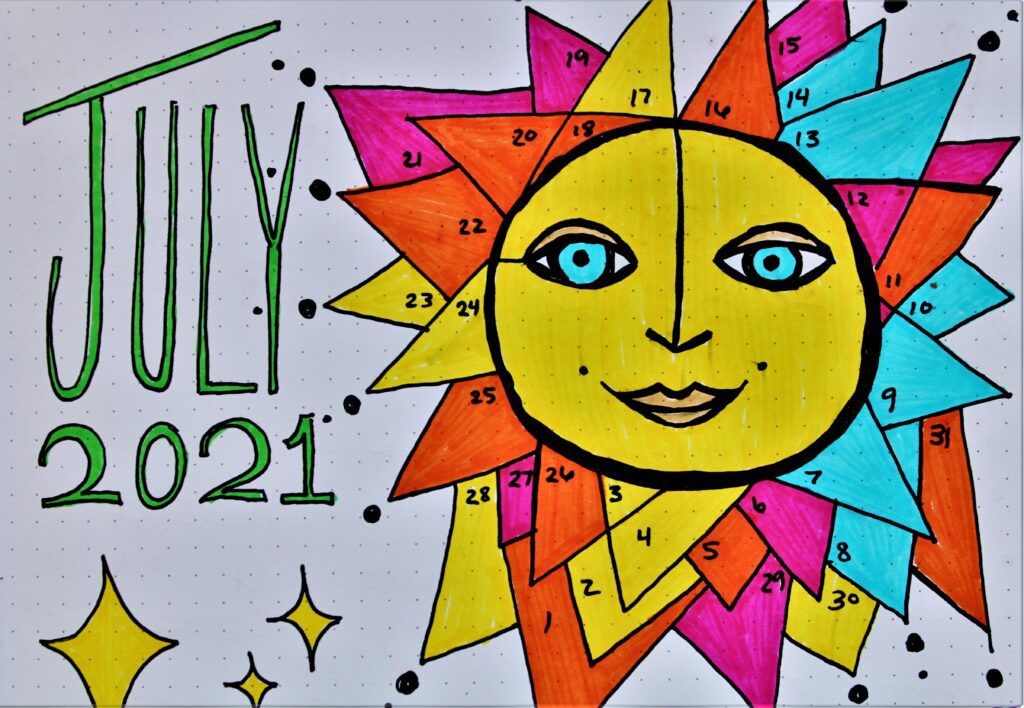
This July themed cover spread was created by me! In hindsight, I kind of wish I chose a different, lighter color scheme, but that’s part of learning. Would you like to see more bujo spreads created by me? Check out my social media to stay up to date on what I’m currently working on, which are bullet journals!

summer aesthetic bujo bullet journal ideas page sunshine happy
@briannaeisman
summer aesthetic bujo bullet journal ideas page
@grace.journals

Have an empty page that you can’t seem to fill? Quotes are amazing to help fill that white space! Check out my Pinterest board for aesthetic looking quotes if you need some inspiration.

summer aesthetic bujo bullet journal ideas page
@Sarahslittlelife
summer aesthetic bujo bullet journal ideas page
@grace.journals
summer aesthetic bujo bullet journal ideas page
@24braunh

Flowers are perfect additions to many bujo spreads, but it helps to choose ones that blossom during the current season. Certain flowers exude a warm, summery tropical vibe, while others are more spring-like. Keep this in mind when choosing which flowers to draw in your bujo spreads!

summer aesthetic bujo bullet journal ideas page
@wickedawesomearts
summer aesthetic bujo bullet journal ideas page
@grace.journals
summer aesthetic bujo bullet journal ideas page
@wickedawesomearts

Conclusion

So there you have it, my fellow artists and journaling enthusiasts—35 bullet journal ideas to make your summer 2024 one for the books! For a complete list of my art supply recommendations, check out my Favorite Art Supplies List.

Whether you’re soaking up the sun on a sandy beach or exploring exciting hiking trails across the world, let your bullet journal and these inspiring bujo spreads be your creative companion every step of the way. Happy journaling!

35 Best BUJO Spreads for a Colorful Summer 2024 Read More »
Scroll to Top
Cart
0
Add Coupon Code
Subtotal