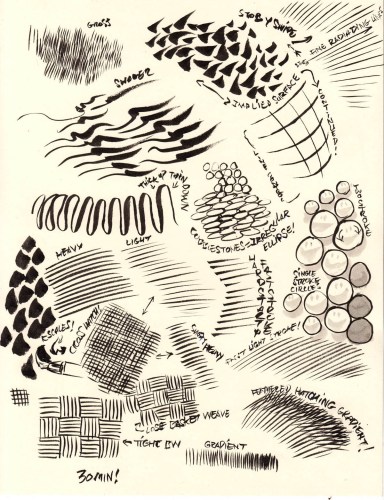
drawing tips

How to wish someone Happy Birthday, 7 Artsy Tips!

Why you should make your own artistic ‘happy birthday’ cards

Maybe you’re a bad friend and haven’t realized, but ‘happy birthday’ cards have gotten really expensive. If you’re in a rush, sure, buy the card, but if you have an ounce of artistic merit and some cardstock paper, I can teach you to create a much more personalized card for a lot less money.
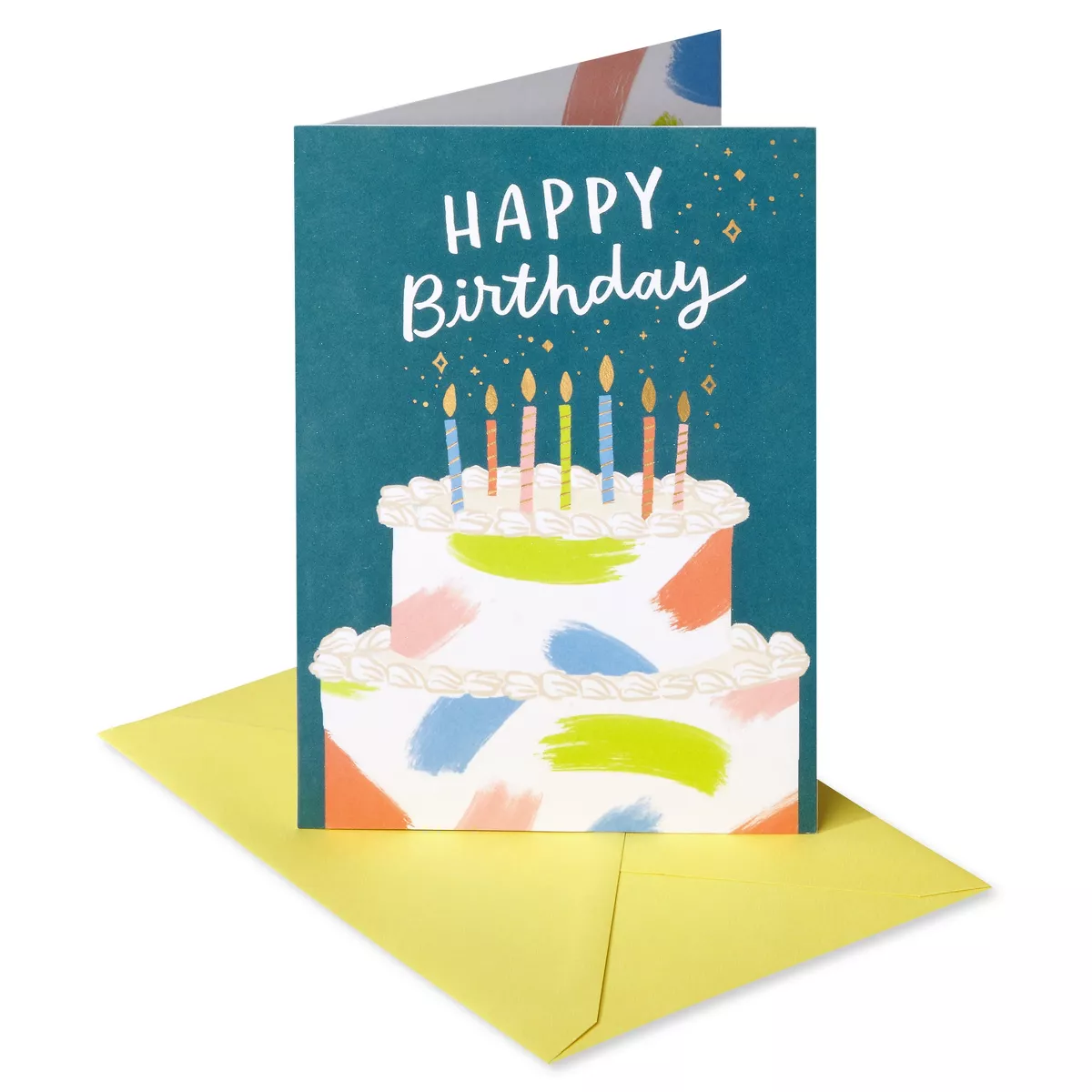
This happy birthday card from Target is currently $4.99.

At $5 per ‘happy birthday’ card, plus the cost of a gift, I decided early on to make my own cards for my friends, and they love them. In fact, I’ve been told my friends choose to keep my handmade cards over most others.

Unfortunately, none of my own cards will be in this article. I choose not to photograph my homemade cards to preserve their integrity as intimate gifts for my friends and family only. I am willing to share my Pinterest board where I source inspiration for my handmade cards.
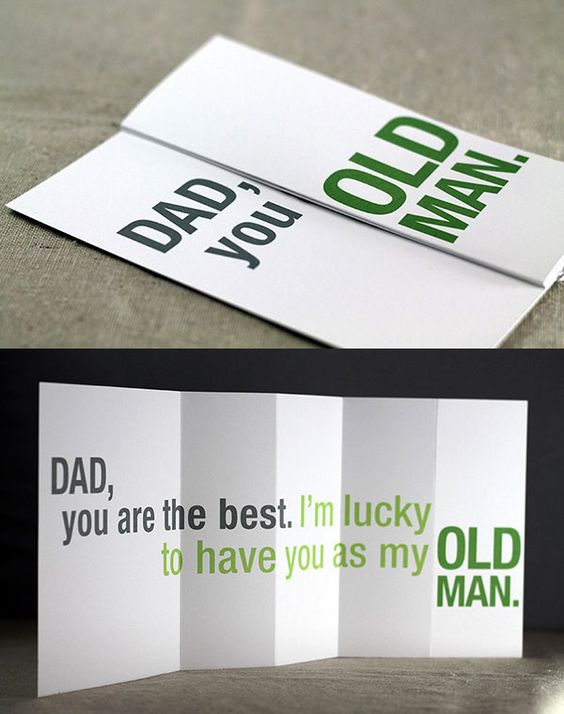
The cards you make can be just text, feel free to add drawings as you wish.

Art also has a unique way of expressing emotions, and what better occasion to put your creative skills to work than a friend’s birthday? In this fast-paced world, where digital communication often takes precedence, a handcrafted birthday card can truly stand out as a heartfelt gesture.

This blog post will not only guide you through the process of making beautiful birthday cards but also explore the idea of planning them in advance based on analytics to ensure you never miss an opportunity to celebrate your friends’ special days.

Tip 1: The Power of Personalized Happy Birthday Cards
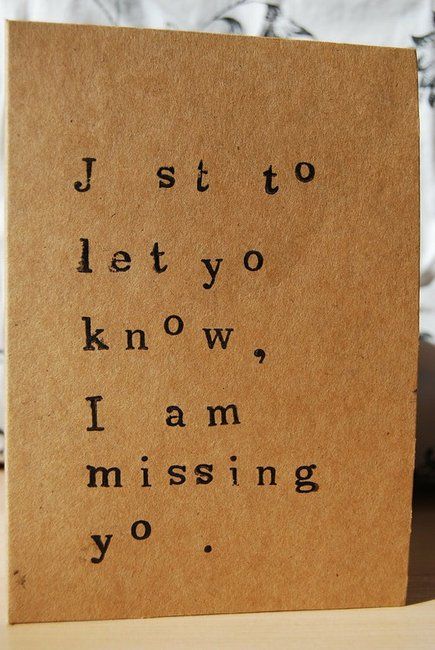
This is such a cute and easy to make card, sourced from my Pinterest board.

In a world filled with text messages and emails, a handmade happy birthday card can make a profound impact. It shows that you’ve invested time and thought into celebrating your friend’s special day.

The act of giving is itself rewarding, and when it’s a personalized birthday card, it can bring immense joy to both the giver and the receiver. A well-crafted card reflects your love and care for your friend.

Tip 2: Gathering Supplies to decorate the best ‘happy birthday’ card

Before you begin crafting, gather essential art supplies such as colored paper, scissors, glue, markers, stickers, and embellishments. These will be your tools for creating a unique card to say “happy birthday” or “congratulations” or “i love you.”

Check out my list of favorite art supplies on Amazon. For personalized cards, I recommend materials including this heavy multi-media paper, these dual tip brush markers, and this Pilot G-2 gel pen.

Choosing the right materials is crucial. Consider your friend’s personality and preferences when selecting colors, patterns, and themes for the card. Personalization makes the card even more special. For example, I know my mom’s favorite colors are pink and green so I try to include that color scheme in her cards.
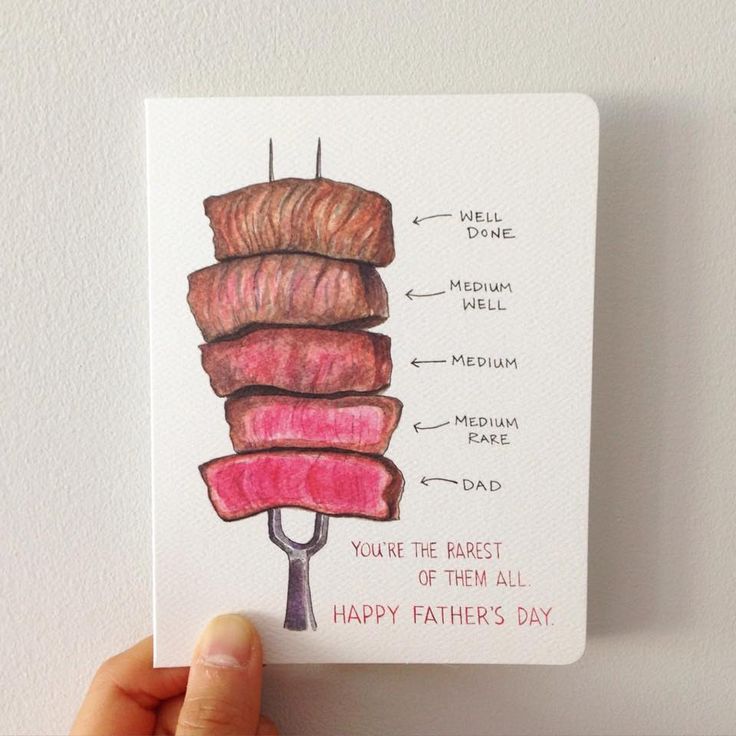
Your card can be for any occasion, from a happy birthday to a happy father’s day.

Keep color theory in mind when choosing your colors for these heartfelt cards. Red and green may come across as Christmas themed, purple and orange may feel too much like Halloween, and hot pink may not be the best choice for your hyper-masculine guy friend (but hey, if you know he likes the color, go for it).

For tips specific to color schemes, check out my color knowledge article!

Tip 3: Designing Your Happy Birthday Card

I typically start the design process by gathering inspiration. Check out my Pinterest Board titled ‘Cards‘ to see my inspiration for handmade cards.
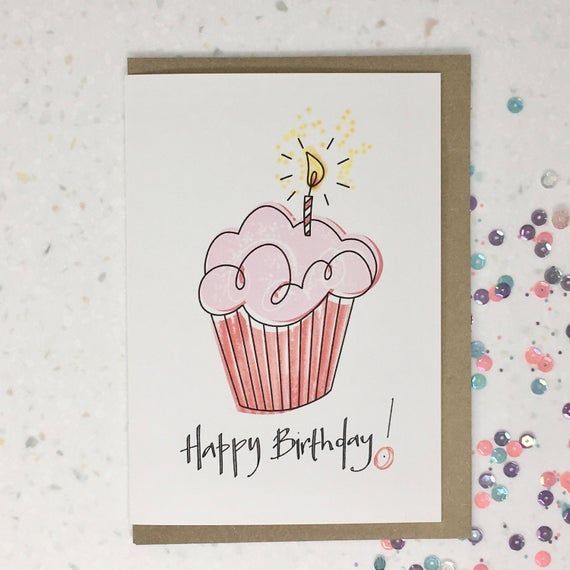
When designing a ‘happy birthday’ card, think about items representing birthdays like candles, cake, balloons, confetti and party hats.

Start by sketching out your card’s design using pencil on a spare sheet of paper. For more sketching and drawing tips for beginners check out this article. This rough sketch will help you visualize the final product and make necessary adjustments.

There are countless card layouts to choose from, such as pop-up cards, layered cards, and simple folded cards. Pick one that suits your design and skills.

Though, if inspiration is just not striking, AI may help spark some creativity. Use Chat GPT to find just the right words to say. For more about using AI in art, read this article.
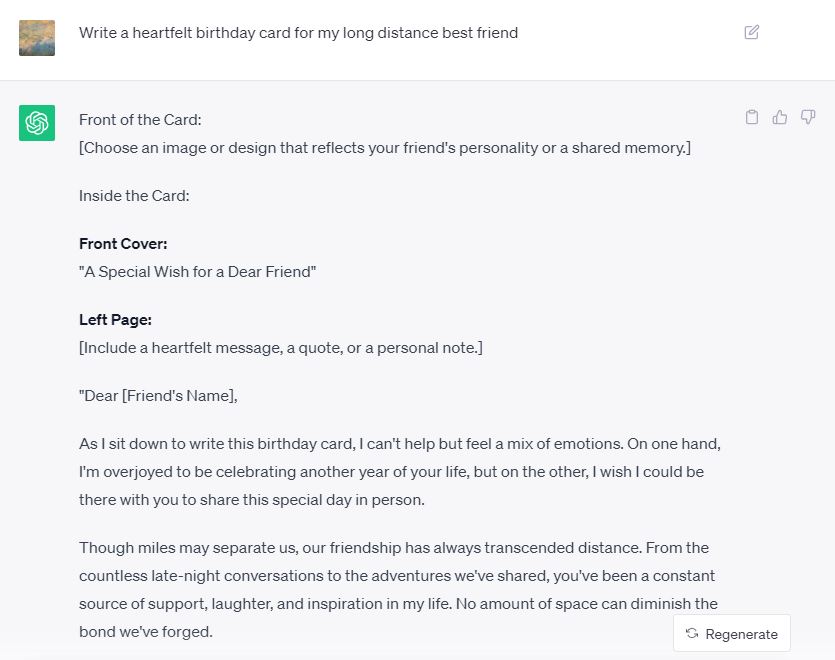
As a last resort, ask Chat GPT to create text for your card if artists block is blocking the emotions.

You can also include personal elements like photographs, handwritten messages, or inside jokes that are meaningful to your friendship. These touches will make your card truly unique.

Tip 4: Planning the ‘happy birthday’ Ahead with Analytics

In today’s digital age, it’s easier than ever to track birthdays. Consider using calendar apps or social media platforms to remind yourself of your friends birthdays.

You can also optimize your card making processes by using simple analytics.
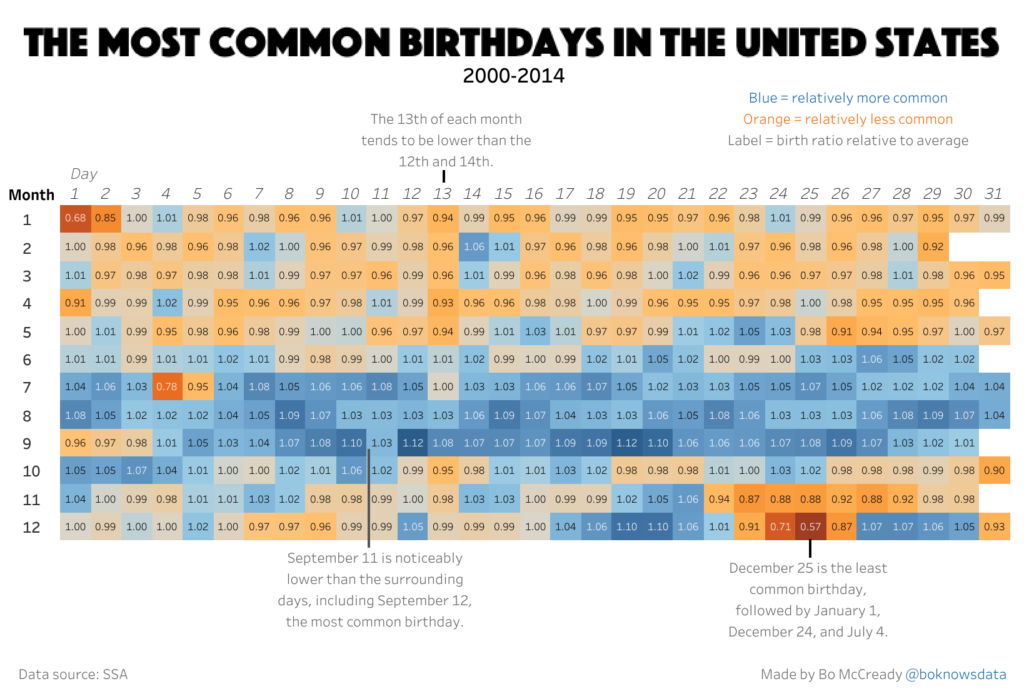
According to this visualization heat map created by Bo McCready, September is the most popular month to be born.

In the United States, September is found to be the most popular month to be born. This data was sourced from the public Social Security Administration and the Centers for Disease Control and Prevention’s National Center for Health Statistics.
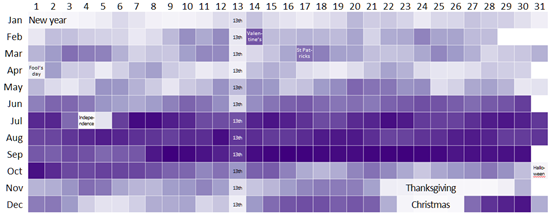
This visualization heat map shows the popularity of birthdays in the US between 1973 – 1999.

An analyst at Gramener Inc evaluated a similar result as Bo McCready’s results showing more births in September than other months of the year.

Gramener Inc also found the following results:

  • “Most people are born in August & September (and therefore were conceived around November & December, during the holidays, perhaps?)
  • However, very few people are actually born during holidays – New year, Independence day, Halloween, Thanksgiving and Christmas. (People don’t like to spoil their holidays?)
  • Few people are born on the 1st of April. (You don’t want your kid born on Fool’s Day)
  • Few people are born on the 13th of any month. (Unlucky?)
  • Plenty are born on Valentine’s Day and St Patrick’s day”
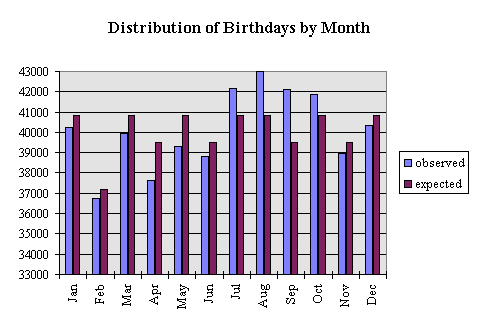
Analyst Roy Murphy sourced birthdates from “480,040 insurance policy applications” between 1981-1994 from a Life Insurance Company.

I decided to include one more visualization from another source providing evidence of seasonality in birthdates. The data was sourced from birthdates from “480,040 insurance policy applications” between 1981-1994 from a Life Insurance Company. The graph shows July, August, and September as having the most birthdays of any other month throughout the year.

Identifying patterns in your friends’ birthdays can help you when creating cards in bulk. September or August may be the perfect time to create several cards at once, when you know September is the most popular month for birthdays in the United States. This efficient approach allows you to be prepared and thoughtful.

While batch card making can save time, remember to personalize each card according to the recipient’s preferences and personality. Adding small, thoughtful details can go a long way.

Tip 5: Crafting Tips and Techniques
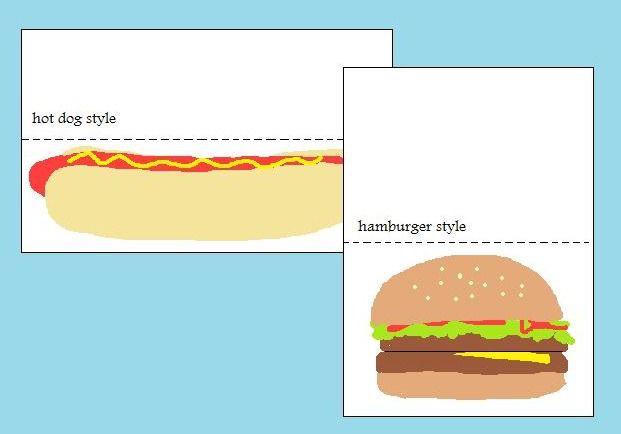
Visual of hot dog and hamburger style folding. These are the typical folding styles for ‘happy birthday’ cards.

If you’re looking for tips specifically focused on the design and drawing phase of crafting homemade cards, here are 10 valuable suggestions:

  1. Sketch Your Ideas: Start by sketching your card’s design on a blank sheet of paper. This preliminary step helps you visualize the layout and composition before committing to the final card.
  2. Consider Card Size and Orientation: Decide on the size and orientation (landscape or portrait) (hotdog or hamburger) of your card before diving into the design. This choice will impact the available space and layout possibilities.
  3. Choose a Focal Point: Determine the main element or focal point of your card’s design. It could be a beautifully drawn flower, a charming illustration, or a calligraphy ‘happy birthday.’ Make this element the star of your card.
  4. Explore Themes: Select a theme that aligns with the occasion or recipient’s interests. Whether it’s a whimsical design for a child’s happy birthday or a sophisticated motif for a formal event, a clear theme will guide your drawing.
  5. Color Harmony: Plan your color scheme carefully. Consider complementary and harmonious colors that evoke the desired mood. Test your chosen colors on a separate sheet before applying them to the card.
  6. Practice Your Drawing Skills: If you’re not confident in your drawing abilities, practice specific elements that will appear on the card, such as flowers, animals, or lettering. The more you practice, the more polished your final card will be.
  7. Incorporate Hand Lettering and Fonts: Handwritten messages add a personal touch. If you’re comfortable with hand lettering, consider writing your card’s message using different fonts or calligraphy styles.
  8. Balance and Symmetry: Pay attention to balance and symmetry in your design. Ensure that elements are evenly spaced, and the overall layout feels visually pleasing. Symmetry can create a sense of harmony in your card. John Mulaney jokes about this concept in the video below.
  9. Experiment with Textures: Incorporate textures into your design. Use shading techniques, stippling, or cross-hatching to add depth and dimension to your drawings. Experimenting with textures can make your card visually interesting.
  10. Prototype and Refine: Don’t be afraid to create a few prototypes or drafts before finalizing your card. This allows you to test different design ideas and make refinements based on what works best.
John Mulaney jokes about the well known situation of writing a happy birthday card without planning out the letters first.

Remember, the design and drawing phase is where your creativity truly shines. Take your time, enjoy the artistic process, and let your unique style come through in each card you create. Whether you’re crafting cards for a friend’s happy birthday, holidays, or any special occasion, your personal touch will make them truly special and cherished by the recipients.

Improving your calligraphy or hand lettering skills can make your cards look even more elegant and personal. I like to use a brush tip pen for calligraphy, though I would suggest the Piochoo Calligraphy Pens for beginner artists wanting a variety of different tips. If you find you like a specific pen style best, maybe think about investing in more expensive ones. My absolute go-to pen is the Pilot G-2 in 0.7mm for everyday use and dual tip brush pens for bullet journaling, custom cards, and sketchbook drawings. To learn more about my art supplies and what I prefer to use for drawing and painting, check out this article about my favorite mediums to use as an artist.

Also, make sure to test out your markers and pens before writing on the final card! While I opt for pens and markers over ink, both can bleed through the paper.
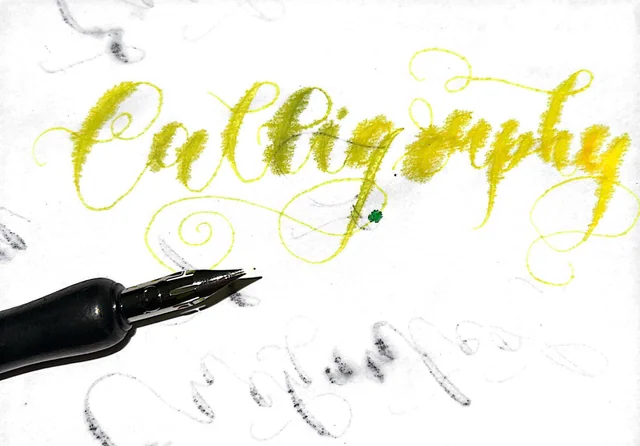
This artist used the wrong type of paper, and found their writing bled across the page.

You may also consider integrating technology into your cards, such as adding a QR code that leads to a personalized video message or playlist. How cute would it be if you use a QR code for the ‘happy birthday’ song!! This modern touch can absolutely enhance the card’s charm and charisma.

Tip 6: Assembling and Presenting Your Card

Assemble your custom card with precision and patience. Pay attention to details like even folds and neat glue application. Small details like these will be what sets your work apart from a handmade gift to a memorable work of art.
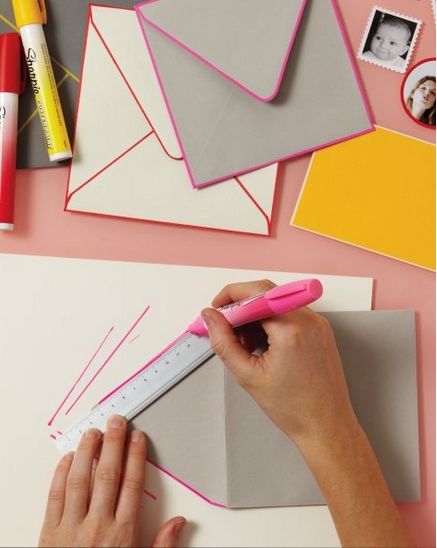
Adding color to the edges of your envelope can help improve the presentation quality of your card.

How you present the card is as important as the card itself. Use a decorative envelope or gift box, and consider adding a small gift or token of appreciation to add that extra celebration. I like to throw in a couple cute stickers, cut out heart confetti, or spray a little of my favorite perfume. It gives it that extra something, don’t you think?
Pink Scented GIF - Pink Scented Legally - Discover & Share GIFs

Tip 7: The Joy of Gifting

Now it’s time to give your custom card away! The joy on your friend’s face when they receive a handmade card is priceless. The surprise element adds to the delight. A well-crafted happy birthday card often becomes a cherished keepsake, a reminder of the beautiful moments you’ve shared with your friend.

Celebrating Friendship Through Art

In a world where digital communication often prevails, taking the time to create personalized happy birthday cards is a beautiful way to celebrate and strengthen your relationships and friendships. By planning ahead based on analytics and putting thought into each card’s design, you can make your friends feel truly special.

Remember, it’s not about the card, but the love and care that go into making it. Your loved ones love YOU, not how well you can write ‘happy birthday’ in cursive. Even if you are no artist, crafting a personalized card lets your loved one know how much they mean to you.

So, gather your supplies, unleash your creativity, and start crafting those meaningful happy birthday cards today! Your friends will undoubtedly appreciate the effort and thoughtfulness you put into each one, making their birthdays, holidays, and celebrations all the more memorable.

How to wish someone Happy Birthday, 7 Artsy Tips! Read More »
5 Easy Drawing Tips For Beginners and Intermediate Artists

Are you wondering how to get started as a beginner drawing artist? You may have searched drawing tips for beginners, lineart tips, shading with pencil techniques, or drawing tips and tricks.

Welcome to Artsy Drawings where you will learn those drawing tips for beginners.

Welcome to the world of art, young grasshopper.

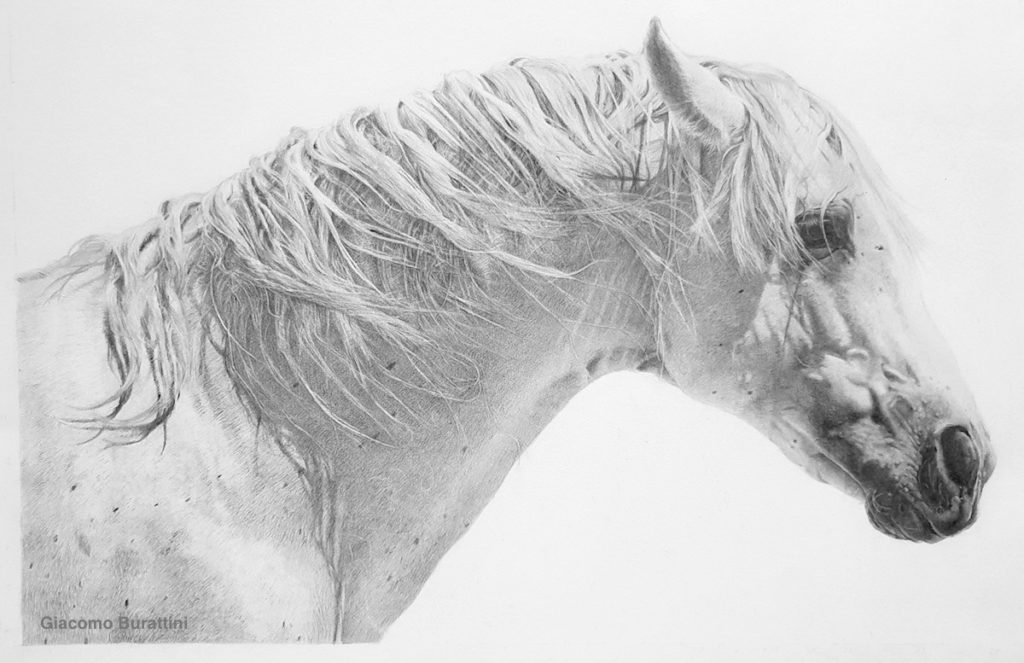
a pencil drawing of a horse helps express drawing tips for beginners
Elegance by Giacomo Burattini

Welcome to the incredible world of art at ArtsyDrawings.com! We are happy to welcome creative spirits, aspiring artists, painters, drawers, photographers, sculptors, printmakers, and lovers of art. It is my hope to teach, inspire, and applaud you for taking steps into the creative realm!

The purpose of this article is to teach drawing tips for beginners and intermediate artists. We will go step by step and cover a myriad of art tips, tricks, and techniques.

We will start with choosing a medium, discuss creating value and using the line weight technique, warn against the dreaded furry kitty, and remind you that drawing and lineart is mark making. Let’s get into these drawing tips for beginners!

Drawing Tips for Beginners 1: Pick a Pencil

Drawing is one of the best ways to get your foot in the door because you can use a wide variety of mediums. You can use graphite pencils and expensive drawing paper or a ballpoint pen and a napkin. Drawing is the underlying foundation of art, and a great place to start.

In fact, I recommend all artists know how to draw, no matter if they are a sculptor, printmaker, or painter. Drawing is a universal language and contributes to many factors that can make you a more successful artist. Check out this article about why drawing can make you a more successful artist.

Certain mediums and materials can enhance the quality of your artwork simply by using them the right way to get a certain effect. Will we discuss picking a pencil in this drawing tip for beginners.

<img loading=
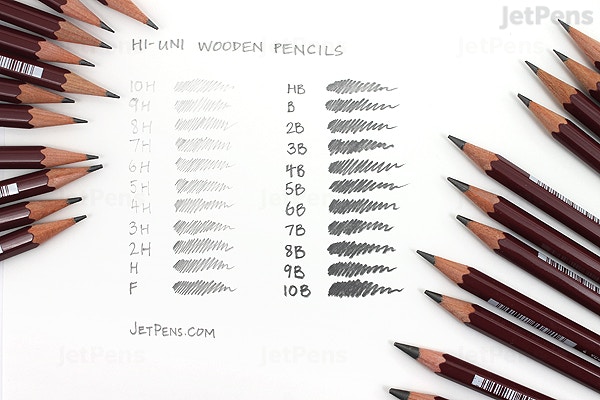
Pencil Hardness

Letter and Numbers on your Pencils

This drawing tip for beginners has to do with those letters and numbers on your graphite pencils.

You have seen HB, 4B, 2H, and R2D2, and unless you’re a Star Wars fan, you probably won’t recognize the odd man out. The letters and numbers represent the hardness of the lead in the pencil.

They work on a scale in which HB is in the perfect center and stands for “Hard Black.” This is the typical #2 pencil you probably used in grade school, and a perfectly reasonable tool for extreme calculus problems or drawing artsy drawings.

On opposite ends of the scale are 8H and 8B. I think I’ve come across a 10B somewhere, but honestly, I haven’t found much difference after 8B.

If H stands for “Hard” and B stands for “Black,” an 8H is the hardest lead in the pencil and will create the lightest line.

I have a heavy hand so I typically use a 2H or 4H pencil for my under-drawing and work my way up to the 8B as I add in my shadows and dark tones. I use the drawing technique of working light to dark. The B pencils are softer and can create a darker value because more of the lead is pushed into the paper.

James Portrait – Black and White Detail by Brianna Eisman

Mechanical vs. Wood Pencils

“Mechanical pencils are usually better suited for precision, while traditional pencils are great for laying down large areas of texture.”

Time Von Rueden
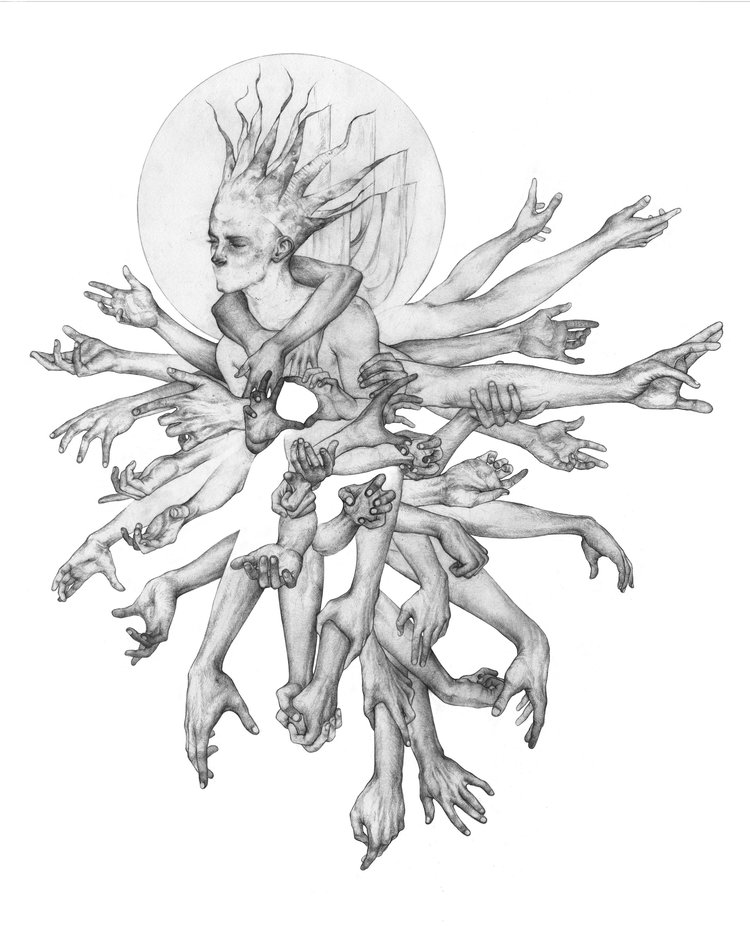
a pencil drawing by Tim Von Rueden of a man with many arms stretching out from his abdomen. This drawing shows drawing tips for beginners
Silent King by Tim Von Rueden

Pencil and graphite artist Tim Von Rueden creates stunning detailed drawings that you can see in the example above titled Silent King and on his website. He has a great perspective on mechanical pencils saying they are “usually better suited for precision, while traditional pencils are great for laying down large areas of texture.”

Personally, I do agree with this statement. Most mechanical pencils are classified as an HB #2 pencil. Mechanical pencils are a great option for the under drawing before you add a lot of dark tones and shading. In my opinion as someone recommending drawing tips for beginners, I suggest investing in a pencil set with light and dark pencils.

If you do decide to use an HB mechanical pencil throughout the entirety of the piece, it may leave permanent marks in the paper, a shiny finish in the dark shaded areas, and you could accidentally poke a hole in the paper.

All in all, the medium is still up to the artist. You run the show here. It’s your creation and art is about breaking boundaries and trying new things.

Drawing Tips For Beginners 2: Create Value

What is value? I don’t mean the price of the artwork, though I would hope everyone here becomes a famous artist one day.

Value is an element of design that refers to the lightness and darkness of a subject. The illusion of value in a work of art is what makes it look three-dimensional. Value provides the illusion of form.

There are many ways to draw and many more ways to successfully create value.

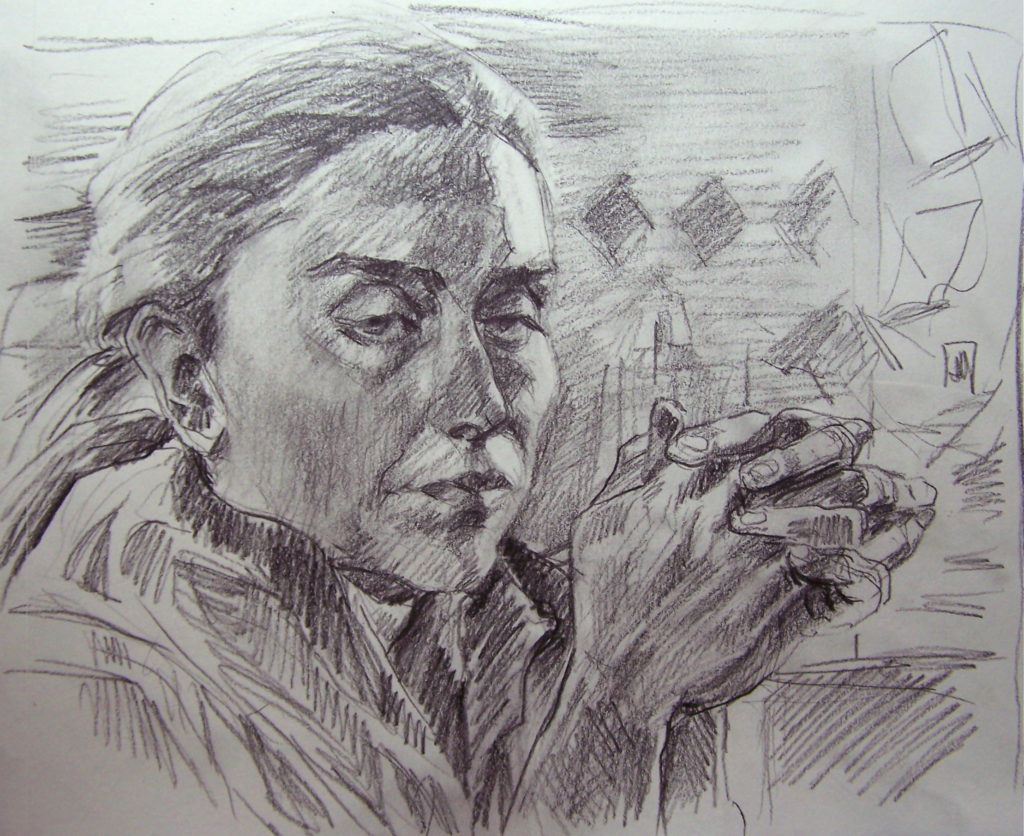
a pencil drawing by Mariah that features a woman’s face with her hands folded in front of her. This drawing helps express drawing tips for beginners
Fourteenth for JKPP by Mariah

Creating Value with Sketching

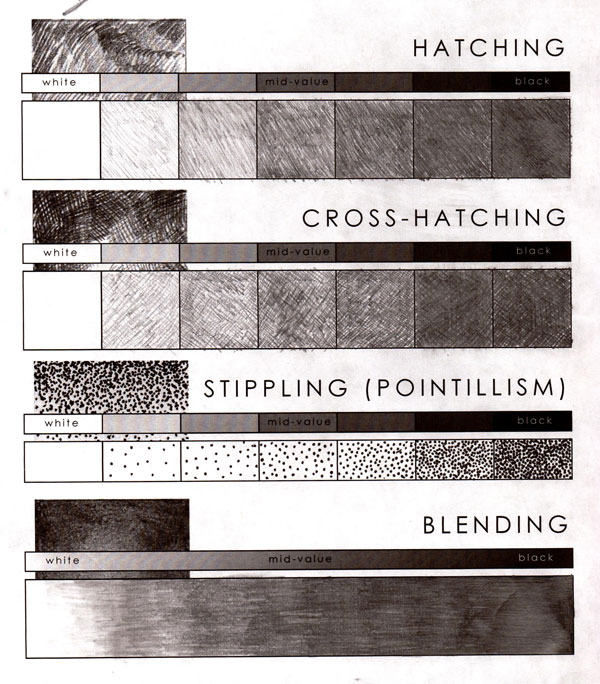
My drawing tip for beginners is to focus on finding your own drawing techniques to create value. Some may prefer smoother transitions while others like stippling, hatching, crosshatching and more sketching techniques, where you can clearly see the lines and marks that shade the subject.

a pencil sketch shows drawing tips for beginners featuring 7 square boxes horizontally lined up to show the differences in styles including stippling, hatching, and curved marks
Hatching by Salgood Sam

I recommend playing around with different styles including organic, structured, simple, complex, and making value scales (light to dark gradients) to practice these techniques.

a pencil sketch that features gradients of crosshatching, hatching, stippling (pointillism), and blending to provide drawing tips for beginners that focus on learning value
Value Scale 11 by Julianna Kunstler

Drawing Tips For Beginners 3: Use Line Weight to your Advantage

The next drawing tip for beginners is to use line weight to your advantage to create value.

I started drawing with what’s called “a heavy hand.” My lines were beautiful, clean and uniform, until I realized the portrait head I just drew was disproportionate to the rest of the body so I would have to completely erase it and start over. It is very challenging to erase when you draw hard.

I am not Michelangelo or Picasso, I can’t get away with intentional disproportions in my 2D drawings. Many drawings were lost to the abyss due to inaccurate proportions. Once I had erased and redrawn the piece, you could still see the under-drawing where I had pressed my pencil a little too hard into the paper and created a ghost texture, forever imprinting my mistake into the artwork.

Gesture Drawing

One solution to this issue is drawing a gesture first.

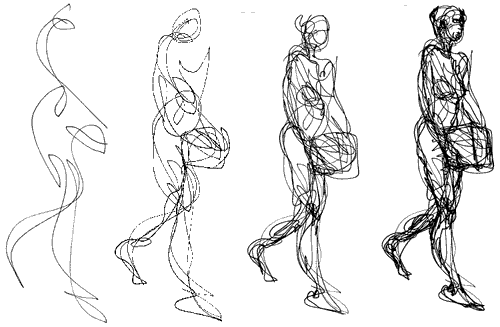
A gesture drawing is a quick, fluid, blog of shapes that resemble your subject. Many times my human subjects will not have details like jewelry or facial expressions. Instead, the focus is on the form of the body, the way the clothes drape, and the subject’s pose. When you’re creating a gesture drawing, it’s supposed to be quickly done, with as few strokes as possible to create the general idea of your subject.

this drawing shows four gesture drawings of the same figure and pose. Each drawing has progressively more line work, detail, and shading to express drawing tips for beginners that focus on learning value and gesture drawing.

In gesture drawing, the repeated lines create value as you form the shape of the figure.

My next drawing tips for beginners is to practice line weight to gain control. This was a practice I really enjoyed in art school. We used line weight to create form in a 2D drawing.

Use graphite or pencil to start.

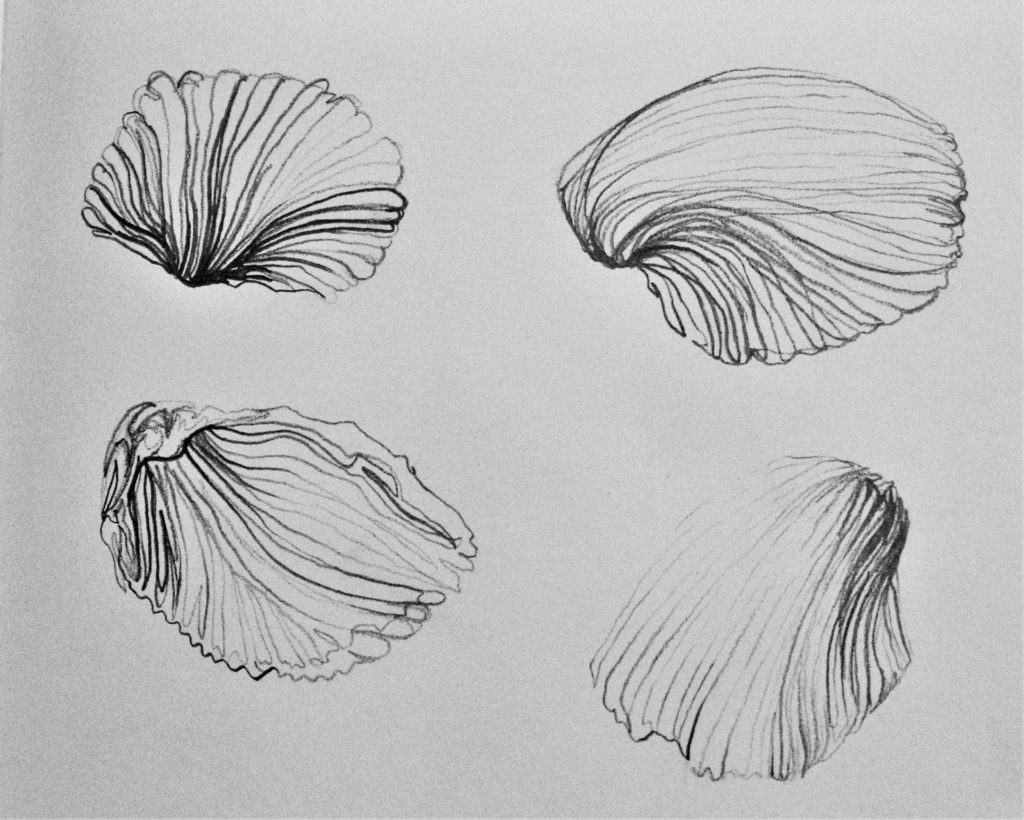
You start drawing very light and gradually press harder on the pencil creating a value scale line until the mark is as dark as it will go. This is your gradient scale to start your drawing. If you’re drawing a sphere, press harder to create a darker shade for the shadow and lighten your pressure for the lighter side of the sphere.

Below is a photo of four shell drawings I did using line weight. The “head” of the shell where the ridges come together was the most in shadow, so I pushed my pencil harder into the paper to create a darker line for that area.

Weighted line practice with the subject of shells helps express drawing tips for beginners
Weighted Line Shells by Brianna Eisman

When you’re choosing a subject for this practice, focus on something with a lot of form and a range of light to dark value. Shells provide organic and wavy lines showing value, making them the perfect subject to practice this technique.

Drawing Tips FOr Beginners 4: Avoid the Furry Kitty  

One of the first drawing tips for beginners I learned in art school was to avoid drawing a furry kitty.

At first I thought my teacher hated cats. Then, she explained that ‘furry kitty’ is a drawing technique. She wanted me to improve my linework by avoiding a poor drawing technique.

‘Furry Kitty’ is a technique using short strokes to create the shape. The result is a scratchy sketchy-like drawing that often gives an unfinished appearance.

Not only is ‘fur’ a distraction, but it uses a lot of graphite material and can lead to easy smudging. We don’t like accidental smudging and fingerprints on your artwork! It’s messy!

Visual Confidence in Art

Avoiding the furry kitty is also a lesson in becoming more confident in your line work, and by extension, your creations.

Imagine drawing a circle. Whether the circle is for a character’s head, a joint in their arm, or the wheel of a car, circles make up the basis of many forms in our worlds. If your drawing of a circle turns out like an oval or some type of warped sad potato, that’s okay!

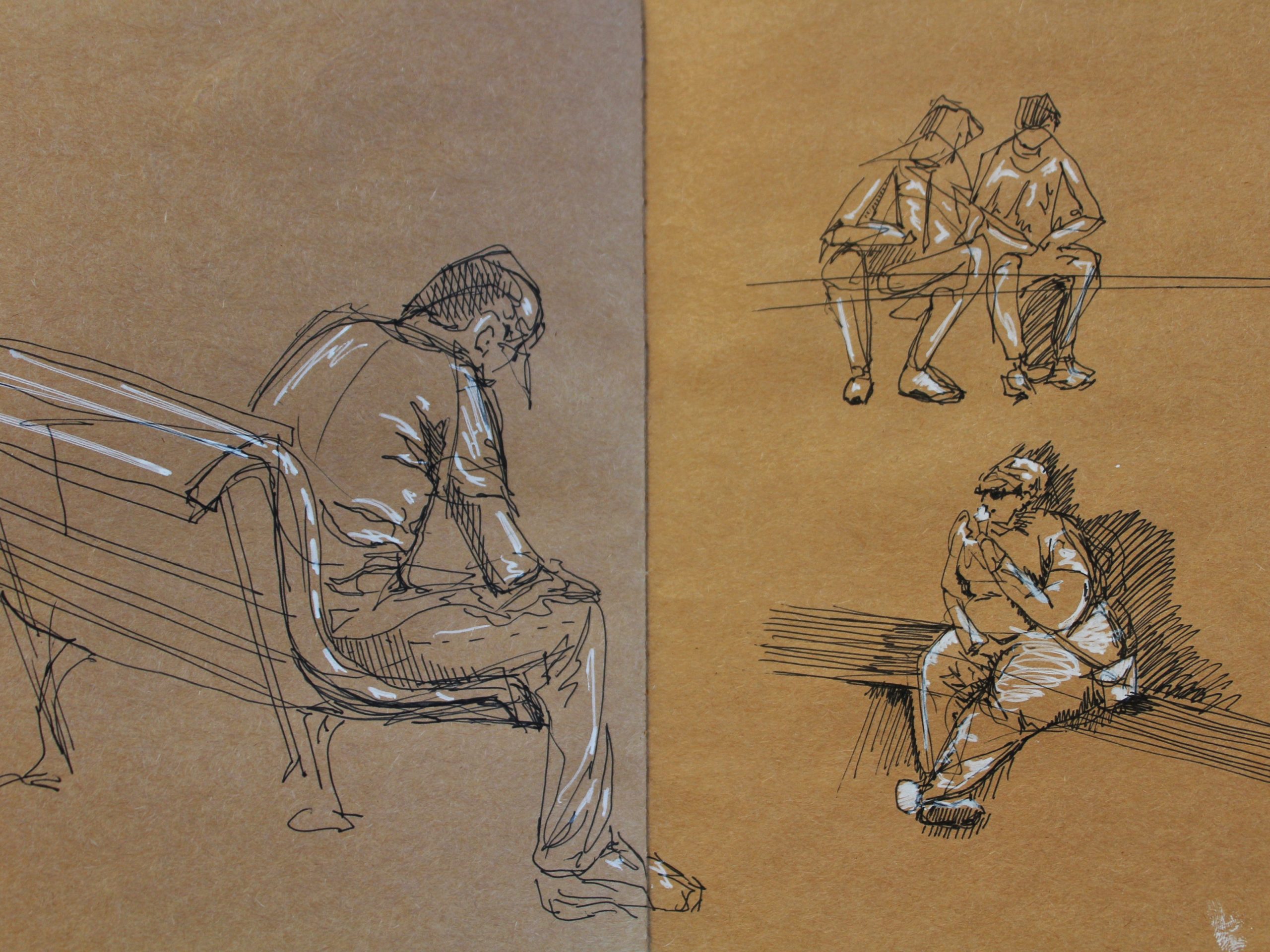
Draw your “circle” again over that sad potato. The more you draw the circle over and over again (lightly!), it will eventually look symmetrical enough to actually look like a circle. This method is also the main theory behind gesture drawings.

Gesture Drawings of figures sitting and doing normal human things.

Gesture drawings are quick sketches to improve line quality, hand-eye coordination, and an easy way to get better at art quickly. This method will also help with your drawing and painting skills in the long run.

The artist Love Life Drawing talks about his strategies and suggestions for becoming a better artist in his article here. I really like how he encourages ‘smart’ practice and advises gesture and figure drawings to learn how to draw.

Drawing Tips for Beginners 5: Drawing is about Mark Making

One of my favorite responses when I show people my art is “Wow! I can’t even draw a stick figure!”

Creating a drawing is all about mark making, and that includes drawing stick figures. It is the act of putting the pen to paper, pushing and pulling down on the utensil, and actively guiding the pen to create a work of art. It about being deliberate in creation, as Salgood Sam states in his blog Deliberate Focused Practice.

To accommodate proper practice attitudinally, I make a point that there is a difference between Doing, and Practicing.

Salgood Sam

Do not be afraid to make marks.

Artists are pioneers, explorers, scientists. I’ve spent way too long watching a blank canvas, trying to figure out what to draw. Honestly? If you are ever stuck with artists block, remember that art is about mark making.

a page of marks to express the drawing tips for beginners that drawing can be as easy as putting squiggles on a page. It has heavy, light, straight, curvy, zigzag, and circle marks

Once you start drawing, it’s much harder to stop. So pick up a sketchbook and be inspired:

  • Make a page of intentional marks: curly, straight, squiggles, zigzags, thick, thin, scratchy and smooth.
  • Practice line weight
  • Practice using different pencil leads.
  • Try out different shading techniques using the same subject (like a sphere or egg)
  • Draw a chair, a plant, your hand, your dog
  • Draw yourself in a mirror
  • Look up things to draw
  • Create a drawing upside down
  • Trace an image using a window to work on your line work

Learning art is work. It takes time and practice and perseverance.

But, through it all, it is extremely rewarding. To look back as a work of art that you created is the most incredible feeling of accomplishment and pride.

Someone said a passion is what you enjoy doing that has no purpose except to make you happy. I know you’re passionate about art, that’s why you’re here. Let’s do something about it and start creating.

5 Easy Drawing Tips For Beginners and Intermediate Artists Read More »

Scroll to Top
Cart
0
Add Coupon Code
Subtotal