drawing tips for beginners

100 Surreal Drawing Ideas for every artist

Staring at a blank page, waiting for inspiration to strike, is the worst. You have the skill, the motivation (kind of), and the urge to create, but… what do you even draw? Whether you’re sketching for fun, practicing your craft, or just trying to break out of an art block, having a list of creative drawing ideas at your fingertips can make all the difference. Sometimes, all you need is a single spark—an unusual prompt, a fresh challenge, or a concept that takes your art in an unexpected direction.

Below is a carefully curated list of 100 creative drawing ideas designed to help you experiment, refine your style, and, most importantly, enjoy the process.
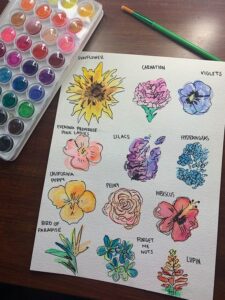
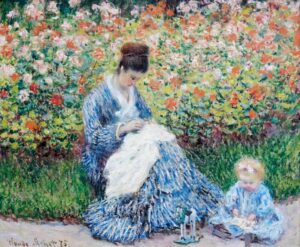
Introduction

There’s no wrong way to use this list—pick one randomly, challenge yourself to a daily drawing spree, or combine ideas to create something truly unique. These prompts are broken into different categories to suit your mood and style: fantasy, portraiture, nature, surrealism, and more.

For example, if you’re drawn to character design, you might love the idea of sketching a cyberpunk warrior or a historical figure reimagined as a fantasy character. If you prefer atmospheric scenes, try creating a neon-lit city on a rainy night or an enchanted forest with glowing plants. Feeling conceptual? Play with gravity-defying landscapes or melting clocks dripping into dreamscapes. The goal is to let your creativity take the lead—these ideas are just the launchpad.

Having the right art supplies is essential for bringing your creative visions to life—whether you’re sketching quick ideas or crafting detailed masterpieces. Quality materials like smooth sketchbooks, vibrant pencils, and blendable markers not only make the process more enjoyable but also help your artwork look its best. Below are some of my favorite and cheap art supplies—click through my Amazon affiliate links to grab them and support my work at the same time!

If you’ve gone through the list, and are still artistically stumped, check out my portfolio or other artsy articles on ArtsyDrawings.com.

Fantasy & Floral Drawing Ideas

  1. A wilted flower coming back to life with magical energy
  2. A giant sunflower with an eye in the center
  3. A fairy sitting inside a blooming rose
  4. A cactus growing out of a teacup
  5. A tree with glowing blossoms that only bloom at night
  6. A tiny village hidden inside a hollow tree
  7. A mushroom house with little windows and a smoking chimney
  8. A snail with a succulent growing from its shell
  9. A flower that changes shape with the seasons
  10. A floating lily pad city in the middle of a peaceful lake

Mystic Nature Scenes Drawing Ideas
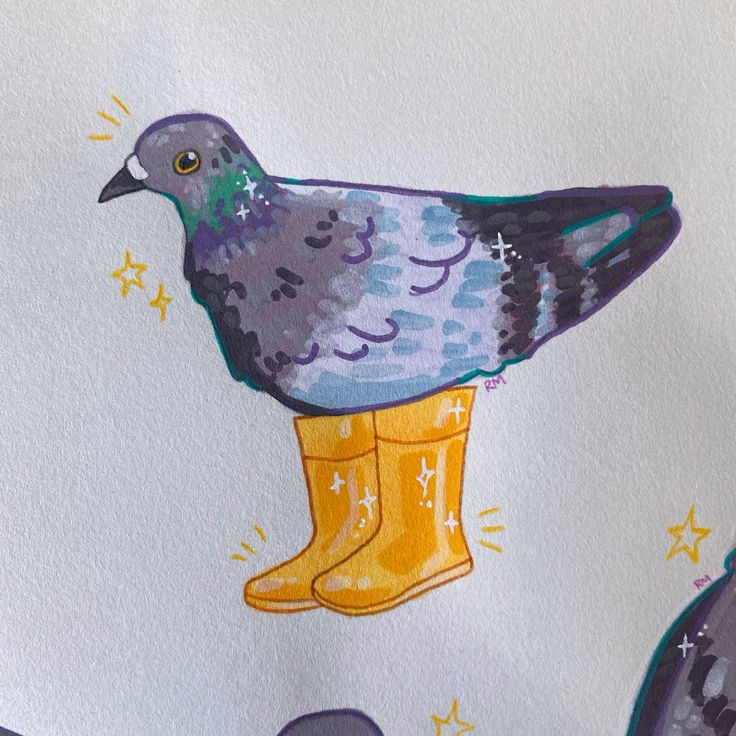
pigeon wearing yellow rain boots drawing ideas for artsy drawings
Pigeon in Yellow Rainboots by RM
  1. A twisting tree with roots reaching out like hands
  2. A hidden waterfall behind a wall of vines
  3. A forest path glowing under the light of fireflies
  4. A deer with antlers covered in hanging moss and flowers
  5. A secret garden only visible under the full moon
  6. A butterfly with flower petal wings
  7. A fox with fur that looks like swirling leaves
  8. A bird made entirely of vines and blossoms
  9. A mermaid whose tail turns into flower petals
  10. A rabbit with dandelion fluff instead of fur

Surreal Landscapes Drawing Ideas

  1. A tree growing upside down from the sky
  2. A crystal geode splitting open to reveal a tiny garden inside
  3. A flower field that turns into stars at night
  4. A floating rock covered in grass and wildflowers
  5. A mystical pond that reflects a different world than the one above it
  6. A garden where every flower glows a different color
  7. A river winding through the sky like a ribbon
  8. A giant daisy acting as an umbrella for a tiny creature
  9. A treehouse hidden among cherry blossoms in full bloom
  10. A stormy sky where lightning forms the shape of blooming flowers

Celestial & Atmospheric Drawing Ideas
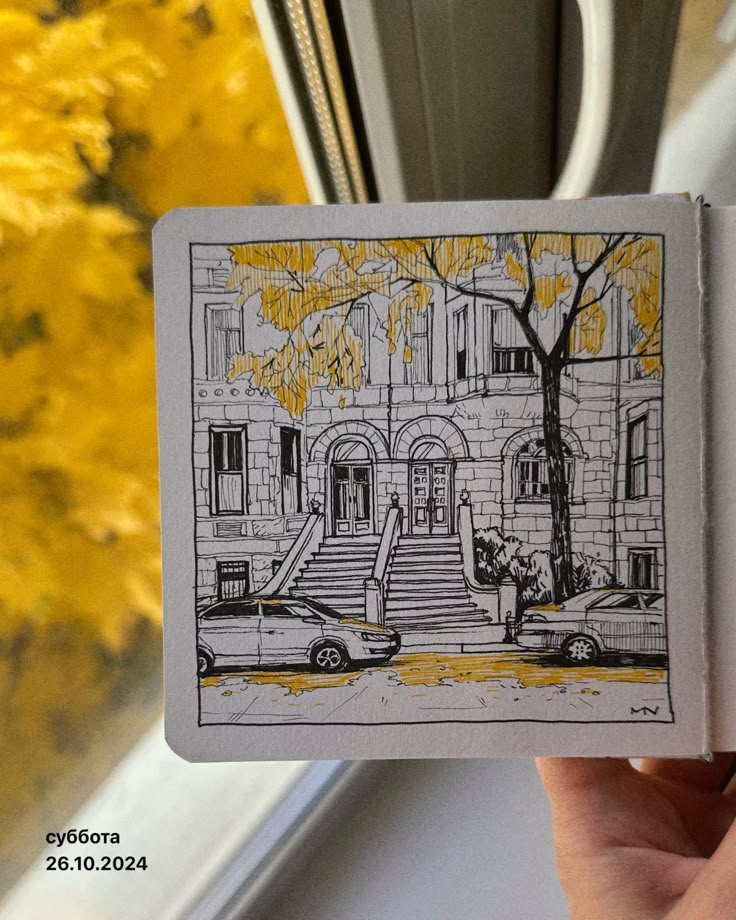
street view drawing ideas daily sketch by maria
Yellow Street View Drawing Ideas by Daily Sketch by Maria
  1. A moonflower opening under a glowing full moon
  2. A rainbow forming from the mist of a magical waterfall
  3. A sunset where the clouds are shaped like giant blooming roses
  4. A path made of floating lotus flowers leading to an unknown place
  5. A glacier with frozen flowers trapped inside the ice
  6. A bird with crystal feathers that glow in the dark
  7. A forest where every tree has a different colored bark
  8. A giant lily pad floating through the sky like an airship
  9. A desert where the cacti are made of glass and reflect the stars
  10. A floating island with a single, massive cherry blossom tree

Whimsical Animals & Insects Drawing Ideas

  1. A hummingbird with wings made of flower petals
  2. A swan whose feathers turn into leaves when it spreads its wings
  3. A moth with wings that resemble dried autumn leaves
  4. A fox with a tail made of ivy and wildflowers
  5. A butterfly with stained-glass wings that reflect flowers in the light
  6. A river that glows in the dark, winding through a field of lavender
  7. A forest where the trees have golden leaves that never fall
  8. A moss-covered ruin overtaken by vines and blooming flowers
  9. A lake with floating flowers that light up like lanterns at night
  10. A meadow filled with oversized mushrooms and glowing spores

Dreamy Botanical Drawing Ideas
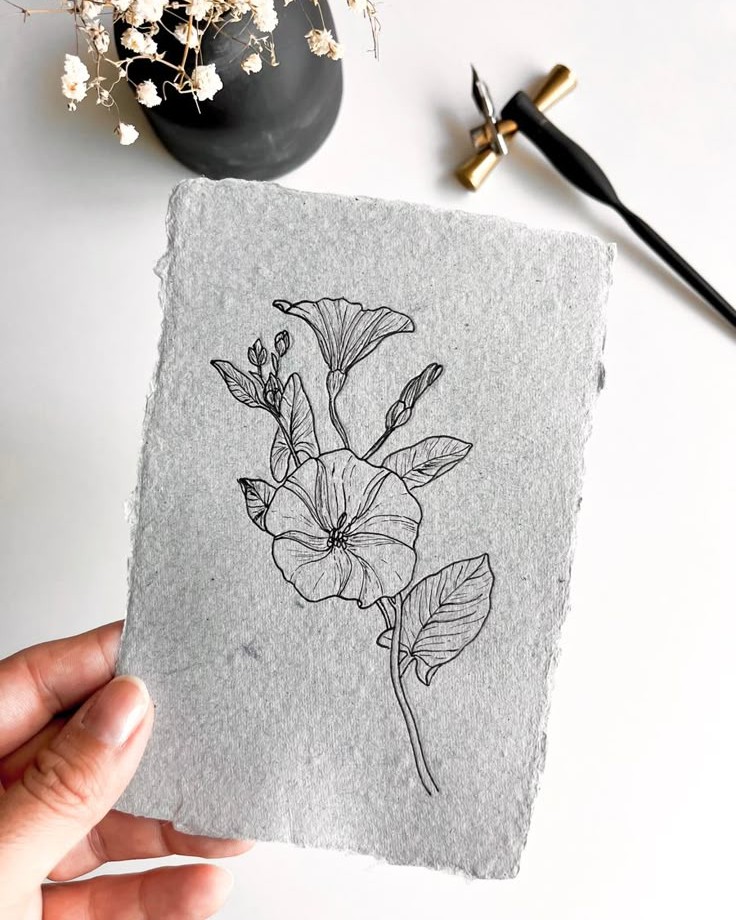
morning glory drawing ideas cami gonzalez calligraphy
Morning Glory Drawing By Cami Gonzalez
  1. A teapot pouring a stream of water that turns into a waterfall
  2. A giant sunflower bending down to whisper to a tiny creature
  3. A floating flower shop with bouquets tied to balloons
  4. A bridge made entirely out of intertwined vines and roses
  5. A giant dandelion puff releasing wishes into the sky
  6. A succulent terrarium with tiny people living inside
  7. A flower-covered skull as a symbol of life and rebirth
  8. A morning glory vine wrapping around an old, forgotten key
  9. A rose bush growing in the shape of a heart
  10. A water lily with a tiny fairy sleeping on its petals

Geometric & Abstract Conceptual Drawing Ideas

  1. A single line forming the silhouette of a city skyline
  2. Abstract shapes blending into each other to create a mysterious figure
  3. Geometric forms representing the concept of chaos
  4. A spiraling pattern that slowly morphs into a bird
  5. A circular pattern that gets increasingly disorganized the closer you look
  6. A series of interconnected dots forming a complex, surreal network
  7. A series of mismatched patterns swirling together into one image
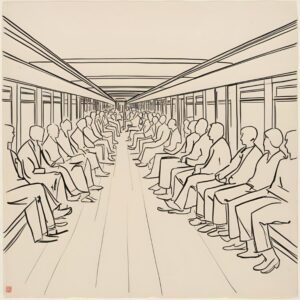
  8. A minimalist sketch of a crowded subway, showing only the outlines of passengers
  9. A futuristic city skyline where every building is a different distorted shape
  10. A chaotic mix of black ink splatters and precise pencil details

Organic & Flowy Drawing Ideas
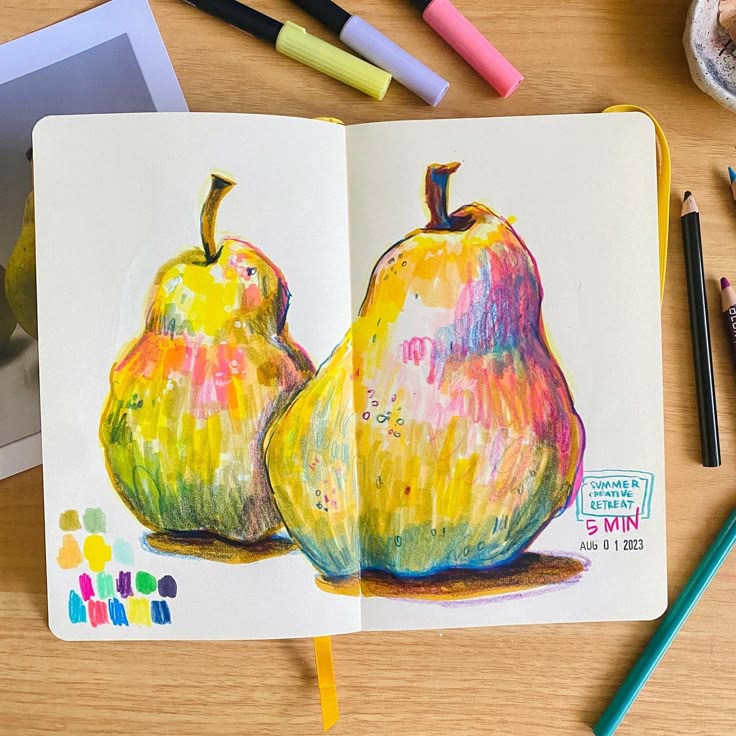
colorful Non-Local Pear Drawing ideas by Erika Lamar Buentello artsy drawings brianna eisman
Non-Local Pear Drawing by Erika Lamar Buentello
  1. A plant growing through a cracked window, creeping upward
  2. A half-drawn face with its features slowly dissolving into thin air
  3. A hollowed-out human figure with intricate patterns spilling out from inside
  4. A body with transparent parts that reveal a hidden world inside
  5. A melting object dripping into a chaotic pool of shapes
  6. A liquid that’s spilling from a cup, but instead of water, it’s made of words
  7. A deconstructed object—like a chair—rearranged into an abstract form
  8. A person holding a transparent sphere, and inside it, a completely different world
  9. A tangled mess of strings, each representing different emotions or concepts
  10. A floating object that shifts in shape the longer you look at it

Human & Emotional Drawing Ideas

  1. A faceless person standing in a crowd of shadows
  2. Two hands reaching toward each other, but never quite touching
  3. A hollowed-out human figure with intricate patterns spilling out from inside
  4. A body with transparent parts that reveal a hidden world inside
  5. A person holding a transparent sphere, and inside it, a completely different world
  6. A maze drawn inside a person’s silhouette, with no clear beginning or end
  7. A floating object that shifts in shape the longer you look at it
  8. A crumpled paper drawing, with creases creating a 3D effect
  9. A human figure dissolving into an array of fine, intricate lines
  10. An empty frame with only a shadow inside, suggesting what’s missing

Minimalism & Surrealism Drawing Ideas

  1. A blank page slowly getting filled with random scribbles
  2. A melting object dripping into a chaotic pool of shapes
  3. An open hand with light streaming out between the fingers
  4. A single brushstroke that seems to form a silhouette but fades into abstract swirls
  5. A sketch of a tree with roots that are made of tangled thread
  6. A bird with crystal feathers that glow in the dark
  7. A liquid that’s spilling from a cup, but instead of water, it’s made of words
  8. An abstract wave crashing into a geometric structure, like a solid wall
  9. A figure partially submerged in water, with only certain parts of them visible
  10. A cloud of dust swirling around an undefined object

Conclusion

At the end of the day, the best drawing ideas are the ones that excite you. Don’t be afraid to put your own spin on these prompts—merge ideas, push boundaries, and experiment with styles you wouldn’t normally try. The more you create, the more your artistic voice develops, and that’s where the real magic happens.

So grab your sketchbook, pick an idea, and start drawing! Who knows? That one random prompt might just lead to your next masterpiece.

Join my monthly newsletter!

Sign up for my monthly artsy newsletter and stay up to date with all things from ArtsyDrawings.com

*

100 Surreal Drawing Ideas for every artist Read More »
5 Easy Drawing Tips For Beginners and Intermediate Artists

Are you wondering how to get started as a beginner drawing artist? You may have searched drawing tips for beginners, lineart tips, shading with pencil techniques, or drawing tips and tricks.

Welcome to Artsy Drawings where you will learn those drawing tips for beginners.

Welcome to the world of art, young grasshopper.

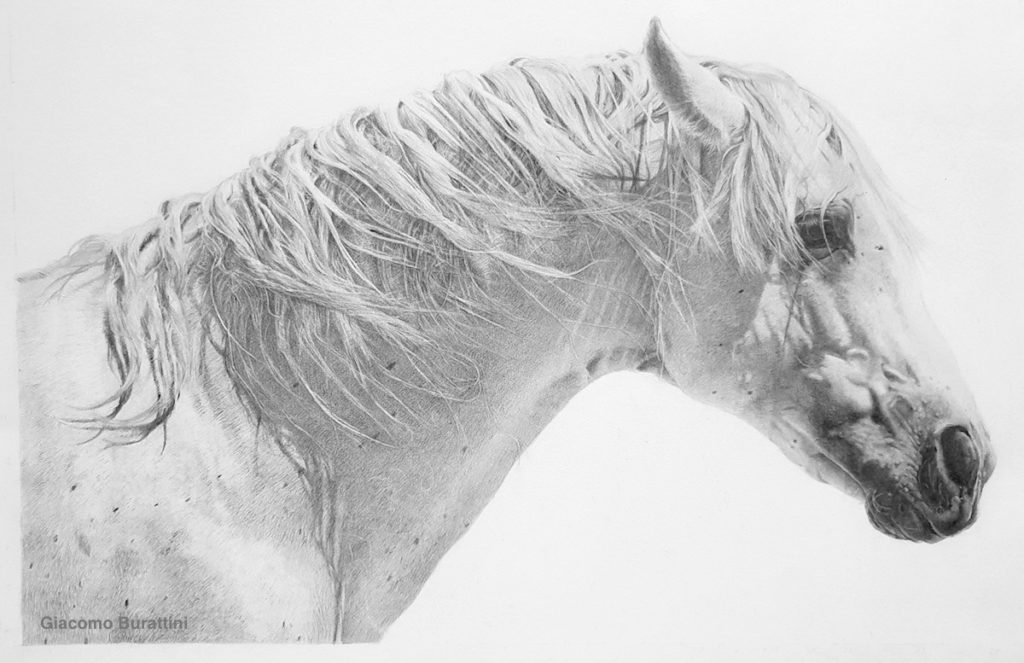
a pencil drawing of a horse helps express drawing tips for beginners
Elegance by Giacomo Burattini

Welcome to the incredible world of art at ArtsyDrawings.com! We are happy to welcome creative spirits, aspiring artists, painters, drawers, photographers, sculptors, printmakers, and lovers of art. It is my hope to teach, inspire, and applaud you for taking steps into the creative realm!

The purpose of this article is to teach drawing tips for beginners and intermediate artists. We will go step by step and cover a myriad of art tips, tricks, and techniques.

We will start with choosing a medium, discuss creating value and using the line weight technique, warn against the dreaded furry kitty, and remind you that drawing and lineart is mark making. Let’s get into these drawing tips for beginners!

Drawing Tips for Beginners 1: Pick a Pencil

Drawing is one of the best ways to get your foot in the door because you can use a wide variety of mediums. You can use graphite pencils and expensive drawing paper or a ballpoint pen and a napkin. Drawing is the underlying foundation of art, and a great place to start.

In fact, I recommend all artists know how to draw, no matter if they are a sculptor, printmaker, or painter. Drawing is a universal language and contributes to many factors that can make you a more successful artist. Check out this article about why drawing can make you a more successful artist.

Certain mediums and materials can enhance the quality of your artwork simply by using them the right way to get a certain effect. Will we discuss picking a pencil in this drawing tip for beginners.

<img loading=
Pencil Hardness

Letter and Numbers on your Pencils

This drawing tip for beginners has to do with those letters and numbers on your graphite pencils.

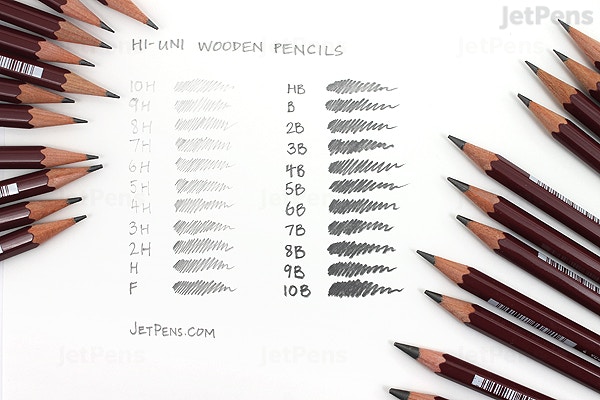
You have seen HB, 4B, 2H, and R2D2, and unless you’re a Star Wars fan, you probably won’t recognize the odd man out. The letters and numbers represent the hardness of the lead in the pencil.

They work on a scale in which HB is in the perfect center and stands for “Hard Black.” This is the typical #2 pencil you probably used in grade school, and a perfectly reasonable tool for extreme calculus problems or drawing artsy drawings.

On opposite ends of the scale are 8H and 8B. I think I’ve come across a 10B somewhere, but honestly, I haven’t found much difference after 8B.

If H stands for “Hard” and B stands for “Black,” an 8H is the hardest lead in the pencil and will create the lightest line.

I have a heavy hand so I typically use a 2H or 4H pencil for my under-drawing and work my way up to the 8B as I add in my shadows and dark tones. I use the drawing technique of working light to dark. The B pencils are softer and can create a darker value because more of the lead is pushed into the paper.

James Portrait – Black and White Detail by Brianna Eisman

Mechanical vs. Wood Pencils

“Mechanical pencils are usually better suited for precision, while traditional pencils are great for laying down large areas of texture.”

Time Von Rueden
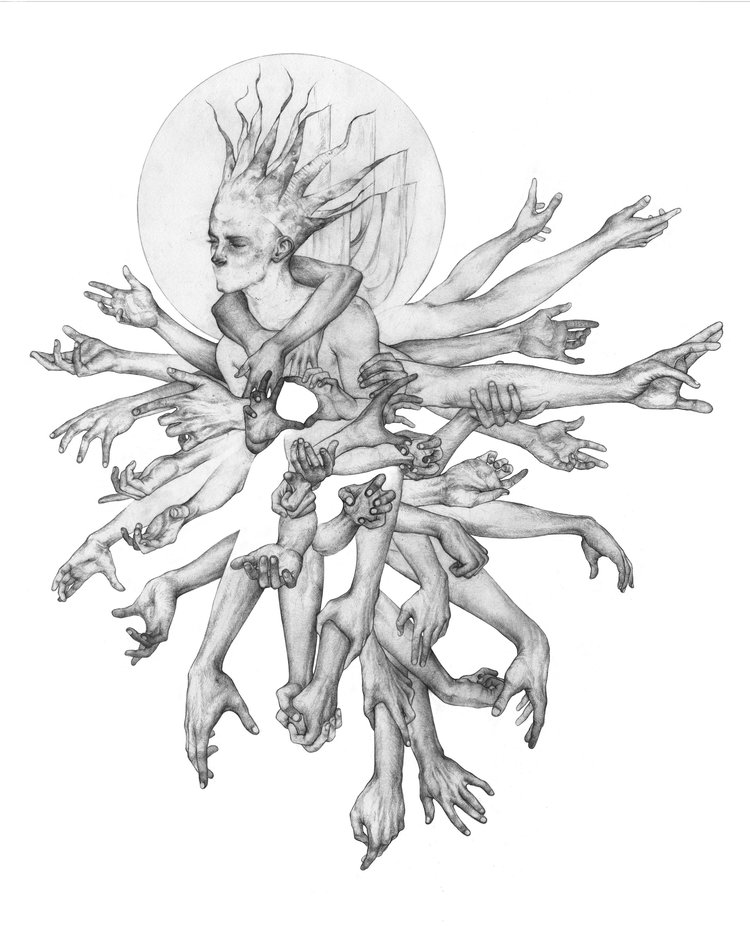
a pencil drawing by Tim Von Rueden of a man with many arms stretching out from his abdomen. This drawing shows drawing tips for beginners
Silent King by Tim Von Rueden

Pencil and graphite artist Tim Von Rueden creates stunning detailed drawings that you can see in the example above titled Silent King and on his website. He has a great perspective on mechanical pencils saying they are “usually better suited for precision, while traditional pencils are great for laying down large areas of texture.”

Personally, I do agree with this statement. Most mechanical pencils are classified as an HB #2 pencil. Mechanical pencils are a great option for the under drawing before you add a lot of dark tones and shading. In my opinion as someone recommending drawing tips for beginners, I suggest investing in a pencil set with light and dark pencils.

If you do decide to use an HB mechanical pencil throughout the entirety of the piece, it may leave permanent marks in the paper, a shiny finish in the dark shaded areas, and you could accidentally poke a hole in the paper.

All in all, the medium is still up to the artist. You run the show here. It’s your creation and art is about breaking boundaries and trying new things.

Drawing Tips For Beginners 2: Create Value

What is value? I don’t mean the price of the artwork, though I would hope everyone here becomes a famous artist one day.

Value is an element of design that refers to the lightness and darkness of a subject. The illusion of value in a work of art is what makes it look three-dimensional. Value provides the illusion of form.

There are many ways to draw and many more ways to successfully create value.

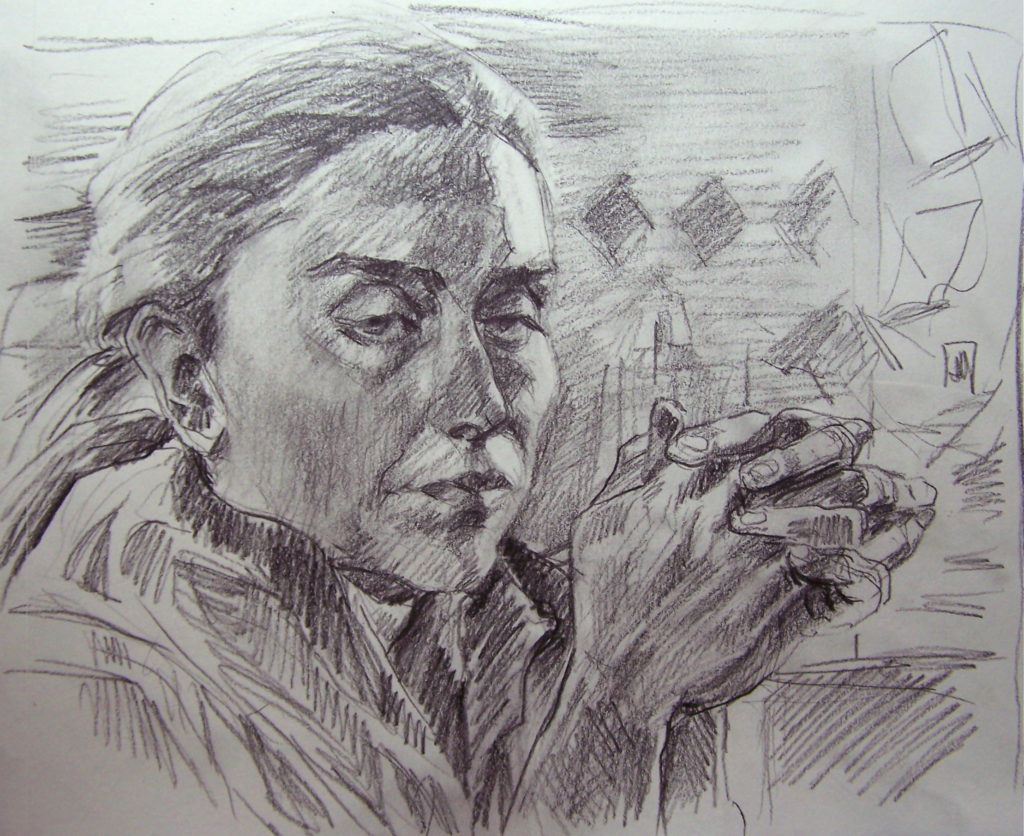
a pencil drawing by Mariah that features a woman’s face with her hands folded in front of her. This drawing helps express drawing tips for beginners
Fourteenth for JKPP by Mariah

Creating Value with Sketching

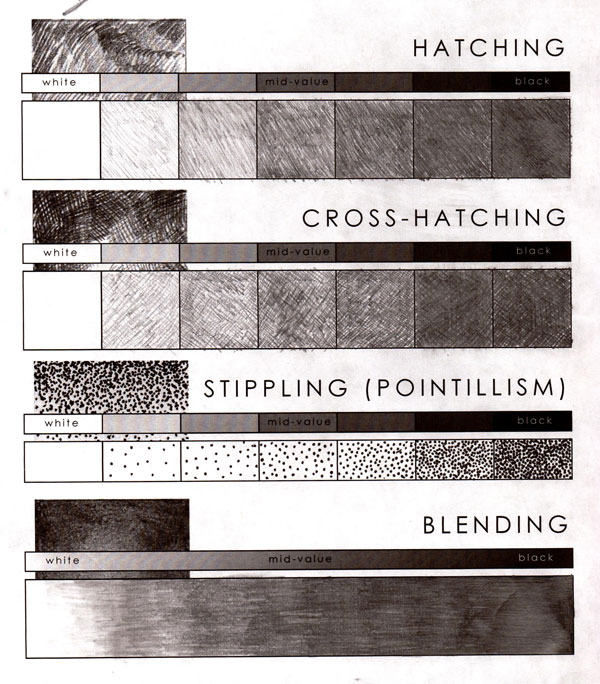
My drawing tip for beginners is to focus on finding your own drawing techniques to create value. Some may prefer smoother transitions while others like stippling, hatching, crosshatching and more sketching techniques, where you can clearly see the lines and marks that shade the subject.

a pencil sketch shows drawing tips for beginners featuring 7 square boxes horizontally lined up to show the differences in styles including stippling, hatching, and curved marks
Hatching by Salgood Sam

I recommend playing around with different styles including organic, structured, simple, complex, and making value scales (light to dark gradients) to practice these techniques.

a pencil sketch that features gradients of crosshatching, hatching, stippling (pointillism), and blending to provide drawing tips for beginners that focus on learning value
Value Scale 11 by Julianna Kunstler

Drawing Tips For Beginners 3: Use Line Weight to your Advantage

The next drawing tip for beginners is to use line weight to your advantage to create value.

I started drawing with what’s called “a heavy hand.” My lines were beautiful, clean and uniform, until I realized the portrait head I just drew was disproportionate to the rest of the body so I would have to completely erase it and start over. It is very challenging to erase when you draw hard.

I am not Michelangelo or Picasso, I can’t get away with intentional disproportions in my 2D drawings. Many drawings were lost to the abyss due to inaccurate proportions. Once I had erased and redrawn the piece, you could still see the under-drawing where I had pressed my pencil a little too hard into the paper and created a ghost texture, forever imprinting my mistake into the artwork.

Gesture Drawing

One solution to this issue is drawing a gesture first.

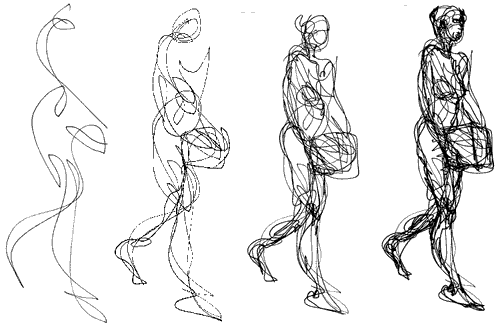
A gesture drawing is a quick, fluid, blog of shapes that resemble your subject. Many times my human subjects will not have details like jewelry or facial expressions. Instead, the focus is on the form of the body, the way the clothes drape, and the subject’s pose. When you’re creating a gesture drawing, it’s supposed to be quickly done, with as few strokes as possible to create the general idea of your subject.

this drawing shows four gesture drawings of the same figure and pose. Each drawing has progressively more line work, detail, and shading to express drawing tips for beginners that focus on learning value and gesture drawing.

In gesture drawing, the repeated lines create value as you form the shape of the figure.

My next drawing tips for beginners is to practice line weight to gain control. This was a practice I really enjoyed in art school. We used line weight to create form in a 2D drawing.

Use graphite or pencil to start.

You start drawing very light and gradually press harder on the pencil creating a value scale line until the mark is as dark as it will go. This is your gradient scale to start your drawing. If you’re drawing a sphere, press harder to create a darker shade for the shadow and lighten your pressure for the lighter side of the sphere.

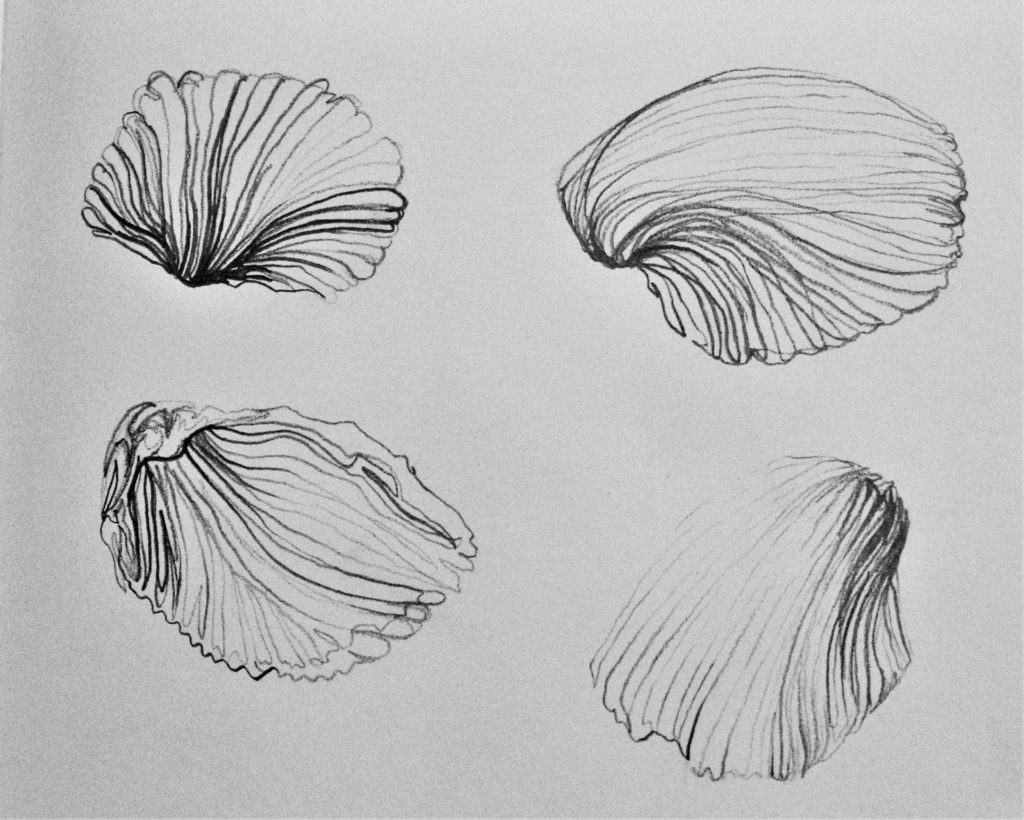
Below is a photo of four shell drawings I did using line weight. The “head” of the shell where the ridges come together was the most in shadow, so I pushed my pencil harder into the paper to create a darker line for that area.

Weighted line practice with the subject of shells helps express drawing tips for beginners
Weighted Line Shells by Brianna Eisman

When you’re choosing a subject for this practice, focus on something with a lot of form and a range of light to dark value. Shells provide organic and wavy lines showing value, making them the perfect subject to practice this technique.

Drawing Tips FOr Beginners 4: Avoid the Furry Kitty  

One of the first drawing tips for beginners I learned in art school was to avoid drawing a furry kitty.

At first I thought my teacher hated cats. Then, she explained that ‘furry kitty’ is a drawing technique. She wanted me to improve my linework by avoiding a poor drawing technique.

‘Furry Kitty’ is a technique using short strokes to create the shape. The result is a scratchy sketchy-like drawing that often gives an unfinished appearance.

Not only is ‘fur’ a distraction, but it uses a lot of graphite material and can lead to easy smudging. We don’t like accidental smudging and fingerprints on your artwork! It’s messy!

Visual Confidence in Art

Avoiding the furry kitty is also a lesson in becoming more confident in your line work, and by extension, your creations.

Imagine drawing a circle. Whether the circle is for a character’s head, a joint in their arm, or the wheel of a car, circles make up the basis of many forms in our worlds. If your drawing of a circle turns out like an oval or some type of warped sad potato, that’s okay!

Draw your “circle” again over that sad potato. The more you draw the circle over and over again (lightly!), it will eventually look symmetrical enough to actually look like a circle. This method is also the main theory behind gesture drawings.

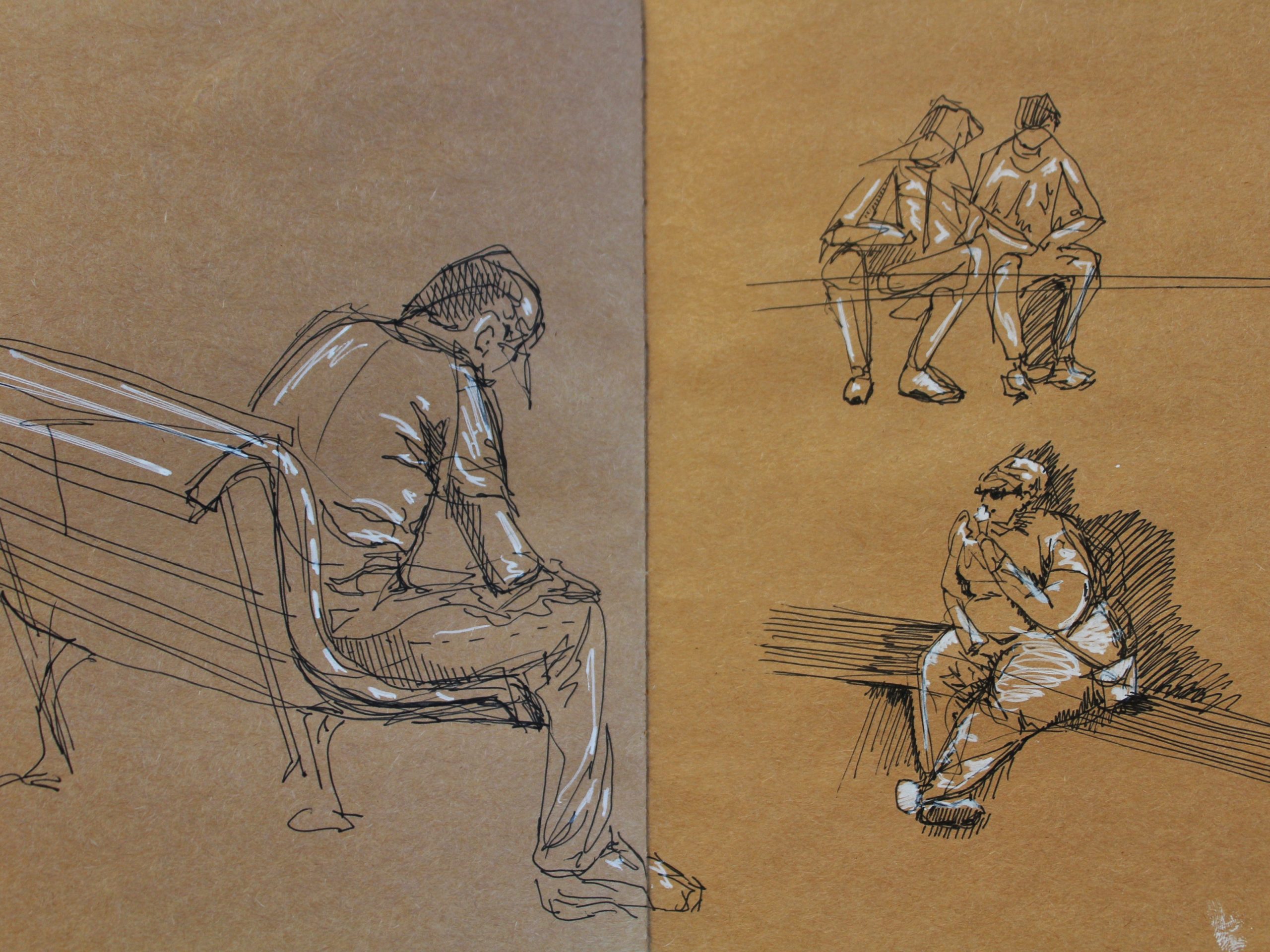
Gesture Drawings of figures sitting and doing normal human things.

Gesture drawings are quick sketches to improve line quality, hand-eye coordination, and an easy way to get better at art quickly. This method will also help with your drawing and painting skills in the long run.

The artist Love Life Drawing talks about his strategies and suggestions for becoming a better artist in his article here. I really like how he encourages ‘smart’ practice and advises gesture and figure drawings to learn how to draw.

Drawing Tips for Beginners 5: Drawing is about Mark Making

One of my favorite responses when I show people my art is “Wow! I can’t even draw a stick figure!”

Creating a drawing is all about mark making, and that includes drawing stick figures. It is the act of putting the pen to paper, pushing and pulling down on the utensil, and actively guiding the pen to create a work of art. It about being deliberate in creation, as Salgood Sam states in his blog Deliberate Focused Practice.

To accommodate proper practice attitudinally, I make a point that there is a difference between Doing, and Practicing.

Salgood Sam

Do not be afraid to make marks.

Artists are pioneers, explorers, scientists. I’ve spent way too long watching a blank canvas, trying to figure out what to draw. Honestly? If you are ever stuck with artists block, remember that art is about mark making.

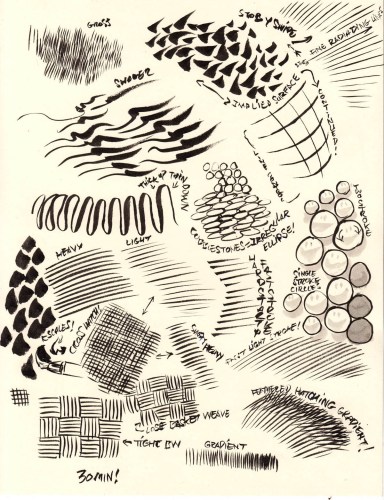
a page of marks to express the drawing tips for beginners that drawing can be as easy as putting squiggles on a page. It has heavy, light, straight, curvy, zigzag, and circle marks

Once you start drawing, it’s much harder to stop. So pick up a sketchbook and be inspired:

  • Make a page of intentional marks: curly, straight, squiggles, zigzags, thick, thin, scratchy and smooth.
  • Practice line weight
  • Practice using different pencil leads.
  • Try out different shading techniques using the same subject (like a sphere or egg)
  • Draw a chair, a plant, your hand, your dog
  • Draw yourself in a mirror
  • Look up things to draw
  • Create a drawing upside down
  • Trace an image using a window to work on your line work

Learning art is work. It takes time and practice and perseverance.

But, through it all, it is extremely rewarding. To look back as a work of art that you created is the most incredible feeling of accomplishment and pride.

Someone said a passion is what you enjoy doing that has no purpose except to make you happy. I know you’re passionate about art, that’s why you’re here. Let’s do something about it and start creating.

5 Easy Drawing Tips For Beginners and Intermediate Artists Read More »

Scroll to Top
Cart
0
Add Coupon Code
Subtotal