Contemporary art

Better Understand your Art Style in 10 Questions

Throughout my art journey, I’ve often found myself intrigued by the timeless question: how does one find their unique art style? It’s a journey that every artist embarks on, one that intertwines with their growth and self-discovery.

I’ve created a fun and insightful quiz to help you uncover which historical art style matches your unique personality and the artwork you create. I recommend taking the quiz first, then exploring the art movements later in the article.

Take the Quiz: Unveil Your Art Style

Whether you’re a romanticist at heart or a abstract expressionist, this quiz will uncover your personality through the rich tapestry of art history. Take a few moments to explore where you and your art truly belong in the world of artistic expression. I hope you enjoy it as much as I enjoyed creating it!

This quiz is meticulously crafted to tap into your inherent artistic inclinations, guiding you towards the movement that best aligns with your creative spirit. Whether you’re a meticulous planner, an emotional dynamo, a lover of light, or a pop culture enthusiast, this quiz will illuminate your path.
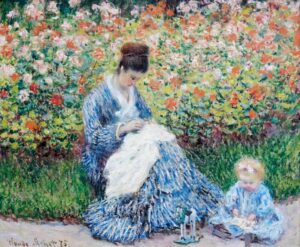
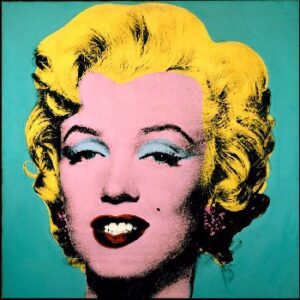
Which historical art style best represents you and your own unique creative style? Take this quiz to find out!

Please enter your email:

1. Which one sounds the most like you:


2. Which one are you most inspired by?


3. Where do you most frequently make your artwork?


4. Choose which one color scheme you tend to use most in your art


5. Which one principle of art do you think you use the most?


6. How would you best describe your line work?


7. Do you express your emotions in your artwork?


8. Which one artist do you most closely identify with?


9. How would you best describe your art style?


Question 1 of 9

Quiz Results: Unveil Your Art Style

Embarking on the journey to discover your unique art style is a scary, yet transformative experience. As a artist, I understand the importance of aligning your creative voice with the rich heritage of art history. Each of these historical art movements—Classicism, Expressionism, Impressionism, and Pop Art—offers a distinct lens through which to view and develop your artistic identity.

Classicism: The Pinnacle of Order and Beauty

If your answers indicate a strong inclination towards Classicism, you are drawn to the order, balance, and timeless beauty that define this art movement. Your art style reflects a profound appreciation for tradition, harmony, and technical mastery, capturing the idealized essence of the human experience.

Classicism is an artistic movement deeply rooted in the traditions of Ancient Greece and Rome, re-emerged with vigor during the Renaissance and neoclassical periods. It represents the pinnacle of harmony, proportion, and disciplined beauty, reflecting the ideals of symmetry and perfection. Artists of this era like John Collier, Raphael, Michelangelo and Jacques-Louis David believed in the pursuit of an idealized form, emphasizing rationality and restraint.

Classicism art style artsy drawings website by Brianna Eisman. Featuring art history quiz for artsy people interested in learning more about their art style and what art words best match their style
Oath of the Horatii by Jacques Louis David

Key Characteristics:

  • Proportionality and Symmetry: Classicism thrives on balanced compositions and harmonious proportions. The golden ratio frequents classical art, guiding the placement and scale of elements within a piece.
  • Idealized Figures: Human forms in classical art are depicted in their most perfect state, exuding a sense of calm and stoic grandeur. It is important to know that many figures are idealized, and not always true to life.
  • Mythological and Historical Themes: Classical artworks often draw inspiration from ancient myths, legends, and historical events, celebrating the human form and intellect. Many of these stories are Greek and Roman.
  • Technical Mastery: Precision, control, and an emphasis on fine detail are hallmarks of classical technique, showcasing the artist’s skill and dedication to craftsmanship. You will likely not see as many brush strokes or paint texture in this art movement.

If your creative process gravitates towards meticulous planning, balance, and a deep appreciation for historical context, Classicism might be your natural art style. Your artsy persona likely values tradition and seeks to capture the timeless elegance of the human experience.

Expressionism: The Canvas of Emotion and Inner Turmoil

Expressionism art style artsy drawings website by Brianna Eisman. Featuring art history quiz for artsy people interested in learning more about their art style and what art words best match their style
Autoportrait a la tete baissee by Egon Schiele

If your answers indicate a strong inclination towards Expressionism, you are likely driven by the need to convey intense emotions and explore the complexities of the human psyche. Your art style is characterized by bold colors, dramatic forms, and a powerful emotional impact, transferring your most inner thoughts onto the canvas.

Emerging in the early 20th century as a reaction to the dehumanizing effects of industrialization and war, Expressionism broke away from traditional representation to convey raw, unfiltered emotion. Artists sought to depict the subjective experiences and inner turmoil of the human psyche, often distorting reality to evoke a more expressive response from viewers.

Artists of this era include Wassily Kandinsky, Edvard Munch, Egon Schiele, Vincent van Gogh, Willem de Kooning, Jackson Pollock and Francis Bacon, among many others.

Key Characteristics:

  • Emotional Intensity: Expressionism is characterized by its dramatic and often jarring depictions of emotion, capturing feelings of angst, fear, and passion.
  • Distorted Forms: To convey psychological depth, artists frequently distort figures and landscapes, creating a sense of unease and tension.
  • Bold Colors and Brushstrokes: Vivid, often non-naturalistic colors and dynamic, fluid brushwork are used to enhance the emotional impact of the artwork.
  • Subjective Perspective: The artist’s inner world takes precedence over objective reality, with works often reflecting personal and existential struggles.

Finding Your Art Style in Expressionism: If your artistic expression is driven by a need to explore and convey deep emotions, Expressionism might be your calling. Your artsy approach likely embraces the chaos and complexity of human experience, channeling your inner turmoil and passions onto the canvas with fervor.

Impressionism: The Dance of Light and Moment
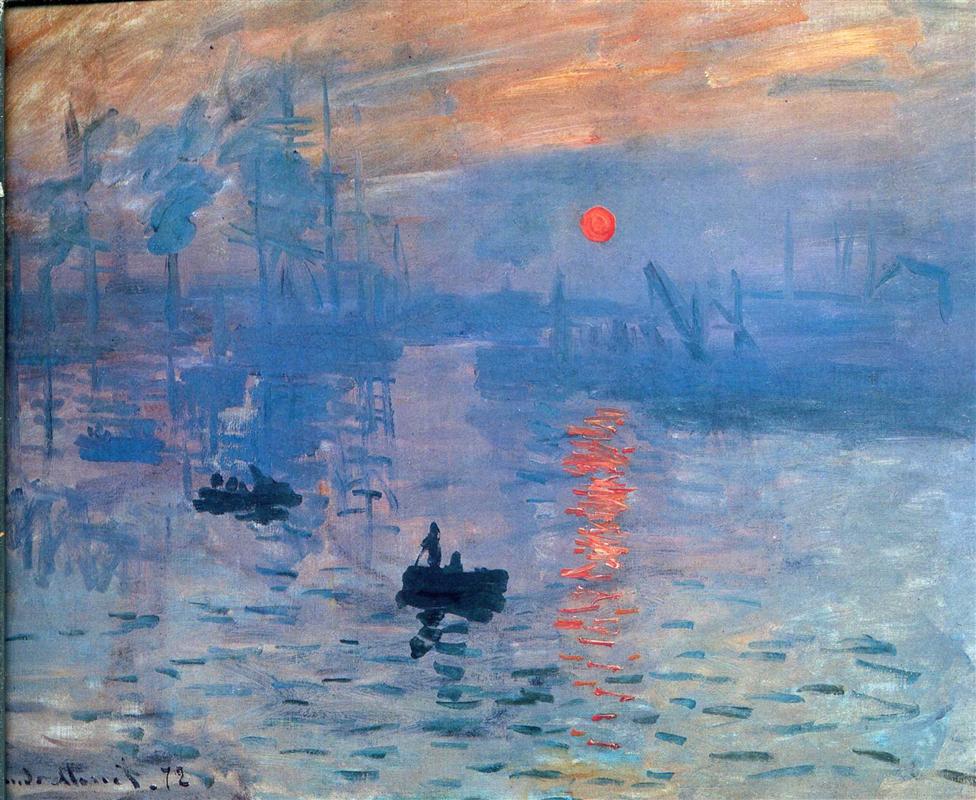
Impressionism art style artsy drawings website by Brianna Eisman. Featuring art history quiz for artsy people interested in learning more about their art style and what art words best match their style
Sunrise by Claude Monet

If your answers indicate a strong inclination towards Impressionism, you are likely captivated by the transient and dream-like effects of light and color, finding beauty in the fleeting moments of everyday life. Your art style is loose, spontaneous, and infused with the delicate interplay of light and atmosphere.

Impressionism emerged in the late 19th century as a revolutionary departure from the rigid formalism of the art academies. Artists like Claude Monet, Edgar Degas, Auguste Renoir, Mary Cassatt, and Paul Cézanne sought to capture the fleeting effects of light and color, emphasizing spontaneity and the perception of the moment. While the movement was initially met with criticism, it eventually redefined the entire trajectory of modern art.

Key Characteristics:

  • Light and Color: Impressionists focused on how light interacts with objects, using short, quick brushstrokes to capture the transient effects of light and atmosphere.
  • Everyday Scenes: Rather than grand historical or mythological subjects, Impressionist artists often depicted ordinary scenes of modern life—cafés, gardens, and urban landscapes.
  • Loose Brushwork: The use of loose, visible brushstrokes creates a sense of immediacy and movement, inviting viewers to engage with the work from a distance. This brushwork style coincides with the rise of Pointillism, which became a fundamental drawing technique.
  • En Plein Air: Many Impressionists painted outdoors (en plein air) to directly observe and capture natural light and its changing qualities. This process contributes to the idea that impressionist artists tend to be more spontaneous.

Finding Your Art Style in Impressionism: If you’re captivated by the beauty of everyday moments and the play of light, Impressionism could be your ideal art style. Your artwork is likely attuned to the subtleties of color and atmosphere, and you tend to find joy in the spontaneous and ephemeral aspects of life.

Pop Art: The Celebration of Popular Culture
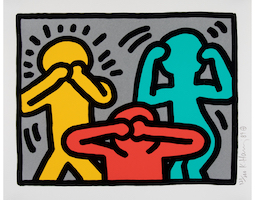
Modern Pop art style artsy drawings website by Brianna Eisman. Featuring art history quiz for artsy people interested in learning more about their art style and what art words best match their style
Pop Shop III by Keith Haring

If your answers indicate a strong inclination towards Pop Art, you are likely inspired by popular culture and the vibrant imagery of mass media. Your art style is bold, graphic, and often infused with irony, celebrating and critiquing the contemporary world with a playful and artsy flair.

Pop Art emerged in the mid-20th century as a vibrant counterpoint to the introspective nature of Abstract Expressionism. Drawing inspiration from mass media, advertising, and consumer culture, Pop Art celebrated the mundane and the commercial, blurring the boundaries between high art and popular culture.

Artists of this era included Andy Warhol, Roy Lichtenstein, Keith Haring, David Hockney, Jasper Johns, Robert Rauschenberg, Yayoi Kusama and Jeff Koons.

Key Characteristics:

  • Bold Imagery: Pop Art is known for its bold, graphic imagery, often featuring recognizable icons from popular culture such as celebrities, comic strips, and brand logos. Andy Warhol was known for his art of Mickey Mouse, Marilyn Monroe, and the Campbell Soup Can.
  • Bright Colors: The use of vibrant, often primary colors gives Pop Art its striking and attention-grabbing quality.
  • Repetition and Patterns: Techniques such as repetition and the use of industrial printing methods underscore the mass-produced nature of consumer goods.
  • Irony and Satire: Pop Art frequently employs irony and satire to critique or celebrate aspects of modern culture, from consumerism to media sensationalism.

Finding Your Art Style in Pop Art: If your creativity thrives on the many conversations between art and popular culture, Pop Art might resonate with you. Your artsy nature is likely drawn to the bold, the vibrant, and the iconic, using art as a means to engage with and critique contemporary society.

Embrace Your Own Unique Art Style

Remember, your art style is not a static destination but a dynamic and evolving journey. Embrace the insights gained from this exploration and let them guide you as you continue to refine and express your unique artsy essence. Through the lens of history and the canvas of your creativity, you’ll find a style that is authentically and unmistakably yours.

Please comment below or message me if you enjoyed this quiz! I enjoyed creating it and I would love to make more if it’s well received.

Subscribe to my newsletter

Sign up for my monthly newsletter and stay up to date on my artsy journey!

*
*

Better Understand your Art Style in 10 Questions Read More »
How to make your Graffiti Art Drawings more Captivating

Introduction

Graffiti art drawings are a testament to the resilience of self-expression in the face of conformity. These vivid visual narratives are far more than mere sketches on barren walls; they are declarations of defiance and creativity. In a world where the urban landscape is the canvas, how can you make sure your graffiti art drawings stand out and communicate your message? This article explores how to create captivating graffiti, offers insights and techniques, and describes the cynical journey art takes from the streets to museums.

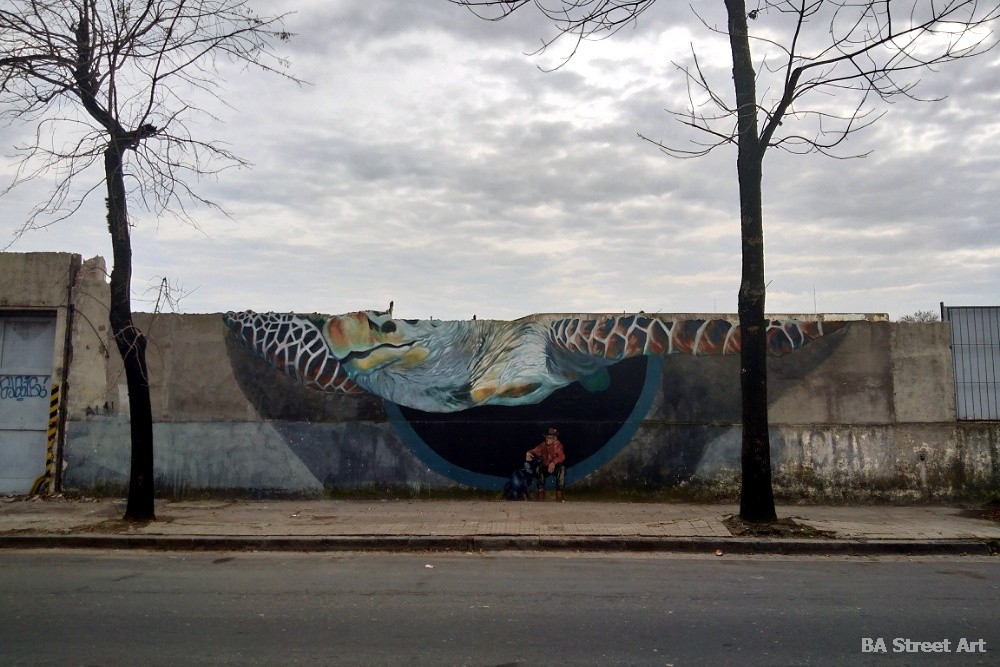
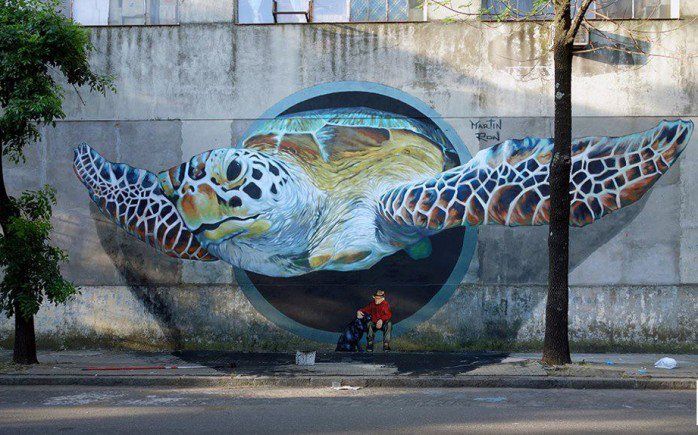
turtle graffiti art drawing painting by Martin Ron of 3D sea turtle swimming street art
Pedro Luján and his Dog by Martin Ron features a stunning 3D graffiti painting of a sea turtle appearing to swim out of a hole in the wall.

The Dynamic Spectrum of Graffiti Art Drawings

Graffiti art drawings encompass a kaleidoscope of styles, messages, and mediums. Housed like the homeless, these drawings challenge conventions, spark conversations, and mirror society’s complexity.

Crafting captivating graffiti art drawings involves striking a balance between artistry and audacity, and weaving narratives that resonate deeply.

Basically, what makes something street art is the message in the context of the setting combined with visual aesthetics and painterly techniques.

Banksy’s Whisper of Dissent

Banksy is an England-based street artist, political activist, and film director whose real identity remains unknown despite considerable speculation. He is known for his satirical street art and subversive artistry combining dark humor with graffiti executed in a distinctive stenciling technique.

Firstly, Banksy’s art is probably some of the most well known graffiti art in the world. That being said, the artist’s unknown identity juxtaposes their popularity, which fits the theme of this article.

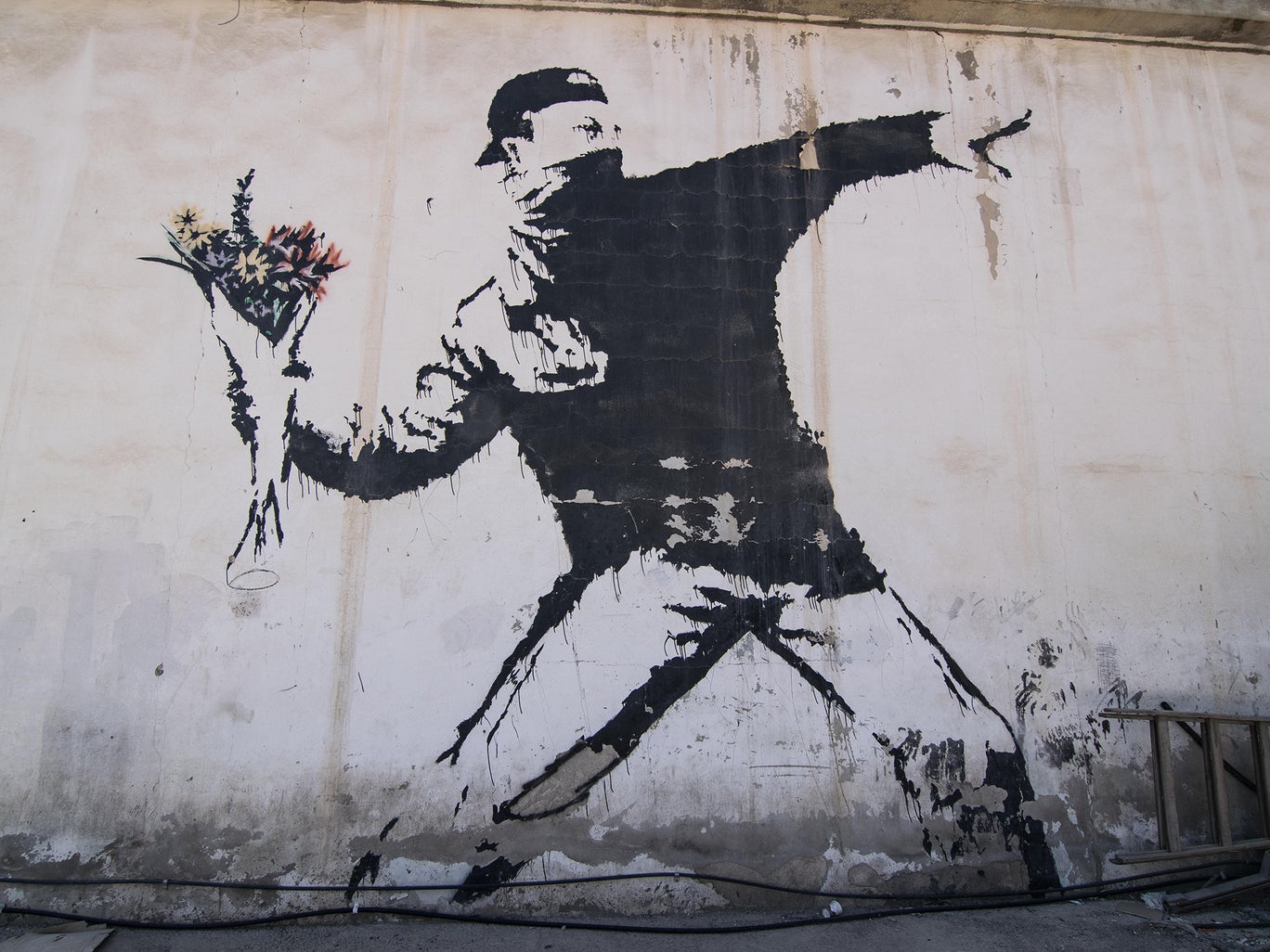
Banksy’s graffiti is moving. As shown below, works like “The Flower Thrower” resonates as a powerful statement against oppression and inequality. Banksy’s work comments on topics of capitalism, war, and issues in common society. Like Banksy’s graffiti art drawings, use your art to start conversation, question norms, and challenge views.

Banksy graffiti art drawings
Banksy creates some of the most well known graffiti art drawings like The Flower Thrower in which “the protester is a pacifist.”

Shepard Fairey’s Iconic Amplification

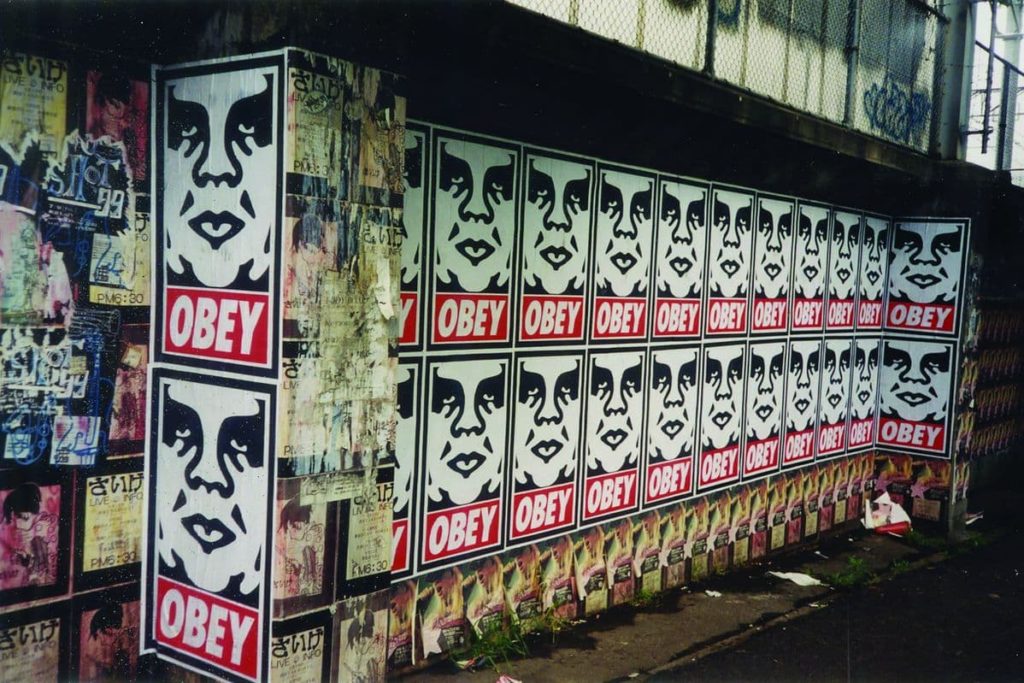
Next, Shepard Fairey’s works, such as “Obey Giant,” blend pop art with street culture, evoking emotions and creating a lasting impact.

Incorporating recognizable symbols into his art, Fairey’s graffiti art style is instantly recognizable.

Shepard Fairey’s first series Andre the Giant, was modeled after an image of professional wrestler André René Roussimoff

Shepard Fairey’s art style is an exquisite fusion of pop art and activism. His signature use of bright, bold colors, striking visuals, and thought-provoking messages defines his work. In addition to visuals, his graffiti art drawings often carry an urgency to engage with social and political issues.

Fairey’s meticulous attention to detail and his ability to distill complex ideas into impactful imagery are hallmarks of his artistry. Likewise, his art style exudes a sense of cultural commentary, a visual conversation that challenges norms and prompts contemplation.

Basquiat’s Emotional Outpouring

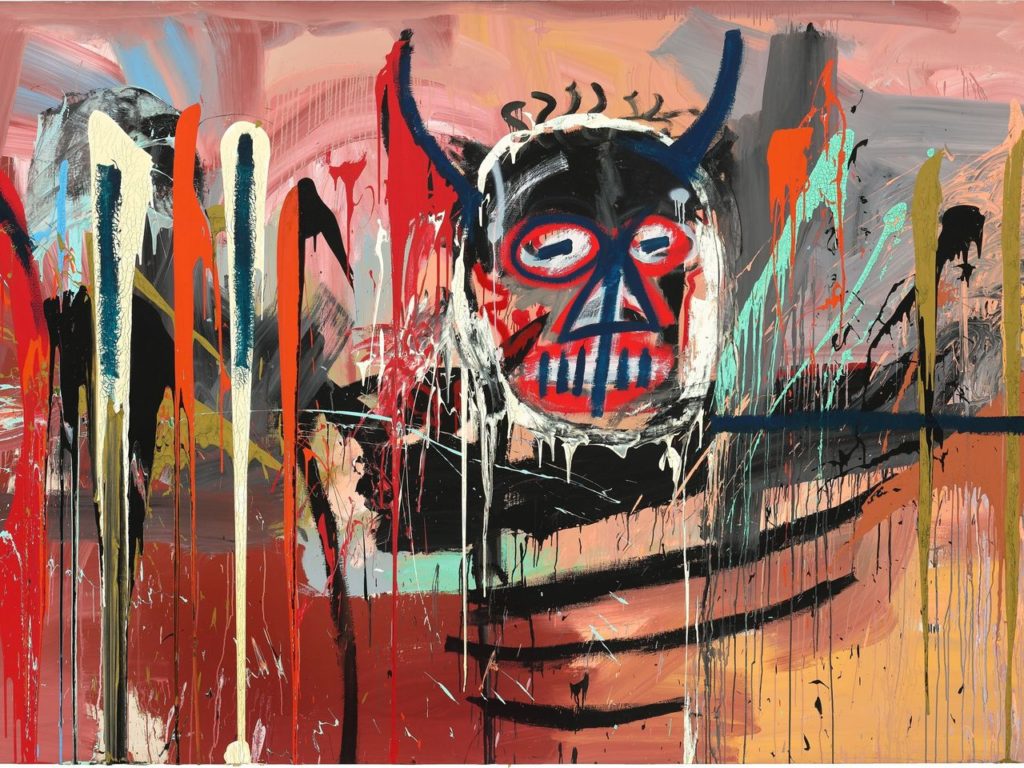
Jean-Michel Basquiat’s art is a raw emotional outpouring on canvas. His graffiti art drawings, like “Untitled,” evoke feelings through chaotic lines and vibrant colors. Similar to Shepard Fairey’s work, Basquiat uses the color red to invoke angry, passion, and intense emotions. Basquiat’s style mirrors Expressionism art styles, where color, texture, and brushstrokes reflect inner emotions. If you are interested in find out more about your personal art style, check out this art style quiz. Your art may also reflect an Expressionist style like Basquiat!

Basquiat’s graffiti art drawings, like this work titled Untitled, rebel against traditional norms, and voice a bold testament to the power of unfiltered self-expression and an exploration of identity.

Jean-Michel Basquiat’s art style is an electrifying blend of abstraction, street influences, and expressive rawness. His overall use of vivid colors and frenetic brushwork creates a sense of immediacy and emotional intensity.

Often, Basquiat’s art incorporates text, symbols, and cryptic codes, inviting viewers to decipher hidden meanings. His fusion of cultural references, from African art to street graffiti, forms a visual tapestry that resonates with diverse audiences. Basquiat’s art style is a rebellion against traditional norms, a bold testament to the power of unfiltered self-expression and an exploration of identity.

Inviting Interactivity with Ernest Zacharevic

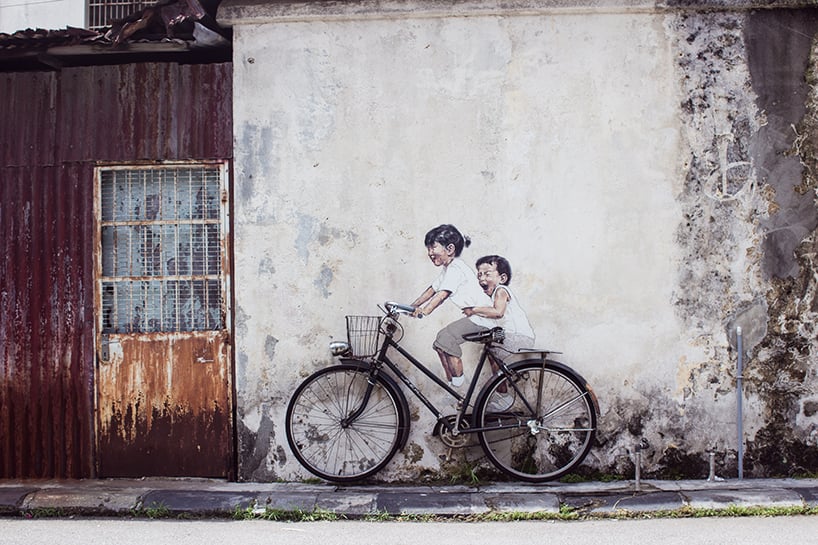
Ernest Zacharevic’s graffiti art drawings incorporate real-world objects, inviting passersby to interact. Similar to the two previous artists, Zacharevic wants his viewers to interact and really feel his art. His pieces engage viewers both visually and physically, sparking a sense of wonder and social participation. He incorporates physical elements into the graffiti art drawings, making it an immersive experience for the audience.

The whimsical feeling of Ernest Zacharevic’s art style is a beautiful marriage of street art and interactive installations. His unique approach involves integrating real-world objects alongside his art, ultimately inviting viewers to actively engage with his art. Through this interplay, his pieces appear to come alive, blurring the line between art and reality.

children on bicycle by Ernest Zacharevic requires the surrounding environment to provide context to the art.

In short, Zacharevic’s art often exudes a playful and whimsical quality, injecting a dose of lightheartedness into urban landscapes. His ability to seamlessly merge physical elements with artistic expression adds a layer of surprise and delight to his work, turning passersby into participants in the artistic experience.

Insights and Techniques for Clean Graffiti Art Drawings

  1. Master the Basics: Before diving into complex techniques, ensure you have a solid grasp of fundamental skills like line work, shading, and perspective.
  2. Experiment with Styles and Mediums: Try different graffiti styles like wild style, bubble letters, or stencil art. This exploration will help you find your unique voice. Check out my article on personal branding for context about how to find your voice and personal brand.
  3. Practice Sketching: Regular sketching sharpens your creative abilities and helps you refine your concepts before translating them onto larger surfaces. Drawing is an essential part in learning art and improving your graffiti art drawings. Read this article about drawing tips for artists.
  4. Study Typography: Understanding letterforms and typography is essential in graffiti. Study various fonts and letter styles to add diversity to your work. A fun and easy way to do this is through bullet journalling.
  5. Color Theory: Learn color theory to create eye-catching compositions. Experiment with color schemes and their emotional impact.
  6. Use Layering: Layering colors and elements can add depth and complexity to your work. Start with a base layer and build up from there.
  7. Create Depth with Shadows: Mastering light and shadow adds realism and dimension to your pieces. Experiment with light sources to create depth.
  8. Blend and Fade: Blending colors smoothly into one another adds a professional touch to your graffiti art drawings.
  9. Stencil Techniques: Stencils can help achieve intricate details and precise lines. Experiment with various stencil techniques for dynamic and detailed effects.
  10. Incorporate Texture: Use various tools to create texture in your art. Sponges, fabric, and even unconventional objects can add tactile interest, physically incorporating the audience and environment into the graffiti art drawings.
  11. Embrace 3D Effects: Incorporating three-dimensional elements gives your graffiti an extra dimension. Practice adding depth and highlights for a realistic look.
  12. Study Perspective: Understanding perspective is crucial for creating graffiti art drawings that interact with their environments. Practice drawing objects from different angles.
  13. Keep Evolving: Graffiti is about pushing boundaries. Continuously seek inspiration from other artists, experiment with new techniques, and never stop learning.

Remember, graffiti art is a form of self-expression, so don’t be afraid to break the rules and develop your unique style. Practice, persevere, and maintain a willingness to learn: these will be your greatest allies on your journey to mastering graffiti art techniques.

The Museum Paradox

Does street art belong in museums? Does the surrounding environment matter in art?

Banksy’s Unauthorized Exhibition

In the MOCO Museum in Amsterdam, there is a permanent gallery called the ‘Laugh Now’ exhibit. It houses iconic works including Laugh Now, Girl with Balloon, Flower Thrower, Smiling Copper, Crude Oil series and many more.”

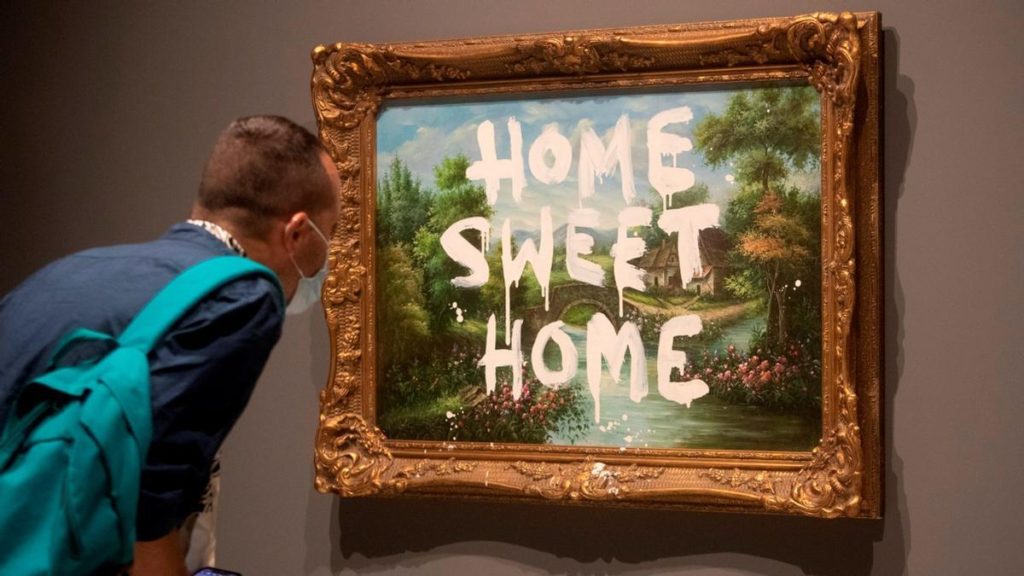
When I visited the Moco Museum in 2021, I was met with a series of different emotions and questions. I felt the awe of seeing some of Banksy’s most famous works personally and confusion about whether the work should even be in a gallery, where I had paid money for entry.

Man wearing mask stares intently at Banksy’s Home Sweet Home

Additionally, on the Moco Museum website, the gallery states Banksy has no say in the exhibition of his work:

“The ‘Laugh Now’ exhibition is not authorised by Banksy nor it is curated by the artist. Moco Museum features a diverse selection of original works throughout Banksy’s noteworthy career.”

Moco Museum Amsterdam

Christopher Michaut takes an interesting approach to the conversation of Banksy’s unauthorized exhibition in his article for the Daily Art Magazine.

Simply put, it seems the very rebellious nature that gave rise to graffiti art is now being paradoxically displayed in museums.

Artists who were once anonymous are now selling their artwork for high prices. This change is causing discussions about whether this move to museums is genuine or just for profit, and it’s making people wonder if the true spirit of street art can still exist in museums.

On one hand, it lets more people see and appreciate this type of art. But, on the other hand, it may take away from the raw and daring essence that makes graffiti art unique.

Understandably, this change is difficult for many artists. Moving from the streets to museums is a delicate balance between staying rebellious and fitting into a more mainstream setting. Likewise, the artist must choose between their origins and making the most of new opportunities.

Environmental Effects

On the other other hand, creating art for a museum is more legal and safer than spray painting a building without consent.

In addition to legitimizing a street artists’ work, museums diligently safeguard precious artworks, ensuring their preservation for generations to come. Climate-controlled environments, delicate lighting, and expert care all come together to shield art from the ravages of time.

However, the nature of graffiti art, often exposed to the elements and subject to the unpredictability of urban life, contrasts starkly with this protected realm. While museums provide a controlled haven for art, graffiti art exists vulnerably in its raw form, weathering the same elements that give it life.

Pedro Luján and his Dog by Martin Ron, as mentioned in the introduction of this article, was destroyed when its wall was demolished in 2017 (photo © Buenos Aires Street Art).

When artwork is moved from gritty city walls to the sterile halls of museums, an essential part of their essence is lost. The street, the texture, the unexpectedness – these are all elements that street artists use to their advantage when choosing the platform for their art. Placing graffiti art drawings in a museum might provide wider exposure, but it also strips away the very environment that gives the art its life and power.

In museums, the vibrant interplay between art and context is muted, reducing the impact that graffiti pieces could have in their natural habitat. This is a prime example of why some people believe that graffiti art loses its authenticity when confined to museum spaces, as it’s severed from the very context that nurtured its birth and meaning.

Conclusion

Graffiti art drawings defy the boundaries of traditional artistry, pushing the limits of expression and protest. Artists like Banksy, Shepard Fairey, and Jean-Michel Basquiat thrive in controversy. Remember, your art can be commentary to injustice, encouragement for change, and a mirror to society’s idiosyncrasies. Find your brand, your voice, and share it.

As you wield your medium of choice, whether a spray can or paint brush or chisel or Photoshop, remember that your art possesses the power to question, inspire, and provoke.

In the streets where messages are drowned in noise, your graffiti art drawings can become the unsilenced voice. In every stroke, every splash of color, and every intricate detail, you encapsulate stories that transcend surfaces and resonate with souls. Embrace the irony of the museum paradox, for within it lies a testament to the evolution of rebellion and the temporary nature of creativity in the 21st century. Let your graffiti art drawings challenge, captivate, and leave an indelible mark on the world’s canvas, echoing the voices of the brave.

How to make your Graffiti Art Drawings more Captivating Read More »

My 5 Favorite Artistic Mediums: How to Paint and Draw like a Pro

Art is a powerful means of self-expression that allows individuals to convey emotions, ideas, and experiences. Within the vast realm of art, various artistic mediums offer unique possibilities for artists to translate their visions onto the canvas.

In this Artsy Drawings blog post, we delve into five fascinating artistic mediums that have captured the hearts of many: acrylic, mixed media, watercolor, pencil, and gouache. I chose the order by which are my personal favorite artistic mediums. So, let’s explore the distinct qualities and creative potential of each of the five artistic mediums and discover why they are beloved by artists worldwide.

I also created a list of my Favorite Art Supplies, from brush pens to gouache paint.

Acrylic – my all time favorite of the artistic mediums

  1. Acrylic: Versatility and Vibrancy

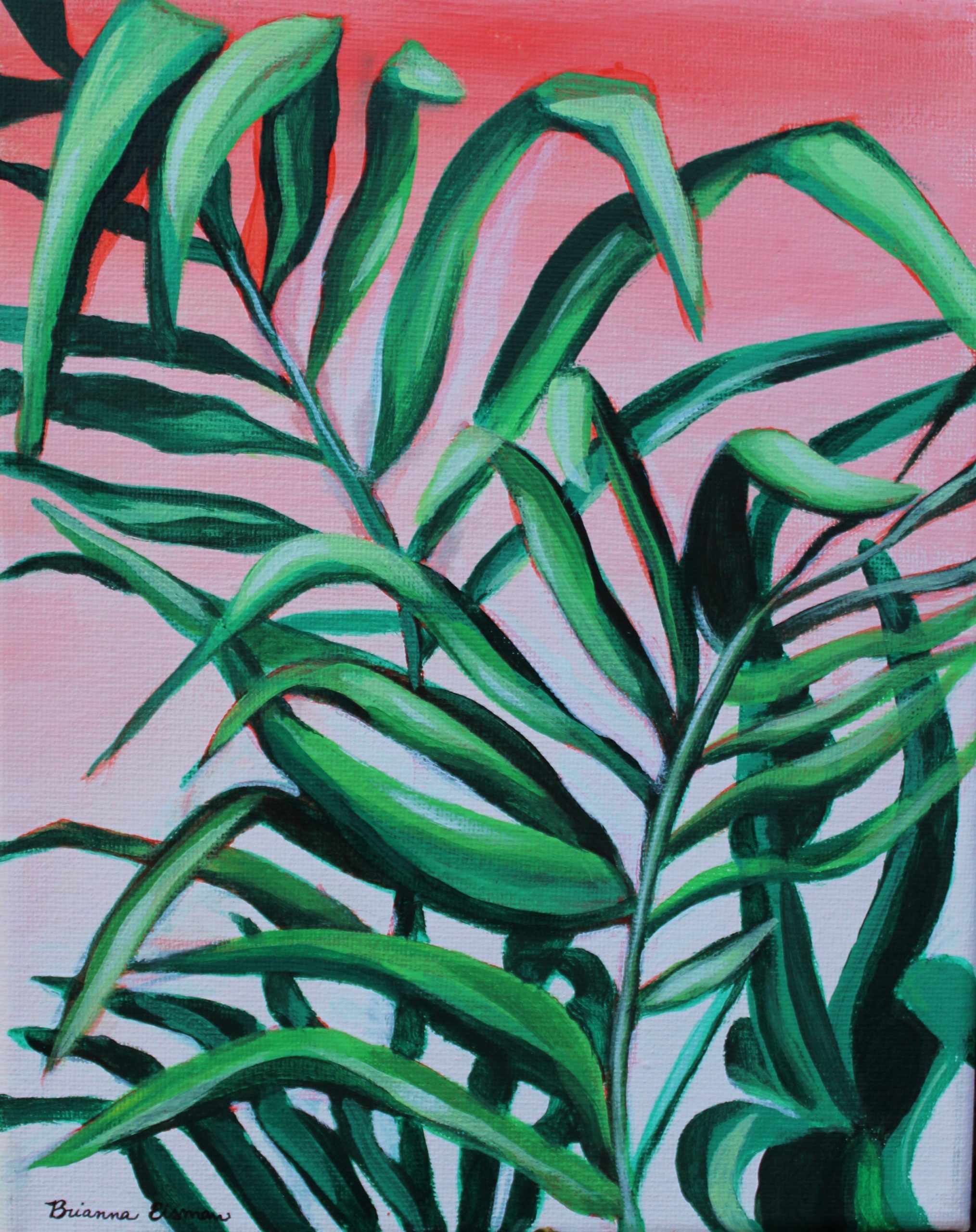
I want to start with my favorite artistic medium: acrylic paint. This medium is becoming increasingly popular due to its versatility and vibrant color range. Many artists, like myself, appreciate the quick drying time of acrylics, which allows for layering and blending techniques. Rather than waiting around all day, (approximately 24 hours) for oil paint to dry, I can work much faster with acrylic paint, which can dry within 20-30 minutes. For example, the painting below, Pretty Plants #2, was completed in four total hours, mostly because I didn’t want to waste paint.

pretty green fern style plant painting in acrylic on canvas with red to white gradient background
Pretty Plants #2 by Brianna Eisman is part of an acrylic on canvas series featuring different plants on gradient backgrounds.

Also, I love the versatility of acrylic paint. You can change the consistency by adding water or acrylic mediums. These additions allow you to create transparent glazes or thick impasto textures. The fast-drying nature of acrylics makes it easier to correct mistakes or make alterations during the painting process.

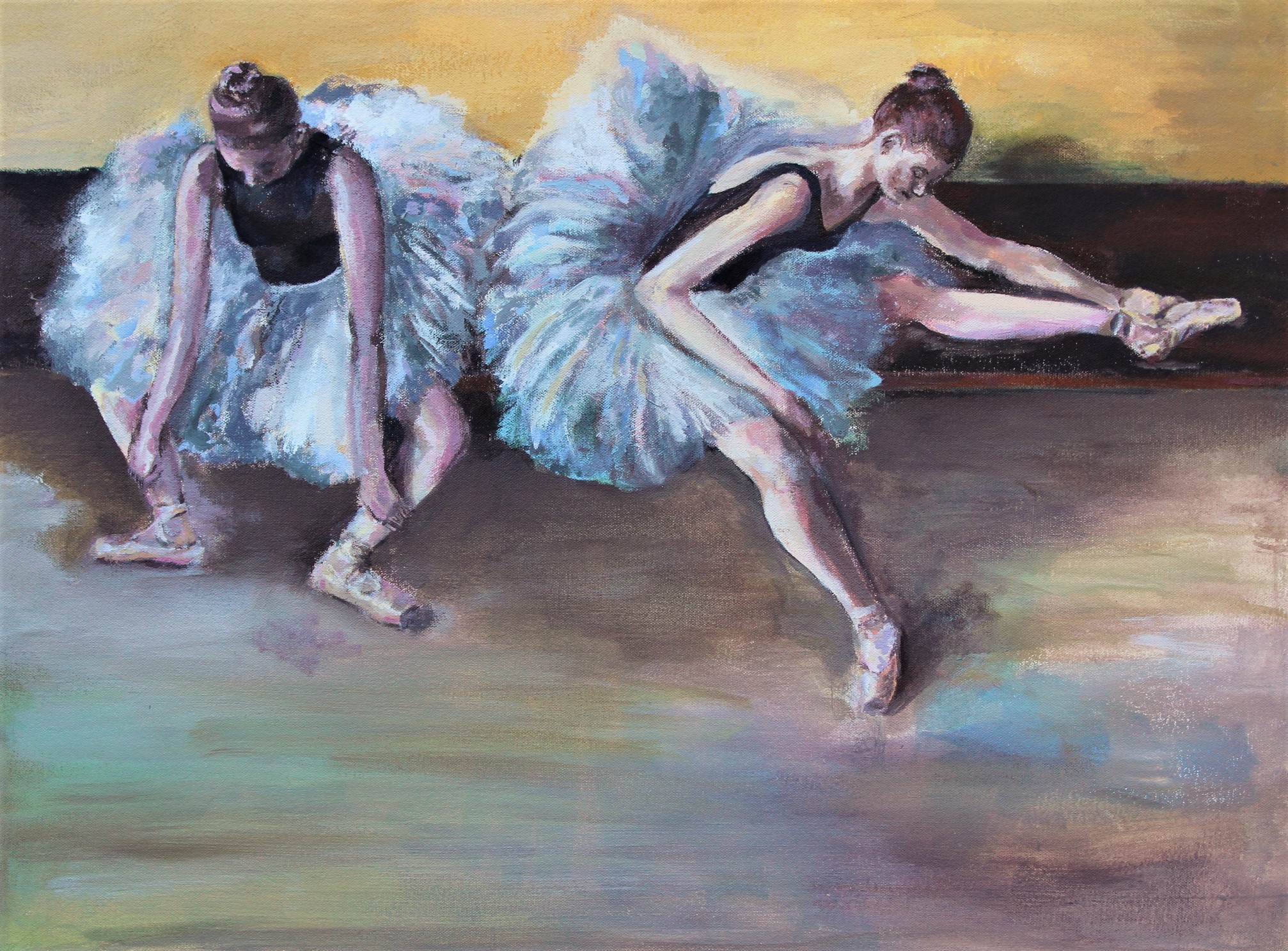
This technique is great for impressionist styles. I had to use it often for paintings during my art classes, as I had limited time to work. When the class ended, I had to clean up quickly so my paints wouldn’t dry out. As a result, my early paintings had a lot of small strokes layered on top of each other, giving them an impressionist look. For example, the painting below, inspired by Edgar Degas’s dancers, has multiple layers of colors and strokes, especially in the tutu skirts, creating depth with a light yellow base and blues and pinks added on top.

Not sure what your art style resembles? Check out this art style quiz to help you find which historical art style matches your artwork!

this is a acrylic painting on canvas of two dancers wearing black leotards and fluffy white blue tutus. The dancers are stretching while seated on a wooden bench. The style is similar to Edgar Degas. The painting describes the use of favorite artistic mediums in which acrylic is one of my favorites for its impressionistic abilities.
Dancers Stretching by Brianna Eisman was inspired by impressionist painter Edgar Degas. I used acrylic paint on stretched canvas for this painting.

One of the key advantages of acrylics is its ability to mimic other artistic mediums. It can resemble watercolor when diluted or take on the characteristics of oil paint when applied with a heavy body. Acrylic paint can be used on a variety of surfaces, including canvas, wood, paper, and even glass or metal. These broad possibilities add acrylic paint to the list of favorited artistic mediums for many artists.

For me, I have built my acrylic paint arsenal over many years of experience. I prefer Liquitex Basics for my white paint (I use Titanium White more than any other color). I also like Lukas CRYL Studio Paints, although they’re a little more expensive.

Lastly, I like DecoArt Acrylic Paints for projects under 24″x 36″. DecoArt paint typically comes in smaller containers, but I find they are easier to store than larger tube style paints. The brand also just released an environmentally friendly acrylic paint set!

Mixed Media – Making me a trash monster, one sticker at a time

  1. Mixed Media: Limitless Creativity

Mixed media art involves the combination of different artistic mediums and techniques to create unique visual experiences. This next medium truly puts “artistic” in the artistic mediums list. Mixed media encourages artists to think beyond the boundaries of traditional artistic approaches. Mixed media, literally mixes artistic mediums. It allows for the incorporation of diverse elements such as paper, fabric, found objects, photographs, and even digital media. You can also classify the use of both paint and pens in the same piece as mixed media, as you are ‘mixing’ the artistic mediums.

Many of my sketchbooks use mixed media. Sometimes, I feel like a trash monster. I collect fortune cookie quotes and receipts and ticket stubs and stickers. I arrange them all in specific sketchbooks as a document of my life, my mental health, and my travels.

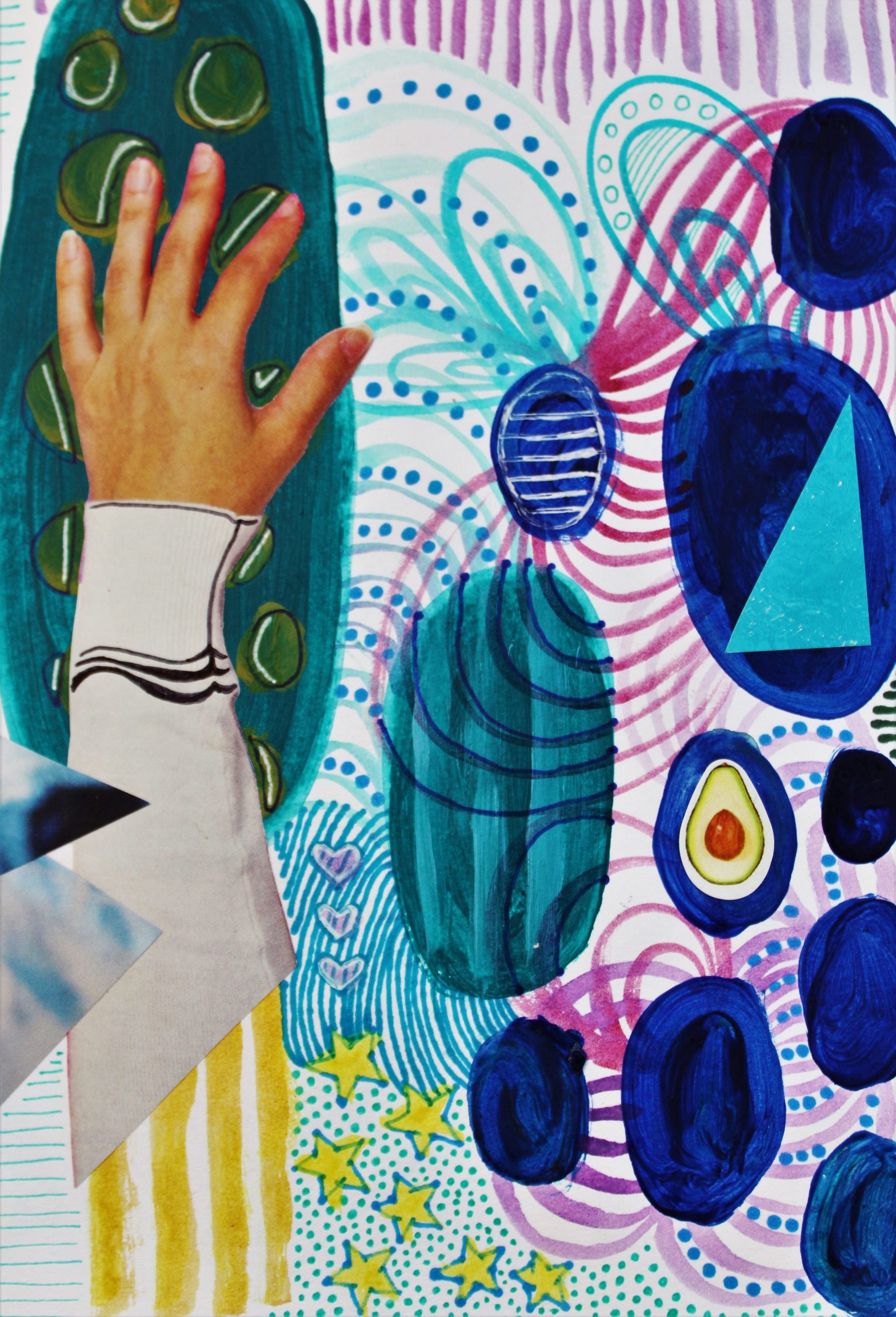
Hand of God by Brianna Eisman is a mixed media work featuring watercolor paint, ink, magazine cutouts, and stickers. This piece was created for Artsydrawings.com at Artsy Drawings. The reference material is for the blog about mixed media and favorite art mediums.
Hand of God by Brianna Eisman is a mixed media work featuring watercolor paint, ink, magazine cutouts, and stickers.

The beauty of mixed media art lies in its limitless possibilities and the freedom it provides for artistic expression. Artists can explore texture, depth, and layers, creating rich and multidimensional artworks with an unlimited number of artistic mediums.

I also think mixed media is one of the most environmentally friendly types of art. As I mentioned above, I sometimes feel like a trash monster, but you really can save money on art supplies by using mixed media. My colleague Emily wrote a great article about how to thrift art supplies, and I think second-hand art supplies could make for the best type of textured found-object artwork.

These limitless mixtures of artistic mediums invite experimentation and encourages artists to step outside their comfort zones, leading to innovative and thought-provoking creations.

Watercolor

  1. Watercolor: Elegance and Serenity

Watercolor paint has an ethereal and delicate quality, often capturing the essence of light, translucency, and fluidity. Artists love the subtle nuances and atmospheric effects achieved with this medium. So, the transparent nature of watercolor allows for luminous washes and seamless gradients.

I also find watercolor to be one of the more accessible art mediums. I absolutely love my cheap Crayola watercolor paints! All you need for watercolor is the paint kit, water in a cup, a brush, and maybe a paper towel or two.

This painting was done in my sketchbook in watercolor paint by Brianna Eisman for Artsy Drawings for Artsydrawings.com. The painting features my desk with my laptop open, clock, pens, sticky notes, water cup, phone, and salt lamp. The study was a quick exercise while watching a movie and I like it a lot.
Desk in Watercolor by Brianna Eisman was painted on a lonely night when all I wanted to do was paint and watch a rom-com on my computer. So I did just that.

Watercolor’s unpredictability adds an element of spontaneity and excitement to the painting process. The artist must adapt and work with the flow of water and pigment, resulting in charming imperfections and unique characteristics. This medium is perfect for capturing landscapes, still life arrangements, and expressive portraits, evoking a sense of tranquility and serenity.

Pencil Drawings

  1. Pencil: Timeless Precision

Pencil is one of the most fundamental artistic mediums, cherished for its simplicity and versatility. With just a simple pencil and paper, artists can create intricate drawings, detailed sketches, and realistic portraits. Likewise, the graphite shades offer a wide tonal range, enabling artists to achieve a remarkable level of precision and detail.

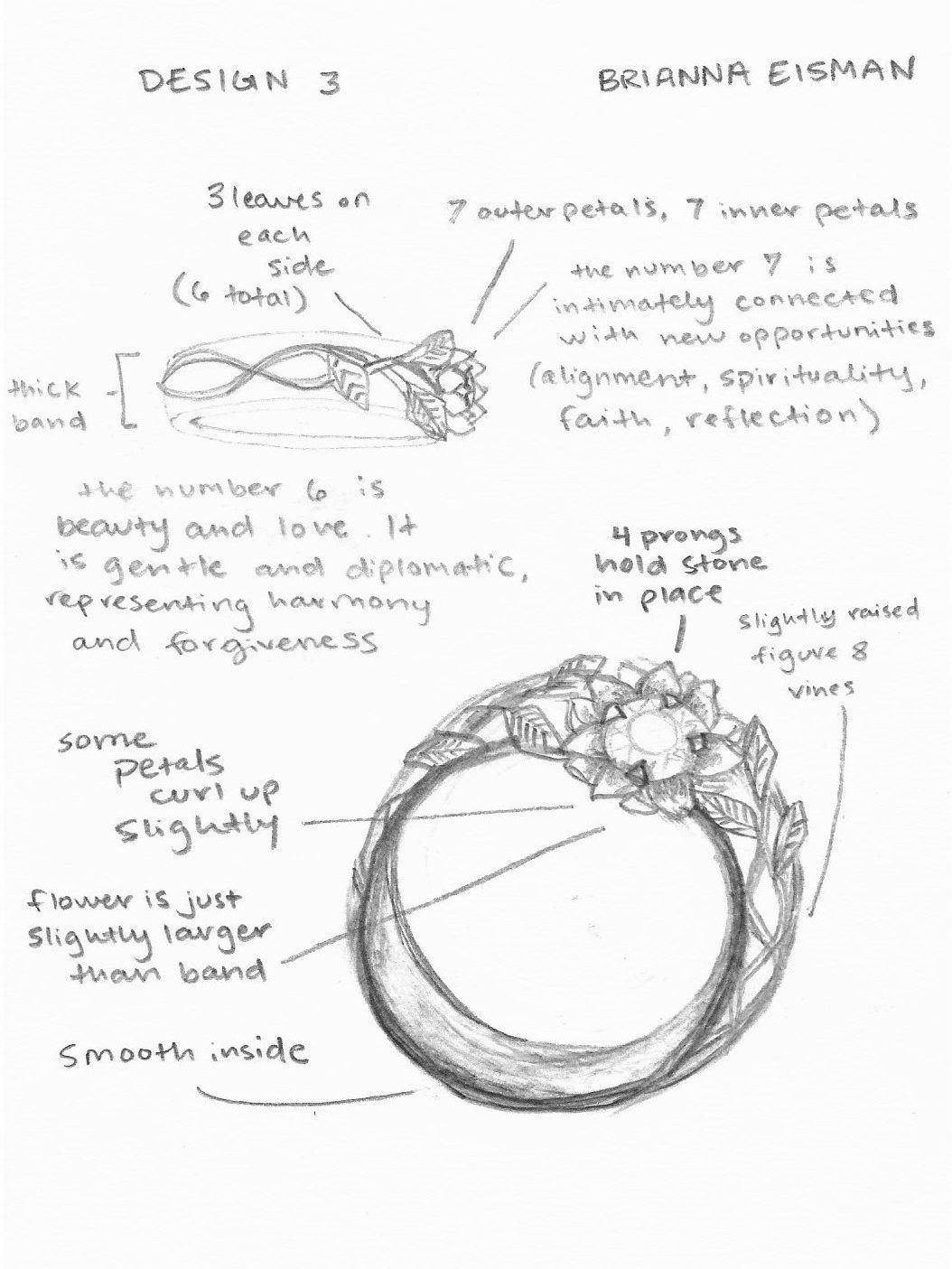
The following image features Design 3, the third design commissioned for a custom floral engagement ring. The patron chose a graphite medium to show fine details and edit the design as needed throughout the workflow of the project.

The following image features Design 3, the third design commissioned for a custom floral engagement ring. The patron chose a graphite medium to show fine details and edit the design as needed throughout the workflow of the project.
Design 3 by Brianna Eisman is a graphite sketch for a custom engagement ring design.

Pencil drawings possess a timeless quality, and the monochromatic nature of graphite pencil adds a sense of elegance and understated beauty. Overall, this medium is perfect for capturing textures, shading, and creating stunning grayscale compositions. Pencil art allows artists to focus on the essentials, emphasizing form, and exploring the interplay of light and shadow. It is also a good starting point for many artists, making it one of the most popular artistic mediums.

Gouache

  1. Gouache: Boldness and Opacity

Last but not least, is gouache paint! Gouache is still new to me, but one of the more powerful artistic mediums. I see this medium growing in popularity and I want to experiment with it more. Gouache paint combines aspects of both watercolor and acrylic and allows for many opaque layers added on throughout the process, especially at the end with a fine tip brush.

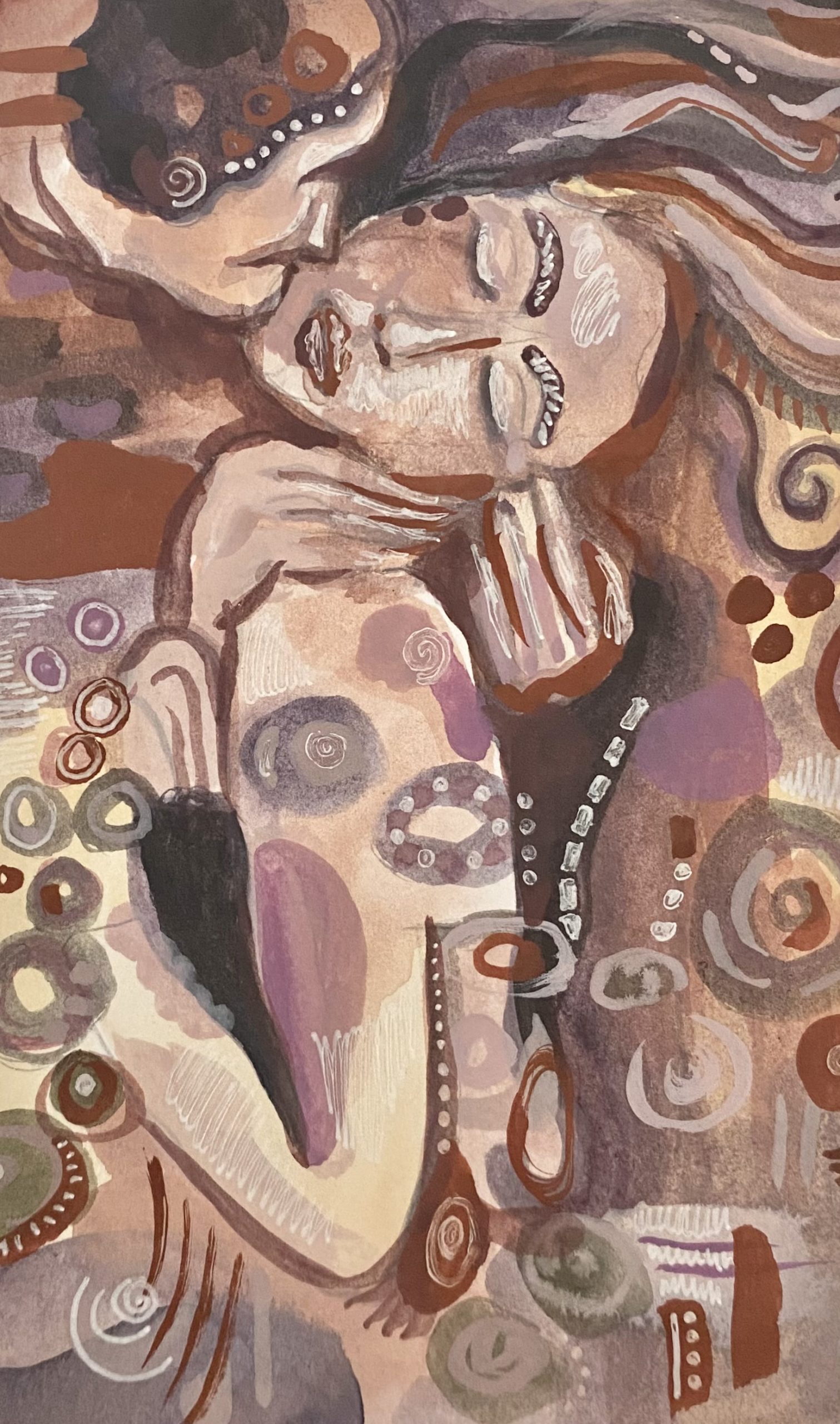
The following painting by me, inspired by the infamous Klimt masterpiece, uses gouache paint and features a couple embracing in a beautiful and intimate kiss. I bought this exact gouache paint set and I really loved it for a starter set. I will admit that I used the white quickly, but I always use white paint more than any other color. For the price and ease, this is a great paint set for any artist wanting to get into gouache.

Inspired by the Kiss by Gustav Klimt, this painting was created in gouache paint and features a couple embracing in a beautiful and intimate kiss. the style has many dots and lines, a stylistic technique I enjoy. This painting is done by Brianna Eisman as part of Artsy Drawings.
The Kiss by Brianna Eisman was inspired by the Kiss by Gustav Klimt.

Gouache’s unique opacity and matte finish give it a distinct aesthetic appeal. Gouache has this masterful ability to provide solid, vibrant colors. Artists can easily apply the paint to various surfaces, including paper, canvas, and illustration boards. The opaque nature of gouache allows artists to correct mistakes or make revisions by simply layering additional paint over the existing layers. Gouache allows for layering and reworking, making it ideal for illustrative works.

One of the key advantages of gouache is its versatility in creating both fine details and bold, graphic elements. Artists can achieve crisp edges, intricate patterns, and precise lines, making it a popular choice among illustrators and designers.

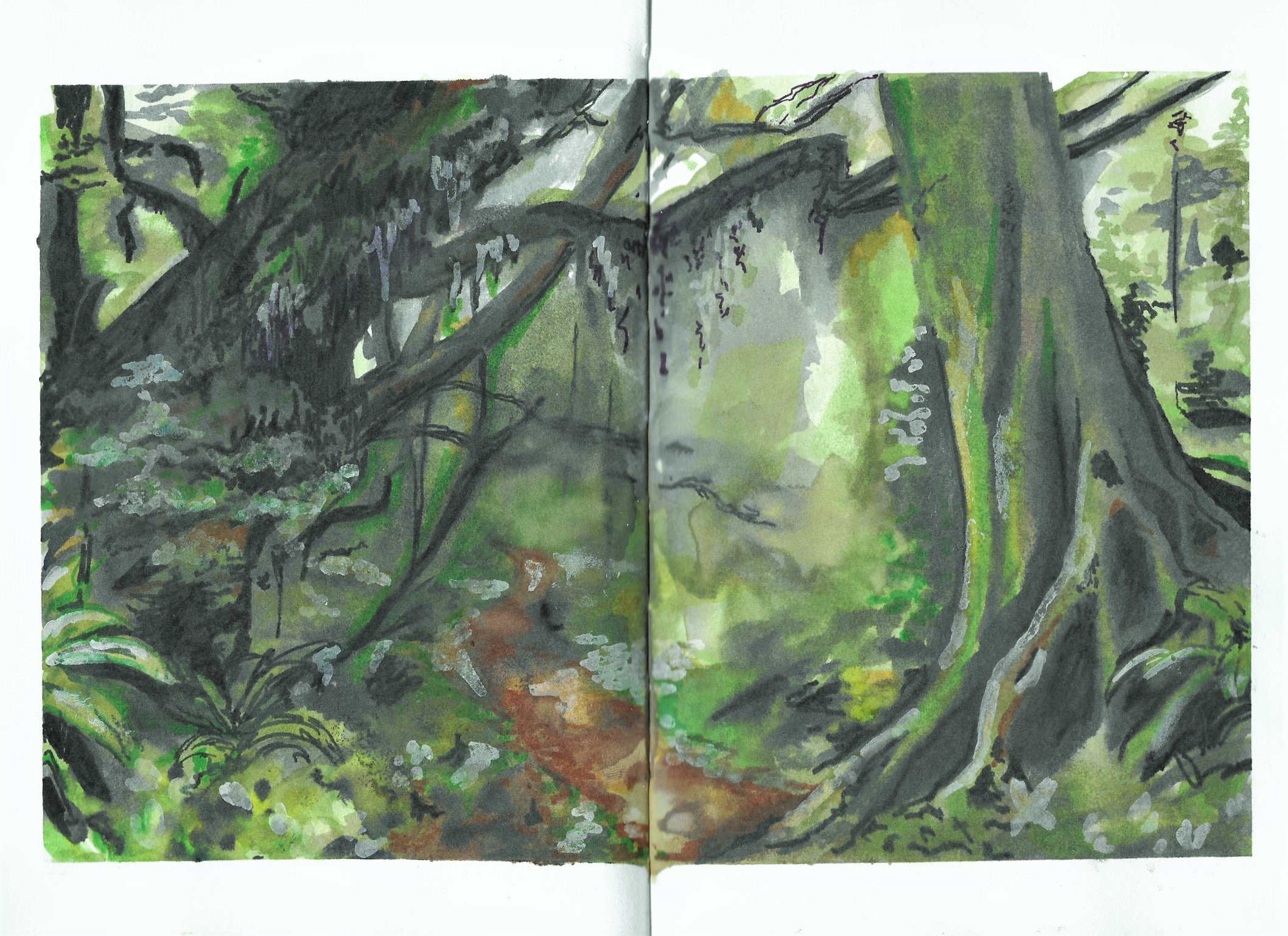
Beautiful Forest by Brianna Eisman was painted using gouache in a sketchbook. The painting was done through Artsy Drawings on artsydrawings.com. The painting shows a green dense forest with large mossy trees and lots of foliage. There is a single brown trail leading through the forest.
Beautiful Forest by Brianna Eisman uses gouache in a sketchbook.

Another noteworthy aspect of gouache is its rewetting properties. As a sustainable artist, this is one of my favorite parts! Unlike acrylics or oil paint, gouache can be reactivated with water, even after it has dried. This makes it possible to rework areas of the painting or blend colors seamlessly, providing artists with greater control and flexibility.

Furthermore, gouache’s quick-drying nature makes it convenient for artists who prefer to work in layers or require shorter drying times for their projects. This quality allows for efficient workflow, enabling artists to build up layers of color and detail without extended waiting periods.

I bought this exact gouache paint set and I really love it!

Conclusion – Favorite Artistic Mediums

Each of these artistic mediums possesses its own unique qualities and appeal, attracting artists with different preferences and artistic goals. Acrylics offer versatility and vibrancy, mixed media enables limitless creativity, watercolor exudes elegance and serenity, pencils provide timeless precision, and gouache showcases boldness and opacity.

These favorite artistic mediums — acrylic, mixed media, watercolor, pencil, and gouache — have captured the hearts of countless artists worldwide, including my own heart. Their distinct characteristics, creative potential, and ability to evoke emotions and narratives make them powerful tools for artistic expression. Please check out my Favorite Art Supplies list and comment below your favorite supplies!

Whether you are drawn to the vibrant colors of acrylics, the multidimensional possibilities of mixed media, the ethereal beauty of watercolor, the precise detailing of pencils, or the boldness of gouache, each medium offers a unique journey of artistic exploration. So, pick up your preferred medium, let your creativity flow, and embark on a captivating artistic adventure.

Not sure which artistic medium matches your art style? Take this quick quiz to better understand your art style!

My 5 Favorite Artistic Mediums: How to Paint and Draw like a Pro Read More »

Is AI art to be a valuable future or a scary end of originality?

Artificial Intelligence (AI) has been a hot topic in recent years, with its applications ranging from self-driving cars to natural language processing. However, AI is not just limited to practical applications – it is also being used in the field of art, leading to the emergence of AI art. AI art is created using algorithms and machine learning techniques, and is becoming increasingly popular among artists and art enthusiasts. But what does AI art mean for traditional artists, and how will it impact the art world?

How do you make AI art?

First, it’s important to understand how artificial intelligence art is created. AI art comes from feeding an algorithm with a dataset of images or other visual information. Then, machine learning algorithms generate new images based on that dataset. These images can be completely abstract or can be based on specific styles or genres. For example, an algorithm can be trained to generate new images in the style of Impressionism or Cubism. My own personal style is very similar to Impressionism, though I prefer traditional methods to AI. Check out my gallery here.

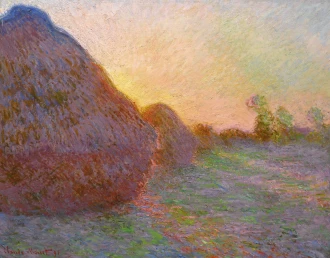
Meules by Claude Monet is a great example of the Impressionism style with small, visible brushstrokes that provide the “bare impression of form.”

AI art is not limited to still images – it can also be used to create animations, videos, and even music. One example of AI art is the deep dream algorithm developed by Google. This algorithm creates surreal and dreamlike images by analyzing and enhancing patterns in existing images. Another example is the artwork created by Mario Klingemann, who uses neural networks to generate abstract and surreal images.

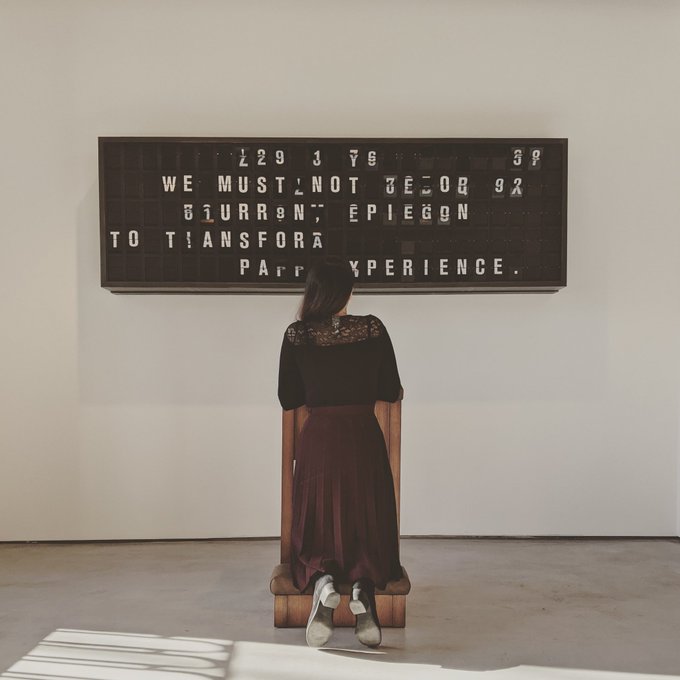
Appropriate Response by Mario Klingemann poses the question of “how much meaning can you put into 125 letters?”

How will AI art affect traditional artists?

So, what does AI art mean for traditional artists? On the one hand, AI art presents new opportunities for artists to experiment with new techniques and styles. Artists can use AI to generate new and inspiring ideas, or to create artworks that would be difficult or impossible to produce manually. For example, an artist could use AI to research images pieced together as a reference image as the basis for a new painting or sculpture.

On the other hand, art made with artificial intelligence also presents new challenges for traditional artists. With the rise of AI art, there is a risk that traditional art forms may become less relevant or even obsolete. If AI can generate images and other artworks with a high degree of accuracy and creativity, why would people need to commission traditional artists? This is a question that many artists and art enthusiasts are grappling with.

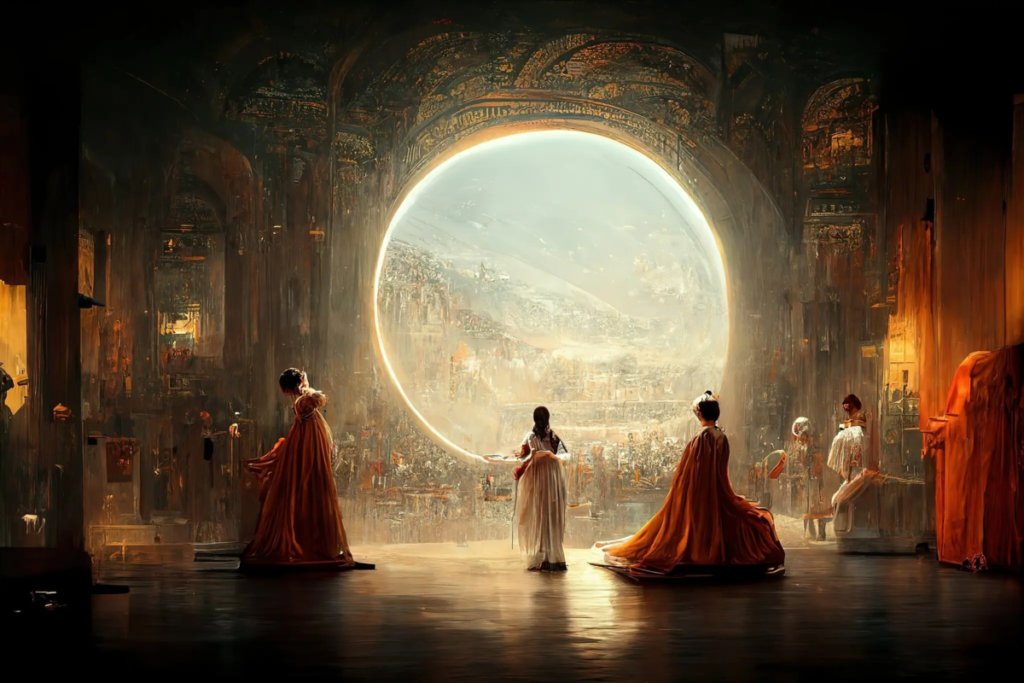
In fact, in September 2022 the New York Times posted an article titled An A.I.-Generated Picture Won an Art Prize. Artists Aren’t Happy. The artist used Midjourney, an artificial intelligence program which transforms lines of text into hyper-realistic graphics. He won first prize — a blue ribbon — in the Colorado State Fair, under the division for “digital art/digitally manipulated photography.”

Théâtre D’opéra Spatial by Jason Allen is created using AI art technology and took first place at the Colorado State Fair.

Have we reached the end of originality?

Another challenge for traditional artists is the potential loss of creativity and originality. If an artist relies too heavily on AI to generate ideas and inspiration, their work may become formulaic and predictable. There is also a risk that AI-generated artworks may become too similar to each other, leading to a lack of diversity and innovation in the art world.

Despite these challenges, many traditional artists are embracing artificial intelligence art as a new tool in their creative arsenal. Some artists use AI to generate new ideas and inspirations, while others are using AI to enhance their existing artworks. For example, an artist could use AI to analyze the colors and patterns in their paintings and then use that data to create a new series of paintings with a similar aesthetic.

AI Art is Here to Stay

In conclusion, artificial intelligence art is a new and exciting field that is rapidly growing and evolving. While it presents new opportunities and challenges for traditional artists, it is clear that AI art is here to stay. Whether traditional artists choose to embrace AI as a tool for creativity or view it as a menace and threat to their livelihoods, there is no doubt that AI will have a significant impact on the art world in the years to come.

Is AI art to be a valuable future or a scary end of originality? Read More »

Scroll to Top
Cart
0
Add Coupon Code
Subtotal