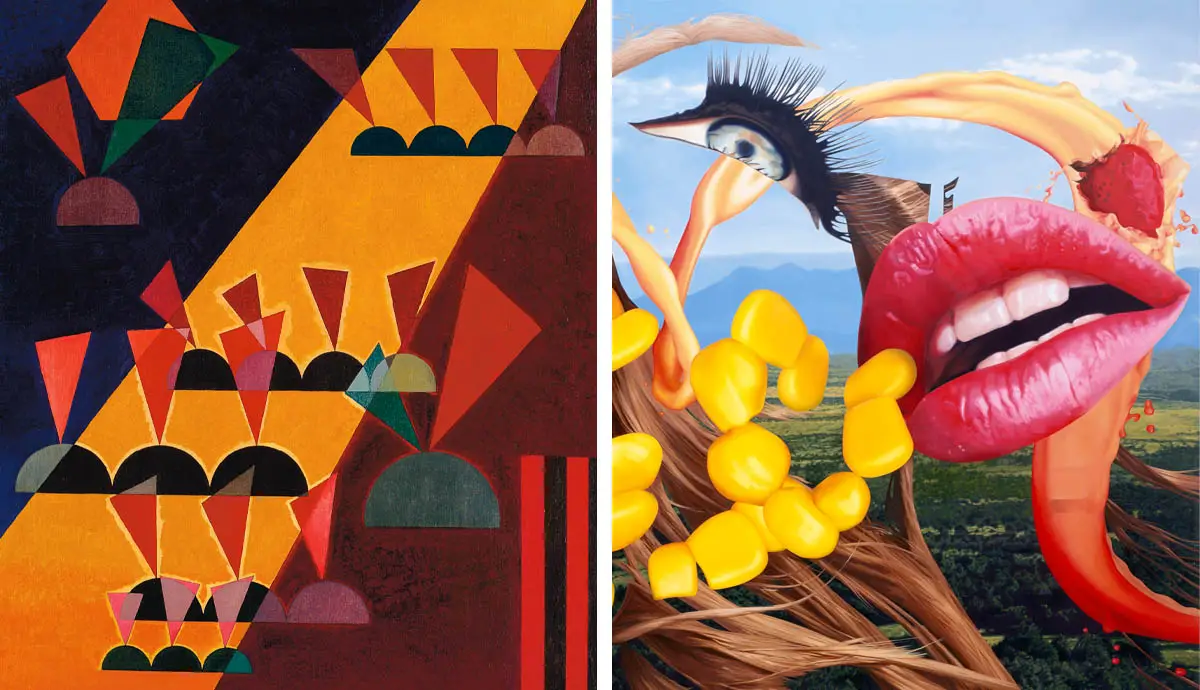
Throughout my art journey, I’ve often found myself intrigued by the timeless question: how does one find their unique art style? It’s a journey that every artist embarks on, one that intertwines with their growth and self-discovery.
I’ve created a fun and insightful quiz to help you uncover which historical art style matches your unique personality and the artwork you create. I recommend taking the quiz first, then exploring the art movements later in the article.
Take the Quiz: Unveil Your Art Style
Whether you’re a romanticist at heart or a abstract expressionist, this quiz will uncover your personality through the rich tapestry of art history. Take a few moments to explore where you and your art truly belong in the world of artistic expression. I hope you enjoy it as much as I enjoyed creating it!
This quiz is meticulously crafted to tap into your inherent artistic inclinations, guiding you towards the movement that best aligns with your creative spirit. Whether you’re a meticulous planner, an emotional dynamo, a lover of light, or a pop culture enthusiast, this quiz will illuminate your path.
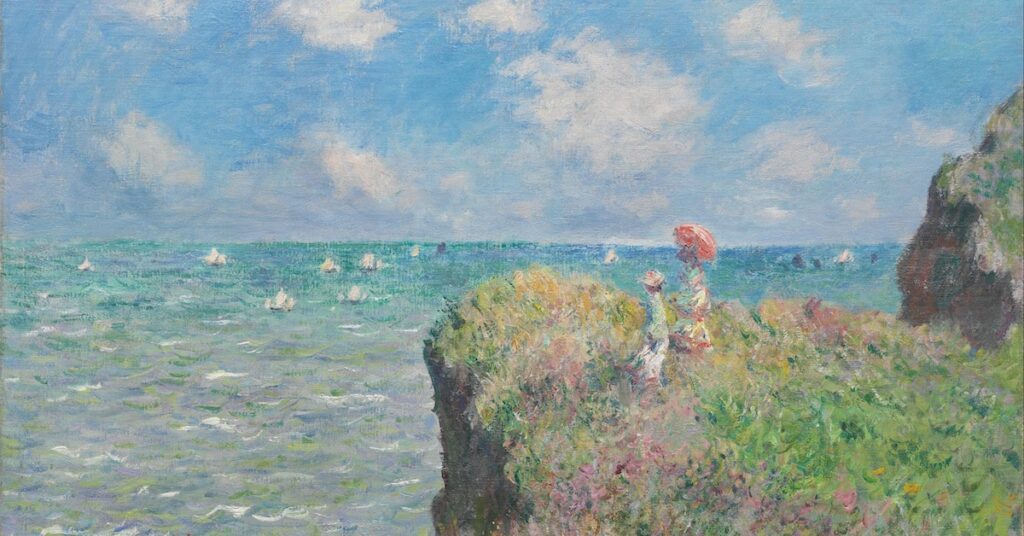
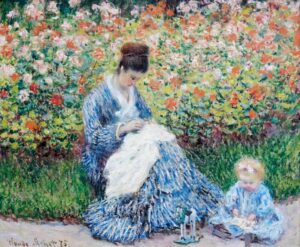
Camille Monet and a Child in the Artist’s Garden at Argenteuil, by Claude Monet
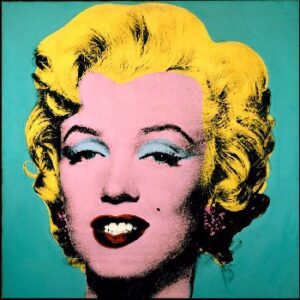
Marilyn Monroe by Andy Warhol
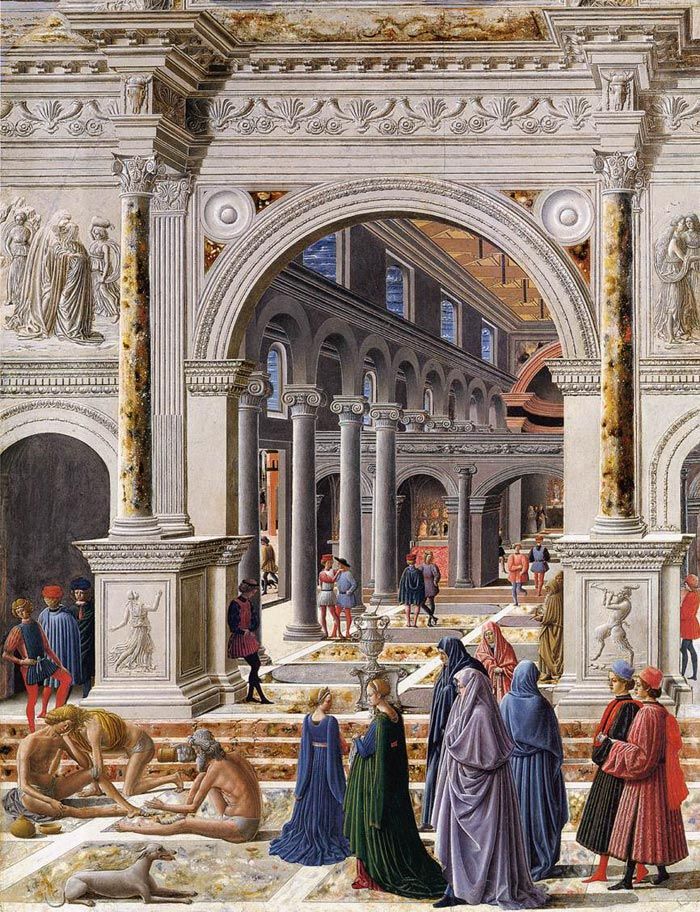
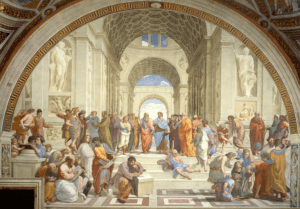
School of Athens by Raphael
Which historical art style best represents you and your own unique creative style? Take this quiz to find out!
Quiz Results: Unveil Your Art Style
Embarking on the journey to discover your unique art style is a scary, yet transformative experience. As a artist, I understand the importance of aligning your creative voice with the rich heritage of art history. Each of these historical art movements—Classicism, Expressionism, Impressionism, and Pop Art—offers a distinct lens through which to view and develop your artistic identity.
Classicism: The Pinnacle of Order and Beauty
If your answers indicate a strong inclination towards Classicism, you are drawn to the order, balance, and timeless beauty that define this art movement. Your art style reflects a profound appreciation for tradition, harmony, and technical mastery, capturing the idealized essence of the human experience.
Classicism is an artistic movement deeply rooted in the traditions of Ancient Greece and Rome, re-emerged with vigor during the Renaissance and neoclassical periods. It represents the pinnacle of harmony, proportion, and disciplined beauty, reflecting the ideals of symmetry and perfection. Artists of this era like John Collier, Raphael, Michelangelo and Jacques-Louis David believed in the pursuit of an idealized form, emphasizing rationality and restraint.
Oath of the Horatii by Jacques Louis David
Key Characteristics:
Proportionality and Symmetry: Classicism thrives on balanced compositions and harmonious proportions. The golden ratio frequents classical art, guiding the placement and scale of elements within a piece.
Idealized Figures: Human forms in classical art are depicted in their most perfect state, exuding a sense of calm and stoic grandeur. It is important to know that many figures are idealized, and not always true to life.
Mythological and Historical Themes: Classical artworks often draw inspiration from ancient myths, legends, and historical events, celebrating the human form and intellect. Many of these stories are Greek and Roman.
Technical Mastery: Precision, control, and an emphasis on fine detail are hallmarks of classical technique, showcasing the artist’s skill and dedication to craftsmanship. You will likely not see as many brush strokes or paint texture in this art movement.
If your creative process gravitates towards meticulous planning, balance, and a deep appreciation for historical context, Classicism might be your natural art style. Your artsy persona likely values tradition and seeks to capture the timeless elegance of the human experience.
Expressionism: The Canvas of Emotion and Inner Turmoil
Autoportrait a la tete baissee by Egon Schiele
If your answers indicate a strong inclination towards Expressionism, you are likely driven by the need to convey intense emotions and explore the complexities of the human psyche. Your art style is characterized by bold colors, dramatic forms, and a powerful emotional impact, transferring your most inner thoughts onto the canvas.
Emerging in the early 20th century as a reaction to the dehumanizing effects of industrialization and war, Expressionism broke away from traditional representation to convey raw, unfiltered emotion. Artists sought to depict the subjective experiences and inner turmoil of the human psyche, often distorting reality to evoke a more expressive response from viewers.
Artists of this era include Wassily Kandinsky, Edvard Munch, Egon Schiele, Vincent van Gogh, Willem de Kooning, Jackson Pollock and Francis Bacon, among many others.
Key Characteristics:
Emotional Intensity: Expressionism is characterized by its dramatic and often jarring depictions of emotion, capturing feelings of angst, fear, and passion.
Distorted Forms: To convey psychological depth, artists frequently distort figures and landscapes, creating a sense of unease and tension.
Bold Colors and Brushstrokes: Vivid, often non-naturalistic colors and dynamic, fluid brushwork are used to enhance the emotional impact of the artwork.
Subjective Perspective: The artist’s inner world takes precedence over objective reality, with works often reflecting personal and existential struggles.
Finding Your Art Style in Expressionism: If your artistic expression is driven by a need to explore and convey deep emotions, Expressionism might be your calling. Your artsy approach likely embraces the chaos and complexity of human experience, channeling your inner turmoil and passions onto the canvas with fervor.
Impressionism: The Dance of Light and Moment
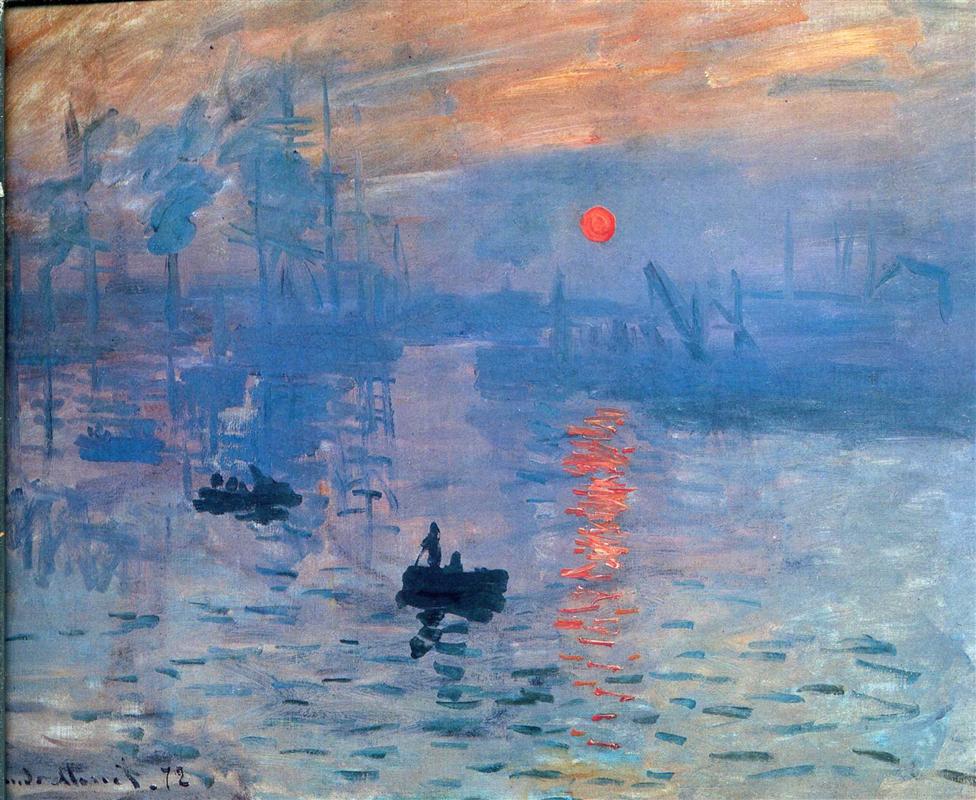
Sunrise by Claude Monet
If your answers indicate a strong inclination towards Impressionism, you are likely captivated by the transient and dream-like effects of light and color, finding beauty in the fleeting moments of everyday life. Your art style is loose, spontaneous, and infused with the delicate interplay of light and atmosphere.
Impressionism emerged in the late 19th century as a revolutionary departure from the rigid formalism of the art academies. Artists like Claude Monet, Edgar Degas, Auguste Renoir, Mary Cassatt, and Paul Cézanne sought to capture the fleeting effects of light and color, emphasizing spontaneity and the perception of the moment. While the movement was initially met with criticism, it eventually redefined the entire trajectory of modern art.
Key Characteristics:
Light and Color: Impressionists focused on how light interacts with objects, using short, quick brushstrokes to capture the transient effects of light and atmosphere.
Everyday Scenes: Rather than grand historical or mythological subjects, Impressionist artists often depicted ordinary scenes of modern life—cafés, gardens, and urban landscapes.
Loose Brushwork: The use of loose, visible brushstrokes creates a sense of immediacy and movement, inviting viewers to engage with the work from a distance. This brushwork style coincides with the rise of Pointillism, which became a fundamental drawing technique.
En Plein Air: Many Impressionists painted outdoors (en plein air) to directly observe and capture natural light and its changing qualities. This process contributes to the idea that impressionist artists tend to be more spontaneous.
Finding Your Art Style in Impressionism: If you’re captivated by the beauty of everyday moments and the play of light, Impressionism could be your ideal art style. Your artwork is likely attuned to the subtleties of color and atmosphere, and you tend to find joy in the spontaneous and ephemeral aspects of life.
Pop Art: The Celebration of Popular Culture
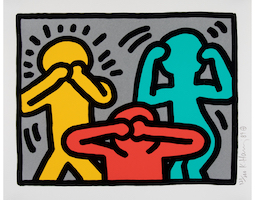
Pop Shop III by Keith Haring
If your answers indicate a strong inclination towards Pop Art, you are likely inspired by popular culture and the vibrant imagery of mass media. Your art style is bold, graphic, and often infused with irony, celebrating and critiquing the contemporary world with a playful and artsy flair.
Pop Art emerged in the mid-20th century as a vibrant counterpoint to the introspective nature of Abstract Expressionism. Drawing inspiration from mass media, advertising, and consumer culture, Pop Art celebrated the mundane and the commercial, blurring the boundaries between high art and popular culture.
Artists of this era included Andy Warhol, Roy Lichtenstein, Keith Haring, David Hockney, Jasper Johns, Robert Rauschenberg, Yayoi Kusama and Jeff Koons.
Key Characteristics:
Bold Imagery: Pop Art is known for its bold, graphic imagery, often featuring recognizable icons from popular culture such as celebrities, comic strips, and brand logos. Andy Warhol was known for his art of Mickey Mouse, Marilyn Monroe, and the Campbell Soup Can.
Bright Colors: The use of vibrant, often primary colors gives Pop Art its striking and attention-grabbing quality.
Repetition and Patterns: Techniques such as repetition and the use of industrial printing methods underscore the mass-produced nature of consumer goods.
Irony and Satire: Pop Art frequently employs irony and satire to critique or celebrate aspects of modern culture, from consumerism to media sensationalism.
Finding Your Art Style in Pop Art: If your creativity thrives on the many conversations between art and popular culture, Pop Art might resonate with you. Your artsy nature is likely drawn to the bold, the vibrant, and the iconic, using art as a means to engage with and critique contemporary society.
Embrace Your Own Unique Art Style
Remember, your art style is not a static destination but a dynamic and evolving journey. Embrace the insights gained from this exploration and let them guide you as you continue to refine and express your unique artsy essence. Through the lens of history and the canvas of your creativity, you’ll find a style that is authentically and unmistakably yours.
Please comment below or message me if you enjoyed this quiz! I enjoyed creating it and I would love to make more if it’s well received.
Introduction: How do you become a successful artist?
Why is drawing important? What does it teach you in the long run? Why does it seem like drawing is the beginning step in becoming a successful artist? What does learning about art have to do with becoming a better person? Why is drawing important to being a successful artist?
It is my goal to attempt to answer these questions by the end of the article. Whether you are just starting out, or a seasoned professional artist, it is important to know the base skills that drawing provides. Overall, drawing is important for several reasons, from cognitive and emotional reasons like self expression and to help release stress, to practical domains like improving hand-eye coordination and motor skills.
If you are interested in learning more about basic drawing and painting skills, please check out my Art Advice page. If you are a beginner artist, I recommend 5 Easy Drawing Tips and How to Create an Artist Statement. These are great resources to becoming a successful artist.
Table of Contents
Drawing is a form of Self expression
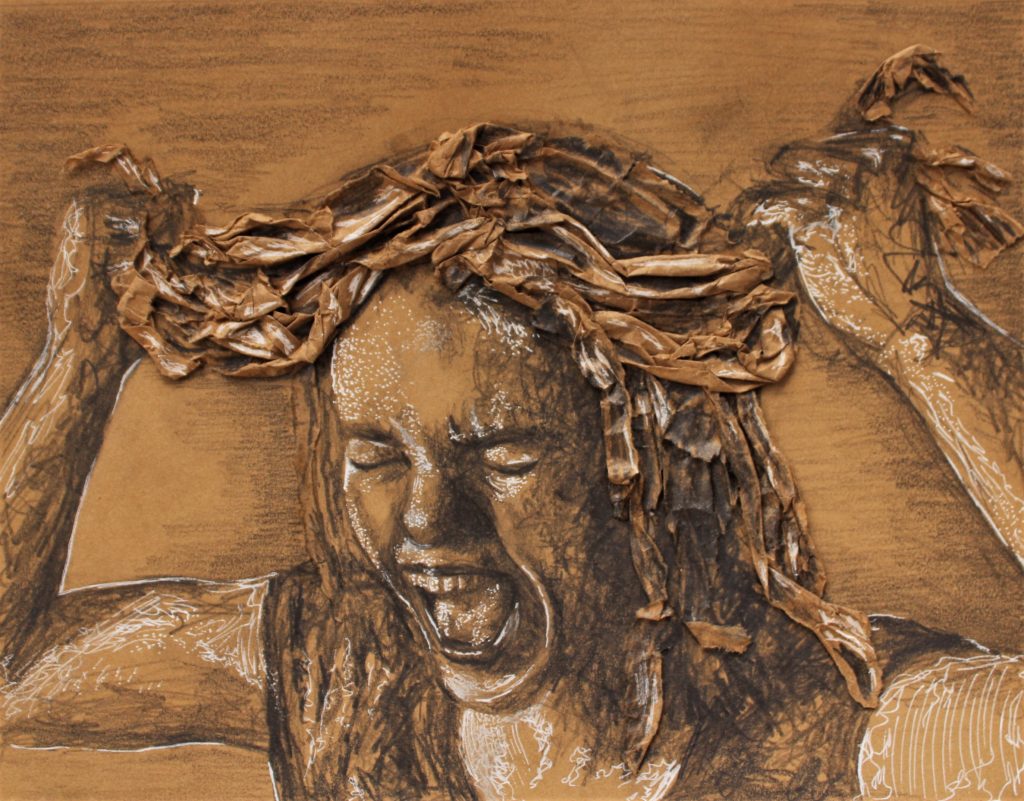
Drawing allows individuals to express themselves visually, providing an outlet for emotions, ideas, and experiences that may be difficult to convey through words alone. It’s a form of non-verbal communication that can be powerful and evocative. The article from Arts Academy in the Woods puts it perfectly:
“Art gives us a way to take a painful thought out of our heads and put it onto a page or into a drawing, painting, or performance. It thereby releases the emotions around that thought and gives it less power.”
Tension, 12″x10″ graphite and white pen on paper by Brianna Eisman
Drawing inspires creativity
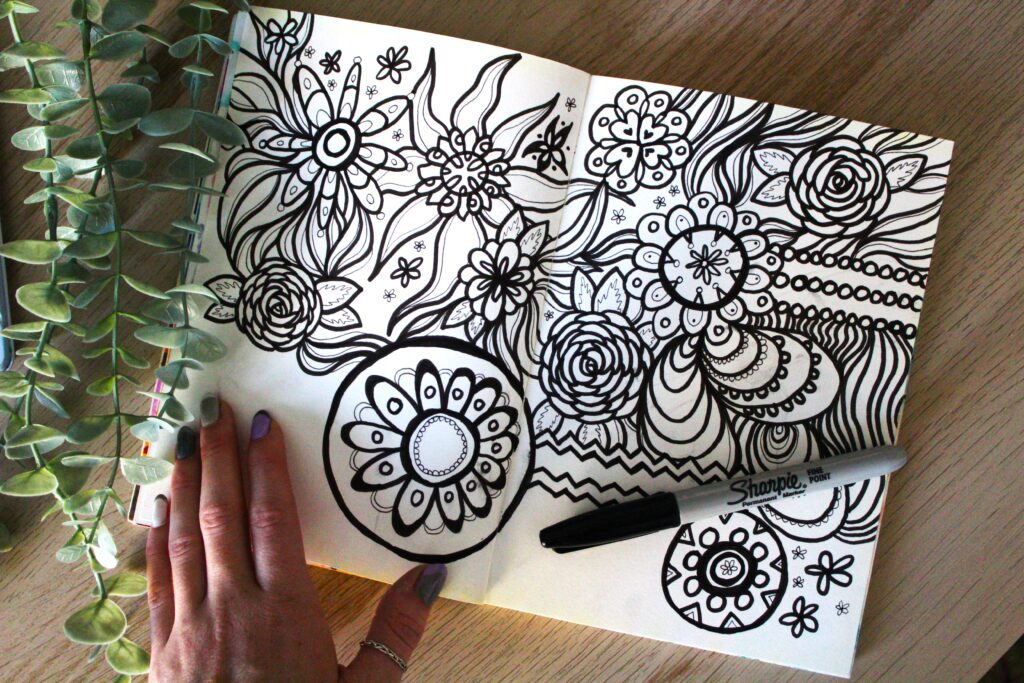
Engaging in drawing stimulates creativity and imagination. It encourages you to think outside the box, explore new ideas, and experiment with different techniques and mediums. I first found a passion for art in school. Whenever I finished a test early, I would flip the page to the back, and doodle, sketch, and draw anything and everything I could imagine. Creativity is a skill, just like riding a bike or learning to code, you must practice being creative and using your imagination.
I believe that you truly become a successful artist when you make a mistake and have to think of a creative solution to fix it. This creative process teaches problem-solving skills, and I have found these skills help in many other areas of my life too.
Draw More, Sharpie and pen on paper by Brianna Eisman
Drawing improves observation
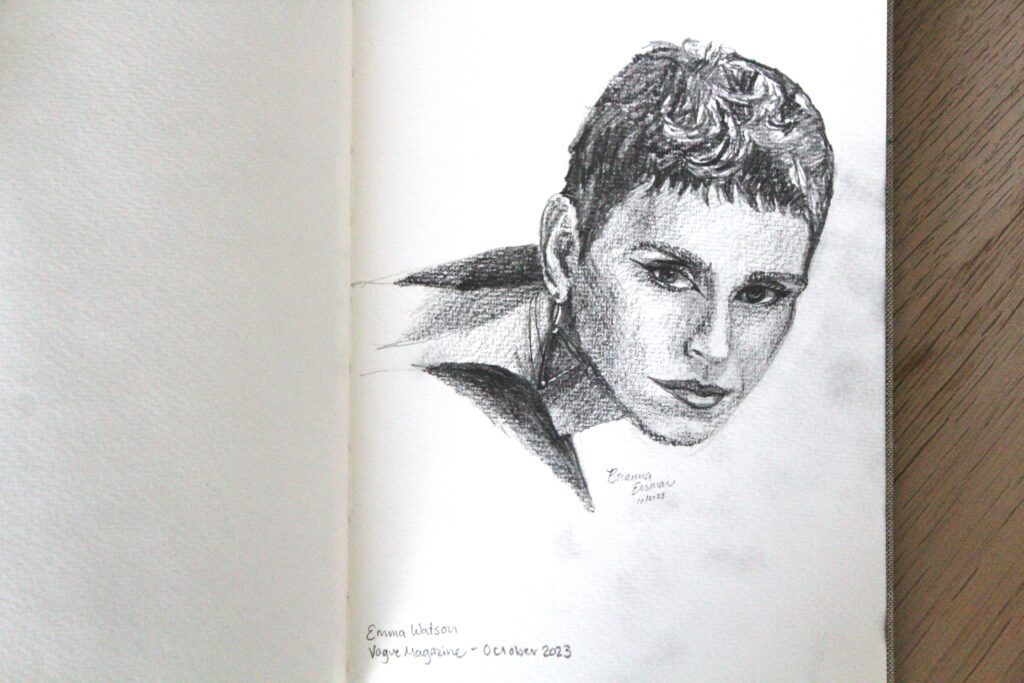
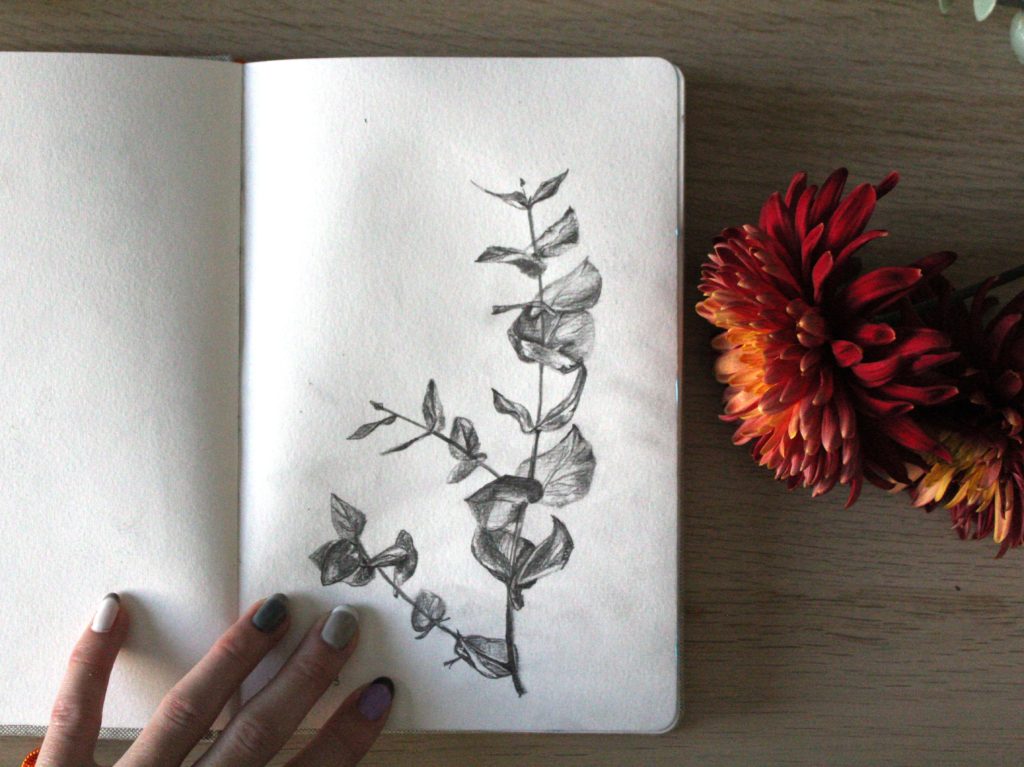
Drawing enhances observational skills as it requires a keen attention to detail, proportions, shapes, and spatial relationships. Performing blind drawing studies especially expedites this skill, and is key to becoming an experienced and successful artist.
Through practice, successful artists learn to perceive the world more deeply and accurately, honing their ability to notice subtleties and nuances in their surroundings, and in other people.
Emma Watson Portrait by Brianna EismanEucalyptus Sketch by Brianna Eisman
Drawing is a type of therapy
Drawing has therapeutic benefits and can promote relaxation, stress relief, and emotional healing. Many people, including myself, use art as a form of self-expression and introspection, finding solace and catharsis through the act of creating art. It’s also a sort of meditative process, especially one away from a digital screen.
Drawing is a Universal Language
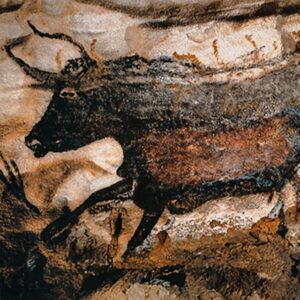
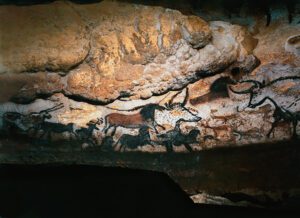
Visual representations can transcend language barriers. Drawing was first used as a form of communication to pass down verbal stories through generations. The caves in Lascaux, France contain around 2000 Paleolithic cave paintings estimated to be 20,000 years old.
Great Black Bull
Hall of the Bulls
From art and design to science and engineering, drawing serves as a universal language that facilitates communication and understanding across cultures and disciplines.
Drawing helps develop motor skills
Drawing requires precise hand-eye coordination and fine motor skills, which are crucial for overall development, particularly in children. Practicing art helps improve dexterity and control over hand movements, which can have positive effects on writing, typing, and other manual tasks.
This skill is key to accurately translating your intended subject. That’s why drawing is taught first in art school, before other techniques like painting or sculpture. Art builds on itself and the more you draw, the better you’ll paint or sculpt or print.
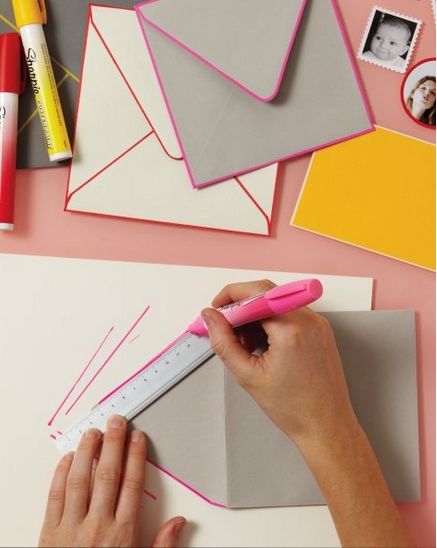
An easy way to practice these motor skills, especially with children, is to create your own birthday and holiday cards. I share my process and inspiration in the article How to Wish Someone Happy Birthday, from an Artist.
Draw your own birthday cards!
Drawing uses visual thinking
Creating art stimulates visual thinking, allowing individuals to organize and conceptualize ideas in a spatial manner. It encourages the brain to think in pictures, aiding in problem-solving, planning, and critical thinking across various domains. For example, my experience with writing in school started with writing artist statements. I used critical thinking to analyze what I was seeing in the painting, and what message the artist was trying to convey or communicate.
To be a successful artist, means you know how to communicate with your viewers. Whether you communicate through paint or sketches or an artist statement on the wall of the museum, bridging visual skills with written text is necessary.
Studies do show arts education improves academic performance. A study by Brian Kisida and Daniel H. Bowen analyzed “42 elementary and middle schools with over 10,000 third- through eighth-grade students.”
The study found “increases in arts educational experiences significantly reduce the proportion of students receiving disciplinary infractions,” “improve writing achievement” and “increase students’ compassion for others by… appreciation of art.”
Drawing encourages art appreciation
Engaging in the arts yourself, fosters an appreciation for artwork and the creative process, and helps you become a more successful artist. By creating your own artwork, you develop insight into the techniques, styles, and meanings behind other works of art, leading to a deeper understanding and enjoyment of visual culture. For example, once you learn color theory, you start to notice it everywhere; from football teams to soda brands.
To be a successful artist, you need to appreciate the arts. You can do this by learning about and analyzing artwork, attending museums, supporting local artists, and visiting arts markets and galleries. If you are interested in learning more about art history and art styles, I suggest you take this quick quiz I made!
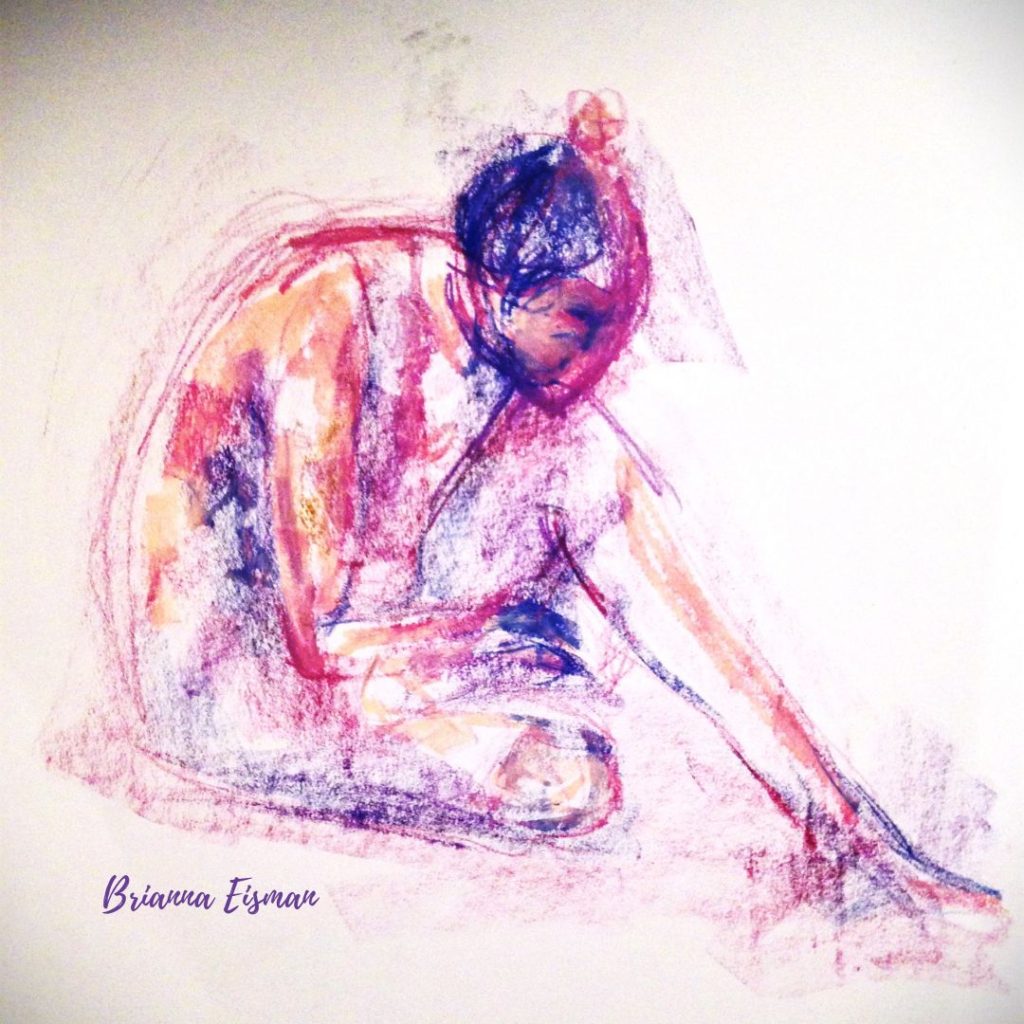
Figure 2, 18″x24″ soft pastels on canvas by Brianna Eisman
Reading about art helps too. Searching for this article and learning about the creative process promotes appreciation of the arts. You are becoming a more successful artist simply by supporting my art journey, and inspiring me to continue to share my knowledge and passion for art.
Conclusion
Think of drawing as ‘step 1’ to becoming a more successful artist. Overall, drawing is a versatile and valuable skill that offers numerous cognitive, emotional, and practical benefits. It enriches the lives of artists and contributes to their personal growth and development.
What is personal branding and how do you start? Where do you find inspiration for it? How do you improve your personal brand through market changes? What are some great examples of personal branding?
Introduction
In the age of digital connectivity, crafting a compelling personal brand has become more than just an option—it’s a necessity. Your personal brand, a melding of your values, expertise, and online presence, is the compass that guides you towards opportunities and cultivates a meaningful online identity. This article dives headfirst into the art of building an impactful personal brand, offering insights, real-world examples, and a hopeful perspective on its role in your life.
Wikipedia defines personal branding by providing the purposes of career advancement, increasing circle of influence, and having a larger impact.
The Essence of a Strong Personal Brand
Your brand isn’t just a buzzword; it’s the vivid tapestry that reflects who you are, both professionally and personally. It shapes perceptions, fosters connections, and sets you apart in a crowded digital landscape. Try building a powerful personal brand which uses a multifaceted approach across many platforms and with many outlets.
To begin the process, think about your values, goals, and inspirations. Craft an identity you want to show the world. From there, add a color scheme, maybe a personalized logo, and a platform. For me, I use a website platform ArtsyDrawings.com.
If you are at a loss for how to build an optimized website, check out my colleague’s web design service: True Ideas.
Instagram Influencers: Building Communities Through Authenticity
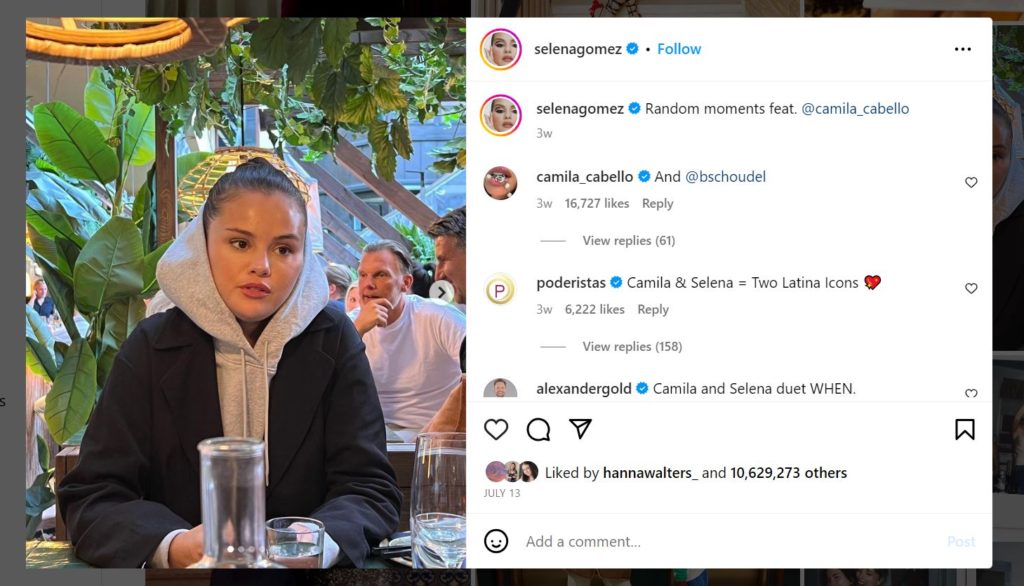
Instagram influencers like @chrissyteigen and @selenagomez have cultivated personal brands rooted in authenticity. They share unfiltered glimpses of their lives, forging genuine connections with their followers. Emulate their approach by showcasing the real you, sharing your passions, and engaging openly with your audience.
Selena Gomez takes an authentic approach to her Instagram account by posting a candid photo she references as a “random moment” taken by her friend.
TikTok Creators: Crafting Compelling Stories in Seconds
TikTok influencers like @charlidamelio and @zachking have mastered the art of storytelling within seconds. When they use their personal brand to entertain, educate, and inspire, they create content that resonates across demographics. Take inspiration from their succinct storytelling and translate it into your own narrative. Also, many marketers advise short videos as the future of successful marketing.
Artists with a Digital Identity: Merging Creativity with Branding
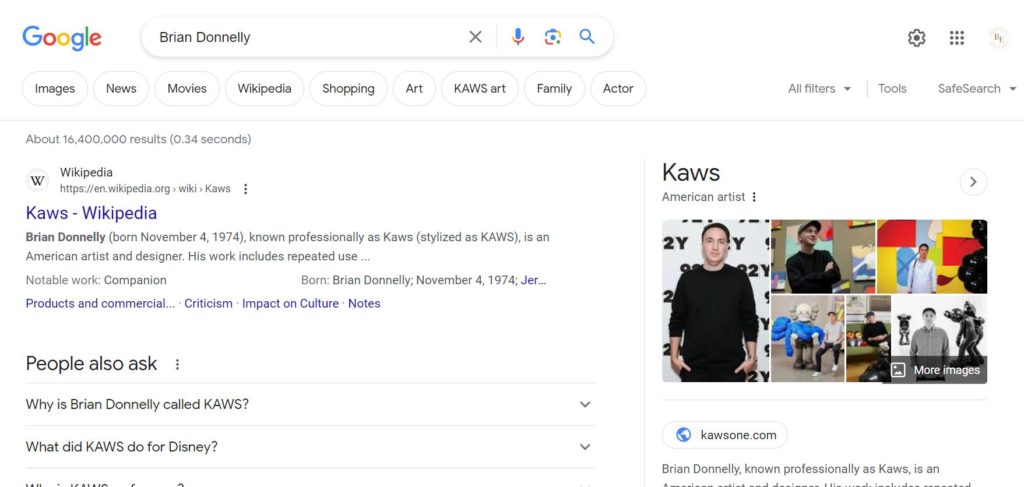
Artists like Banksy and KAWS have utilized their digital presence to amplify their artwork’s impact. Compared to artists who choose to evade social media, these digital connoisseurs have extended their artistic narratives onto social media platforms, effectively merging their creativity with personal branding. Basically, they infuse their personal brands with elements of their craft, merging art with branding.
In some cases, the artist and his work become synonymous on Google. When you search Brian Donnelly, his work and his professional artist name “KAWS” dominates the first results page.
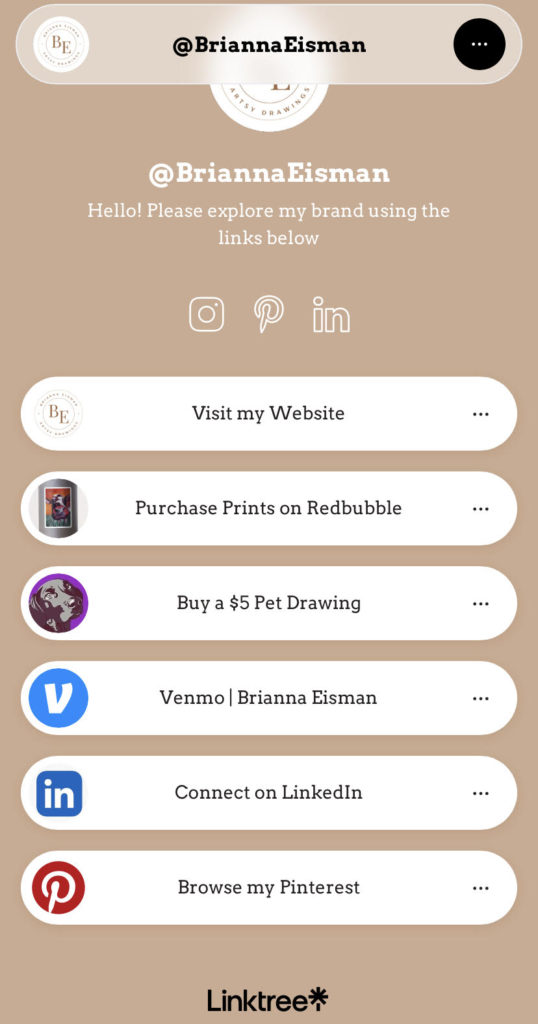
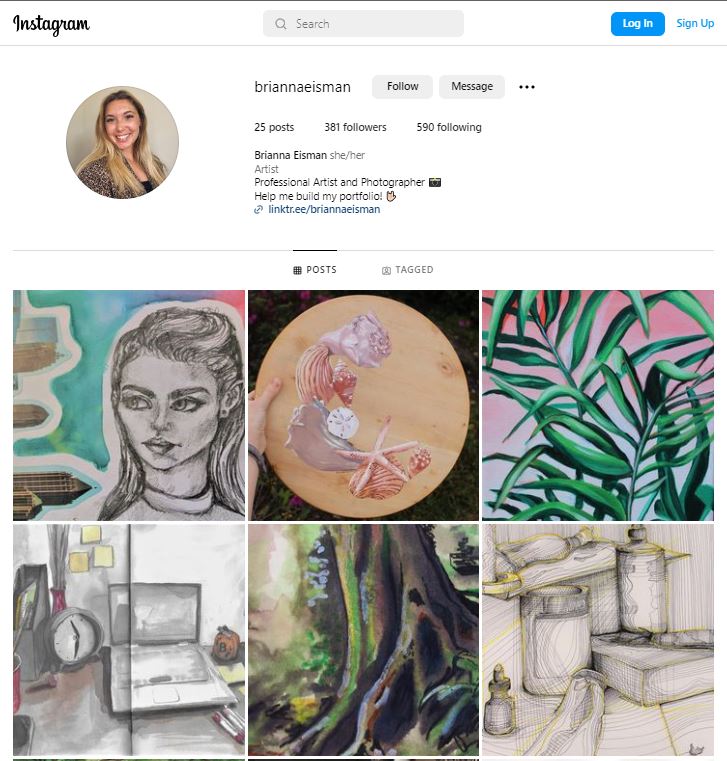
Here at Artsy Drawings, I enjoy merging artistry with my personal brand. I use Linktr.ee to create a single, customizable link that houses multiple links to various online platforms. For me, these platforms include my portfolio, social media profiles like Pinterest and Instagram, and my online store. This link simplifies navigation for my audience, allowing them to access all relevant content from one central location.
Brianna Eisman’s Linktr.ee includes her website, RedBubble, Fiverr, Venmo, LinkedIn, and Pinterest links. Each phrase includes a call to action.
It is important to also note that changing your personal brand with the market is actually a good thing. Recently, I decided to rebrand my website and social platforms with a new color scheme, dedicated fonts, and a logo that focused more on Artsy Drawings itself. For more details on my rebrand, check out my About page.
Job Hunting and Personal Branding: A Match Made in Success
Personal branding isn’t confined to social resources; it plays a pivotal role in job hunting too. When potential employers search your name, what they find can significantly influence their decisions. It is vitally important, especially post graduation, to create a story about who you are and how you want the world to view you. Then, craft your personal brand to reflect your skills, passions, and professional aspirations, essentially turning your online identity into a compelling resume.
Audit Your Social Media: First, go through your social media profiles and remove or adjust any content that might be seen as unprofessional or inappropriate. Delete posts or photos that could be misconstrued or reflect negatively back on you.
Update Your Privacy Settings: Review the privacy settings on your social media accounts to limit what can be viewed by the public. By adjusting your settings, you can control who sees your posts, photos, and personal information. Make use of features that allow you to approve tagged posts before they appear on your profile.
Create a Professional Online Presence: Next, focus on building a positive online image that aligns with your career goals. Share articles, posts, and content related to your industry to demonstrate your knowledge and interests. Consider creating a LinkedIn profile that highlights your professional accomplishments and connects you with others in your field.
Use a Professional Email Address: Create a professional email address that uses your name rather than a nickname or casual (silly goose) handle. This small change can make a positive impression on potential employers when they communicate with you via email.
Monitor Your Online Presence: Regularly search your name on search engines to see what information comes up. This will help you identify any potentially damaging content and take steps to address it. If you find negative information, then you can try to address it directly or focus on pushing positive content higher in search results through active online engagement. Also, try to research personal brand examples to see how influencers tackle positive and negative media.
Digital Marketing Yourself: An Essential Skill in Today’s World
In a world where digital interactions dominate, marketing yourself online is crucial. Similarly to businesses, you can use digital strategies to showcase your personal brand and reach your audience. Hence, dive into SEO optimization, content creation, and consistent engagement to cultivate a strong online presence.
As you grow digitally, try to track your data through insights and analytics. This recording process can be integral in knowing how well your content is performing and analyzing how to improve. For more details about data visualization, collection, and reporting check out my article titled “How to Visualize Data as a Multi-Skilled Artist.”
Noteworthy Personal Brand Examples
Marie Forleo (@marieforleo): A businesswoman and motivational speaker, Marie Forleo’s personal brand is built on empowerment and entrepreneurship. Overall, her online platform provides valuable content that resonates with aspiring business leaders.
Neil Gaiman (@neilhimself): Renowned author Neil Gaiman’s personal brand seamlessly weaves his fantastical writing with his witty and engaging online presence. He particularly uses platforms like Twitter to connect with fans, share insights, and showcase his creative process.
Lizzo (@lizzo): Singer and body positivity advocate Lizzo’s personal brand radiates confidence, self-love, and unapologetic authenticity. Her empowering messages and music resonate with a global audience, making her a prime example of a relatable personal brand.
Simon Sinek (@simonsinek): Leadership expert Simon Sinek’s personal brand centers around inspiring leadership and self-discovery. Basically, his TED Talks, books, and majority of his online presence encourage individuals to find their “why” and lead with purpose.
Alex Strohl (@alexstrohl): Adventure photographer Alex Strohl’s personal brand seamlessly intertwines his passion for photography with a love for travel and the outdoors. His captivating visuals and storytelling inspire wanderlust in his followers.
Amanda Gorman (@amandascgorman): Poet Amanda Gorman’s personal brand combines her powerful words with her advocacy for social change. Her eloquence and activism have made her a symbol of hope and progress.
Casey Neistat (@caseyneistat): Filmmaker and content creator Casey Neistat’s personal brand is characterized by his unique storytelling style and his commitment to authenticity. Following his YouTube vlogs and cinematic videos offers insights into his life and creative processes.
Gwyneth Paltrow (@gwynethpaltrow): Last but not least, actress and entrepreneur Gwyneth Paltrow’s personal brand revolves around wellness and lifestyle. Her company, Goop, and her online presence promote holistic living and self-care.
Conclusion
Crafting a compelling personal brand isn’t just about garnering followers; it’s about shaping an identity that reflects your values, aspirations, and expertise. As you navigate the digital landscape, drawing inspiration from Instagram influencers, TikTok creators, and notable figures like artists and public speakers, remember that personal branding is a journey of self-discovery and growth.
Remember, in job hunting, personal branding acts as a beacon that attracts the right opportunities. By digitally marketing yourself, you take control of your narrative and present your most authentic self to the world. Whether you’re an aspiring entrepreneur, a creative artist, or a professional seeking advancement, your personal brand serves as your virtual handshake, leaving a memorable impression that extends beyond pixels and platforms.
Embrace the evolution of your personal brand with hope and enthusiasm, for it is a canvas that you paint with your passions, experiences, and aspirations. As you infuse your online presence with authenticity, engagement, and a touch of inspiration, you’re bound to forge connections, open doors, and carve a meaningful path towards success.
I love the process of creating art. I love the brainstorming session with terrible stick figure drawings, the ‘practice stage’ of drawing the same thing over and over again, and feeling accomplishment you get from the final design. Through every tedious planning stage, I love how those small wobbly drawings in your sketchbook come to life in a beautiful masterpiece.
You know what the art means to you, but how do you describe it to others? How do you talk about it? Where do you find the words to describe art, something so subjective and intangible?
In this article, I hope to provide some clarity and tips for how to talk about art and which words to describe art. I will define a formal artist statement, analyze how others create artist statements and content captions, and list out the best words to describe art.
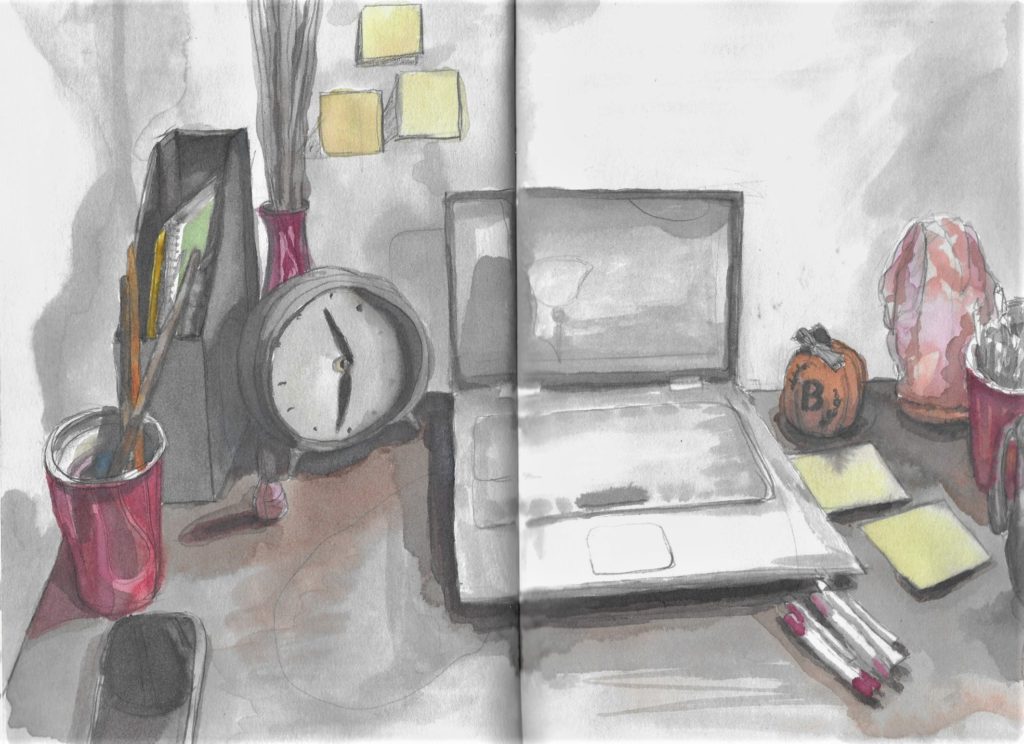
Desk Check by Brianna Eisman As someone who moves rather frequently I document my travels with what I like to call a “Desk Check.” I will draw, paint, photograph, and ultimately document everything on my desk at a certain point in time. This type of artwork displays an intimate snapshot into my life.
Table of Contents
What is an artist statement?
“[An artist statement is a] piece of writing by you that helps the audience access or understand your artistic work.”
Basically, an artist statement is a formal way of using words to describe art. It is a way for you, the artist, to express the message you are trying to convey visually. Words to describe art are used in many ways: from social media and website promotion to galleries, exhibitions, grant applications, teaching position applications, and fellowships.
Generally, I frequently write and rewrite my artist statements. Please check out my social media to see how I describe my own art.
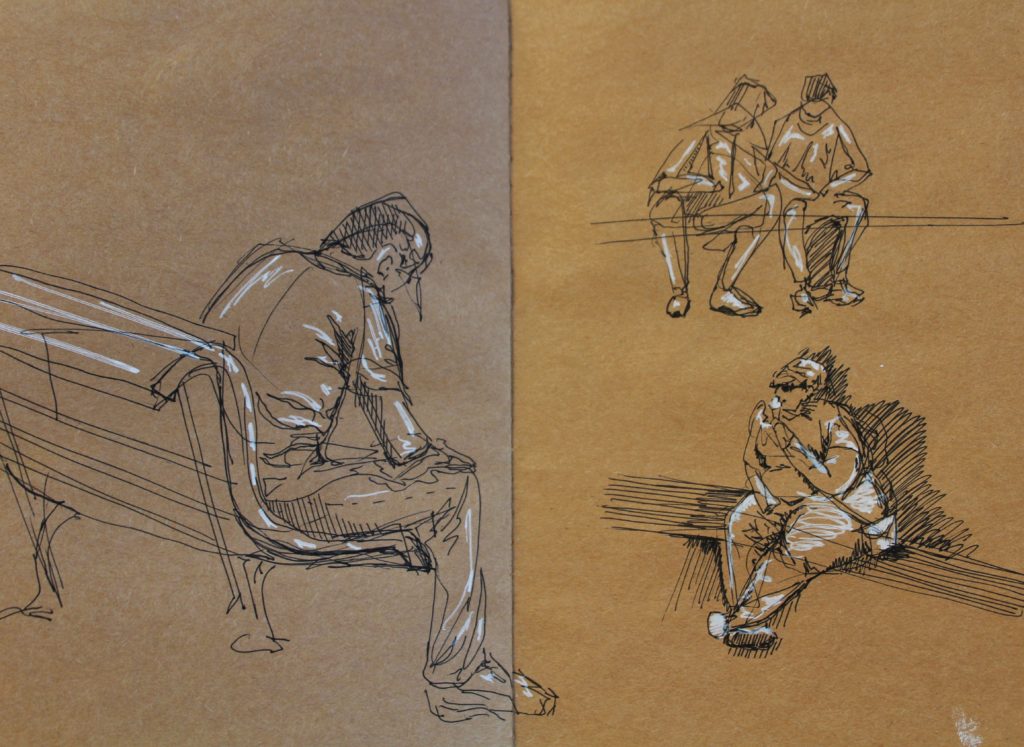
Gesture Figure Drawings by Brianna Eisman Gesture drawings are quick studies of the human form and one of the easiest ways to practice your line work and accurately sketching figures. ~ After visiting the Rijksmuseum in Amsterdam, I sketched a few people sitting around the fountain. I used my brown paper sketchbook to create a mid-tone base, a black pen for shadows, and a white pen for highlights. Not only did these gesture drawings improve my understanding of the human form, but I was able to capture light in a quick and cool manner.
What are the best ways to write a strong artist statement?
Writing an artist statement is more complex than simply using random words to describe art. First, write in first person POV, remember to keep your audience in mind while writing, and follow the acronym K.I.S.S. (Keep It Simple, Stupid). Lastly, I included some good questions to think about when brainstorming your artist statement. Hopefully, these tips to choosing the right words to describe art will help you communicate clearly.
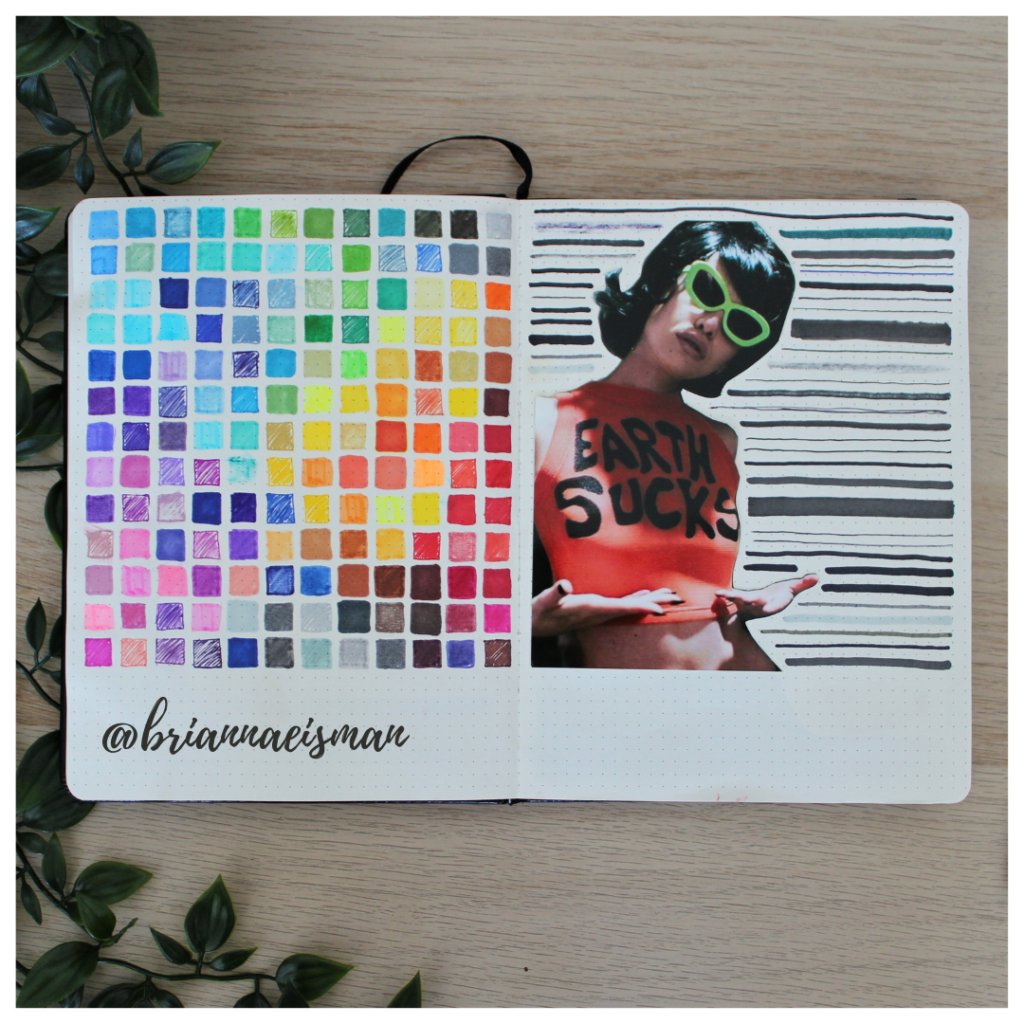
Marker Test (Earth Sucks) by Brianna Eisman About once a year I set aside a page in my sketchbook, or bullet journal, to do a marker test. First, I go through every pen I own including Sharpies, highlighters, Bic Permanent Markers, Crayola markers, Stabilo pens, Expo dry erase markers and everything in between. I document the quality and determine whether to keep or toss the utensil. It’s easy to collect art materials, especially when you’re like me and switch mediums regularly. It is important to know that when I reach for a certain pen or marker, it’s going to work the way I want it to. I do keep a page at the back of my sketchbook open for testing mediums, but it’s an important part of the process of creating art to go with the flow and just draw.
Tip 1: Write in First Person Point-of-View
Structurally, the SAIC recommends to write the artist statement in first person. This advice contrasts artist biographies which are typically written in third person.
For instance, you can say “I created this work to represent…” and “my mother influenced this…”. These examples work well because they help define an intimate connection between the art and the viewer.
Typically, you don’t personally know the viewer, so establishing personalized meaning can add substance to your art. Supporting the connections between the viewer and the artwork is vital in helping people really understand your work.
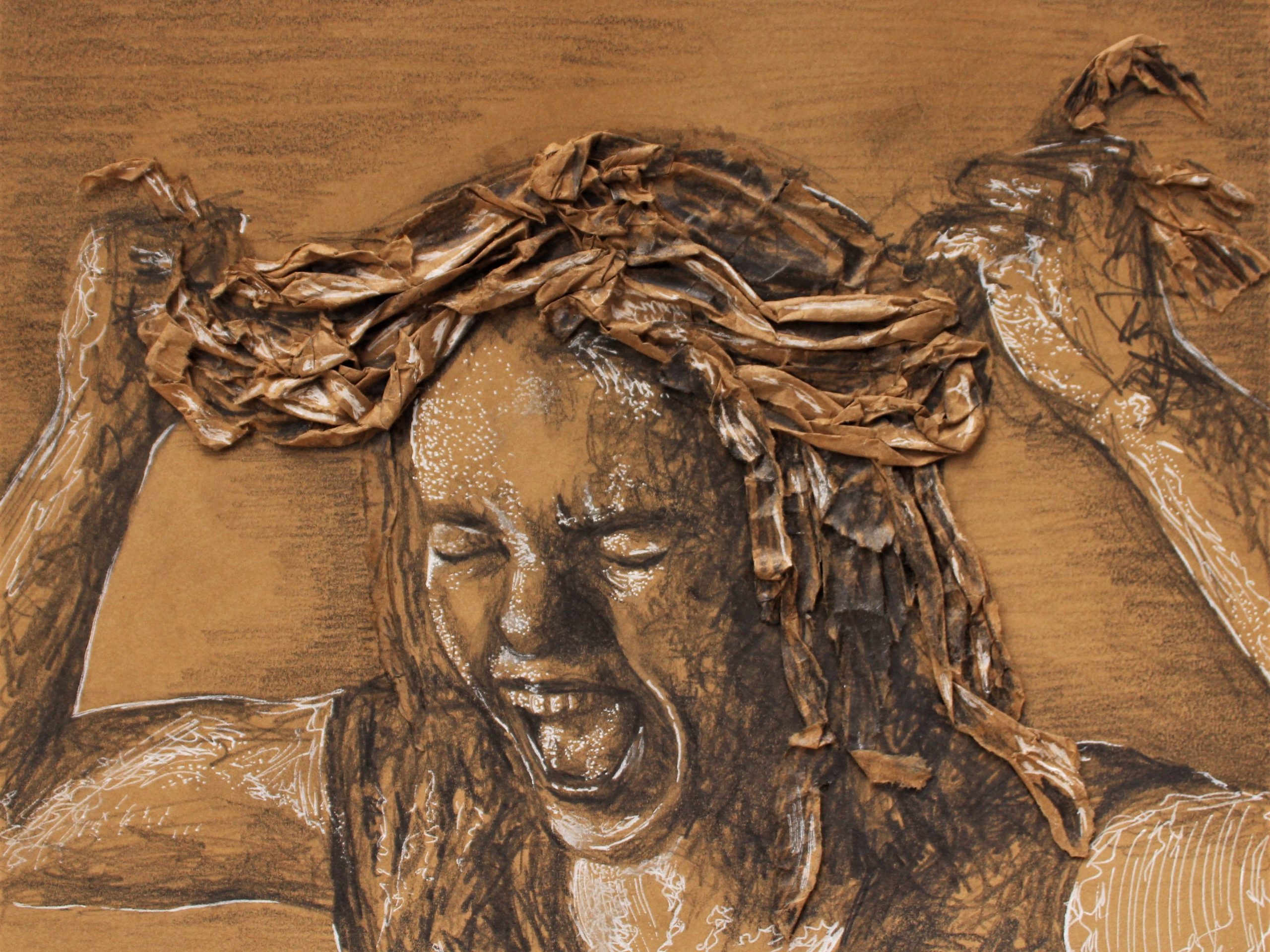
Tension by Brianna Eisman As art students, we were tasked with creating a work of art, recycling brown paper bags, and expressing ‘tension.’ In the midst of high school drama and stressful testing seasons, I created this mixed media drawing of a woman silently screaming and pulling at her hair, which is made of delicate paper.
Tip 2: Know your Audience & keep them in mind
Remember who your audience is. Who did you create this artwork for? What type of people would you imagine in the gallery looking at this artwork? Who would buy this painting? If you post it online, who is interacting with the post?
The artist statement is sometimes published on social media platforms or printed next to the painting in a gallery. You may be writing to someone who has never held a paintbrush in their life, so keep these thoughts in mind when writing an artist statement. Carefully choose words to describe art that make sense to your audience.
Some words to describe art are different for artists versus non artists. For example, saying a work is impressionistic could mean in reference to the impressionism painting style of the 19th century. In contrast, impressionistic could represent the work’s capability in leaving an impression, or a lasting memory, on the viewer. Learning art history is a great method to improve your art lingo. For instance, maybe learn how the difference between modern and contemporary, and how in the art world, they are not synonymous. If you are curious about which art style best matches your artwork, check out this quiz!
The specialized art jargon, referred to as “art speak,” is great for the critique, though try to avoid it for the artist statement.
“The terms ‘modern art’ and ‘contemporary art’ are easily confused, but each refers to its own distinct period in art history,” according to Rosie Lesso of The Collector
Tip 3: The KISS Method – Keep it Simple, Stupid
Try to be concise, straightforward, and as clear as you can. A good rule of thumb is to avoid using too many complex words to describe art, and stick to what you know. I like using certain words to describe art like colors, shapes, and patterns.
If you are optimizing your artwork for digital marketing purposes, sometimes describing the art is better than describing the meaning or the feeling. Understanding nuances in color theory help when describing your art, so make sure you read my article: Color Knowledge Tips That Will Make You a Better Artist
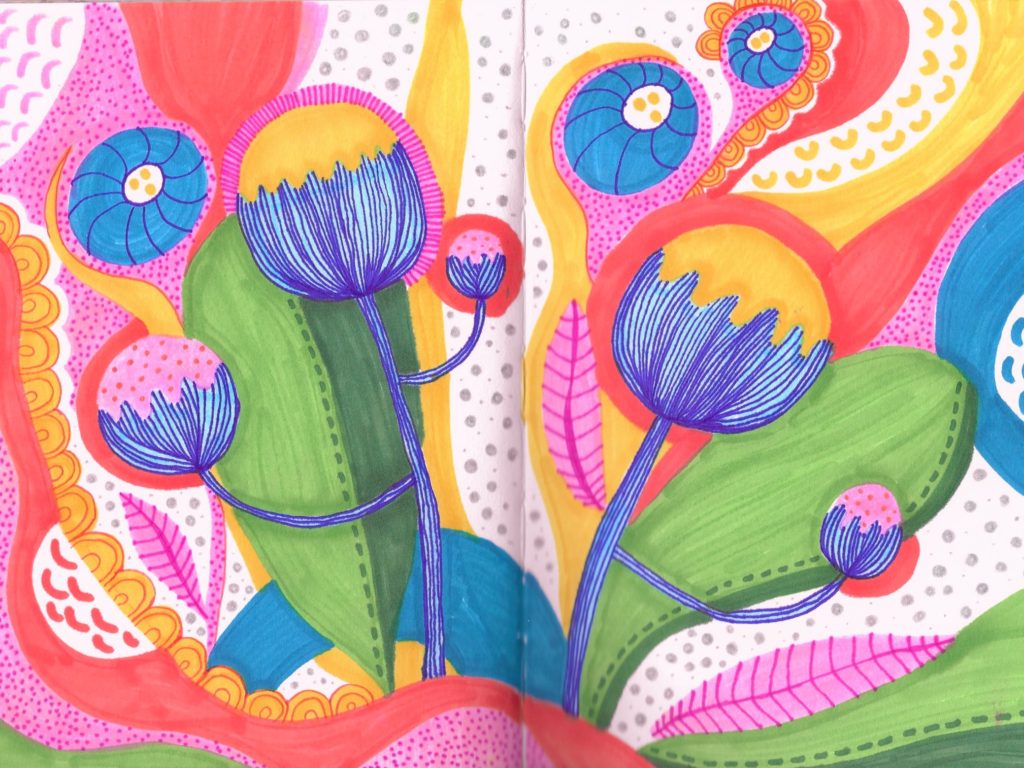
Stylized Poppies by Brianna Eisman This sketchbook spread features a stylized pattern of colorful poppy flowers. The garden of flowers includes leaves of green, yellow and peach. The flowers are yellow with blue stems. The drawing as a whole has a whimsical and playful feel with a bright color scheme, polka dots and organic squiggle shapes, and blobs of seemingly random colors.
Tip 4: Actually think it over before you write
Yes, brain dump writing is healthy, but your artist statement should not be a brain dump. You need to really think about your art and ask yourself certain questions prior to writing. Be selective in your words to describe art. Below are some important questions to ask yourself throughout the brainstorming process. Your answers to these questions can include words to describe art and how you created the art.
What are the key ideas, issues, struggles, and goals within your work?
Does your work have a thematic focus (goals, purposes, intentions, and explorations)?
What is the content of work, including themes, ideas, and subject matter?
How were you influenced culturally, historically, theoretically, artistically, personally, and biographically?
Who is your audience? Who will be looking at your work? What do you imagine they feel when viewing it?
How would your audience use words to describe art?
How did you create the work? What materials, processes, traditions, and styles did you use in your work?
Can you use your senses to describe the art? What does the work look, sound or feel (impasto) like?
How can you make your art work easier to understand?
Finally, have a friend or teacher review your artist statement when you finish writing it. You may think the statement makes sense, but it may not be clear to someone who hasn’t spent hours working on the artwork.
How do artists describe their art?
Tip 5: Study how the masters used words to describe art
Edvard Munch
Many famous artists write artist statements describing their masterful artwork. Some are available in museums, some are available online.
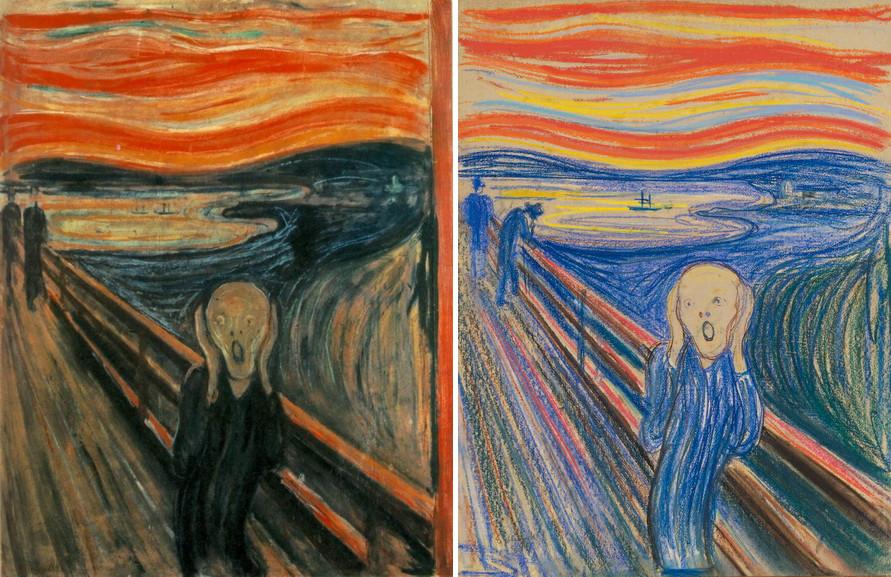
For instance, Edvard Munch’s The Screamhas a vivid artist statement full of life and emotion, similar to the visuals seen in the work itself. The artist chose relatively simple words to describe art, but written with dashes, like parsed thoughts coursing through the artist’s head.
The Scream by Edvard Munch I was walking along a path with two friends – the sun was setting – suddenly the sky turned blood red – I paused, feeling exhausted, and leaned on the fence – there were blood and tongues of fire above the blue-black fjord and the city – my friends walked on, and I stood there trembling with anxiety – and I sensed an infinite scream passing through nature.
Jackson Pollock
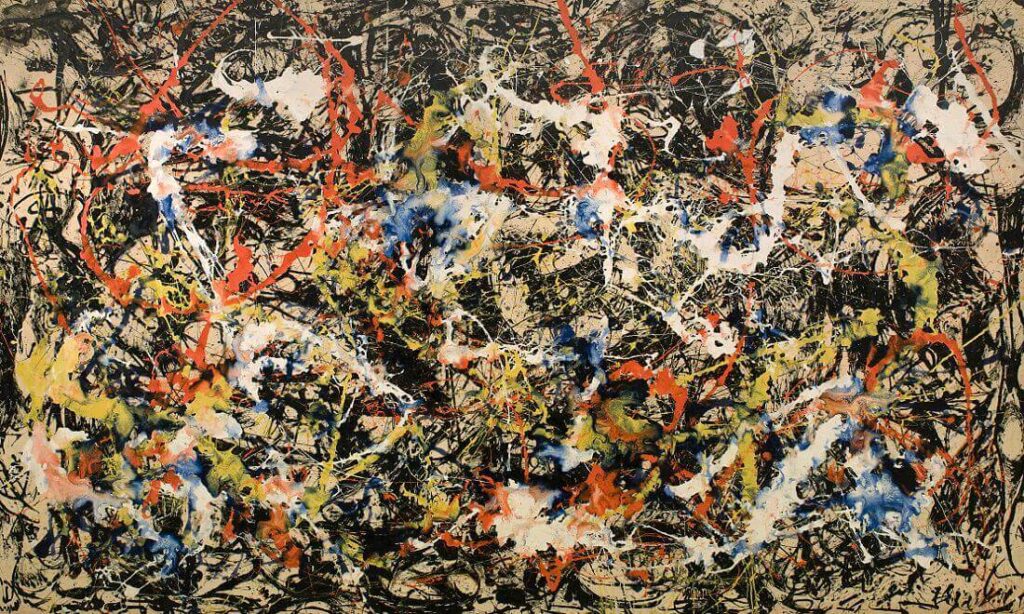
Jackson Pollock is fantastic artist, despite criticism for his work’s abstracted features. Pollock chose words to describe art that was not subjective, and much more emotive.
Convergence by Jackson Pollock I want to express my feelings rather than illustrate them. It doesn’t matter how the paint is put on, as long as something is said. On the floor, I am more at ease. I feel nearer, more part of the painting, since this way I can walk around it, work from the four sides and literally be in the painting. When I’m painting, I’m not aware of what I’m doing. It’s only after a get-acquainted period that I see what I’ve been about. I’ve no fears about making changes for the painting has a life of its own.
Louise Bourgeois
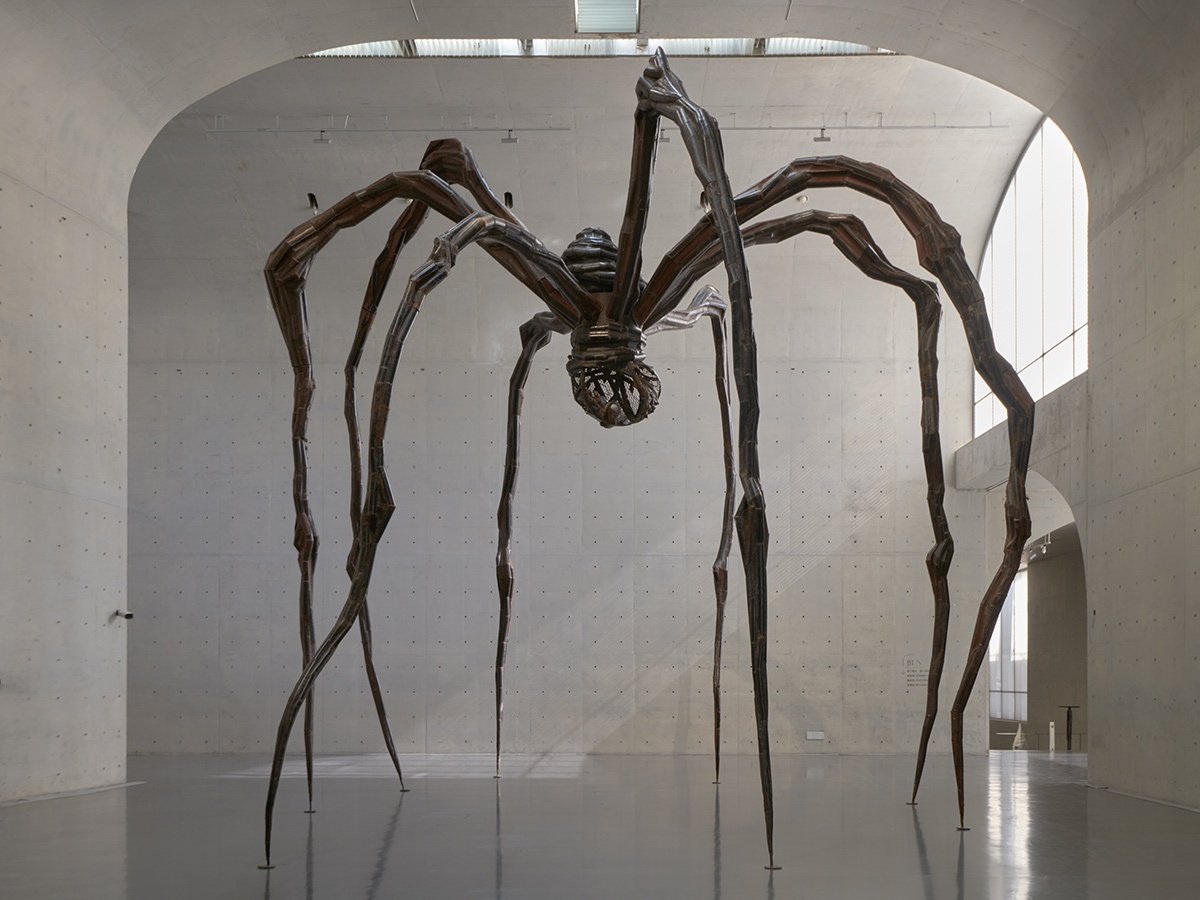
Louise Bourgeois’s massive spider sculptures are really cool and worth sharing. She started creating these steel structures in the 1990s, contrasting her previous styles. The words she chose to describe her art explain the metaphorical allegory behind the sculpture.
Spider by Louise Bourgeois I’ve drawn my whole life. My parents were in the tapestry restoration business, and as a young girl, I would draw in the missing parts of the tapestry that needed to be re-woven. My ability to draw made me indispensable to my parents. I came from a family of repairers. The spider is a repairer. If you bash into the web of a spider, she doesn’t get mad. She weaves and repairs it. ‘The Spider’ is an ode to my mother. She was my best friend. Like a spider, my mother was a weaver. . . Like spiders, my mother was very clever. Spiders are friendly presences that eat mosquitoes. So, spiders are helpful and protective, just like my mother.
Many of these masters use words to describe art with passion, flame, and emotion. Notice how they use first person POV, relatively simple diction, and still manage to communicate what the art is about and what it means to them.
Tip 6: Get inspired by Underrated Artists
I want to include some artist statements of underrated artists as well. I’ve met many talented and creative individuals, and I would like to share their art and artist statements in this section.
August Lamm
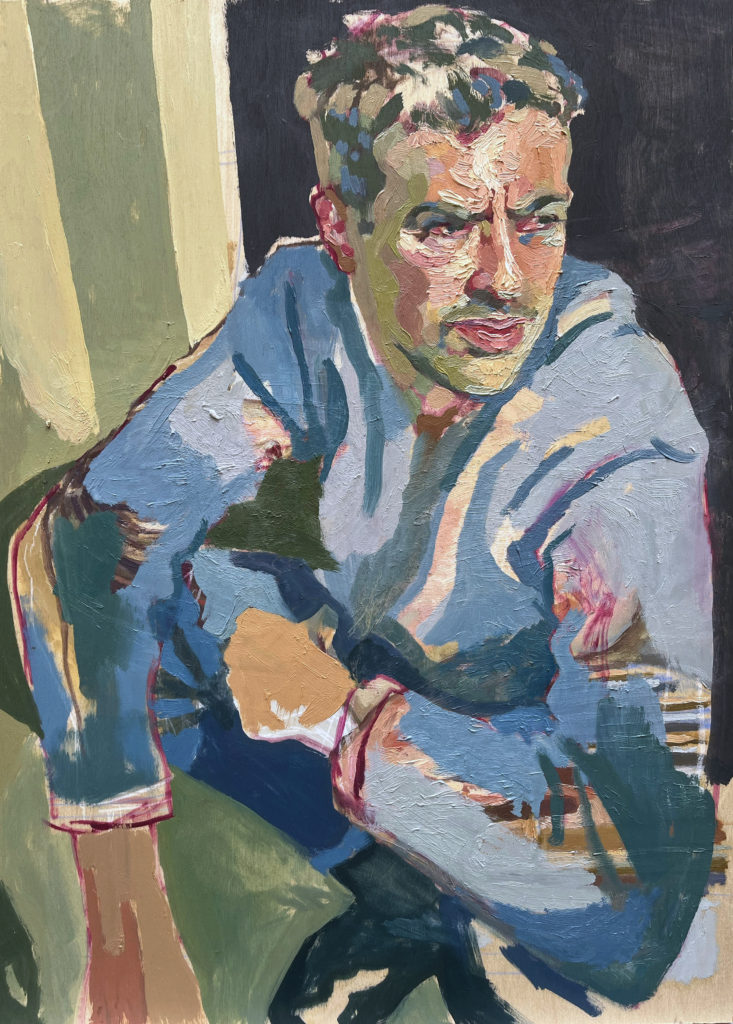
August Lamm is an incredible portrait artist, and I’m very excited to share her artwork. She typically uses ink and oil paints. In this piece, I especially love the use of complementary colors in the man’s face, the contrast of detail versus an almost unfinished impressionistic appearance, and of course, the simplicity of the artist statement. It’s very painterly and I love it. Be sure to check out more of August’s works on her Instagram!
The artist statement included in this painting is short and simple compared to others in this article. Regardless of length, it is powerful and emotional and allows the viewer to connect with the artist, and maybe even the subject, on a more intimate level.
Murray by August Lamm Sometimes you paint over an old painting and wonder why you waited so long to let go
Erika Wilson
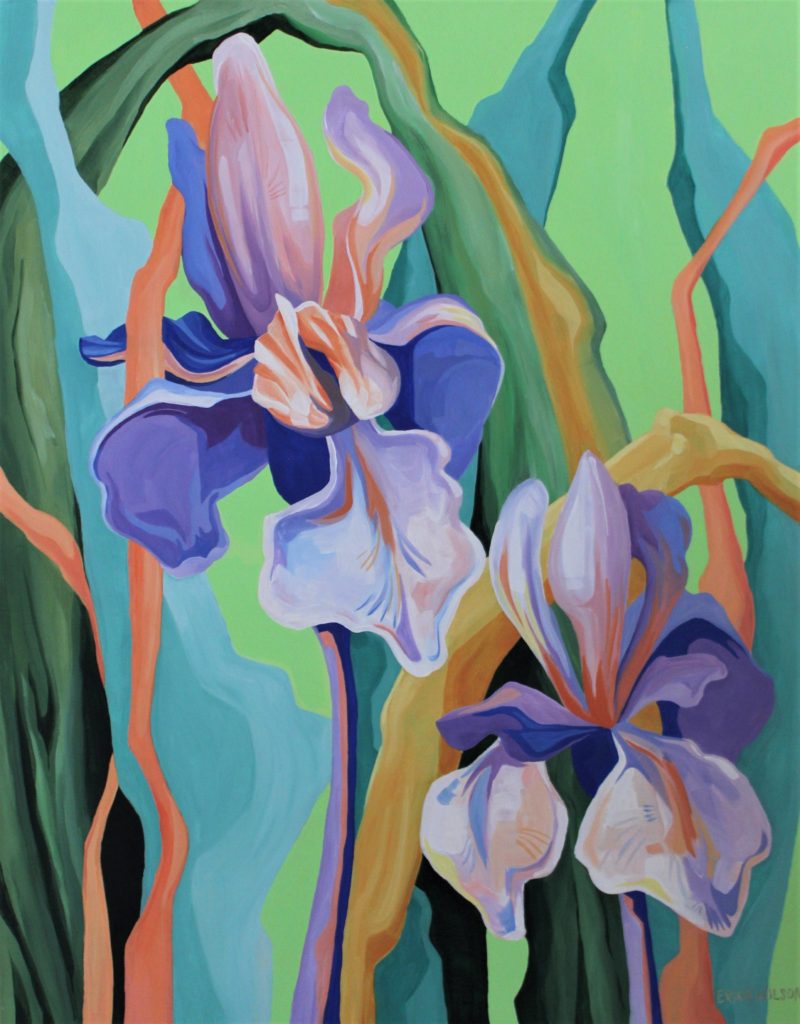
I first discovered Erika Wilson at a local arts market. Her work was captivating and I wanted to learn more about this incredible artist. Erika provided two artist statements, proving her knowledge of writing to a certain audience.
In the first artist statement, notice the purpose is primarily for social media, and make sure to follow her Instagram! Erika uses first person POV and includes the dimensions and mediums used in the work. She also includes emojis and middle dots between paragraphs, a common spacing technique for Instagram, showing that she knows her audience.
There Is Still Time by Erika Wilson So often I am eager for the future, reminiscent of the past, and losing track of the time in between. Feeling afraid or anxious that I don’t have time for everything. The weighty pressure of needing to make each day count. . This painting reminds me that a day is LONG when we are present for it, and immeasurably valuable regardless of what I do during it. Some days are filled with intentional time and mindfulness, some days I am meaninglessly busy and pointlessly stressed out, and some days I indulge in doing nothing at all. All are good days, and there is still time ✨️ . . . “There is Still Time” 22″ x 28″ acrylic on canvas Available
The next artist statement is noticeably more professional. In particular, notice how Erika adapted the bullet points into dashes and uses clear spacing, giving a cleaner appearance, similar to a resume. Erika’s use of words to describe art discuss her inspiration, techniques, and purpose in under 100 words. It’s simple, effective, and one of the best artist statements I’ve seen.
——————-
Hello! I’m Erika Wilson, a visual artist based in Salt Lake City, UT.
My work is deeply inspired by natural wilderness and the lush, strange, beauty of the botanical world. Equally, my artwork draws from cultivated nature found in urban spaces: gardens, houseplants, and roadside scrub alike.
I use vibrant color and dramatic line to create imagery that provokes wonderment, engages curiosity, and invites viewers to experience their senses unreservedly.
At its foundation, my artwork is a celebration of our intimate connection to nature, in the many forms we may find it, no matter how ordinary or unusual.
Kyle and I actually went to the same arts high school. We both studied Visual Arts and I’m really proud to see how he has grown as an artist. Please go follow his Instagram account here!
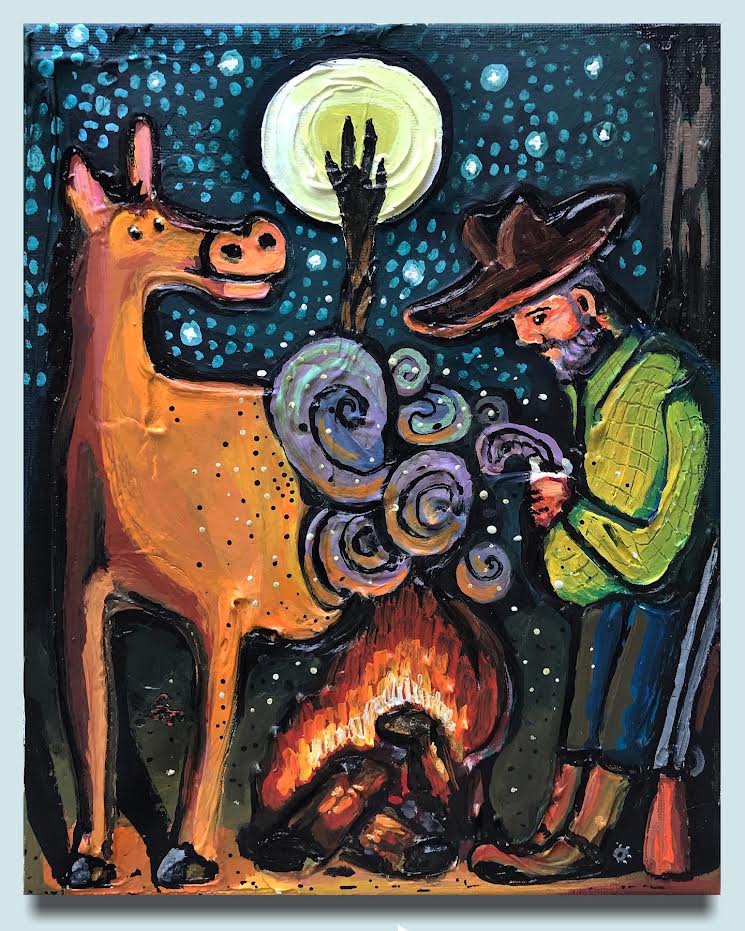
Kyle has a stunning impasto painting technique that really gives life to contrasting flat cartoon-like characters. His works are animated and fun to look at, as well as visually interesting.
Kyle’s artist statement uses first person POV to describe his thoughts and organizes the paragraphs increasing in size. He also continues to deliver contrasting elements. The whimsical and colorful style conveys comfort, in this “cozy painting,” unlike the realities in the life of a western cowboy, portrayed in the serious face and stature of the man.
Campfire Cowboy by Kyle Drury The Campfire Cowboy is part of a series of paintings I call Worsterns. I’m thinking about the bad things that could and maybe should have happened to old time cowboys. They’re dramatic paintings of cowboys falling victim to the dangers of the wild west. The danger is less obvious in Campfire Cowboy. It’s a cozy painting of a well-fed fella and his horse relaxing and drinking coffee by the fire. Its more about having a feeling that something bad is about to happen instead of witnessing it firsthand.
Julia Hill
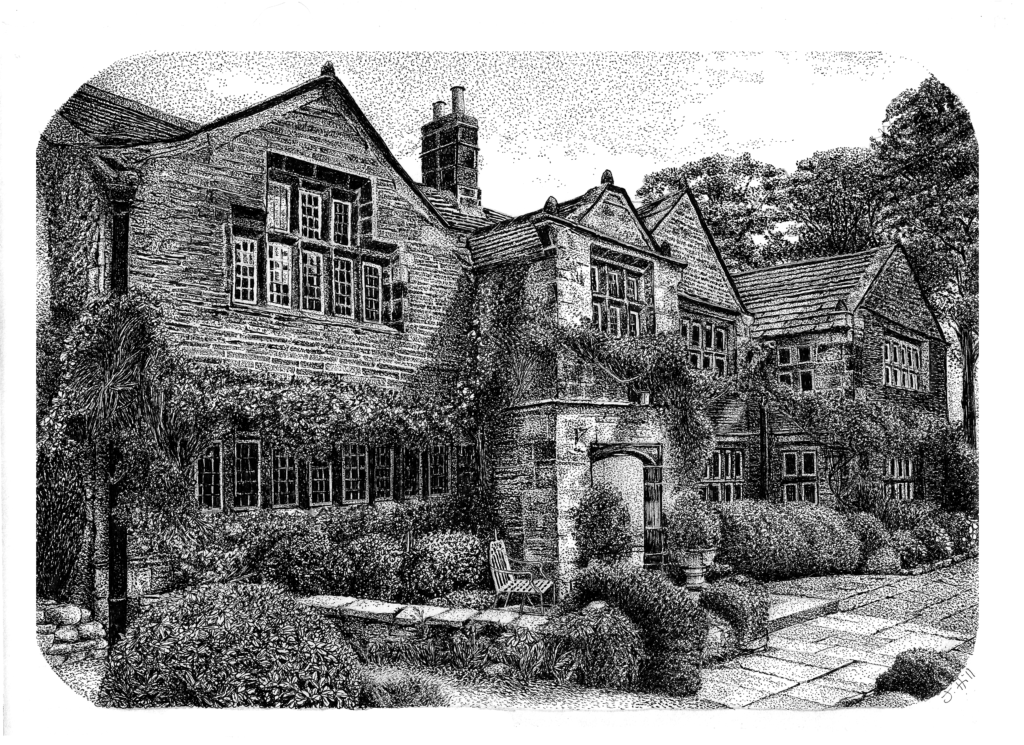
I found Julia’s artwork on Instagram and I was awestruck, definitely make sure to give her a follow! She uses fine pens to create stunning realistic and hyper detailed landscape drawings. Her artist statement is also written in first person POV and describes her medium of choice, thoughts behind her style and technique, and how her personal background impacts her artwork. The words to describe art express her talent and experience with the medium, her knowledge of principals and elements of design, and the contextual origin of the content.
Truly, Julia’s words describe the artwork better than I could ever analyze it. This is a perfect example of the importance of an artist statement and how it can compliment the visual artistry of the work.
Holdsworth House – A Place in Time by Julia Hill As an Illustrator, I predominantly use fine liners to create my images. I use 0.03, 0.05 and 0.1 black uni pens. I find drawing using a single black line extremely therapeutic and somewhat fascinating. I am driven by the constant complexities of creating depth, texture, light and shadow within my work using only a single black line. Holdsworth House presented itself to me as a challenge, to combine the solidity of a beautiful structure and the softness of the environment it sits within. Nature, the environment, wildlife and botanicals form the basis of all of my personal work. The natural environment has held a particular fascination for me since I was a child. The intricacy of my drawing allows me to connect to each subject on a much deeper level. ‘Seeing’ the intricacy within a form and recreating it with a mix of lines, dots and patterns to create an overall visual effect. My work is not just a simple depiction of the subject I have chosen, but rather a visual expression of my emotional and spiritual connection to what I am drawing.
What are some artsy words to describe art?
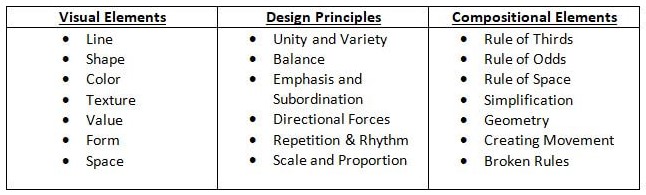
In this final section, I want to recall the elements and principles of art and design. These are the building blocks of aesthetically pleasing work, and great references to use when describing your own art. The list of elements and principles of art are generally a good place to start when looking for words to describe art. Basically, there are six elements of art and eight principles of art.
Tip 7: Use the Elements of Art and Design
Color: Generally associated with hue, value, and intensity, color is one of my personal favorite elements of art. Check out examples of color in my art here.
Shape: Associated with height and width, shape can be organic and/or geometric.
Form: I associate this element with volume, height, width, depth. It can be two or three dimensional because it gives an illusion of value (drawing) or real value (sculpture).
Line: This element is generally associated with being implied, abstracted, parallel, or crossed.
Space: This element is generally associated with positive (subject matter) and negative (background) areas. Space creates the illusion of depth through value.
Texture: This element is generally associated with how the art feels or looks like it feels (soft, bumpy, hard, slick, squishy, sharp, smooth).
Tip 8: Use The Principles of Art and Design
Rhythm: This principle of art and design is generally associated with patterns, movement, repetition, tempo, and beat.
Harmony: This principle is generally associated with unification, familiarity, and connection.
Balance: This principle of art is generally characterized by symmetrical, asymmetrical, and radial.
Contrast: This principle is generally used to highlight the focal point, or the subject, of a work of art. Pop art is a great example of using contrasting colors, especially complementary colors (colors opposite each other on the color wheel i.e. orange and blue).
Movement: This principle is generally associated with dynamism and action and helps to guide the viewer’s eye to the focal point.
Pattern: Similar to rhythm, this principle of design is generally associated with duplication.
Proportion: Relativity is a huge part of this principle of art and design. It is also related to relationships and size.
Variety: Generally associated with diversity and interest, variety captures attention, similar to contrast. Variety partners with unity to establish balance.
Conclusion: best words to describe art
In this article we defined an artist statement, discovered tips to effectively use words to describe art, and reviewed examples of artist statements in the wild.
You can choose to describe art in any way you want, because it’s your art. You can call it ugly or nonsensical just as easily as you call it stunning and deep and impressive. Adjectives are subjective in the same way you and your artwork are subjective.
However, if you want people to understand your artwork, you may need to clearly communicate what it means. Using artistic terms helps to encourage the viewer to look past the image and think about the process, materials, backstory, and time dedicated to create the art. Use art words to describe art.
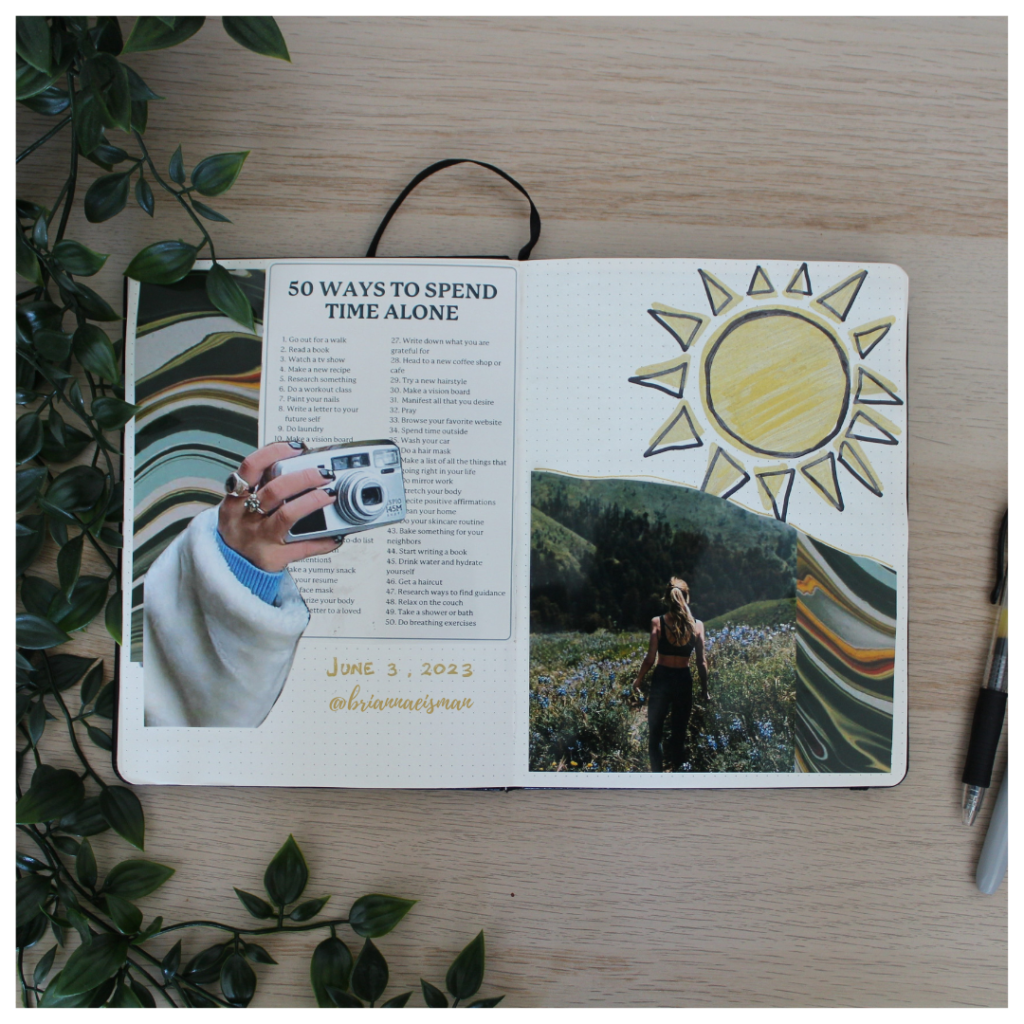
50 Ways to Spend Time Alone by Brianna Eisman After I graduated college, I felt especially lonely. You go from being surrounded by many curious and exotic people to a much smaller group. And then, you realize working 9-5 means you have even less time to spend with friends. I found this list of 50 Ways to Spend Time Alone on Pinterest. I hope you can use it and learn to love spending time alone as much as I have.
In this sense, writing a clear, optimized, and creative artist statement can add value to your artwork. There are many words to describe art, but an artist statement is unique because it comes directly from the creator. These are your words to describe art.
You, the artist, have the chance to tell the world what your art really means. You are the one to give your art value.