What is personal branding and how do you start? Where do you find inspiration for it? How do you improve your personal brand through market changes? What are some great examples of personal branding?
Introduction
In the age of digital connectivity, crafting a compelling personal brand has become more than just an option—it’s a necessity. Your personal brand, a melding of your values, expertise, and online presence, is the compass that guides you towards opportunities and cultivates a meaningful online identity. This article dives headfirst into the art of building an impactful personal brand, offering insights, real-world examples, and a hopeful perspective on its role in your life.
Wikipedia defines personal branding by providing the purposes of career advancement, increasing circle of influence, and having a larger impact.
The Essence of a Strong Personal Brand
Your brand isn’t just a buzzword; it’s the vivid tapestry that reflects who you are, both professionally and personally. It shapes perceptions, fosters connections, and sets you apart in a crowded digital landscape. Try building a powerful personal brand which uses a multifaceted approach across many platforms and with many outlets.
To begin the process, think about your values, goals, and inspirations. Craft an identity you want to show the world. From there, add a color scheme, maybe a personalized logo, and a platform. For me, I use a website platform ArtsyDrawings.com.
If you are at a loss for how to build an optimized website, check out my colleague’s web design service: True Ideas.
Instagram Influencers: Building Communities Through Authenticity
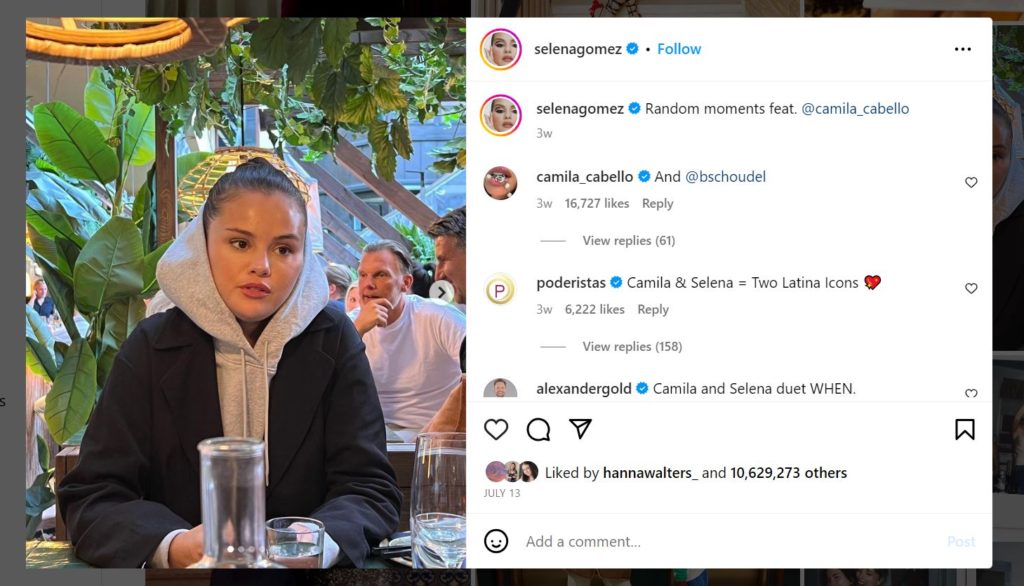
Instagram influencers like @chrissyteigen and @selenagomez have cultivated personal brands rooted in authenticity. They share unfiltered glimpses of their lives, forging genuine connections with their followers. Emulate their approach by showcasing the real you, sharing your passions, and engaging openly with your audience.
Selena Gomez takes an authentic approach to her Instagram account by posting a candid photo she references as a “random moment” taken by her friend.
TikTok Creators: Crafting Compelling Stories in Seconds
TikTok influencers like @charlidamelio and @zachking have mastered the art of storytelling within seconds. When they use their personal brand to entertain, educate, and inspire, they create content that resonates across demographics. Take inspiration from their succinct storytelling and translate it into your own narrative. Also, many marketers advise short videos as the future of successful marketing.
Artists with a Digital Identity: Merging Creativity with Branding
Artists like Banksy and KAWS have utilized their digital presence to amplify their artwork’s impact. Compared to artists who choose to evade social media, these digital connoisseurs have extended their artistic narratives onto social media platforms, effectively merging their creativity with personal branding. Basically, they infuse their personal brands with elements of their craft, merging art with branding.
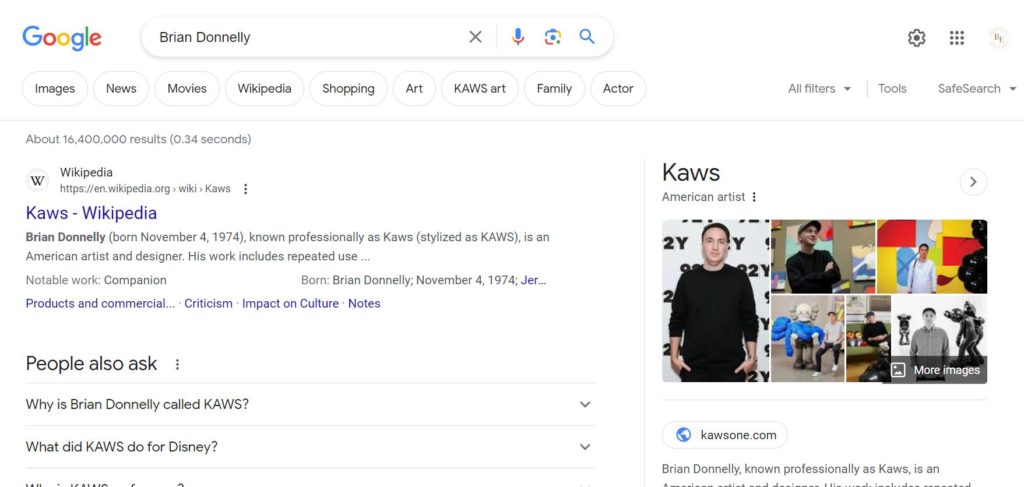
In some cases, the artist and his work become synonymous on Google. When you search Brian Donnelly, his work and his professional artist name “KAWS” dominates the first results page.
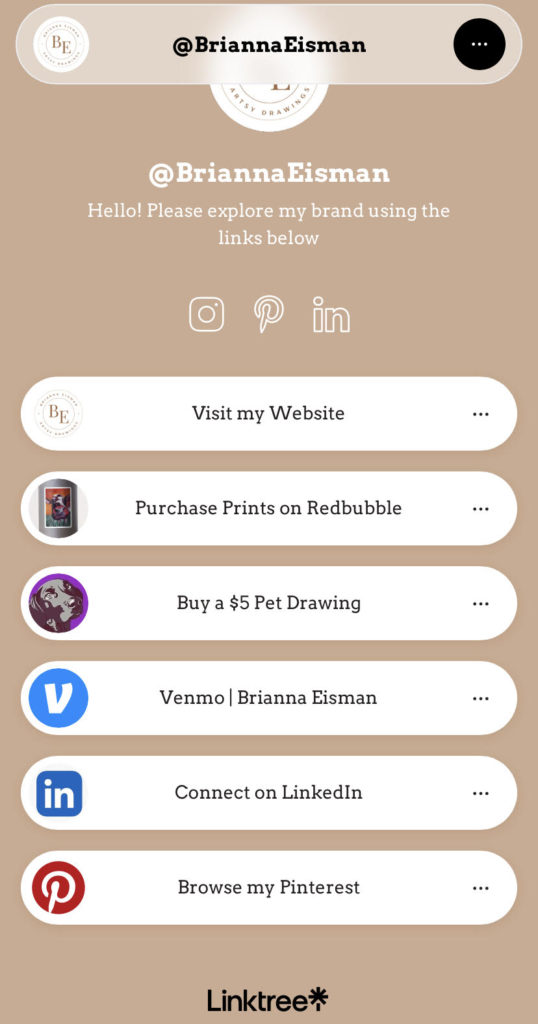
Here at Artsy Drawings, I enjoy merging artistry with my personal brand. I use Linktr.ee to create a single, customizable link that houses multiple links to various online platforms. For me, these platforms include my portfolio, social media profiles like Pinterest and Instagram, and my online store. This link simplifies navigation for my audience, allowing them to access all relevant content from one central location.
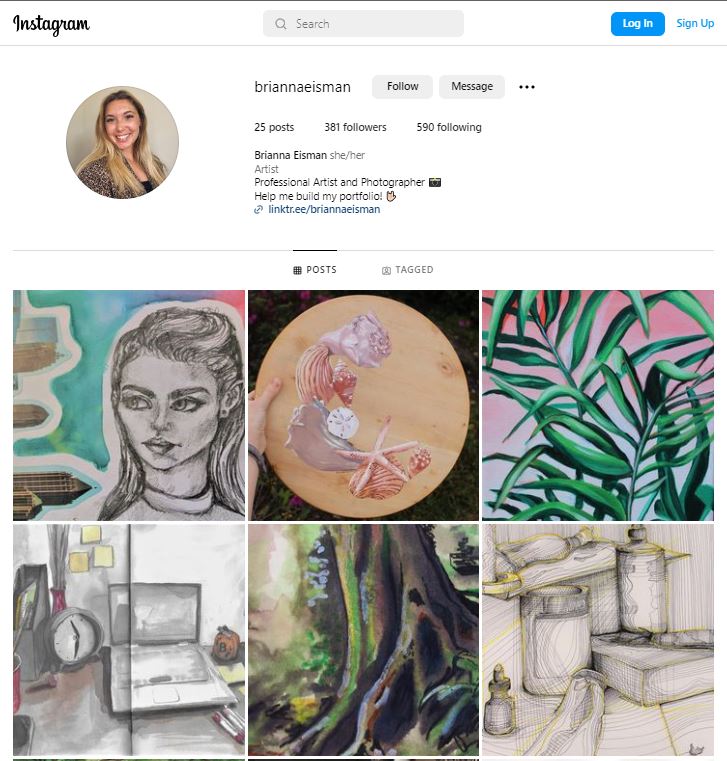
Brianna Eisman’s Linktr.ee includes her website, RedBubble, Fiverr, Venmo, LinkedIn, and Pinterest links. Each phrase includes a call to action.
It is important to also note that changing your personal brand with the market is actually a good thing. Recently, I decided to rebrand my website and social platforms with a new color scheme, dedicated fonts, and a logo that focused more on Artsy Drawings itself. For more details on my rebrand, check out my About page.
Job Hunting and Personal Branding: A Match Made in Success
Personal branding isn’t confined to social resources; it plays a pivotal role in job hunting too. When potential employers search your name, what they find can significantly influence their decisions. It is vitally important, especially post graduation, to create a story about who you are and how you want the world to view you. Then, craft your personal brand to reflect your skills, passions, and professional aspirations, essentially turning your online identity into a compelling resume.
Audit Your Social Media: First, go through your social media profiles and remove or adjust any content that might be seen as unprofessional or inappropriate. Delete posts or photos that could be misconstrued or reflect negatively back on you.
Update Your Privacy Settings: Review the privacy settings on your social media accounts to limit what can be viewed by the public. By adjusting your settings, you can control who sees your posts, photos, and personal information. Make use of features that allow you to approve tagged posts before they appear on your profile.
Create a Professional Online Presence: Next, focus on building a positive online image that aligns with your career goals. Share articles, posts, and content related to your industry to demonstrate your knowledge and interests. Consider creating a LinkedIn profile that highlights your professional accomplishments and connects you with others in your field.
Use a Professional Email Address: Create a professional email address that uses your name rather than a nickname or casual (silly goose) handle. This small change can make a positive impression on potential employers when they communicate with you via email.
Monitor Your Online Presence: Regularly search your name on search engines to see what information comes up. This will help you identify any potentially damaging content and take steps to address it. If you find negative information, then you can try to address it directly or focus on pushing positive content higher in search results through active online engagement. Also, try to research personal brand examples to see how influencers tackle positive and negative media.
Digital Marketing Yourself: An Essential Skill in Today’s World
In a world where digital interactions dominate, marketing yourself online is crucial. Similarly to businesses, you can use digital strategies to showcase your personal brand and reach your audience. Hence, dive into SEO optimization, content creation, and consistent engagement to cultivate a strong online presence.
As you grow digitally, try to track your data through insights and analytics. This recording process can be integral in knowing how well your content is performing and analyzing how to improve. For more details about data visualization, collection, and reporting check out my article titled “How to Visualize Data as a Multi-Skilled Artist.”
Noteworthy Personal Brand Examples
Marie Forleo (@marieforleo): A businesswoman and motivational speaker, Marie Forleo’s personal brand is built on empowerment and entrepreneurship. Overall, her online platform provides valuable content that resonates with aspiring business leaders.
Neil Gaiman (@neilhimself): Renowned author Neil Gaiman’s personal brand seamlessly weaves his fantastical writing with his witty and engaging online presence. He particularly uses platforms like Twitter to connect with fans, share insights, and showcase his creative process.
Lizzo (@lizzo): Singer and body positivity advocate Lizzo’s personal brand radiates confidence, self-love, and unapologetic authenticity. Her empowering messages and music resonate with a global audience, making her a prime example of a relatable personal brand.
Simon Sinek (@simonsinek): Leadership expert Simon Sinek’s personal brand centers around inspiring leadership and self-discovery. Basically, his TED Talks, books, and majority of his online presence encourage individuals to find their “why” and lead with purpose.
Alex Strohl (@alexstrohl): Adventure photographer Alex Strohl’s personal brand seamlessly intertwines his passion for photography with a love for travel and the outdoors. His captivating visuals and storytelling inspire wanderlust in his followers.
Amanda Gorman (@amandascgorman): Poet Amanda Gorman’s personal brand combines her powerful words with her advocacy for social change. Her eloquence and activism have made her a symbol of hope and progress.
Casey Neistat (@caseyneistat): Filmmaker and content creator Casey Neistat’s personal brand is characterized by his unique storytelling style and his commitment to authenticity. Following his YouTube vlogs and cinematic videos offers insights into his life and creative processes.
Gwyneth Paltrow (@gwynethpaltrow): Last but not least, actress and entrepreneur Gwyneth Paltrow’s personal brand revolves around wellness and lifestyle. Her company, Goop, and her online presence promote holistic living and self-care.
Conclusion
Crafting a compelling personal brand isn’t just about garnering followers; it’s about shaping an identity that reflects your values, aspirations, and expertise. As you navigate the digital landscape, drawing inspiration from Instagram influencers, TikTok creators, and notable figures like artists and public speakers, remember that personal branding is a journey of self-discovery and growth.
Remember, in job hunting, personal branding acts as a beacon that attracts the right opportunities. By digitally marketing yourself, you take control of your narrative and present your most authentic self to the world. Whether you’re an aspiring entrepreneur, a creative artist, or a professional seeking advancement, your personal brand serves as your virtual handshake, leaving a memorable impression that extends beyond pixels and platforms.
Embrace the evolution of your personal brand with hope and enthusiasm, for it is a canvas that you paint with your passions, experiences, and aspirations. As you infuse your online presence with authenticity, engagement, and a touch of inspiration, you’re bound to forge connections, open doors, and carve a meaningful path towards success.
Artsy Drawings – 5 Drawing Tips for Beginners and Intermediate Artists. We discuss creating value, using different pencil leads, and shading techniques.
If you scroll through the online artsy backrooms in 2025, you’ll run into two of my favorite art conspiracies: Jackson Pollock was secretly bankrolled by…
I know that not everyone who visits my page is a professional artist, so here’s a few articles if you are just starting out on your own artistic journey!
Explore the art of captivating graffiti, insights and techniques inspired by famous artists, and the graffiti art drawings’ journey from the streets to museums.
In this section, I’ve included art advice articles more tuned to artists who have a confident grasp on the basics. This section serves to dive deeper into how to market yourself as an artist online, track and visualize data on social media, and provide insights into my personal experience with art. From using AI to create art to my favorite mediums and techniques, there is something here for any art enthusiast.
Artsy Drawings – 5 Drawing Tips for Beginners and Intermediate Artists. We discuss creating value, using different pencil leads, and shading techniques.
What zodiac is the most artistic? Explore characteristics of 12 zodiac signs and their corresponding historical art style. From Neoclassicism to Art Nouveau to…
If you scroll through the online artsy backrooms in 2025, you’ll run into two of my favorite art conspiracies: Jackson Pollock was secretly bankrolled by…
Artificial intelligence (AI) has become the ultimate game-changer, sneaking into nearly every corner of our lives—from saving lives in healthcare to making binge-worthy shows even…
Hey there, it’s Brianna! My articles are a way for me to express myself in words, rather than acrylic paint or colored pencils, and maybe share a little of my artist knowledge with you. This is a place where I talk about art crafts, art history, techniques, mediums, and what skills I’ve picked up on this creative journey. Take my articles with a grain of salt. Sometimes I give good advice and something I give terrible advice. Take what works best for you and leave what doesn’t resonate with you. Afterall, this is your artistic artsy journey too.
Artsy Drawings is about finding cool art and learning how to become a better, more creative individual. This website serves as an online gallery, a platform to share artistic advice, techniques, and findings, and a concept that sharing and talking about art can strengthen an appreciation for it. Whether you’re just starting out or you’ve been doodling forever, let’s explore the simple joys of creating art together. No pressure, no big words—just a friendly spot where we can chat about making art and having fun along the way. Come chill and bring your creativity!
How was architecture changed over the years? Why does minimalist architecture today look “ugly” or “bland?” Why has new public architecture become less artistic?
Purple is the color of intrigue, luxury, creativity, and spirit. Explore the color purple, including its rich history, how to creating it, and 30 distinct shades from periwinkle to plum.
Why is September the best month to make happy birthday cards? Gather your supplies, unleash your creativity, and learn to craft a meaningful homemade happy birthday cards today!
Explore the art of captivating graffiti, insights and techniques inspired by famous artists, and the graffiti art drawings’ journey from the streets to museums.
Within the vast realm of art, various artistic mediums offer unique possibilities for artists to translate their visions onto the canvas. In this Artsy Drawings blog post, we delve into…
Artsy Drawings – 5 Drawing Tips for Beginners and Intermediate Artists. We discuss creating value, using different pencil leads, and shading techniques.
I love the process of creating art. I love the brainstorming session with terrible stick figure drawings, the ‘practice stage’ of drawing the same thing over and over again, and feeling accomplishment you get from the final design. Through every tedious planning stage, I love how those small wobbly drawings in your sketchbook come to life in a beautiful masterpiece.
You know what the art means to you, but how do you describe it to others? How do you talk about it? Where do you find the words to describe art, something so subjective and intangible?
In this article, I hope to provide some clarity and tips for how to talk about art and which words to describe art. I will define a formal artist statement, analyze how others create artist statements and content captions, and list out the best words to describe art.
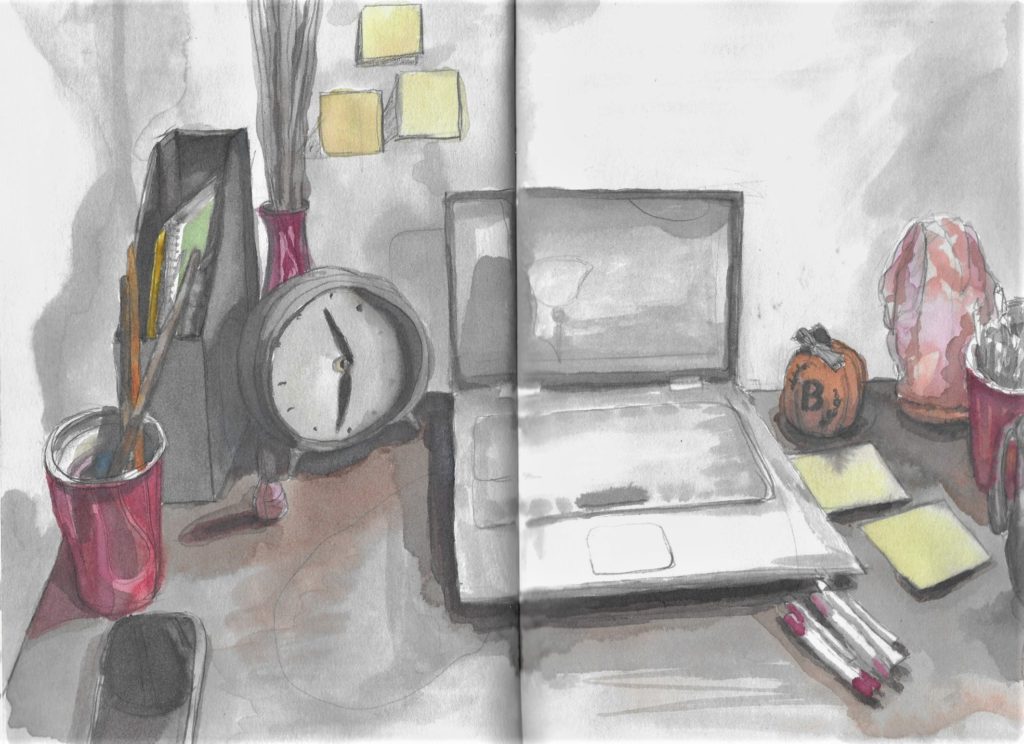
Desk Check by Brianna Eisman As someone who moves rather frequently I document my travels with what I like to call a “Desk Check.” I will draw, paint, photograph, and ultimately document everything on my desk at a certain point in time. This type of artwork displays an intimate snapshot into my life.
Table of Contents
What is an artist statement?
“[An artist statement is a] piece of writing by you that helps the audience access or understand your artistic work.”
Basically, an artist statement is a formal way of using words to describe art. It is a way for you, the artist, to express the message you are trying to convey visually. Words to describe art are used in many ways: from social media and website promotion to galleries, exhibitions, grant applications, teaching position applications, and fellowships.
Generally, I frequently write and rewrite my artist statements. Please check out my social media to see how I describe my own art.
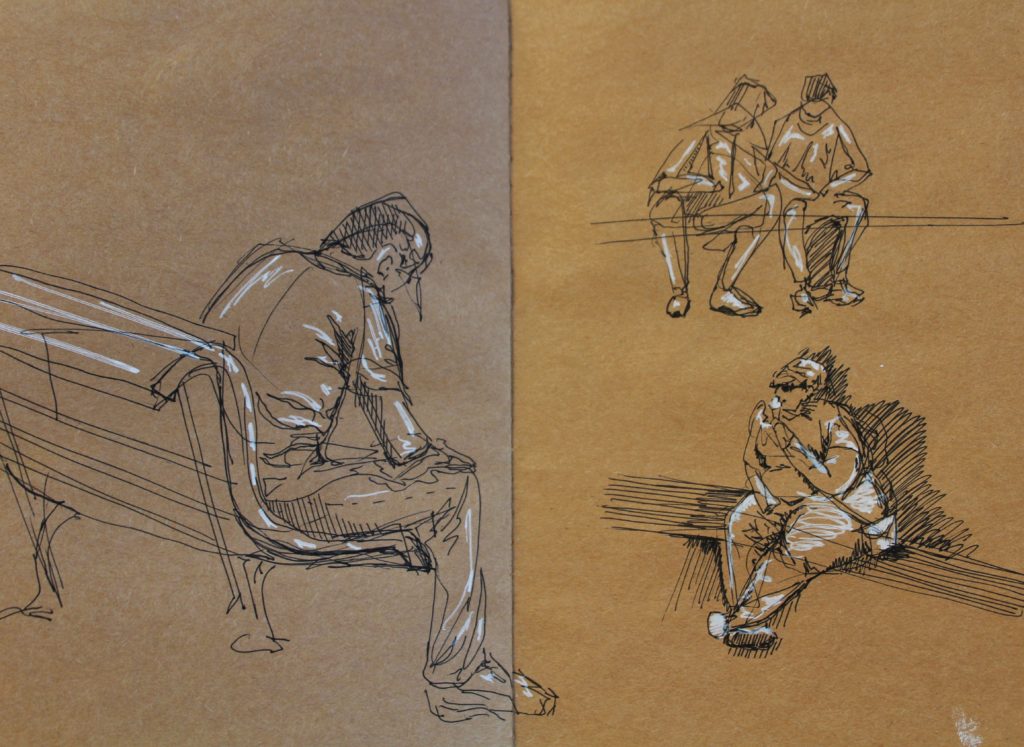
Gesture Figure Drawings by Brianna Eisman Gesture drawings are quick studies of the human form and one of the easiest ways to practice your line work and accurately sketching figures. ~ After visiting the Rijksmuseum in Amsterdam, I sketched a few people sitting around the fountain. I used my brown paper sketchbook to create a mid-tone base, a black pen for shadows, and a white pen for highlights. Not only did these gesture drawings improve my understanding of the human form, but I was able to capture light in a quick and cool manner.
What are the best ways to write a strong artist statement?
Writing an artist statement is more complex than simply using random words to describe art. First, write in first person POV, remember to keep your audience in mind while writing, and follow the acronym K.I.S.S. (Keep It Simple, Stupid). Lastly, I included some good questions to think about when brainstorming your artist statement. Hopefully, these tips to choosing the right words to describe art will help you communicate clearly.
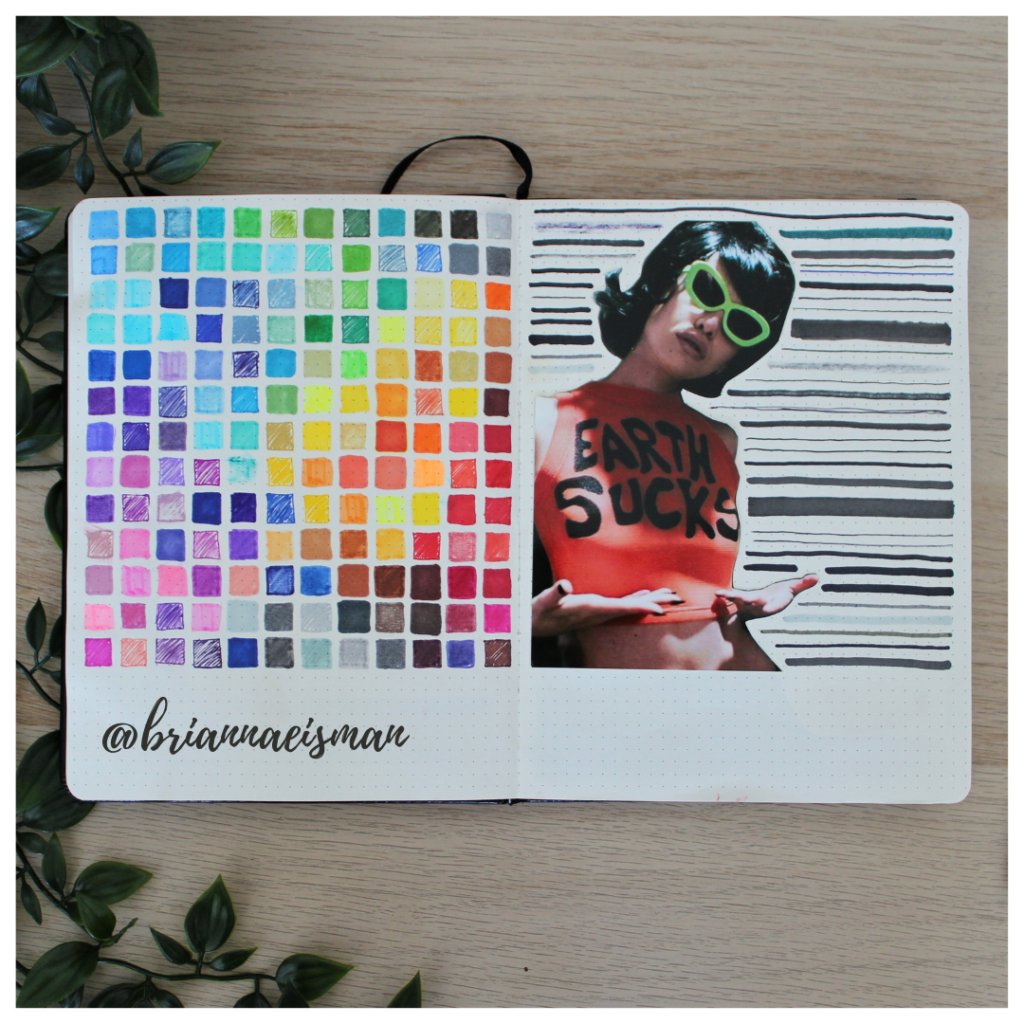
Marker Test (Earth Sucks) by Brianna Eisman About once a year I set aside a page in my sketchbook, or bullet journal, to do a marker test. First, I go through every pen I own including Sharpies, highlighters, Bic Permanent Markers, Crayola markers, Stabilo pens, Expo dry erase markers and everything in between. I document the quality and determine whether to keep or toss the utensil. It’s easy to collect art materials, especially when you’re like me and switch mediums regularly. It is important to know that when I reach for a certain pen or marker, it’s going to work the way I want it to. I do keep a page at the back of my sketchbook open for testing mediums, but it’s an important part of the process of creating art to go with the flow and just draw.
Tip 1: Write in First Person Point-of-View
Structurally, the SAIC recommends to write the artist statement in first person. This advice contrasts artist biographies which are typically written in third person.
For instance, you can say “I created this work to represent…” and “my mother influenced this…”. These examples work well because they help define an intimate connection between the art and the viewer.
Typically, you don’t personally know the viewer, so establishing personalized meaning can add substance to your art. Supporting the connections between the viewer and the artwork is vital in helping people really understand your work.
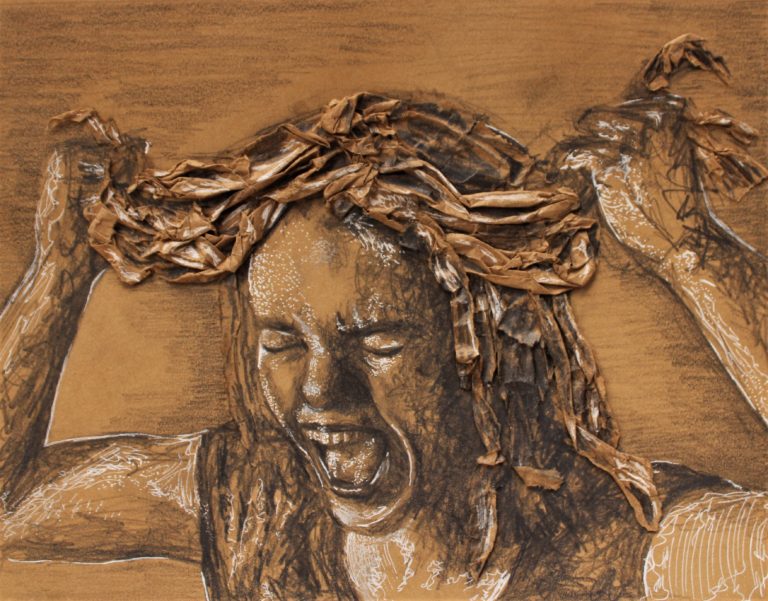
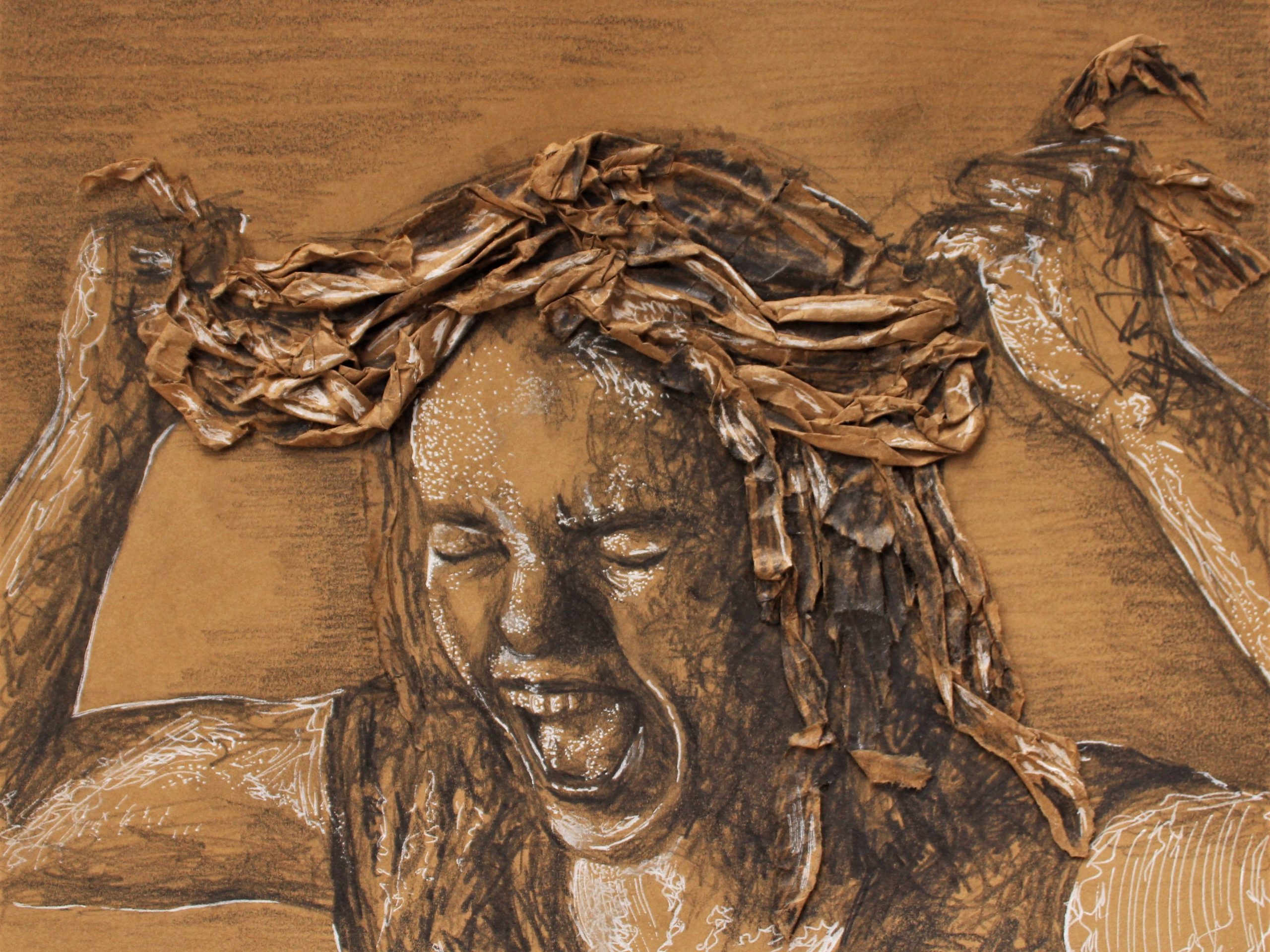
Tension by Brianna Eisman As art students, we were tasked with creating a work of art, recycling brown paper bags, and expressing ‘tension.’ In the midst of high school drama and stressful testing seasons, I created this mixed media drawing of a woman silently screaming and pulling at her hair, which is made of delicate paper.
Tip 2: Know your Audience & keep them in mind
Remember who your audience is. Who did you create this artwork for? What type of people would you imagine in the gallery looking at this artwork? Who would buy this painting? If you post it online, who is interacting with the post?
The artist statement is sometimes published on social media platforms or printed next to the painting in a gallery. You may be writing to someone who has never held a paintbrush in their life, so keep these thoughts in mind when writing an artist statement. Carefully choose words to describe art that make sense to your audience.
Some words to describe art are different for artists versus non artists. For example, saying a work is impressionistic could mean in reference to the impressionism painting style of the 19th century. In contrast, impressionistic could represent the work’s capability in leaving an impression, or a lasting memory, on the viewer. Learning art history is a great method to improve your art lingo. For instance, maybe learn how the difference between modern and contemporary, and how in the art world, they are not synonymous. If you are curious about which art style best matches your artwork, check out this quiz!
The specialized art jargon, referred to as “art speak,” is great for the critique, though try to avoid it for the artist statement.
“The terms ‘modern art’ and ‘contemporary art’ are easily confused, but each refers to its own distinct period in art history,” according to Rosie Lesso of The Collector
Tip 3: The KISS Method – Keep it Simple, Stupid
Try to be concise, straightforward, and as clear as you can. A good rule of thumb is to avoid using too many complex words to describe art, and stick to what you know. I like using certain words to describe art like colors, shapes, and patterns.
If you are optimizing your artwork for digital marketing purposes, sometimes describing the art is better than describing the meaning or the feeling. Understanding nuances in color theory help when describing your art, so make sure you read my article: Color Knowledge Tips That Will Make You a Better Artist
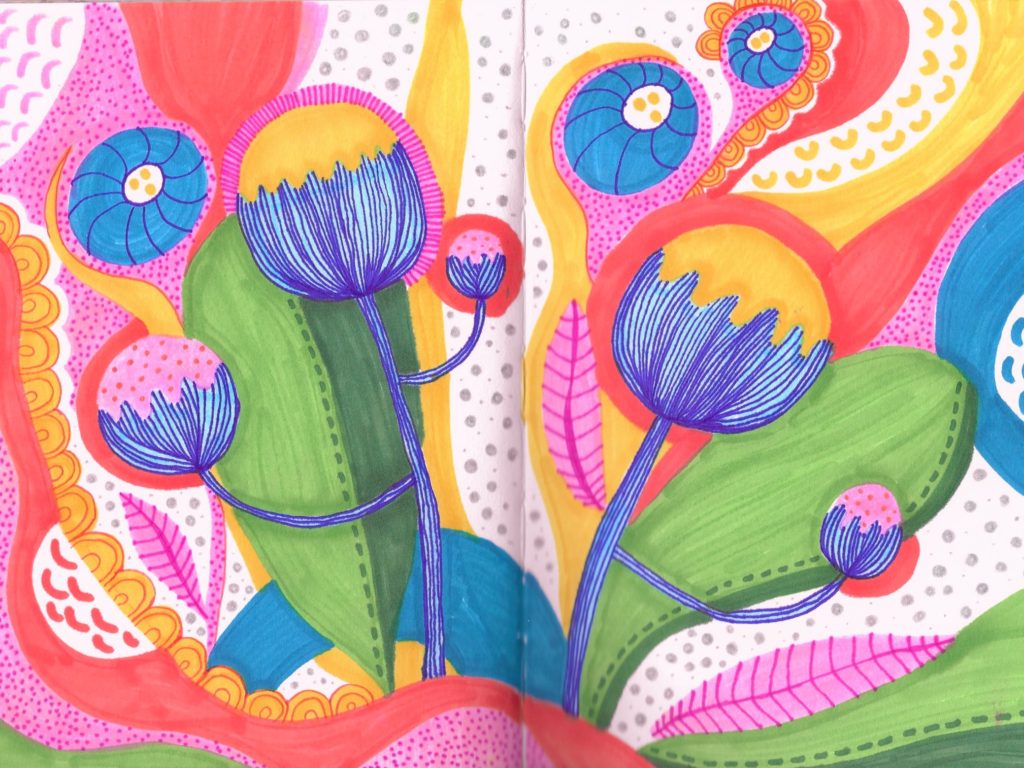
Stylized Poppies by Brianna Eisman This sketchbook spread features a stylized pattern of colorful poppy flowers. The garden of flowers includes leaves of green, yellow and peach. The flowers are yellow with blue stems. The drawing as a whole has a whimsical and playful feel with a bright color scheme, polka dots and organic squiggle shapes, and blobs of seemingly random colors.
Tip 4: Actually think it over before you write
Yes, brain dump writing is healthy, but your artist statement should not be a brain dump. You need to really think about your art and ask yourself certain questions prior to writing. Be selective in your words to describe art. Below are some important questions to ask yourself throughout the brainstorming process. Your answers to these questions can include words to describe art and how you created the art.
What are the key ideas, issues, struggles, and goals within your work?
Does your work have a thematic focus (goals, purposes, intentions, and explorations)?
What is the content of work, including themes, ideas, and subject matter?
How were you influenced culturally, historically, theoretically, artistically, personally, and biographically?
Who is your audience? Who will be looking at your work? What do you imagine they feel when viewing it?
How would your audience use words to describe art?
How did you create the work? What materials, processes, traditions, and styles did you use in your work?
Can you use your senses to describe the art? What does the work look, sound or feel (impasto) like?
How can you make your art work easier to understand?
Finally, have a friend or teacher review your artist statement when you finish writing it. You may think the statement makes sense, but it may not be clear to someone who hasn’t spent hours working on the artwork.
How do artists describe their art?
Tip 5: Study how the masters used words to describe art
Edvard Munch
Many famous artists write artist statements describing their masterful artwork. Some are available in museums, some are available online.
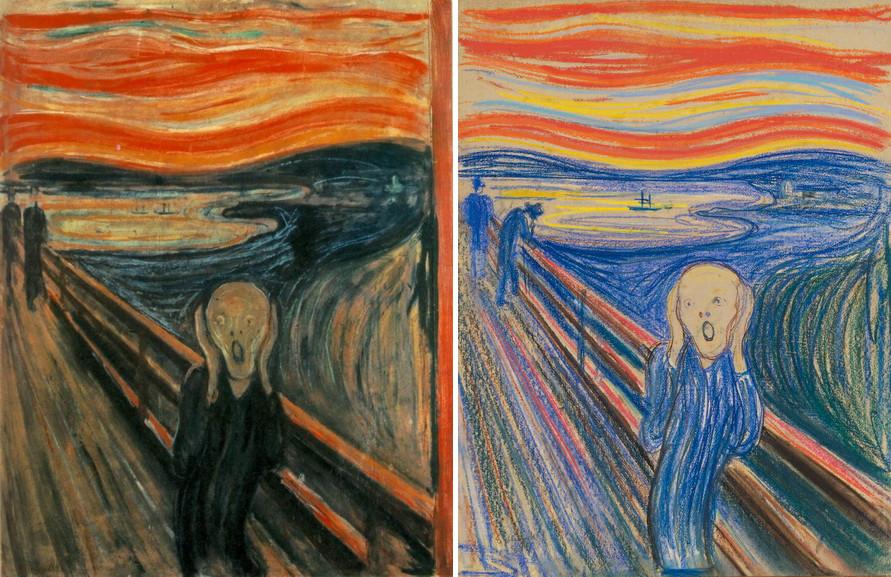
For instance, Edvard Munch’s The Screamhas a vivid artist statement full of life and emotion, similar to the visuals seen in the work itself. The artist chose relatively simple words to describe art, but written with dashes, like parsed thoughts coursing through the artist’s head.
The Scream by Edvard Munch I was walking along a path with two friends – the sun was setting – suddenly the sky turned blood red – I paused, feeling exhausted, and leaned on the fence – there were blood and tongues of fire above the blue-black fjord and the city – my friends walked on, and I stood there trembling with anxiety – and I sensed an infinite scream passing through nature.
Jackson Pollock
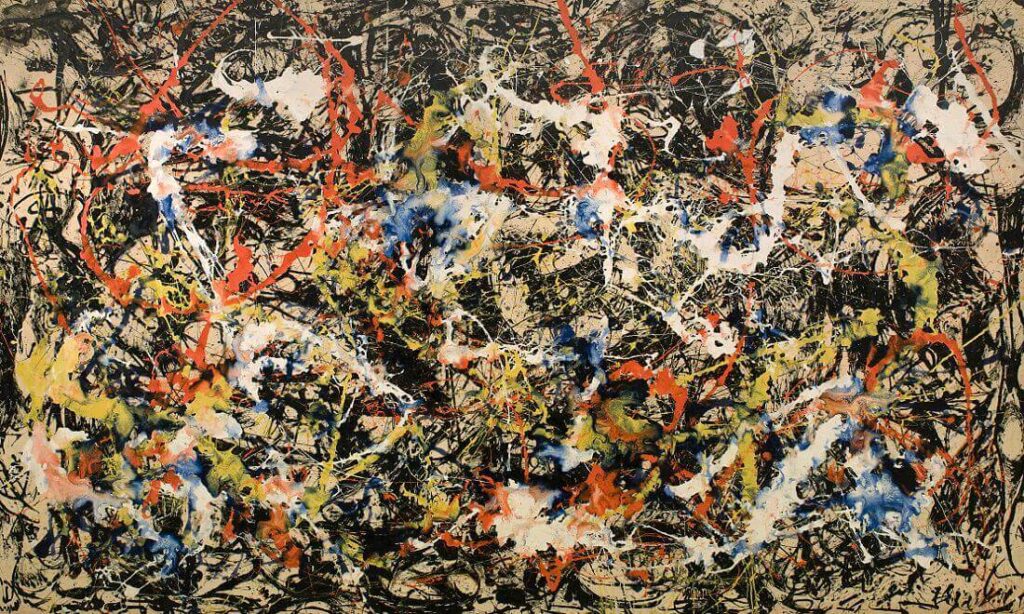
Jackson Pollock is fantastic artist, despite criticism for his work’s abstracted features. Pollock chose words to describe art that was not subjective, and much more emotive.
Convergence by Jackson Pollock I want to express my feelings rather than illustrate them. It doesn’t matter how the paint is put on, as long as something is said. On the floor, I am more at ease. I feel nearer, more part of the painting, since this way I can walk around it, work from the four sides and literally be in the painting. When I’m painting, I’m not aware of what I’m doing. It’s only after a get-acquainted period that I see what I’ve been about. I’ve no fears about making changes for the painting has a life of its own.
Louise Bourgeois
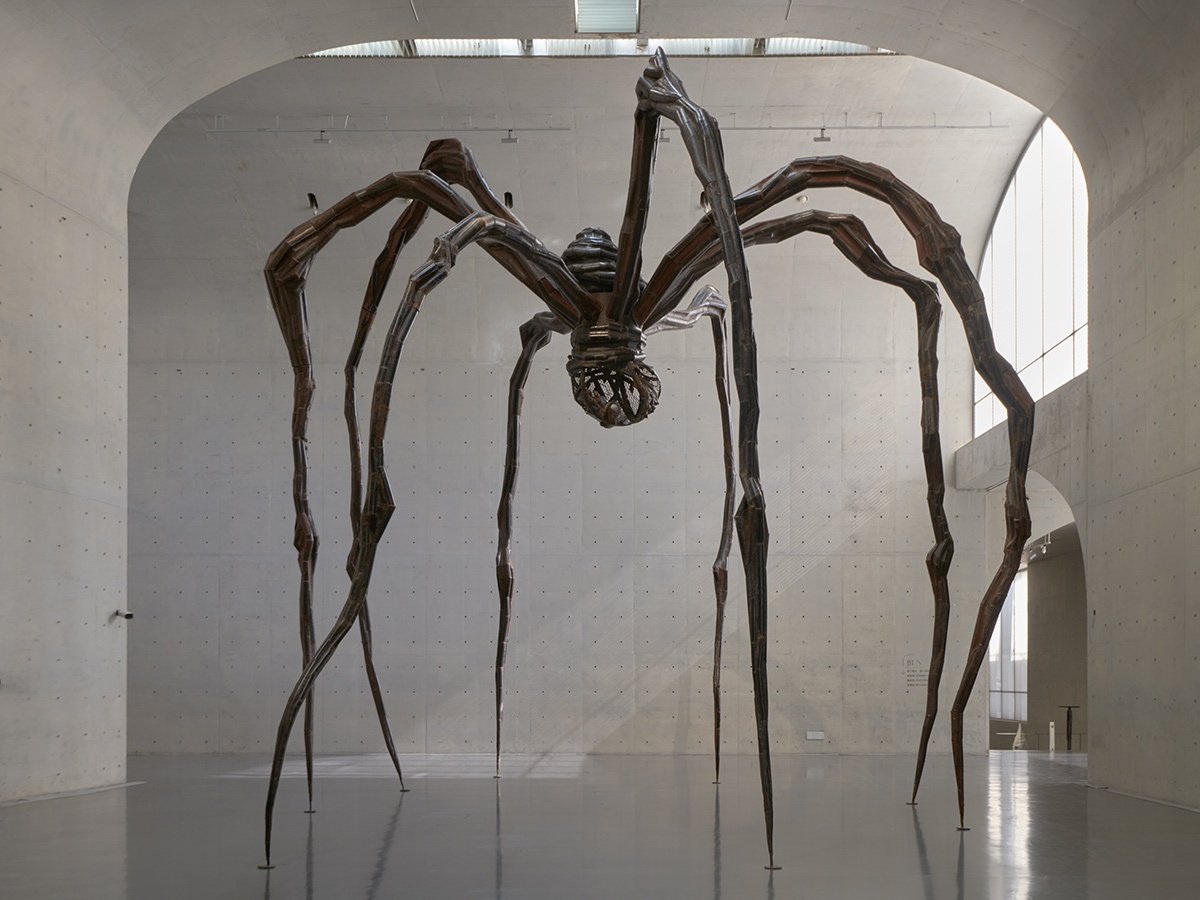
Louise Bourgeois’s massive spider sculptures are really cool and worth sharing. She started creating these steel structures in the 1990s, contrasting her previous styles. The words she chose to describe her art explain the metaphorical allegory behind the sculpture.
Spider by Louise Bourgeois I’ve drawn my whole life. My parents were in the tapestry restoration business, and as a young girl, I would draw in the missing parts of the tapestry that needed to be re-woven. My ability to draw made me indispensable to my parents. I came from a family of repairers. The spider is a repairer. If you bash into the web of a spider, she doesn’t get mad. She weaves and repairs it. ‘The Spider’ is an ode to my mother. She was my best friend. Like a spider, my mother was a weaver. . . Like spiders, my mother was very clever. Spiders are friendly presences that eat mosquitoes. So, spiders are helpful and protective, just like my mother.
Many of these masters use words to describe art with passion, flame, and emotion. Notice how they use first person POV, relatively simple diction, and still manage to communicate what the art is about and what it means to them.
Tip 6: Get inspired by Underrated Artists
I want to include some artist statements of underrated artists as well. I’ve met many talented and creative individuals, and I would like to share their art and artist statements in this section.
August Lamm
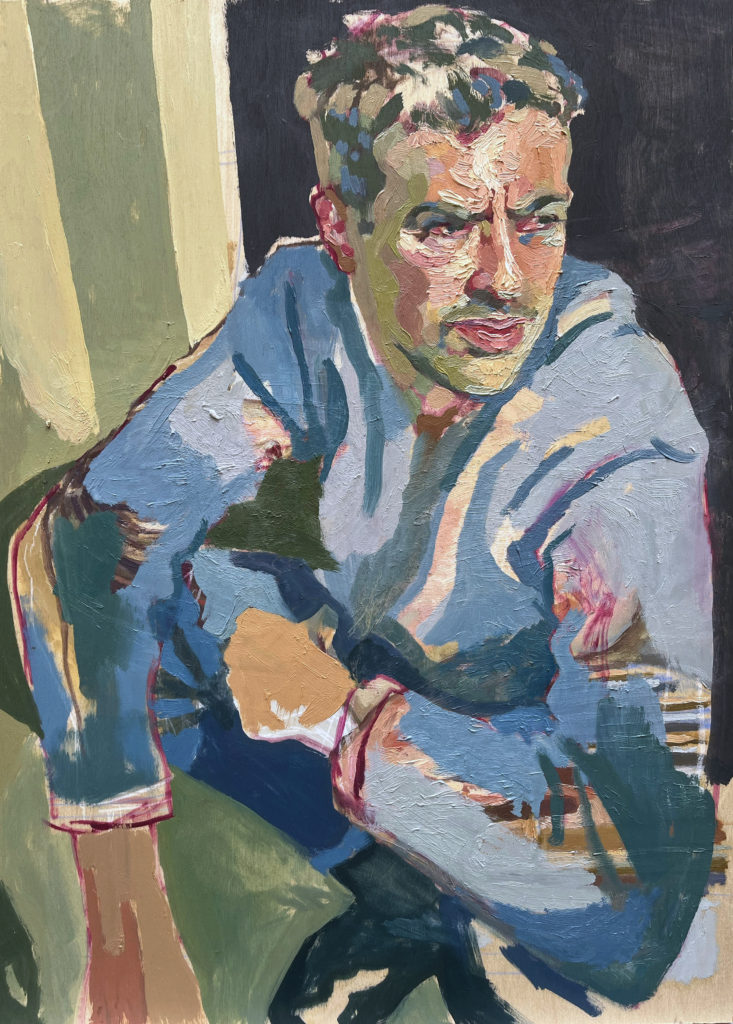
August Lamm is an incredible portrait artist, and I’m very excited to share her artwork. She typically uses ink and oil paints. In this piece, I especially love the use of complementary colors in the man’s face, the contrast of detail versus an almost unfinished impressionistic appearance, and of course, the simplicity of the artist statement. It’s very painterly and I love it. Be sure to check out more of August’s works on her Instagram!
The artist statement included in this painting is short and simple compared to others in this article. Regardless of length, it is powerful and emotional and allows the viewer to connect with the artist, and maybe even the subject, on a more intimate level.
Murray by August Lamm Sometimes you paint over an old painting and wonder why you waited so long to let go
Erika Wilson
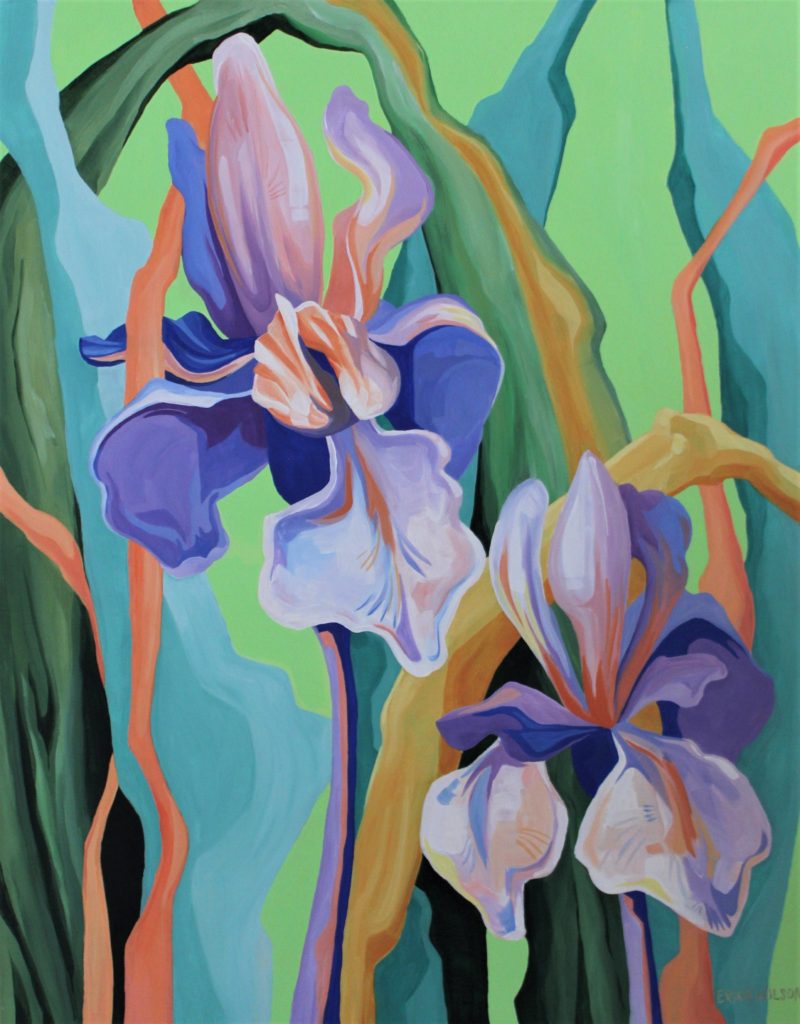
I first discovered Erika Wilson at a local arts market. Her work was captivating and I wanted to learn more about this incredible artist. Erika provided two artist statements, proving her knowledge of writing to a certain audience.
In the first artist statement, notice the purpose is primarily for social media, and make sure to follow her Instagram! Erika uses first person POV and includes the dimensions and mediums used in the work. She also includes emojis and middle dots between paragraphs, a common spacing technique for Instagram, showing that she knows her audience.
There Is Still Time by Erika Wilson So often I am eager for the future, reminiscent of the past, and losing track of the time in between. Feeling afraid or anxious that I don’t have time for everything. The weighty pressure of needing to make each day count. . This painting reminds me that a day is LONG when we are present for it, and immeasurably valuable regardless of what I do during it. Some days are filled with intentional time and mindfulness, some days I am meaninglessly busy and pointlessly stressed out, and some days I indulge in doing nothing at all. All are good days, and there is still time ✨️ . . . “There is Still Time” 22″ x 28″ acrylic on canvas Available
The next artist statement is noticeably more professional. In particular, notice how Erika adapted the bullet points into dashes and uses clear spacing, giving a cleaner appearance, similar to a resume. Erika’s use of words to describe art discuss her inspiration, techniques, and purpose in under 100 words. It’s simple, effective, and one of the best artist statements I’ve seen.
——————-
Hello! I’m Erika Wilson, a visual artist based in Salt Lake City, UT.
My work is deeply inspired by natural wilderness and the lush, strange, beauty of the botanical world. Equally, my artwork draws from cultivated nature found in urban spaces: gardens, houseplants, and roadside scrub alike.
I use vibrant color and dramatic line to create imagery that provokes wonderment, engages curiosity, and invites viewers to experience their senses unreservedly.
At its foundation, my artwork is a celebration of our intimate connection to nature, in the many forms we may find it, no matter how ordinary or unusual.
Kyle and I actually went to the same arts high school. We both studied Visual Arts and I’m really proud to see how he has grown as an artist. Please go follow his Instagram account here!
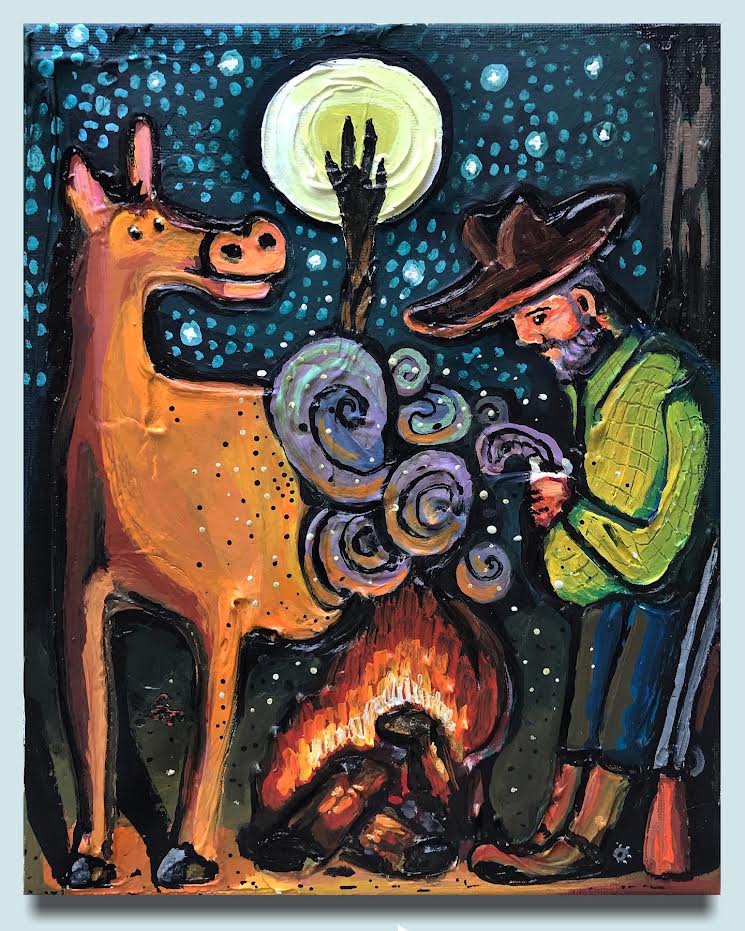
Kyle has a stunning impasto painting technique that really gives life to contrasting flat cartoon-like characters. His works are animated and fun to look at, as well as visually interesting.
Kyle’s artist statement uses first person POV to describe his thoughts and organizes the paragraphs increasing in size. He also continues to deliver contrasting elements. The whimsical and colorful style conveys comfort, in this “cozy painting,” unlike the realities in the life of a western cowboy, portrayed in the serious face and stature of the man.
Campfire Cowboy by Kyle Drury The Campfire Cowboy is part of a series of paintings I call Worsterns. I’m thinking about the bad things that could and maybe should have happened to old time cowboys. They’re dramatic paintings of cowboys falling victim to the dangers of the wild west. The danger is less obvious in Campfire Cowboy. It’s a cozy painting of a well-fed fella and his horse relaxing and drinking coffee by the fire. Its more about having a feeling that something bad is about to happen instead of witnessing it firsthand.
Julia Hill
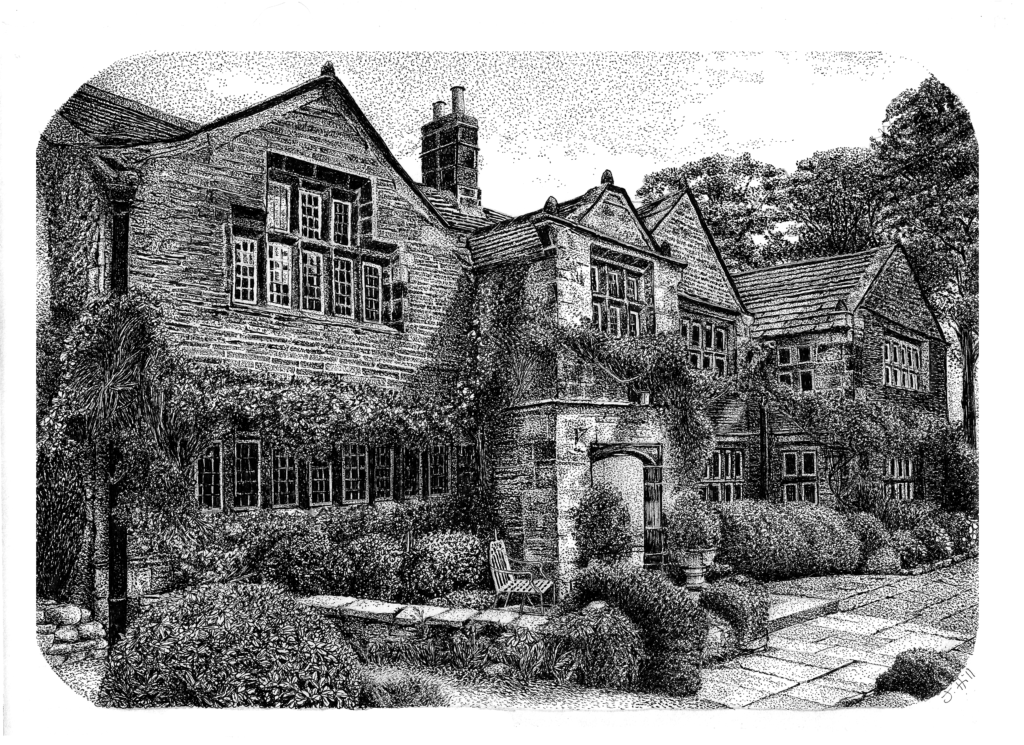
I found Julia’s artwork on Instagram and I was awestruck, definitely make sure to give her a follow! She uses fine pens to create stunning realistic and hyper detailed landscape drawings. Her artist statement is also written in first person POV and describes her medium of choice, thoughts behind her style and technique, and how her personal background impacts her artwork. The words to describe art express her talent and experience with the medium, her knowledge of principals and elements of design, and the contextual origin of the content.
Truly, Julia’s words describe the artwork better than I could ever analyze it. This is a perfect example of the importance of an artist statement and how it can compliment the visual artistry of the work.
Holdsworth House – A Place in Time by Julia Hill As an Illustrator, I predominantly use fine liners to create my images. I use 0.03, 0.05 and 0.1 black uni pens. I find drawing using a single black line extremely therapeutic and somewhat fascinating. I am driven by the constant complexities of creating depth, texture, light and shadow within my work using only a single black line. Holdsworth House presented itself to me as a challenge, to combine the solidity of a beautiful structure and the softness of the environment it sits within. Nature, the environment, wildlife and botanicals form the basis of all of my personal work. The natural environment has held a particular fascination for me since I was a child. The intricacy of my drawing allows me to connect to each subject on a much deeper level. ‘Seeing’ the intricacy within a form and recreating it with a mix of lines, dots and patterns to create an overall visual effect. My work is not just a simple depiction of the subject I have chosen, but rather a visual expression of my emotional and spiritual connection to what I am drawing.
What are some artsy words to describe art?
In this final section, I want to recall the elements and principles of art and design. These are the building blocks of aesthetically pleasing work, and great references to use when describing your own art. The list of elements and principles of art are generally a good place to start when looking for words to describe art. Basically, there are six elements of art and eight principles of art.
Tip 7: Use the Elements of Art and Design
Color: Generally associated with hue, value, and intensity, color is one of my personal favorite elements of art. Check out examples of color in my art here.
Shape: Associated with height and width, shape can be organic and/or geometric.
Form: I associate this element with volume, height, width, depth. It can be two or three dimensional because it gives an illusion of value (drawing) or real value (sculpture).
Line: This element is generally associated with being implied, abstracted, parallel, or crossed.
Space: This element is generally associated with positive (subject matter) and negative (background) areas. Space creates the illusion of depth through value.
Texture: This element is generally associated with how the art feels or looks like it feels (soft, bumpy, hard, slick, squishy, sharp, smooth).
Tip 8: Use The Principles of Art and Design
Rhythm: This principle of art and design is generally associated with patterns, movement, repetition, tempo, and beat.
Harmony: This principle is generally associated with unification, familiarity, and connection.
Balance: This principle of art is generally characterized by symmetrical, asymmetrical, and radial.
Contrast: This principle is generally used to highlight the focal point, or the subject, of a work of art. Pop art is a great example of using contrasting colors, especially complementary colors (colors opposite each other on the color wheel i.e. orange and blue).
Movement: This principle is generally associated with dynamism and action and helps to guide the viewer’s eye to the focal point.
Pattern: Similar to rhythm, this principle of design is generally associated with duplication.
Proportion: Relativity is a huge part of this principle of art and design. It is also related to relationships and size.
Variety: Generally associated with diversity and interest, variety captures attention, similar to contrast. Variety partners with unity to establish balance.
Conclusion: best words to describe art
In this article we defined an artist statement, discovered tips to effectively use words to describe art, and reviewed examples of artist statements in the wild.
You can choose to describe art in any way you want, because it’s your art. You can call it ugly or nonsensical just as easily as you call it stunning and deep and impressive. Adjectives are subjective in the same way you and your artwork are subjective.
However, if you want people to understand your artwork, you may need to clearly communicate what it means. Using artistic terms helps to encourage the viewer to look past the image and think about the process, materials, backstory, and time dedicated to create the art. Use art words to describe art.
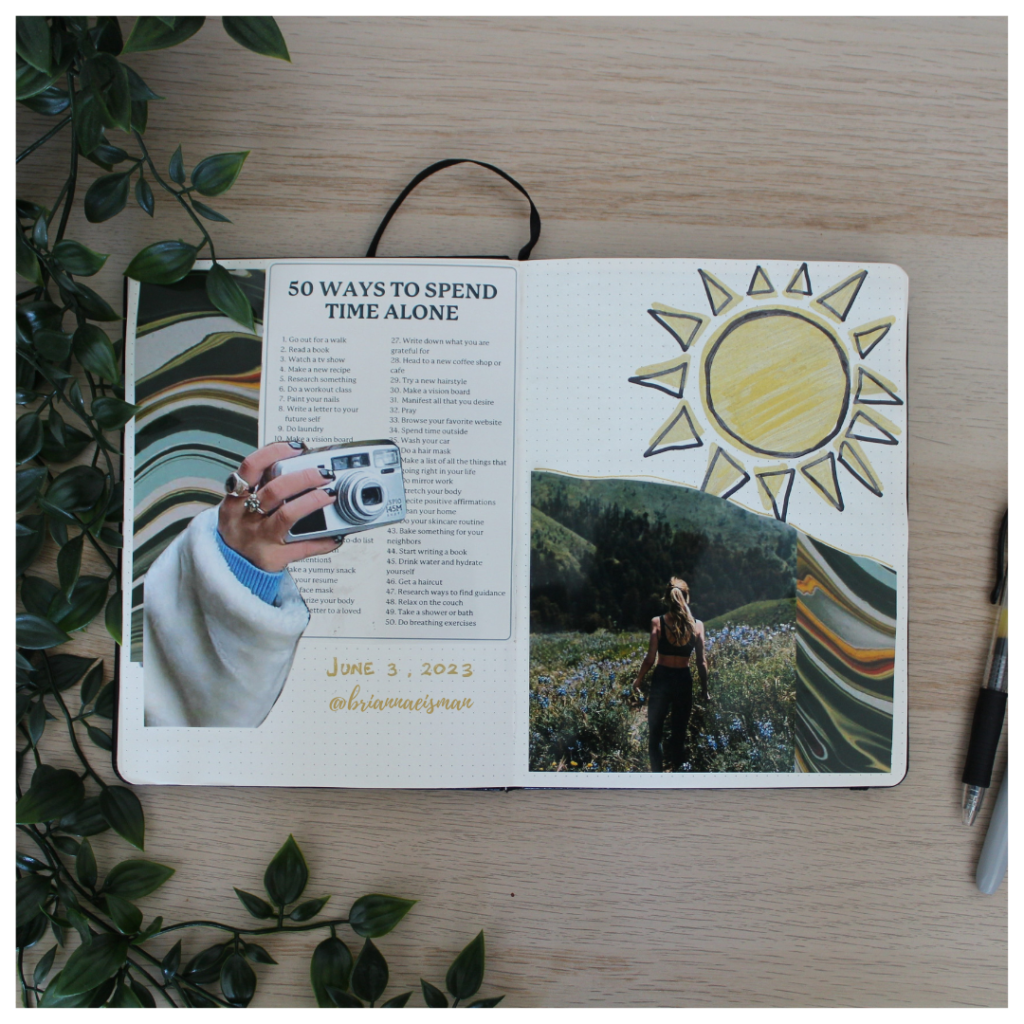
50 Ways to Spend Time Alone by Brianna Eisman After I graduated college, I felt especially lonely. You go from being surrounded by many curious and exotic people to a much smaller group. And then, you realize working 9-5 means you have even less time to spend with friends. I found this list of 50 Ways to Spend Time Alone on Pinterest. I hope you can use it and learn to love spending time alone as much as I have.
In this sense, writing a clear, optimized, and creative artist statement can add value to your artwork. There are many words to describe art, but an artist statement is unique because it comes directly from the creator. These are your words to describe art.
You, the artist, have the chance to tell the world what your art really means. You are the one to give your art value.