Why Did the CIA Fund Brainrot Art? The Messy Truth of Jackson Pollock
If you scroll through the online artsy backrooms in 2025, you’ll run into two of my favorite art conspiracies:
- Jackson Pollock was secretly bankrolled by the CIA to serve as a weapon in the Cold War.
- Brainrot art is being idolized by wealthy cultural gatekeepers/money launderers.
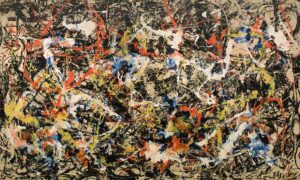

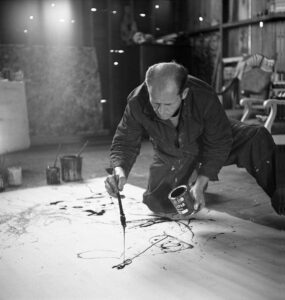
Which one is true? Both? Neither? In this artsy article, I wanna take a winding, tortuous pathway through splatter paint’s journey from admired social activism to the embarrassing reality of being compared to children’s scribbles. Let’s critically judge some art, not to decide if it’s good or bad, but to attempt to find the truth behind brainrot art.
However thoughtful, I know some of you are only here to find brainrot art. And for you silly little brainrot artists, I have found you coloring pages with the worst memes on the internet. Enjoy: https://coloriagevip.com/en/coloriage-steal-a-brainrot/?img=37


The uncomfortable Story of the CIA, Abstract Expressionism, & A Chilly War
In the late 1940s and 1950s, Abstract Expressionism became the flagship avant-garde artistic style in the United States. Artists like Jackson Pollock, Willem de Kooning, Mark Rothko shaped the era. It was chaotic, expressive, often nonfigurative, the complete opposite of realism. Meanwhile, on the other side of the Iron Curtain, Socialist Realism reigned and art was required to depict workers, heroic scenes, factories, revolution, etc.
So you had an ideological clash: expression, freedom, individualism (in the West) versus collectivism, order, narrative (in the Russian Soviet bloc). Pollock was called a “rotten rebel from Russia” and according to co-curator of the Royal Academy exhibition, “Rothko said he was an anarchist.”
The U.S. government wasn’t immediately obsessed with splatter paint, but they quietly liked the idea that art could embody “freedom”— even if that meant non-representational squiggles.
Did the Government actually fund Brainrot Art?
Yes, there is credible evidence that U.S. intelligence and cultural agencies secretly funded or channeled money into promoting abstract art exhibitions as a form of “soft power.” They wanted to show that Americans could afford and enjoy “meaningless art,” implying they live in a freer, more prosperous society.

However, it may be a stretch to say Jackson Pollock personally cashed CIA checks. The funding was often indirect, via foundations, sponsors, international cultural exchanges. But the broader narrative is supported by many art historians: the U.S. used Pollock’s style as propaganda.
In 1973, Max Kozloff argued Abstract Expressionism was “a form of benevolent propaganda,” (Artforum.com) hinting at the impact of the art movement on changes in American culture. He wasn’t the only one to notice this change and eventually the true story started to leak out.
How did they do it?
So, how did the government get away with funding Pollock’s work? If they weren’t handing out splatter paint checks, how did these artists make any money? Here’s a quick history lesson:
The Cold War started in 1944 and in 1947, the U.S. created the CIA. Within the CIA was a special dedicated group called the Propaganda Assets Inventory. This group was responsible for managing a network of over 800 publications, organizations, and other entities to spread pro-American messages globally. They used psychological warfare in the form of modern art.
One such group was called the Congress for Cultural Freedom (CCF) and was known as “an anti-Communist advocacy group active in 35 countries.” The important part is that the CIA “helped to establish and fund” the CCF. According to Alastair Sooke’s BBC article, this group went on to bankroll a number of artistic platforms including a liberal anti-Communist magazine, the Boston Orchestra to perform in Paris, and “several high-profile exhibitions…including The New American Painting [tour]. This European art exhibit toured eight countries between 1958 and 1959, and our favorite brainrot artist was one of the stars! Below, you can see a clear image of Jackson Pollock’s work on display in The New American Painting exhibit.
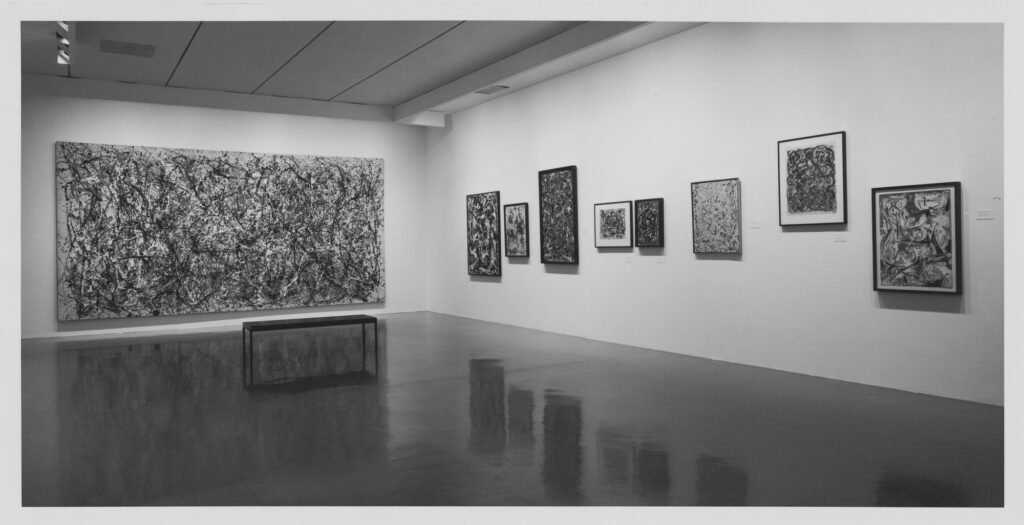
Modern Art Archives, New York.
Why did they choose Abstract (brainrot art)?
So, the CCF funded these galleries across the world. This still doesn’t explain why they chose the subject of abstract art.
From the Soviet side, abstract art was ideologically dangerous: it looked like chaos, it didn’t commit to narratives or legible messages, and it spoke of the individual’s inner life more than of the collective cause. A state that demands uniformity can’t fully comprehend ambiguity in art. So this Western “freedom art” was a cultural arrow pointed at the very heart of socialist doctrine.
Art critics and Soviet officials often ridiculed abstract expressionism as “decadent,” “bourgeois nonsense.” The tension was political, not just aesthetic.
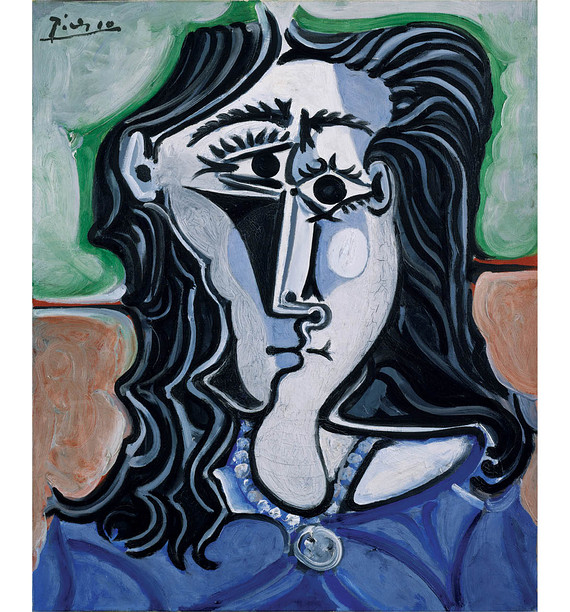
If you’ve actually read a few of my more poignant articles, you know I enjoy art created for political reasons. Picasso challenged what it means to paint a portrait, Basquiat challenged tagging and street art norms, Stuart Semple and Anish Kapoor challenged color itself. Art is progress because artists consciously ask “why” and “how.”
If you are interested in reading more of my artsy articles with this level of cynicism and brattiness, I recommend you check out Why do people hate minimalist architecture?, The Destruction of Art., and Is AI art to be a valuable future or a scary end of originality?.
Maria Brito is an art advisor, curator, and author based in New York City. She believes art has always been political “because art, at its core, is about choices. Who gets to make it? Who gets to show it? Who gets to own it? These are all political questions.”
The story I believe is that art has always been political, whether it was financed by the church, the Medici, or the US government. Art sends a message and typically the rich decide what that message says. So, even though the art may look like splatter paint from a toddler, “brainrot art” was political for the time and context of which it was created. This is the truth behind art and many people struggle with this idea that art is not always pretty or aesthetic to what you want it to be in the present day.
Brainrot art in 2025: How to Judge Art for what it is
Now let’s jump a few decades forward to brainrot art in today’s world. The same Jackson Pollock that was once used as a moral and ideological emblem is widely dismissed as “paint splatter” and compared to that of a child’s drawings. Why would you pay over $100 million for something a toddler can make?
Here’s where things get tricky. I am a 25 year old artist with a little bit of an attitude. I want you, my dearest reader, to not only feel my angst around brainrot art, but to understand that it’s okay to judge art and to not like everything you see in a gallery.


1. Art is born in a context
You can’t just judge Pollock by your 2025 meme filters. You need to ask: what was happening in 1950, socially, politically, culturally? Who funded it? What audiences saw it?
To reject context is lazy criticism.
2. Intent, funding, and “authorship” matter
If a painting is partly propped up by propaganda, that doesn’t erase the artist’s vision — but it does shift how you interpret it. Every painting lives in a web: patronage, politics, fashion, personality. Disentangle where you can, acknowledge what you can’t.
3. Meaning is not fixed
In 1952, someone might see cosmic energy, Jungian spontaneity, or existential angst in Pollock. In 2025, someone might see chaos catered to white institutions. While both judgements are technically accurate, they speak to different viewers. Be humble in your judgment and remember that meanings change over time.
4. Humor and cynicism help
Let’s be real: lots of art gets overblown hype. Hype doesn’t disprove value — but healthy skepticism keeps us honest. It guards against the “emperor’s new clothes” effect.

Conclusion: Pollock as a Mirror, Not a Masterpiece or Meme
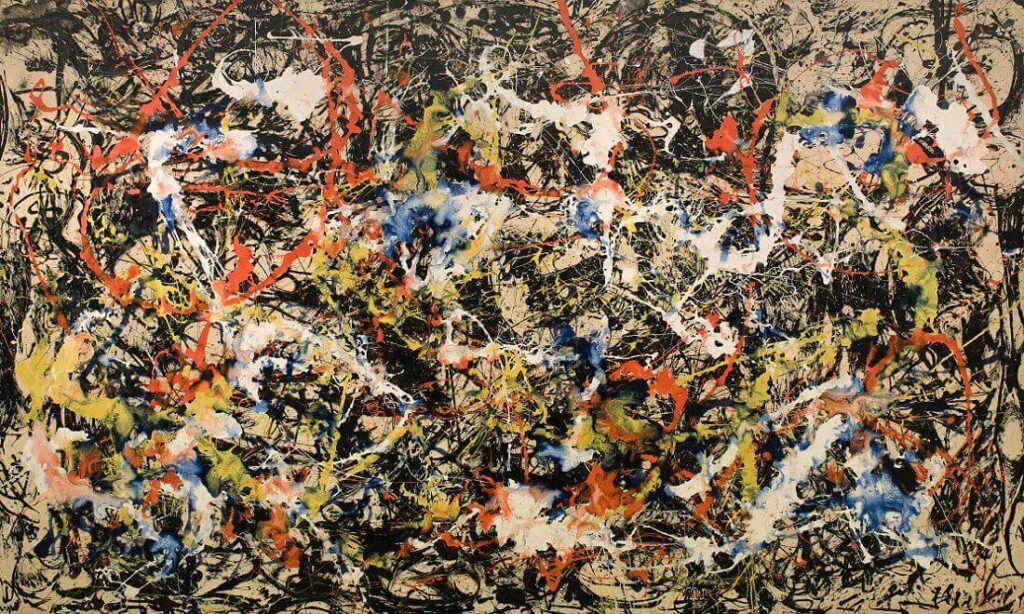
So, was Jackson Pollock really funded by the CIA? Absolutely, and art historians have traced enough circumstantial paths to take that question very seriously. But, does that automatically make his work a propaganda tool? No…?
In 2025, seeing Pollock’s splatter paintings as “brainrot art” is partly backlash: pushback against art-world gatekeeping, elitism, and all that fancy art jargon. But that rejection can also reduce the complexity of what abstract art was trying to do in a fraught political era.
My hope is that future artists and critics keep both their ambition and skepticism. Honor the context without worshipping the myth. Please judge art harshly and directly, but don’t forget about the context in which it was made. Laugh at Renaissance drawings of cats and then try to draw a cat from memory without a reference photo.
Remember that brainrot art used to be just art and trends will ebb and flow, but the joy of a good meme will never die.
Why Did the CIA Fund Brainrot Art? The Messy Truth of Jackson Pollock Read More »