With the air getting cooler and Halloween creeping around the corner, I decided it’s time to tell a spooky art history story.
⚠️ ⚠️ ⚠️ FAIR WARNING: This story is pretty dark and I’ve included some gory details and graphic descriptions of violence and injury. I would not let your kids read this. I would also avoid reading this late at night. And if you do, have fun. This story is a wild ride.
Please check out my other artsy articles! They are not as gory as this one, but all the more inspiring: ArtsyDrawings.com/art-advice/
There is a theory that one of London’s most infamous serial killers may have also been an artist.
His name was Walter Sickert and according to one very determined crime novelist, he was Jack the Ripper. The evidence is strange, disturbing, and in the end, probably not enough to prove anything. But, a fascinating rabbit hole regardless.
Before we get to the artist, we need to go back to London in 1888, when a series of brutal murders became some of world’s most famous unsolved mysteries.
The Whitechapel murders
Between August and November 1888, five women were murdered in what became known as the Whitechapel murders. They were Mary Ann Nichols, Annie Chapman, Elizabeth Stride, Catherine Eddowes and Mary Jane Kelly. They are now commonly called the “Canonical Five.”
Some sources described all five women as prostitutes, but that claim has been challenged. In the free audible book on Amazon, The Five: The Untold Lives of the Women Killed by Jack the Ripper, historian Hallie Rubenhold found evidence of misogynistic Victorian attitudes and sensationalized media coverage. Essentially, a lot of fake news.
And after spending many hours researching this topic, I theorize that these women were so much more than innocent bystanders. They weren’t just killed, they were horrifically murdered.
The horrific Evidence
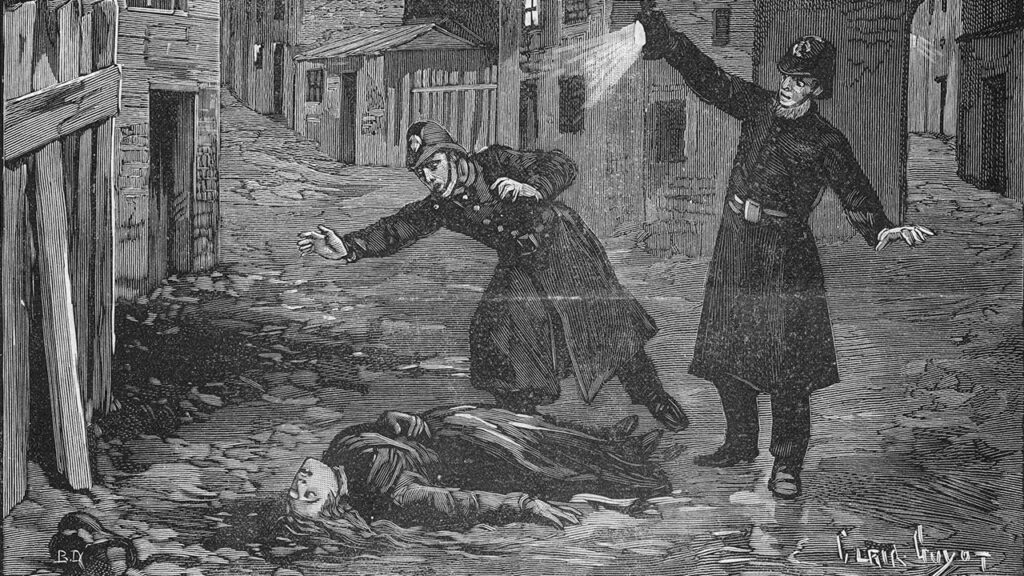
Mary Ann Nichols was found with her throat cut and her abdomen mutilated. Annie Chapman was found with her abdomen opened and several organs removed. Elizabeth Stride’s throat had been cut, although her body was not mutilated to the same extent as the other victims. Catherine Eddowes suffered extensive facial and abdominal mutilation, and her uterus and left kidney were removed.
Mary Jane Kelly’s murder was perhaps the most horrifying of all. Unlike the other women, Kelly was murdered inside her room, giving the killer significantly more time with her body. She was found on her bed, brutally mutilated, with her face and body extensively cut apart and several organs removed.
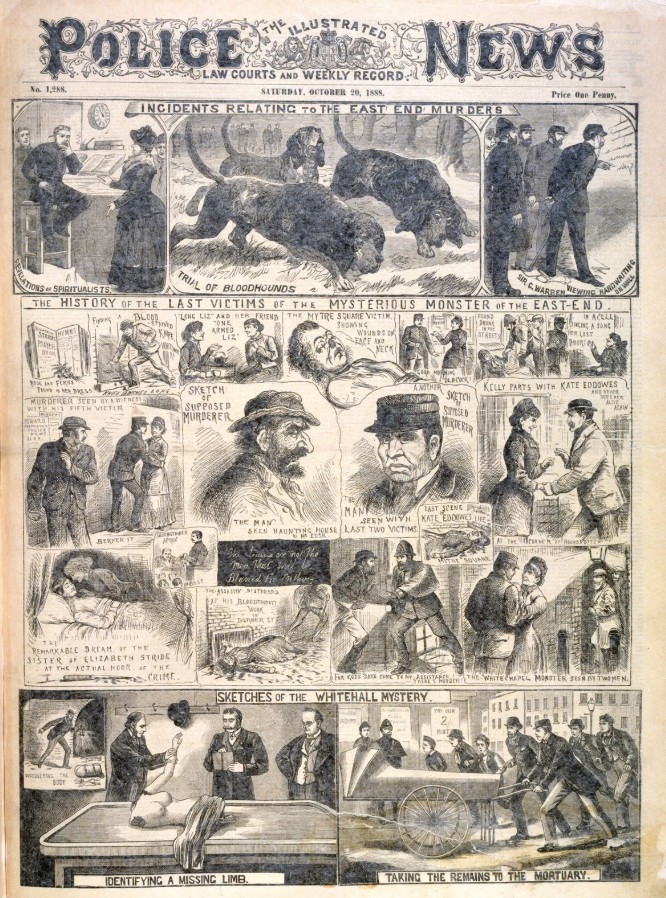
And then half of a human kidney was mailed to George Lusk, chairman of the Whitechapel Vigilance Committee.
Britannica thinks the kidney “may have been extracted from a murder victim.”
There was a letter too, but no one could prove the letter actually came from the killer. The police and newspapers received hundreds of letters claiming to be Jack. It was chaos, and it only gets crazier from there.
Who was Jack the Ripper?
Jack the Ripper is the name given to the unidentified killer responsible for the series of murders in London’s Whitechapel district in 1888. He was also referred to as the Whitechapel Murderer and, earlier in the investigation, the Leather Apron. Jack the Ripper was never caught. There were too many possible suspects and not enough actual evidence.
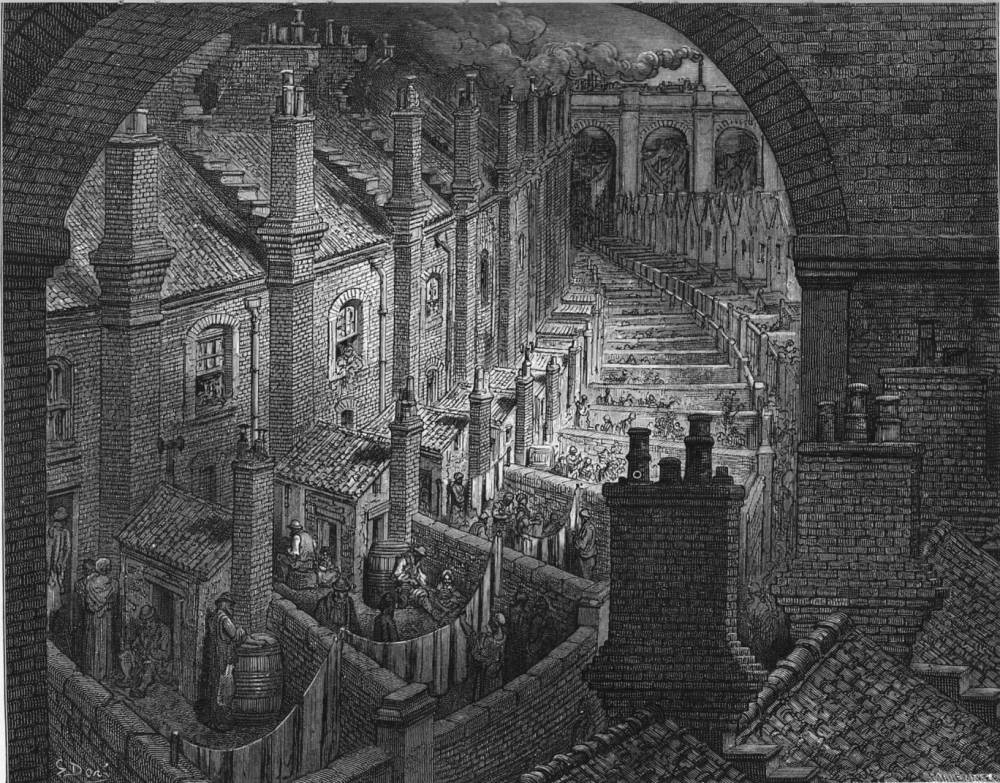
In the late 1880s, Whitechapel was horrifically overcrowded, and it made the investigation very difficult. While London averaged 50 people per acre, Whitechapel had roughly 800 people per acre. For reference, modern day Manhattan is approximately 116 people per acre. People sometimes slept seven, eight or nine to a room, and some casual lodging houses packed as many as 80 people into a single dormitory.
It made it very easy to disappear quickly in a crowd.
As for the police investigation, they interviewed over 2,000 people, examined 300 and detained 80. No one was ever charged. According to an article on a London travel site, “murder was still uncommon during the reign of Queen Victoria. In the Metropolitan Police area, there were 13 murders in 1887, 28 in 1888 and 17 in 1889.”
The violence was so extreme that investigators began wondering whether the murderer had some knowledge of anatomy. The BBC notes that the nature of the mutilations led to speculation that the killer could have been a doctor or butcher.
But, there’s an obvious lack of forensic evidence. There was no murder weapon found, no confirmed DNA, no reliable eyewitness identification.
To make things worse, the this time period marked a significant point in history for the printing press. In 1800 they could print 500 pages/hour, by 1814 they could print 1,000/hour, and by 1843, they could produce millions in a day. Technology evolved at breakneck speed. News spread everywhere fast, it wasn’t just for the wealthy elite anymore. For the first time in history, everyone could afford a newspaper. Literacy rose. People started reading books by themselves and stories were spread faster than ever before.
Any modern individual knows the impact of immediate social sharing, and how it can get messy and inaccurate fast. Growing up with Instagram and Facebook, and now seeing how AI has influenced news cycles, I know all to well the negative impact of speedy communication.
These cramped, overly dramatic neighborhoods became very chaotic very quickly.
The conspiracies
The identity of Jack the Ripper became one of the greatest unsolved mysteries of all time.
Just like any mystery, many tried to solve it. While some accusations pointed towards doctors or butchers, who understood anatomy, others were a little more far fetched. In his 1976 book Jack the Ripper: The Final Solution, Stephen Knight proposed a crazy theory involving the British Royal Family, Freemasons, a secret marriage, and an illegitimate child.
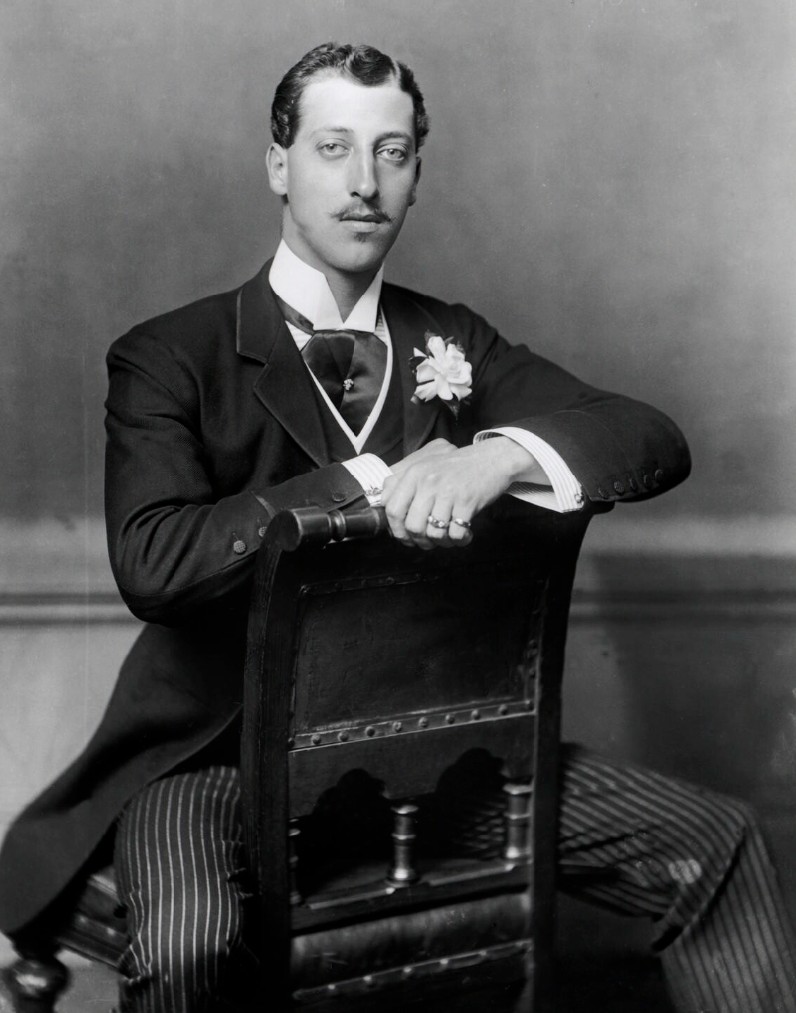
by Alexander Bassano
half-plate glass negative, late 1880s
According to Knight’s theory, Queen Victoria’s grandson, Prince Albert Victor, secretly married a shop girl named Annie Crook. The couple supposedly had a child in 1885, Alice Margaret, who could have been a legitimate heir to the throne. The theory claimed that the Freemasons were involved in eliminating witnesses who knew about the marriage and child. Annie Crook’s home was raided and she was “subjected to some kind of barbarous treatment.” The five women who protected her child were “eliminated” in a “masonic slaughter.”
One of Queen Victoria’s physicians, Sir William Gull, was supposedly recruited to declare Annie Crook “insane” and carry out the murders. History remembers Sir William Gull as highly respected and having treated many members of the royal family. But, history is remembered by the survivors.
There are a few serious problems with Gull as the Ripper.
Gull suffered a stroke in 1887, leaving him in poor health, around a year before the Whitechapel murders began. Despite being an entertaining theory, there’s no convincing historical evidence that the Royal Family ordered the murders, that the Freemasons organized them, or that Sir William Gull was Jack the Ripper. But remember, history is recorded by the winners and survivors.
The royal theory became incredibly popular
The public loved the royal conspiracy story.
As well put by Christopher Scott on Casebook.org, “it is a rattling good story [with] elements of fairytale and myth – a wayward, handsome Royal, a poor young girl who becomes a de facto princess, a child who has to be hidden away to secrete her heritage from the evil men who would kill her…”
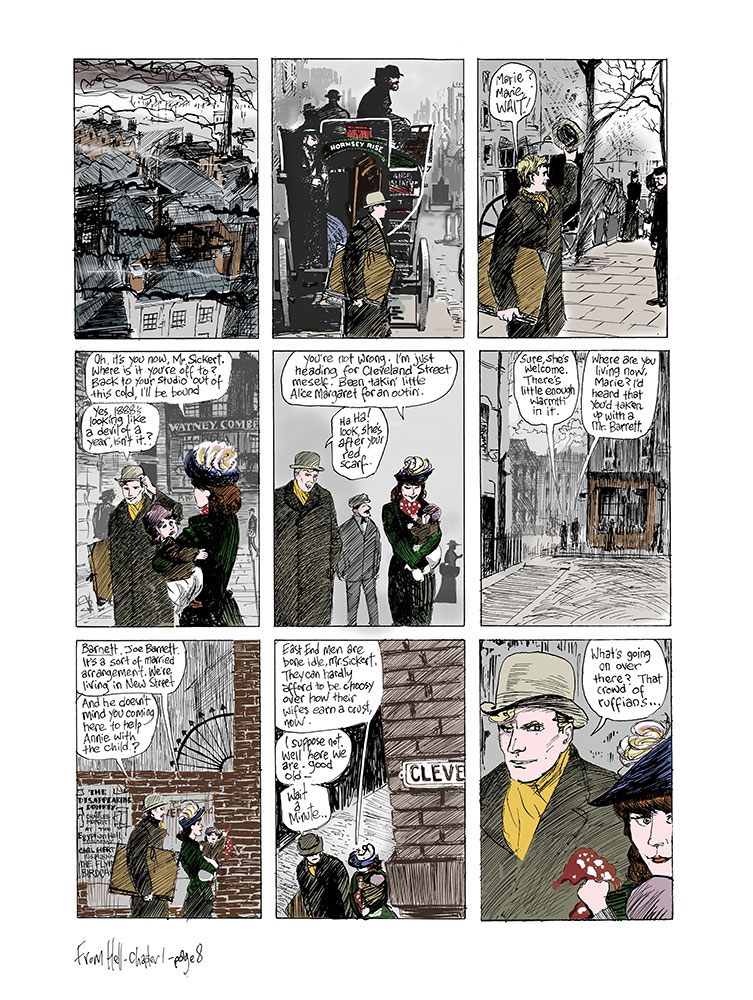
Alan Moore and Eddie Campbell took inspiration from the story and created a 600 page graphic novel, From Hell. The comic reveals the identity of the killer from the start and questions the why of the murders. And guess who plays a part in this riveting comic? None other than our oddly relevant artist, Walter Sickert.
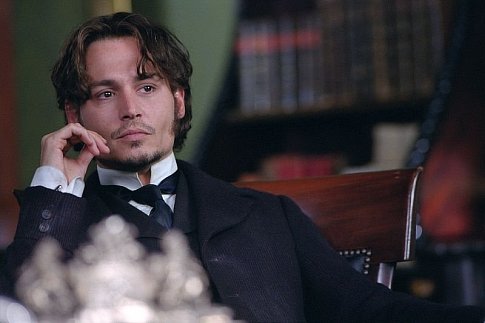
The comic was adapted to film in 2001, staring Johnny Depp. What’s kind of insane is how the whole world sort of catalogued Sir William Gull as this evil character. Wikipedia shows 10 different instances of Gull referenced in pop culture movies, book and tv shows since 1976. Maybe he did it, maybe he just a doctor.
The Start of the RumoUr
So, where did this royal conspiracy come from?
The idea was actually introduced by a man called Joseph Gorman. He was also known as Joseph Sickert, claimed to be the son of Walter Sickert and Alice Margaret, Annie Crook’s daughter.
Joseph alleged that Walter Sickert knew the identity of Jack the Ripper. Joseph later retracted his story, and admitted the whole thing was a hoax, saying “I made it all up. It was a whopping fib.” Was he lying or spreading rumors or telling the truth?
Regardless, this odd behavior and wild story sparked the conspiracy that Walter Sickert knew more than he was letting on.
Who was Walter Sickert?
Walter Richard Sickert was born in 1860 and became a German-born British painter and printmaker. He was associated with the Camden Town Group and became an important figure in British modern art.
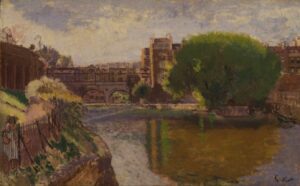

He studied under James McNeill Whistler and was greatly influenced by Edgar Degas. His paintings often focused on theaters, music halls, working-class London and less glamorous scenes than the typical artists of the time. He strived to find the best painting techniques and became a very successful artist mentor.
Walter Sickert married a politician’s daughter in 1885, named Ellen Melicent Ashburner Cobden, though it’s noted that “the marriage was childless, and apparently unhappy.” Ellen divorced him in 1899. In 1911 he married his student, Christine Drummond Angus who died 9 years later.
Joseph Gorman Sickert was born in 1925, in which Walter would have been 65 and Alice Margaret was 40. While Joseph claimed to be the son of Walter, there is little evidence to support Walter was Joseph’s biological father.
Walter married his third wife in 1926. She was the painter Thérèse Lessore. Walter died in 1942 at the ripe age of 81.
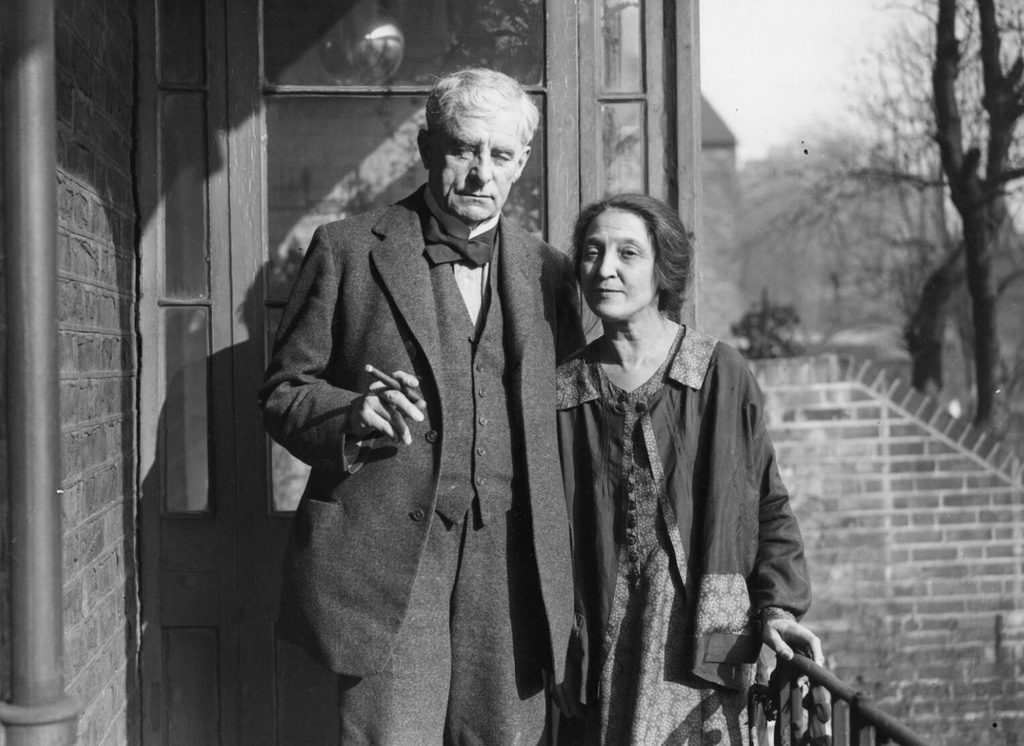
by George Woodbine, for Daily Herald, 1934
The paintings become “evidence”
In 2002, crime novelist Patricia Cornwell entered the story. She decided to try her hand at solving the case.
The Guardian reports Cornwell identified many similarities between Sickert’s paintings and the Ripper crime scenes. Cornwell believed a woman’s pose in one painting resembled Mary Jane Kelly’s position when her body was discovered. Another painting appeared to contain facial mutilation resembling the wounds inflicted on Catherine Eddowes.
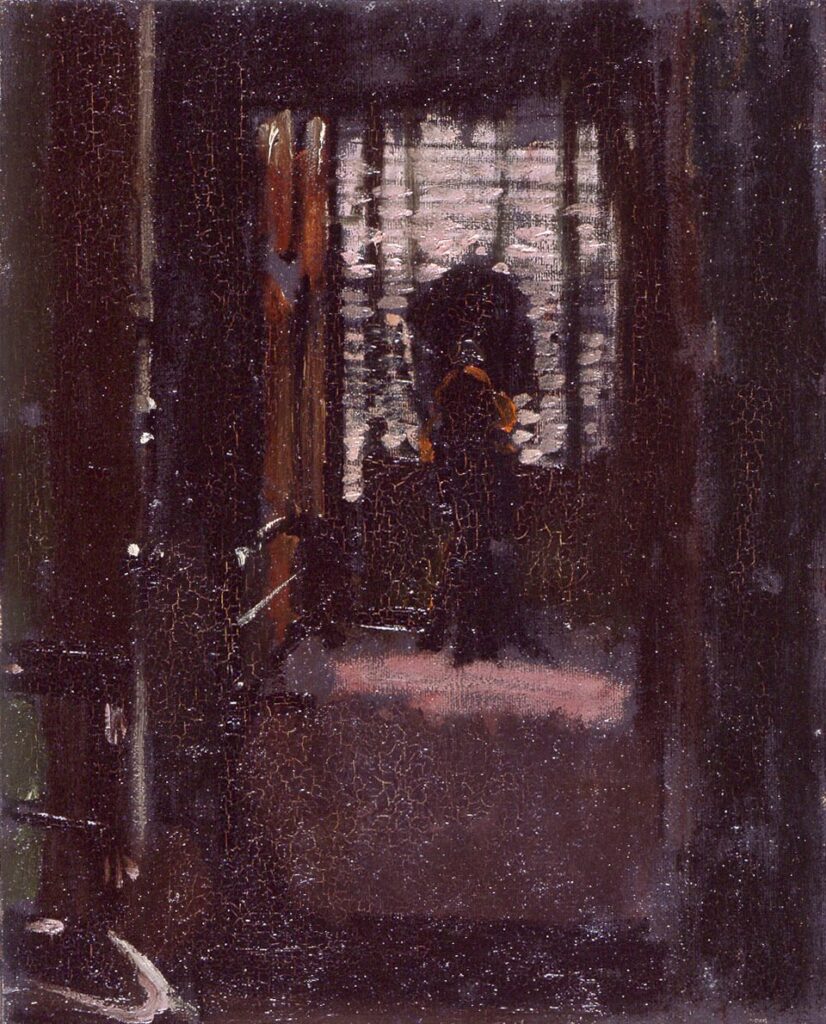
Cornwell also discovered Walter Sickert actually lived in a room supposedly connected to Jack the Ripper. Sickert even created a painting known as Jack the Ripper’s Bedroom. There is no definitive evidence that Jack the Ripper ever actually lived in that room, but it’s still really creepy.
In 1907, a woman named Emily Dimmock was murdered in Camden Town. Sickert became interested in the case and produced a series of paintings inspired by the murder, known as the Camden Town Murder series. One of the paintings, titled “What Shall We Do For The Rent” shows a nude woman lying on a bed while a fully clothed man sits beside her. It’s difficult to tell exactly what’s happening and Sickert doesn’t give any answers.
Is she sleeping? Is she dead? Is the man waiting? What’s he waiting for? Where are her clothes?
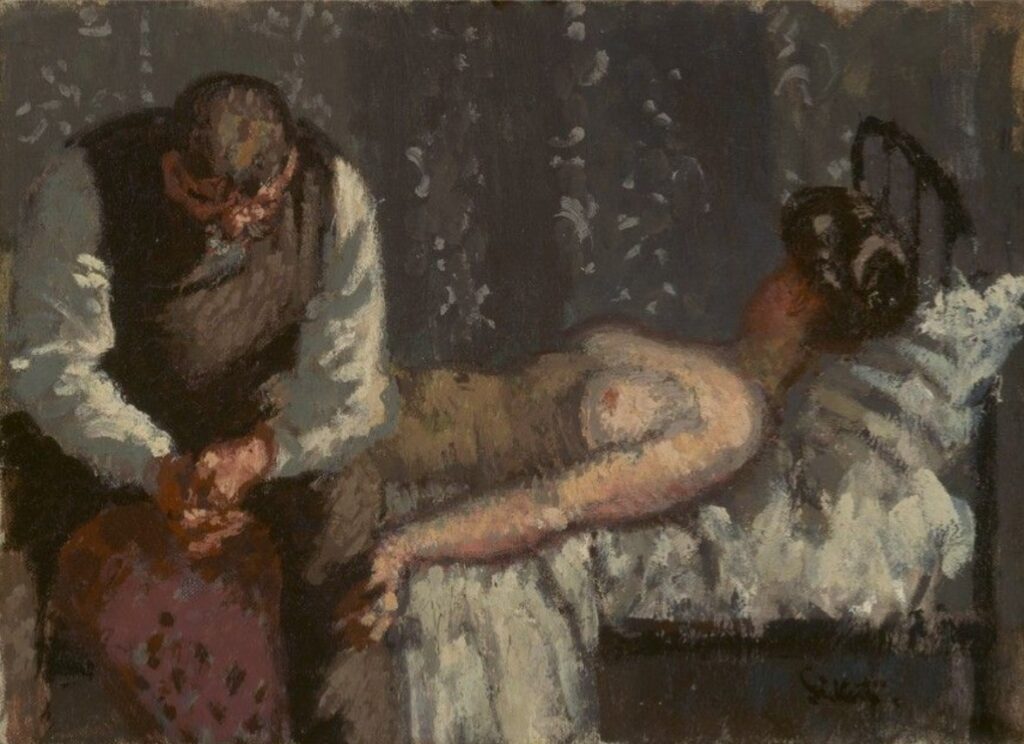
Sickert was a weird sick artist fascinated with murder, and Cornwell firmly believed he was the Whitechapel murderer.
Cornwell reportedly spent £2 million buying 31 Sickert paintings, along with many letters and even his writing desk. Then, she had one of the paintings cut apart because she hoped to find DNA evidence that could connect Sickert to letters supposedly written by Jack the Ripper. Yes, you read that right. A crime novelist spent £2M on paintings and destroyed one looking for evidence that its artist was a serial killer.
Art historians were not thrilled. One described the theory as “silly,” while another compared the destruction of the painting to taking apart a Caravaggio to investigate a stabbing. And unfortunately for Cornwell, the painting did not cough up the Ripper’s DNA.
Cornwell then had forensic testing done on letters supposedly written by Jack the Ripper, but the DNA testing did not link the letters to Sickert.
One thing stood out: one of many letters matched Sickert’s stationary design. Cornwell considered this discovery extremely important saying: “if a jury then had seen that,” she said, “they would have said ‘hang him’.” But there were many letters and many fakes. Some would go as far as to say it was fake news.
Cornwell spend over £7 million on this. It’s kind of ironic, Sickert’s fascination with Jack the Ripper mirrors Cornwell’s fascination with Sickert. Art imitates life I guess.
So, was Walter Sickert Jack the Ripper?
Probably not.
Sickert is still sometimes presented as one of the possible Ripper suspects, but the actual evidence against him is extremely weak.
One major problem is his whereabouts in 1888. Historical accounts place Sickert in France for significant portions of the period surrounding the murders. The Guardian noted that Sickert spent much of the relevant period in Dieppe, although travel records from the era are not precise enough to establish his location for every single day.
There is also no confirmed forensic evidence tying Sickert to the murders. No confirmed DNA. No murder weapon. No reliable eyewitness identification. No contemporary police evidence proving he was the killer. And perhaps most importantly, the police did not identify Sickert as a serious suspect during the original investigation. As London Walks notes, the police investigated more than 300 people and detained around 80, but no one was ever charged.
But, Cornwell remained convinced. She even said on American television:
“I do believe 100% that Walter Richard Sickert committed those serial crimes, that he is the Whitechapel murderer.”
Patricia Cornwell, on Walter Sickert according to The Guardian
But, being completely convinced of something and being able to prove it are two very different things.
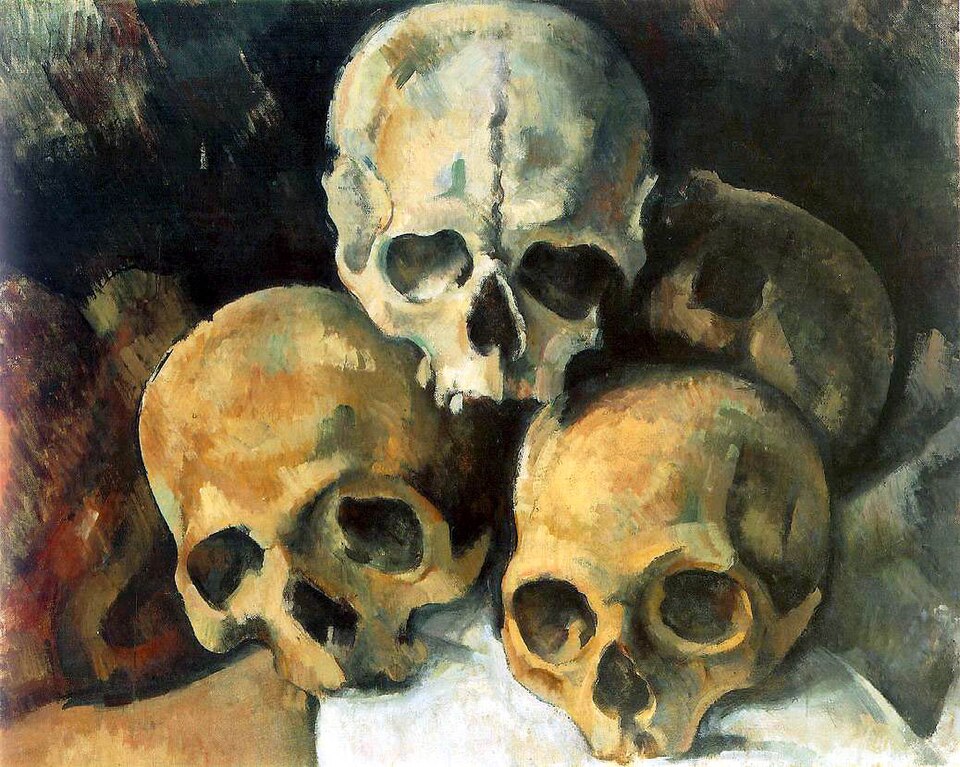
When I look at creepy, disturbing artwork, I think about what kind of person the artist must be to create something like that. It’s sometimes hard to detach the artist from the art. Paint a peaceful landscape of wildflowers, and people assume you’re peaceful. Paint a murdered woman lying on a bed, and suddenly everyone wants to know what is wrong with you.
Mark Lawson suggested Cornwell had been drawn into the popular idea of the “creative artist as headcase.” Sickert probably was a creepy dude who happened to express himself through painting. He picked unsettling subjects and enjoyed making his viewers uncomfortable.
But, that doesn’t make him a serial killer.
Why are we still obsessed with Jack the Ripper?
There is something deliciously irresistible about an unsolved mystery.
More than a century later, there are still people trying to connect the dots. Was it Prince Albert Victor or Sir William Gull or Walter Sickert?? Even Lewis Carroll, author of Alice’s Adventures in Wonderland and Through the Looking-Glass, has been thrown into the suspect pile. The list keeps changing because the mystery has no ending. Jack the Ripper is so popular that he’s even featured in the Haunted Mansion at Disney World!
The Jack the Ripper Museum in London literally asks visitors:
“Will you be able to solve the mystery of Jack the Ripper?”
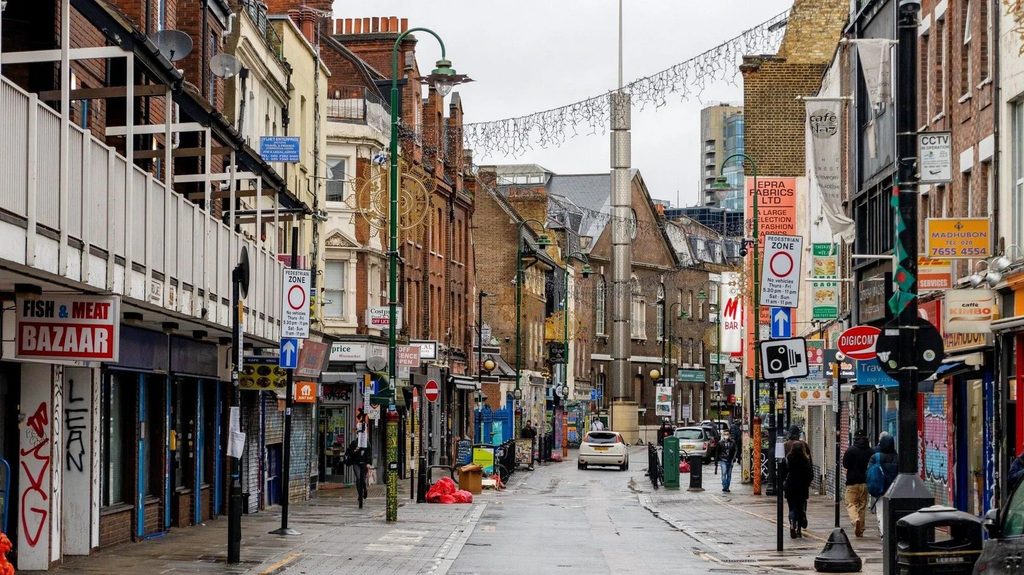
by Krista, Travel Blogger and Content Creator
There’s always the possibility that one more letter, one more painting, one more obscure historical document will finally reveal the answer. One Reddit user described the fascination with the case this way:
“I am 100% sure it’ll never be solved, and yet, whenever I start reading about the case again, there’s always a hopeful part of me that thinks I’ll see something no one’s seen before that’ll take me to the one true answer.”
@mbelf on Reddit, “Why Do You Think We’re Still Fascinated by Jack the Ripper 135 Years Later?”
When the story becomes bigger than the truth
Honestly, I kinda get it. The answers just keep disappearing into the fog.
After 140 years, Jack the Ripper has become more than a murderer. He’s a media phenomenon. Newspapers turned fear into headlines, rumors into theories and an unsolved murder into entertainment.
We have a much faster version of that problem now. Today, a headline, photo or 10 second video can reach millions of people before anyone has stopped to ask whether it’s actually true. We see it constantly in the United States, especially with politics, breaking news and conspiracy theories. The most shocking version of a story often travels further than an accurate one.
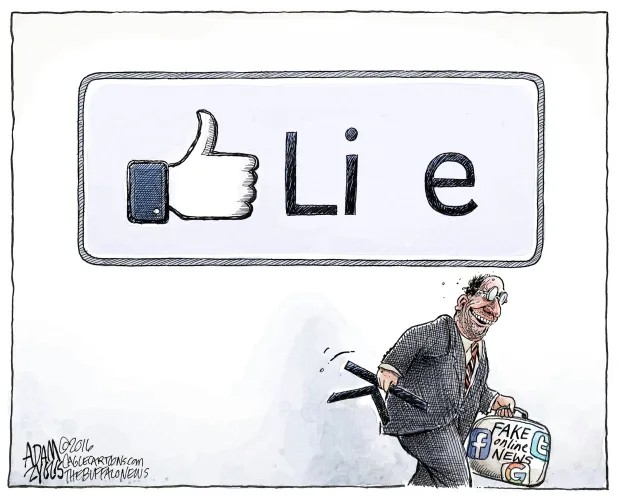
As artists, we understand the power of an image. We know how quickly a picture can make someone feel something, believe something or look at something differently. That power isn’t limited to artists, either. Every one of us is sharing, reacting and helping decide which stories get remembered.
Maybe that’s the real lesson of Jack the Ripper: before you believe the story, look at who is telling it. Before you share it, ask yourself whether you’re spreading the truth, or just the most interesting version of it.
Sometimes the scariest part isn’t what happened, it’s how easily we can be convinced of what happened.